Shelf Life Is a System, Not an Ingredient
The most common mistake I see food entrepreneurs make is thinking about shelf life as something you add to a product. "What preservative should I use?" is usually the first question, and it's the wrong one.
Shelf life is the result of your entire formulation, process, and packaging system working together. When brands remove synthetic preservatives without redesigning the system, they get exactly what you'd expect: shorter shelf life, higher spoilage rates, and customer complaints. But when you approach it as a design problem — engineering multiple preservation hurdles into the product from the ground up — you can achieve 12-24 months of ambient stability with nothing on your ingredient panel that would raise an eyebrow.
I've spent my career developing shelf-stable sauces, condiments, and kettle-cooked products using clean-label approaches. Here's how it actually works.
The Hurdle Technology Framework
The concept of hurdle technology was formalized by German food scientist Lothar Leistner, and it remains the gold standard for food preservation design. The idea is simple: instead of relying on one strong preservation factor, you combine multiple moderate factors that collectively prevent microbial growth.
Think of it like security for a building. You don't rely solely on a lock on the front door. You have the lock, a security camera, motion sensors, and maybe an alarm system. Any one of those can be defeated, but defeating all of them simultaneously is orders of magnitude harder. Food preservation works the same way.
For kettle-cooked sauces and condiments, the primary hurdles available to us are:
- pH (acidity) — the most powerful single hurdle for acidic products
- Water activity (aw) — controlled by sugar, salt, and humectant levels
- Thermal processing — kill step during production and hot-fill
- Packaging — barrier properties, headspace, closure integrity
- Natural antimicrobials — the last line, not the first
The brands achieving the longest clean-label shelf life are using four or five of these simultaneously. The ones struggling are typically relying on one or two.
pH Control: Your Most Powerful Tool
For acidic products — and that includes most sauces, condiments, dressings, and salsas — pH is the single most important shelf-life variable. The magic number is 4.6: below this, Clostridium botulinum cannot produce toxin, which is the line between an acidified food and a low-acid canned food from a regulatory perspective.
But 4.6 is the ceiling, not the target. For clean-label products without synthetic preservatives, I typically formulate to pH 3.8-4.2 for tomato-based products and 2.8-3.5 for vinegar-forward sauces. That extra margin buys you meaningful additional shelf life because every 0.1 pH unit below 4.6 reduces the growth potential of surviving microorganisms exponentially.
Practical pH Management
The challenge is adjusting pH without overwhelming the flavor. Here's how I approach it in formulation:
Vinegar selection matters. Distilled white vinegar is the most efficient acidulant (5% acetic acid) but contributes a sharp, one-dimensional flavor. Apple cider vinegar is softer. Rice vinegar is milder still. I often blend two or three vinegar types to hit my pH target with a more complex, rounded flavor.
Citric acid is a precision tool. When I need to drop pH by 0.2-0.3 units without significantly changing flavor volume, citric acid is my go-to. Small additions (0.1-0.3% of total batch weight) can make a meaningful difference in both preservation and flavor brightness.
Ingredient-inherent acidity counts. Tomatoes (pH 4.0-4.5), citrus juices (pH 2.0-3.0), fermented ingredients, and fruit purees all contribute acidity. Building these into your formula means less reliance on added acidulants.
Understanding how this connects to the broader clean-label picture is essential — I cover that context in what clean label really means for CPG brands.
Water Activity: The Underrated Preservation Lever
Water activity (aw) is probably the most underutilized tool in clean-label preservation, partly because it's less intuitive than pH. Water activity measures the amount of "free" water available for microbial growth, on a scale from 0 (bone dry) to 1.0 (pure water). Most fresh foods are 0.95-0.99. Most spoilage bacteria need aw above 0.91. Most molds need above 0.80.
In sauce and condiment formulation, you manage water activity primarily through:
Sugar Content
Sugar binds water and reduces aw. A BBQ sauce at 35-45% sugar has aw around 0.85-0.90 — significantly below the growth threshold for most bacteria. This is why traditional BBQ sauces, teriyaki sauces, and sweet chili sauces have inherently longer shelf lives than their low-sugar counterparts. For brands targeting the low-sugar space, you lose this hurdle and need to compensate with other preservation factors.
Salt Content
Salt is the other primary water-activity reducer. At 3-5% salt concentration, you achieve meaningful aw reduction. The tension, of course, is that consumers want lower sodium. The formulation puzzle is finding the minimum salt level that still contributes meaningfully to both flavor and preservation. I typically target salt levels where it's doing double duty — enough to matter microbiologically while staying within sodium targets for the product category.
Glycerol and Other Humectants
In specialty applications, food-grade glycerol can reduce water activity without adding sweetness or saltiness. It's clean-label compliant, though it does appear on the ingredient panel. Usage rates of 2-5% can drop aw by 0.02-0.04 units, which can be the difference between a 12-month and 18-month shelf life.
Thermal Processing and Hot-Fill: The Kill Step
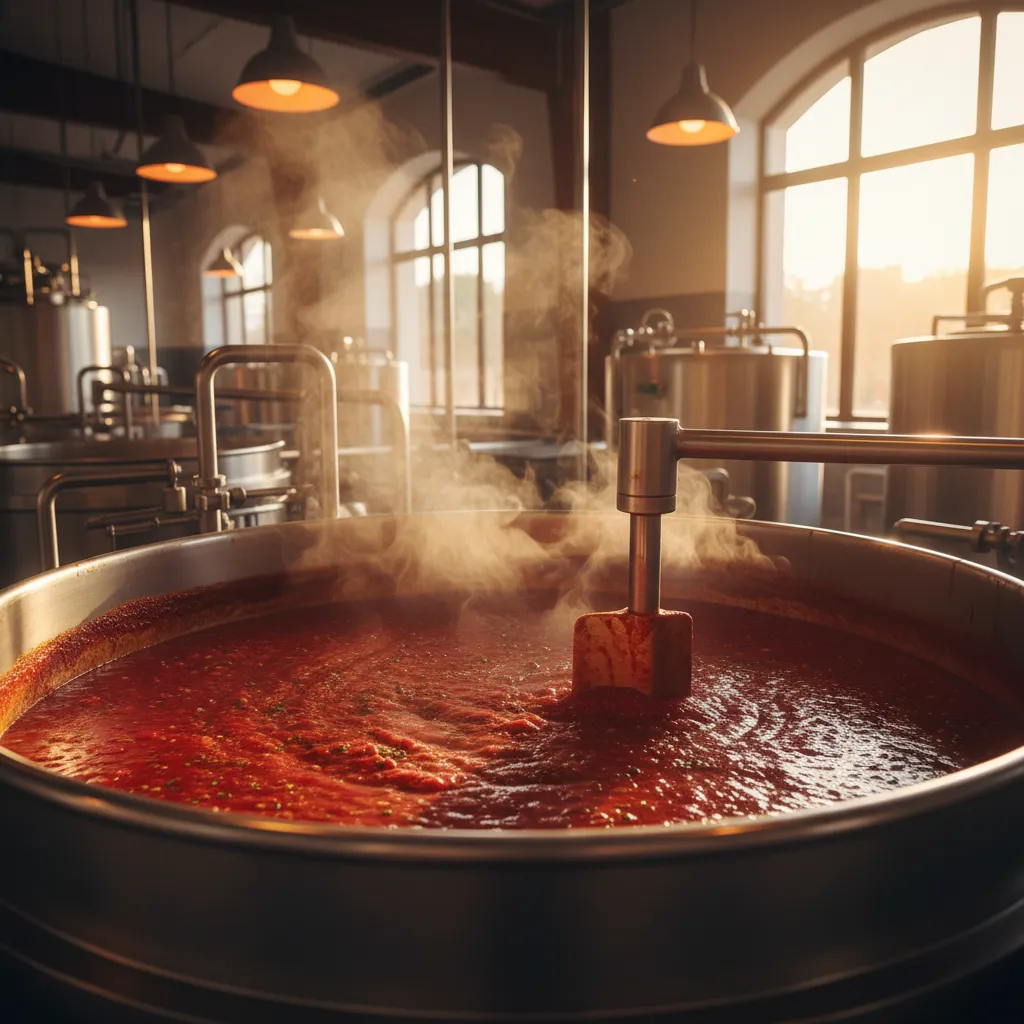
For kettle-cooked products, the thermal process is both the cooking step and the preservation step. A properly executed hot-fill process is the most reliable clean-label preservation technique for acidic sauces and condiments.
How Hot-Fill Works
The product is heated to a minimum of 185 degrees F (85 degrees C) in the kettle, filled into containers at that temperature, sealed, and often inverted to sterilize the closure. The combination of the cooking temperature, hold time, and residual heat in the sealed container achieves a cumulative thermal kill that eliminates vegetative microorganisms and most spoilage organisms.
For acidic products (pH below 4.6), hot-fill is often sufficient as the sole processing step — no retort, no pressure processing, no HPP needed. This is one of the major advantages of kettle cooking for clean-label production. To understand more about why this traditional process excels, read why kettle cooking produces better sauces.
Critical Control Points
The failures I see in hot-fill processing almost always come down to temperature management:
Fill temperature drops. If your filling line is slow or your holding tank isn't insulated, product temperature can drop below 180 degrees F before the container is sealed. At 170 degrees F, your kill step is significantly compromised. Monitor fill temperature continuously, not just at the kettle.
Headspace management. Too much headspace means more oxygen in the sealed container, which promotes oxidation and can support aerobic spoilage organisms. Too little headspace creates pressure problems during cooling. Target 1/4 inch for most glass containers.
Closure integrity. A hot-fill system is only as good as its seal. Damaged lids, under-torqued caps, and worn sealing surfaces all create pathways for recontamination. This is a co-packer quality issue that I flag during production-readiness audits.
Packaging as a Preservation System
Packaging is not just a container — it's an active component of your preservation strategy. The right packaging choice can add 6-12 months of shelf life; the wrong one can cut your shelf life in half.
Glass vs. Plastic for Shelf-Stable Sauces
Glass is the gold standard for shelf-stable acidic products. It's an absolute oxygen barrier, it's impervious to flavor scalping (absorption of flavor compounds into the container), and it supports hot-fill processing. The downsides are weight, shipping cost, and breakage risk.
Plastic containers — PET, HDPE, PP — are lighter and cheaper but permit oxygen transmission through the container walls. This oxygen ingress drives oxidation reactions that degrade color, flavor, and nutrient content over time. For a clean-label product without synthetic antioxidants, this accelerated oxidation can be the limiting factor on shelf life. If you're using plastic, factor in oxygen transmission rates when projecting shelf life.
Closure Selection
Metal lug caps on glass jars create a vacuum seal during hot-fill cooling that provides an additional preservation barrier. The vacuum environment inhibits aerobic spoilage organisms and also serves as a tamper indicator — if the "safety button" pops up, the seal has been broken. For clean-label sauces, the hot-fill-glass-lug-cap system is the most reliable and cost-effective shelf-stable packaging option.
Putting It All Together: A Shelf-Life Design Checklist
When I'm developing a new clean-label sauce or condiment, here's the sequence I follow:
1. Define the target shelf life. Be realistic. If you're targeting Whole Foods and your product will sit in distribution for 2-3 months before reaching shelf, you need at least 12 months total. That means your actual shelf life needs to be 15-18 months to account for distribution lag and consumer storage.
2. Establish pH and aw targets. These are your primary hurdles. For most clean-label sauces, I target pH 3.5-4.2 and aw below 0.92.
3. Design the thermal process. Hot-fill at minimum 185 degrees F into appropriate packaging. Validate the thermal profile with temperature logging.
4. Select packaging. Glass with metal lug caps for maximum shelf life. If plastic is required, choose high-barrier materials and adjust shelf-life expectations.
5. Add natural antimicrobials only if needed. If your pH, aw, and thermal process don't achieve target shelf life alone, then layer in natural preservatives as additional hurdles.
6. Validate. Run accelerated shelf-life studies (typically at 95-100 degrees F) for directional data, followed by real-time studies at ambient conditions. Test for microbial stability, flavor degradation, color change, and texture shifts. Never ship a new formula to retail without real-time validation data.
Frequently Asked Questions
What shelf life can I realistically achieve without artificial preservatives?
For acidic sauces and condiments (pH below 4.2) packaged in glass via hot-fill processing, 18-24 months is achievable and common. Hot sauces often exceed 24 months. Tomato-based sauces typically land at 12-18 months. Higher-pH products like cream-based sauces are more challenging and may require refrigeration or HPP to achieve 60-90 days. The product's inherent pH and water activity are the strongest predictors of achievable shelf life.
Is High Pressure Processing (HPP) necessary for clean-label products?
Not for most shelf-stable acidic products. HPP is primarily valuable for refrigerated products with pH above 4.6 — fresh salsas, guacamole, cold-pressed juices, and similar products that can't withstand thermal processing without quality degradation. For kettle-cooked sauces and condiments that are hot-filled, HPP adds cost ($0.05-0.15 per unit) without meaningful benefit. Save it for products that genuinely need it.
How do I know if my product needs a preservative efficacy test?
If your product has a pH above 4.0, a water activity above 0.92, or uses a novel preservation system, a challenge study (also called a preservative efficacy test or inoculated pack study) is strongly recommended. This involves inoculating the product with known concentrations of target organisms and monitoring their survival over time. It's the most reliable way to validate that your preservation system actually works. Cost runs $2,000-5,000 depending on the organisms tested and study duration, which is a rounding error compared to a recall.
Does organic certification affect my preservation options?
Yes. Organic certification restricts some natural preservatives — for example, some forms of citric acid produced via fermentation using genetically modified organisms are not permitted in certified organic products. Rosemary extract must be produced without synthetic solvents. Cultured dextrose is generally acceptable if produced with organic-compliant media. Always verify specific ingredients against the USDA National Organic Program's National List before committing to a preservation strategy for an organic product.
Can I extend shelf life by just improving my packaging?
Packaging improvements alone can add meaningful shelf life, but they can't compensate for fundamental formulation or process weaknesses. Switching from PET to glass can add 3-6 months for products where oxidation is the limiting factor. Adding an oxygen scavenger to packaging can help. Nitrogen flushing headspace reduces initial oxygen. But if your product is microbiologically unstable due to high pH and high water activity, better packaging won't save it — you need to fix the formula and process first.
Need Help With Your Formulation?
Whether you're scaling your first recipe or reformulating an existing product, let's talk about how to get it right.
Book a Free Discovery Call