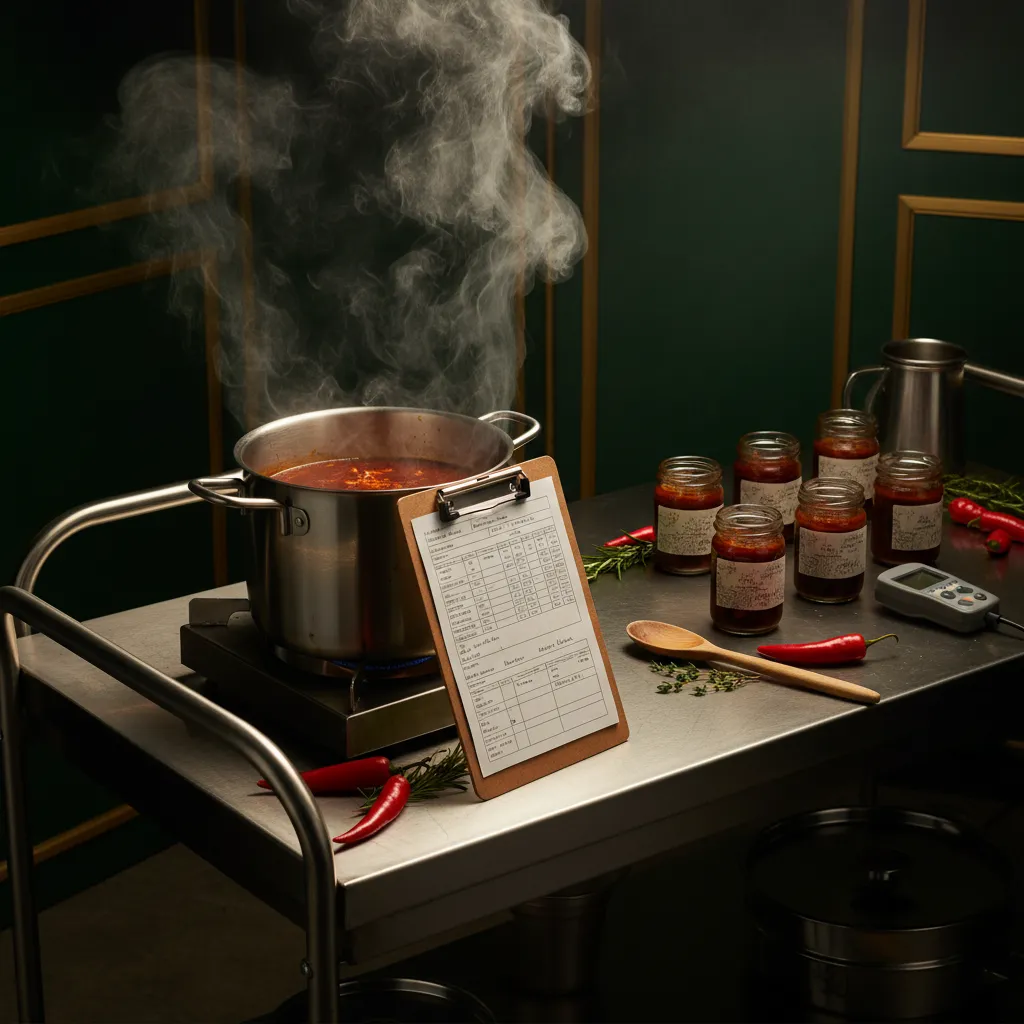
Somewhere there should be a jar of your sauce that everyone agrees is right. Not the version you remember from the early days, and not the batch you liked best last spring, but one labeled, sealed jar from one specific lot that you, your co-packer, and anyone you hire later can open and say: this is the product.
That jar is your gold standard. The spec tells the plant what the numbers should be. The gold standard shows what those numbers are supposed to taste like. A batch can land inside every range and still lose the bright garlic up front or the slow build of heat at the back, and the most reliable way to catch that is to taste it next to something that has it.
Here is how to set a reference you can trust, keep retained samples you can find, taste every batch against both, and handle the awkward fact that your gold standard is food, and food ages.
Three Jars, Three Jobs
The word "sample" gets used for all of these. They are different things with different jobs.
- The gold standard (also called the reference sample). A small set of jars from one approved lot that defines what right tastes, smells, and looks like. It is a measuring stick, useful only if it stays the same while you use it. You own it and keep the master set, which travels with you if production ever moves. The plant should hold a labeled set too, so its quality team has something to compare against.
- Retained samples (retains). Units pulled from every production lot and kept unopened, so that if a question comes up about that lot later, there is product from that exact lot to examine.
- Your batch sample. Jars from every lot sent to you to taste against the gold standard. It is a check on top of the plant's quality control, not instead of it.
One jar can't do all three jobs. A retain you open for a tasting is no longer a retain, and a reference you open every week runs out, or quietly gets replaced by whatever happens to be in the fridge. Make enough reference jars to cover every tasting until the next refresh, for you and the plant, plus a few spares.
Setting the Gold Standard
Use a production batch, not the kitchen pot
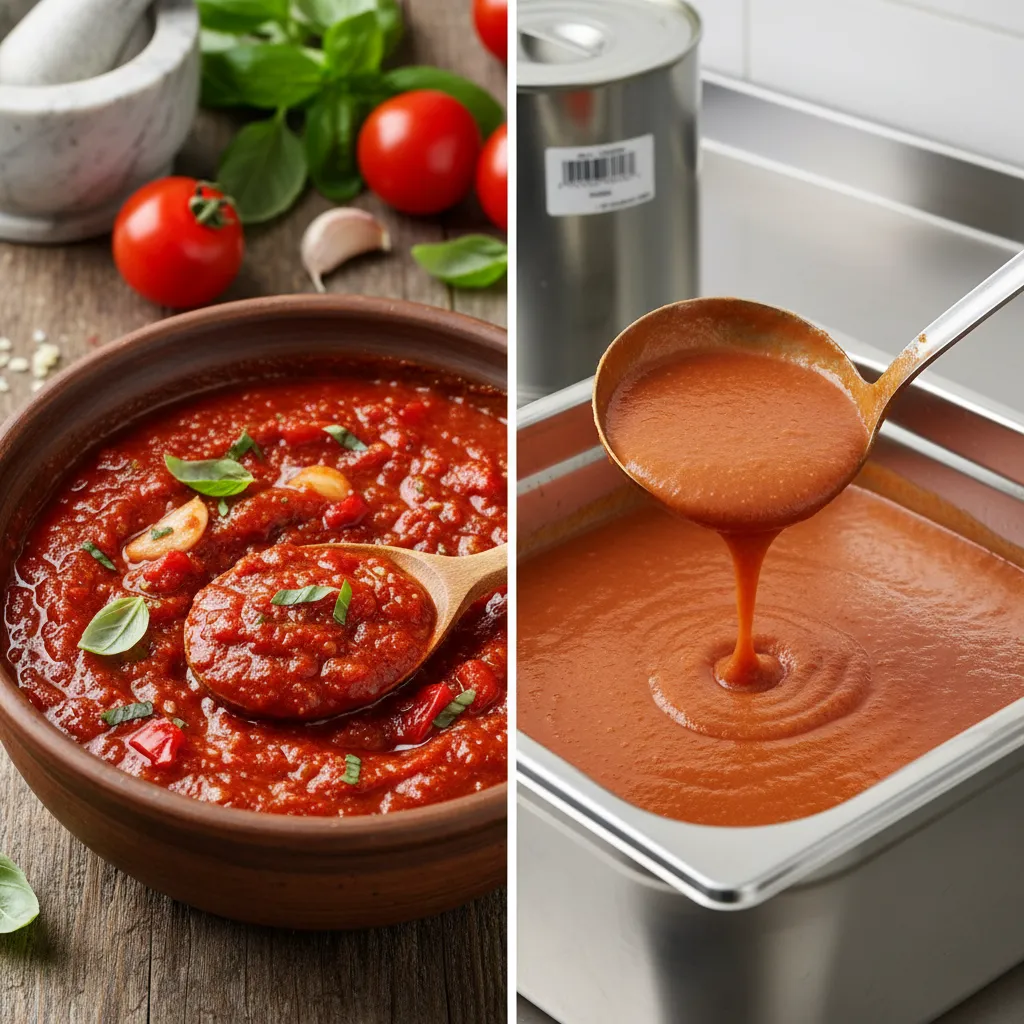
The reference has to be something the plant can actually make. Your kitchen version, cooked in a different pot with different ingredients, is not a fair target for a steam-jacketed kettle (more on that gap in why your co-packer's version never tastes like yours). Take the gold standard from the plant, made to the current written formula and process, ideally from lots you approved after a structured pilot batch. If you have been in production for years without one, pick a current lot that you and the plant agree is right, confirm its readings against the spec, and start there.
Judge it at two weeks, not on make day
A sauce on the day it is made is not the sauce your customer eats. In my experience the flavor settles over about two weeks: acid softens and blends in, salt evens out, spices bloom or mellow, and texture and color can shift a little. So I taste a candidate batch, and check its acidity, salt, texture, and color, on make day, at one week, and at two weeks. The two-week version is the one I judge. Approve a reference on make day and you are approving something that no longer exists by the time the jars reach a shelf.
Pick the middle, not the best
The gold standard should not be the most delicious batch you have ever made. It should sit near the middle of every range on your spec. If your reference sits at the thick end of the viscosity range and the sweet end of the Brix range, every normal batch can look thin and flat next to it, and you can spend months chasing batches that were never wrong.
Write it down in words and numbers
The jar will age. The written record won't. Keep this with the reference set:
- The lot code, make date, approval date, and the formula version it was made to.
- The two-week readings (pH, Brix, viscosity with the temperature it was read at, salt, and color if you measure it), with the method used for each.
- A plain-language sensory description, in order: how it looks, what you smell first, the first taste, how acid, salt, sweetness, and heat arrive, the texture in the mouth, and the finish. "Bright tomato, garlic up front, heat builds slowly and fades clean, coats the spoon without sliding off" is far more useful than "tastes great."
- The two or three things that make it yours. If a batch loses those, nothing else on the sheet matters.
That record belongs with your finished product spec. The numbers decide whether a batch can ship. The description and the jar decide whether it is still your product.
Retains: A Library You Hope You Never Need
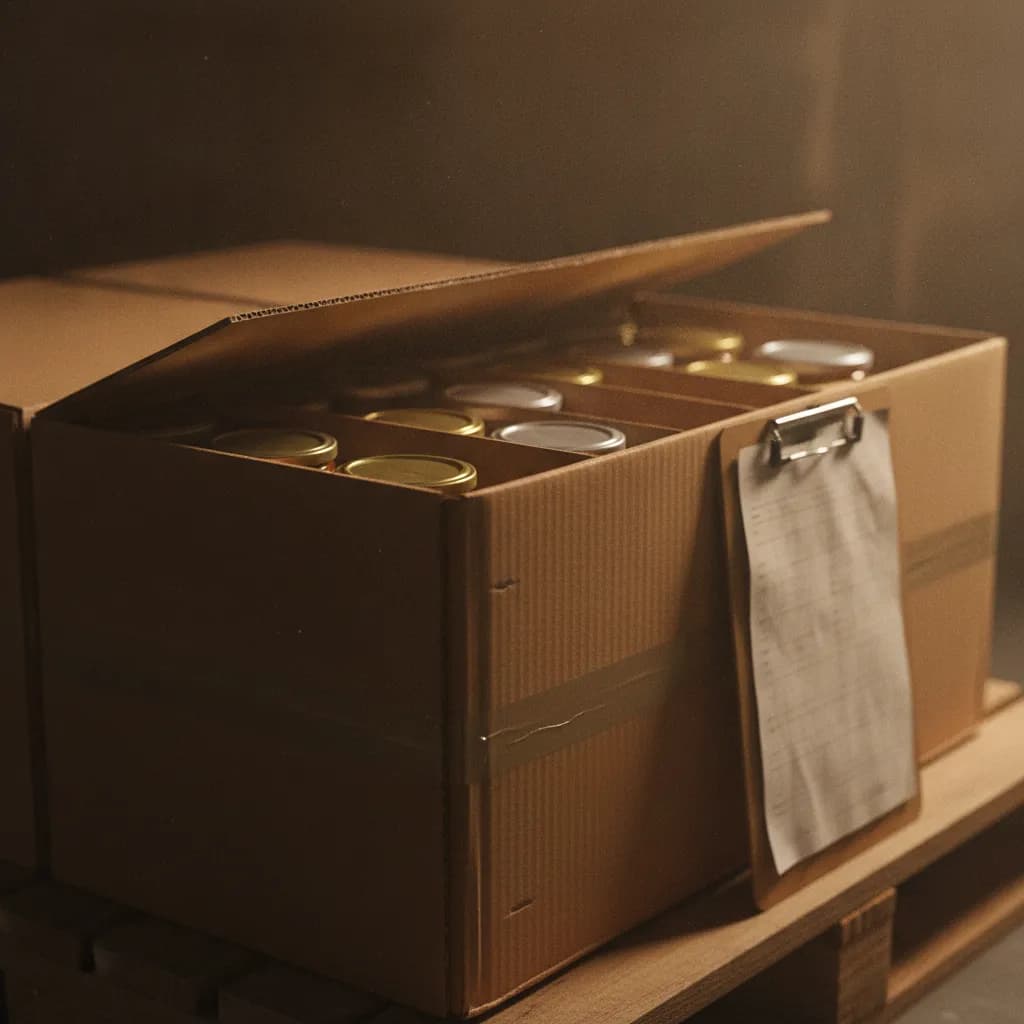
A retain is boring right up until someone asks about a lot from four months ago. A customer writes in about a jar that tasted off, or a buyer says the last shipment looked darker. With retains, you can open a jar from that exact lot code and see whether the problem was in the batch, or in what happened to one jar after it left the plant: heat in a truck, a damaged seal, a sunny window. Without them, you are guessing.
Your co-packer keeps retains under its own program, and how many, from where in the run, and for how long are its decisions. Ask what the policy is and write the answer down. Then keep a set of your own. A few habits make the library work:
- Label by lot code and keep a simple list of what you hold and where. A lot code only helps if you can find the jar it points to. If your coding is loose, start with lot coding and mock recalls.
- Store them the way the product is meant to be stored. Room temperature, out of the light, away from heat. A retain kept in a hot storage unit tells you about the storage unit.
- Keep them through the code date, and often a little past it, so a question from late in the product's life still has an answer.
- Don't raid them for tastings. Batch samples are for tasting. Retains stay sealed until there is a reason to open one.
A Sample From Every Batch, Sent to You
Quality control is the plant's job, and a good co-packer does it on every batch. I don't suggest a brand try to run that program or second-guess it. My advice is simpler: ask for a sample from every batch, and test it yourself against your gold standard.
That isn't distrust. The plant measures your product against the numbers you gave it, but it can't know what "tastes like us" means unless you have shown it. Your tasting fills that gap, and it catches slow change while it is still a conversation rather than a complaint.
Put the request in writing, in the spec or your agreement, so it survives staff changes on both sides: how many units per lot, from where in the run (a jar from the start, middle, and end of the fill tells you more than three from the same minute), the plant's release readings for that lot, and when they ship. Plan on covering the units and the shipping. It is cheap next to hearing about a problem from a customer.
The Side-by-Side Routine
Keep it simple enough that you will actually do it for every batch, the same way every time.
- Check the jar before you taste it. A swollen lid, a broken seal, product that spurts when opened, or an off smell means stop. Do not taste it. Set it aside and call the plant's food safety team with the lot code.
- Match the temperature. Both at room temperature, or both at the temperature the product is eaten at. Cold dulls flavor and thickens texture.
- Match the age where you can. A sample a few days old can taste sharper than a settled reference. Taste it on arrival to catch anything obvious, and do the real comparison two weeks after its make date.
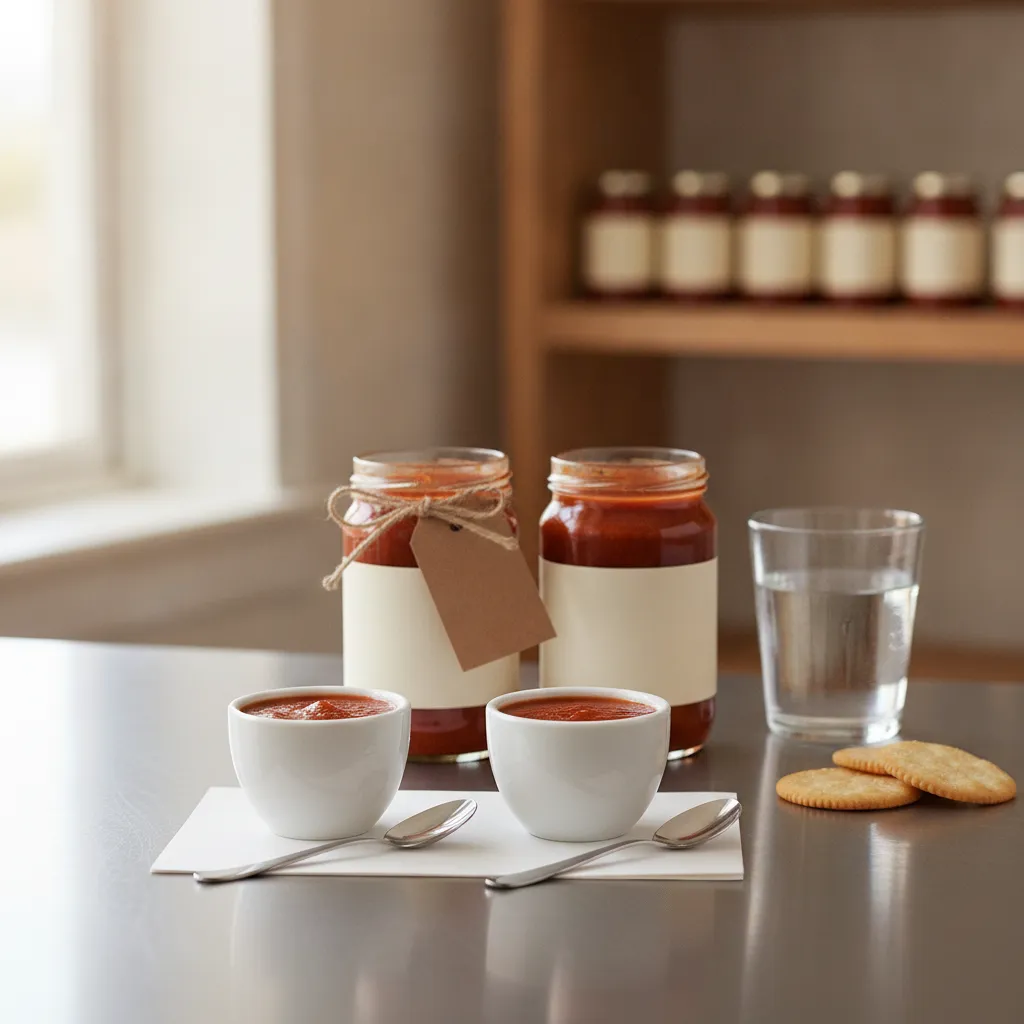
- Look first. Same cups, same amount, white surface, good light. Check color, gloss, particulates, and any oil on top, then pull a spoon through each and watch how it moves.
- Smell, then taste, in a fixed order. Reference first, then the sample, with water and a plain cracker in between. Taste it on the food it is meant for (a chip for salsa, greens for a dressing) as well as on a spoon.
- Go blind when you can. Have someone else pour and code the cups. To learn whether there is any difference at all, set out three cups, two of one and one of the other, and see whether tasters can pick the odd one out. Sensory professionals call this a triangle test, and it keeps wishful thinking out of the room.
- Score against the description. For each attribute (color, aroma, acid, salt, sweetness, heat, texture, finish), mark "matches", "a little more", "a little less", or "clearly different", add one sentence overall, and record the lot code, make date, and tasting date.
Use the same two or three tasters each time if you can. A small panel that knows the product well beats a big one that doesn't.
What to do with what you find
- It matches: log it anyway. A record of matches is what makes the next difference visible.
- A little different: check the plant's readings for that lot against the spec, note it, and watch the next batch. One slightly sweet batch is noise. Three in a row is a direction.
- Clearly different: call the plant with specifics: the lot code, which attribute, which direction, and what the readings say. Offer to send the jar, so their team has something concrete to check against their batch records.
Keep the tone of that call where it belongs. Plant QC checks what the spec asks it to check, and your reference is how you check the rest. When the plant passed a batch and your side-by-side says it is different, both can be right: the batch met the spec, and your tasting found something the spec doesn't measure. Rule out unfair comparisons first (an unsettled sample, a temperature mismatch, a reference too old to trust). If the difference keeps coming back, the spec is missing something the jar knows, such as a heat or color attribute with no target. That gap sits on your side of the table.
When the Gold Standard Gets Old
Here is the awkward part. Your reference is a shelf-stable food, so it changes like any other jar of your product: color deepens or dulls, bright aromatics fade, heat can soften, texture can set up or thin out. The reasons are covered in why flavor and color fade over shelf life. Months in, a fresh batch can look wrong next to an aging reference simply for being fresh. Without a plan, you either press the plant about a difference that is really your reference getting old, or let your standard drift without noticing.
- Treat the written record as the anchor. The numbers and the sensory description do not age. When the jar and the description disagree, trust the description and suspect the jar.
- Slow the aging where it makes sense. One option is to keep part of the reference set in cold storage to slow change, and part at room temperature to show what a shelf jar looks like at that age. Know which one you are tasting, and why.
- Refresh on a schedule you set in advance, well inside the code date. A new reference is a current lot near the middle of the spec that matches the written description at two weeks and holds up next to the outgoing reference while that one is still young enough to be fair.
- Watch for creep. If each new reference is matched only to the last one, small differences stack up, the way a photocopy of a photocopy gets fuzzier. Check every refresh against the spec targets and the written description as well as the previous jar.
- Retire it cleanly when the formula changes. A new formula version gets a new reference, approved the same way. Label the old one as retired so nobody tastes against the wrong jar. This belongs in your formula change control process.
Label every reference jar plainly: gold standard, formula version, lot code, make date, approval date, and the lot it replaces.
The Judgment Behind the Jar
The routine above is deliberately simple. The harder calls sit underneath it: which attributes actually define your product, how wide each range can be before a customer notices, how to turn "the heat feels different" into something a plant can measure, and how to set a reference that is still fair at month six. That calibration is specific to each product, and it is the part I work through with brands inside a project, with their formula and their plant's process on the table. The rest you can start now: a labeled jar, a written description, and the habit of tasting every batch.
Need Help With Your Formulation?
Whether you're scaling your first recipe or reformulating an existing product, let's talk about how to get it right.
Book a Free Discovery Call