What Recipe Reformulation Actually Means
Reformulation is one of those words that makes food entrepreneurs nervous. It sounds like starting over. But recipe reformulation isn't about abandoning what works — it's about evolving your formula to meet new realities. Every successful CPG brand reformulates at some point. Most do it multiple times.
When I talk about reformulating a food product, I mean systematically modifying your existing formula to achieve a specific objective — lower COGS, cleaner label, better shelf stability, improved texture, regulatory compliance, or alignment with a new co-packer's equipment. The goal is always to preserve what makes your product distinctive while solving a real business or technical problem.
Reformulation is not the same as recipe development from scratch. You're working with an established flavor profile that customers already love. The constraint is that the finished product must taste the same (or close enough that your customers don't notice) while achieving whatever technical or business objective triggered the project.
The Six Most Common Reasons to Reformulate
1. Your COGS Are Killing Your Margins
This is the most frequent trigger. You launched with premium ingredients because quality mattered and you weren't focused on margins yet. Now you're scaling, and your ingredient costs consume 50-65% of wholesale price, leaving no room for trade spend, distributor margins, or profit.
Cost-driven reformulation doesn't mean using cheap ingredients. It means finding functionally equivalent alternatives that cost less, adjusting ratios where an ingredient is over-contributing, reducing waste in your process, and optimizing your formula for your co-packer's equipment to improve yield. I've consistently achieved 15-30% COGS reductions through reformulation without perceptible changes in the finished product. For more on ingredient quality trade-offs, see the hidden cost of cheap ingredients.
2. You Need a Clean Label
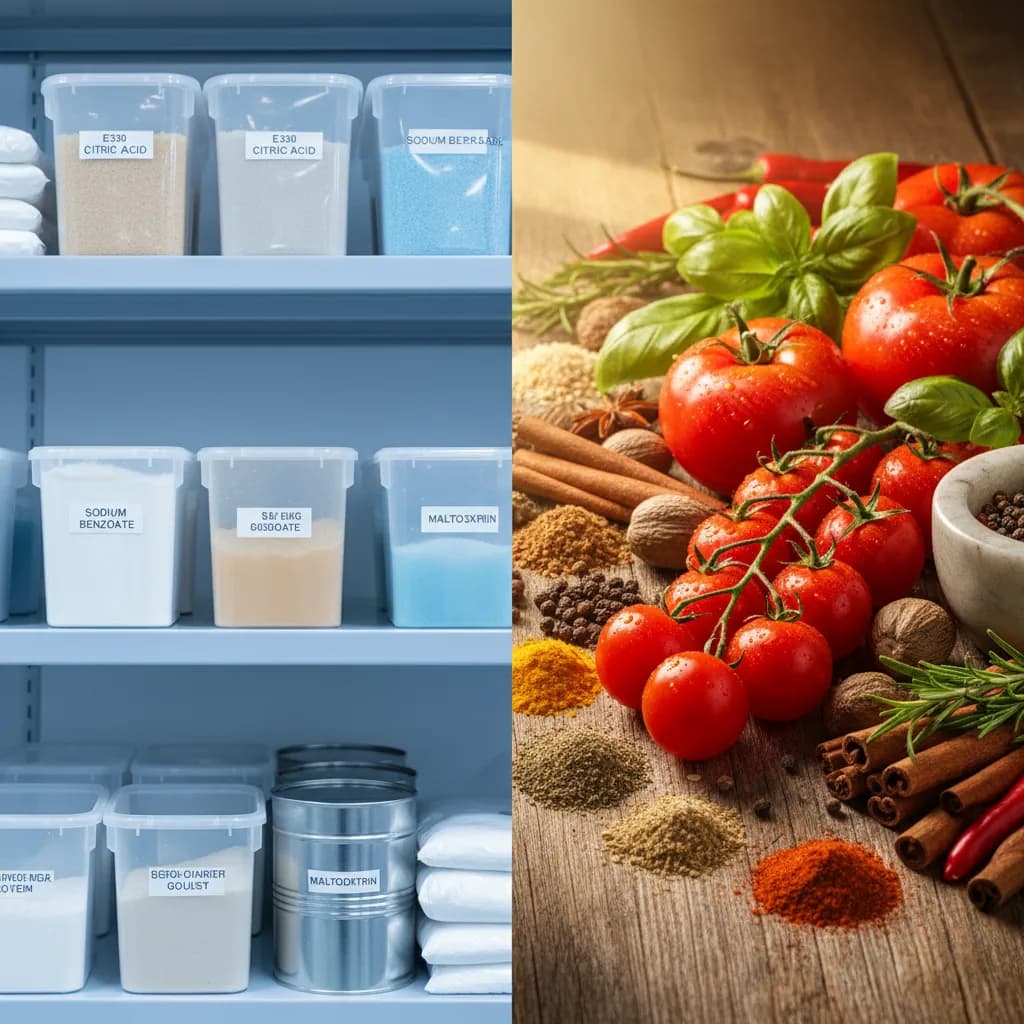
Consumer demand for recognizable ingredients keeps growing, and retailers are increasingly requiring clean labels for shelf placement. If your current formula contains modified food starch, xanthan gum, sodium benzoate, "natural flavors," or other ingredients that consumers question, reformulating to a clean label can open doors to retailers and demographics you can't currently reach.
Clean label reformulation is genuinely difficult. Those "chemical-sounding" ingredients serve real functions — thickening, emulsification, preservation, flavor enhancement. Removing them without replacing their function produces an inferior product. The skill is in achieving the same functionality through ingredient combinations and process techniques that consumers understand and trust. Learn more about what clean label really means for CPG brands.
3. Your Co-Packer Changed (or Their Equipment Did)
Co-packer relationships end for many reasons — capacity constraints, pricing disputes, quality issues, or simply outgrowing them. Your new co-packer likely has different equipment: different kettle sizes, different agitation systems, different filling lines, different thermal processing capabilities. A formula optimized for one facility rarely transfers perfectly to another.
Even if you stay with the same co-packer, they may upgrade equipment. A new kettle with a different heat jacket configuration, a new agitator style, or a switch from batch to continuous processing all affect your product and may require formula adjustments.
4. Shelf Life Issues Have Emerged
Sometimes a product that passed initial shelf life testing develops issues in the real world — color fading, flavor changes, separation, texture degradation, or (worst case) microbial growth. These problems often surface 6-12 months after launch when the product has been sitting in a wider variety of storage conditions than your controlled testing anticipated.
Shelf life reformulation might involve adjusting pH, modifying water activity through ingredient changes, adding natural preservation hurdles (multiple mild preservation methods that work synergistically), or changing your thermal process.
5. Regulatory or Labeling Requirements Changed
FDA labeling requirements evolve. The 2020 Nutrition Facts Panel update, new allergen declarations (sesame became the 9th major allergen in 2023), state-level requirements like California's Proposition 65, and evolving "natural" claim standards can all trigger reformulation. If an ingredient in your formula is reclassified or restricted, you need to adapt.
6. You're Expanding to a New Channel
A product formulated for farmers market sales (refrigerated, consumed quickly) needs reformulation for retail (shelf-stable, 12-18 month shelf life). A retail product may need reformulation for foodservice (different packaging sizes, potentially different viscosity for pump dispensing). Each channel has its own technical requirements.
The Reformulation Process: What to Expect
A well-managed reformulation follows a structured process that minimizes risk to your existing product and customer base:
Phase 1: Benchmarking your current product (Week 1). Before changing anything, we establish a detailed baseline of your current product — pH, Brix, viscosity, water activity, color measurement, and formal sensory evaluation. This becomes the target that the reformulated version must match.
Phase 2: Identifying modification pathways (Weeks 1-2). Based on the reformulation objective, I identify which ingredients and process parameters can be modified and which are untouchable. Every product has signature elements — the specific combination of ingredients and processing that makes it taste like itself. These are the guardrails.
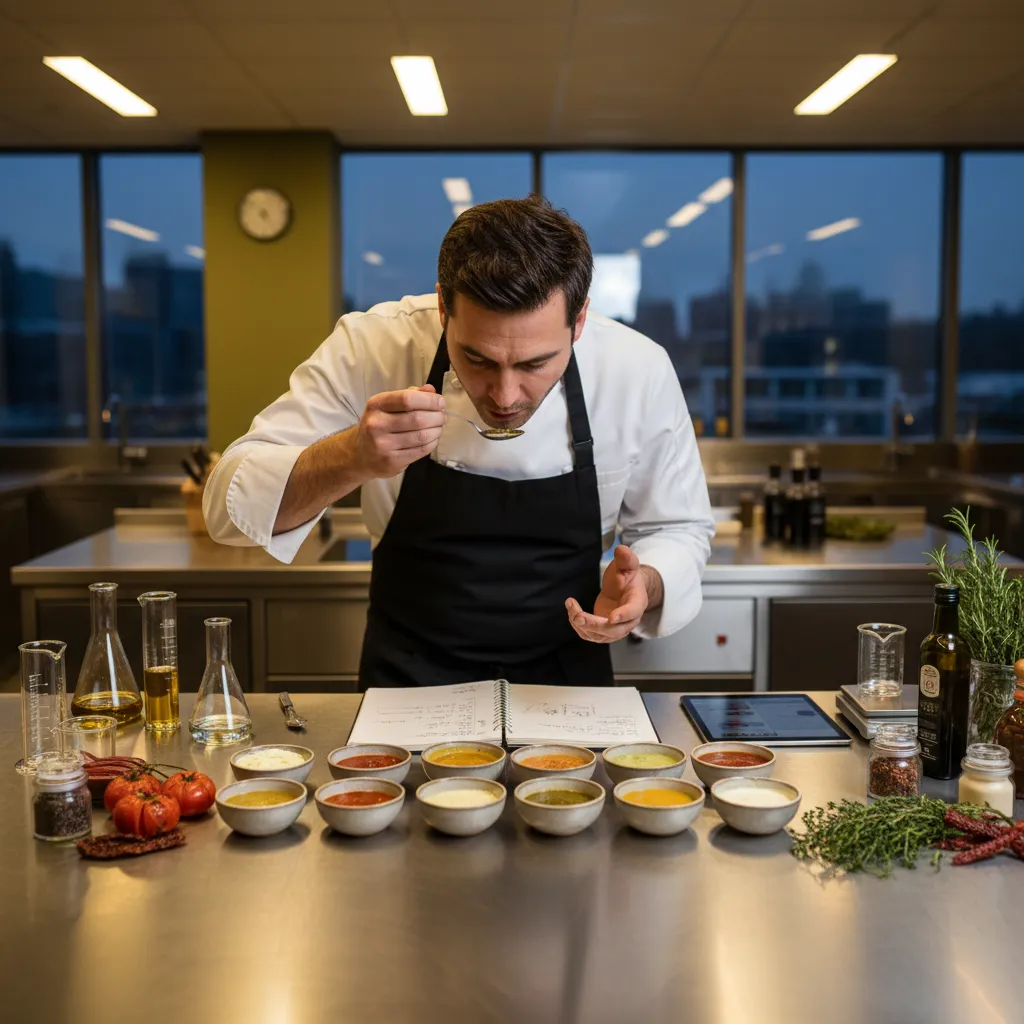
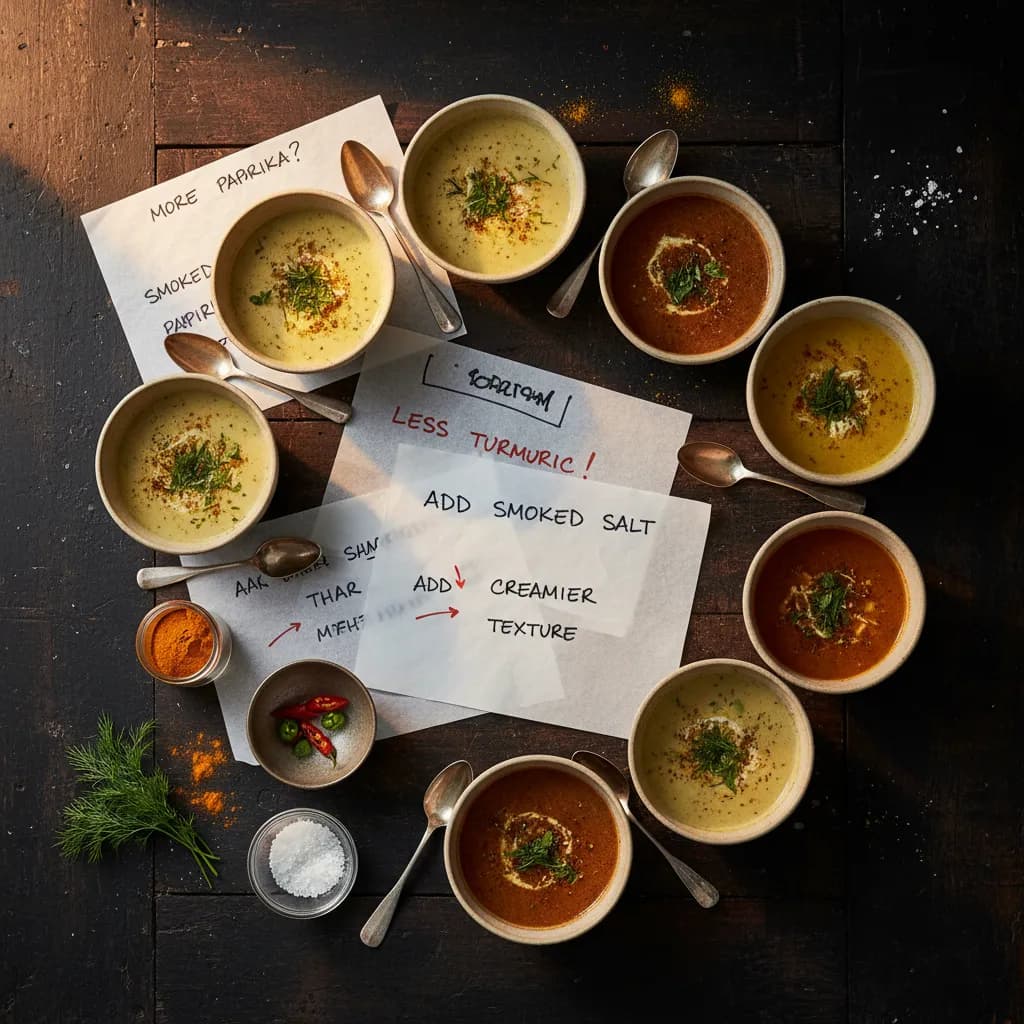
Phase 3: Iterative reformulation (Weeks 2-6). Developing and testing modifications in small batches, typically 3-8 iterations. Each iteration is evaluated against the benchmark through triangle testing (a sensory evaluation method where panelists try to identify the odd sample out of three — if they can't consistently identify the reformulated version, it's a match).
Phase 4: Production validation (Weeks 6-8). Running the reformulated formula at production scale at your co-packer to confirm it behaves as expected in commercial equipment. This is critical — reformulations that work at bench scale don't always translate perfectly.
Phase 5: Shelf life verification (Weeks 8-20). Placing the reformulated product through accelerated shelf life testing to confirm stability. The timeline here depends on your product and target shelf life.
When NOT to Reformulate
Reformulation isn't always the answer. Here are situations where I advise against it:
Chasing trends without business justification. "Keto" labels, collagen additions, adaptogenic mushroom infusions — if the trend doesn't align with your brand and your existing customers didn't ask for it, reformulating to chase a trend is a distraction. Stay focused on what you do well.
When the problem is process, not formula. If batch-to-batch inconsistency is your issue, the formula may be fine — your co-packer's process controls may need tightening. Better specifications, tighter temperature ranges, and improved quality checkpoints often solve this without changing a single ingredient.
When reformulation costs exceed the benefit. If you're spending $10,000 to reformulate a SKU that generates $30,000 in annual revenue with a 2% margin improvement, that's a 15-year payback. Do the math first.
When your customers are loyal specifically to the current formula. Changing a beloved product's recipe is risky. If you have passionate repeat customers, proceed with extreme caution. Consider launching the reformulated version as a line extension rather than replacing the original, especially initially.
If you're considering whether reformulation or a new product makes more sense, a recipe developer can help you evaluate both paths.
Managing the Transition: Reformulation Without Losing Customers
The technical reformulation is only half the challenge. Transitioning your market from the old formula to the new one requires careful planning:
Parallel production. Don't cut over to the new formula overnight. Run both versions simultaneously for a transition period, allowing you to sell through existing inventory while building stock of the reformulated product.
Customer communication (when appropriate). If the reformulation involves a change your customers would perceive as positive — "now made with all organic ingredients" or "new clean label recipe" — communicate it as an upgrade. If the change is cost-driven and the product tastes the same, there's no need to announce it. The last thing you want is customers looking for differences that don't exist.
Label compliance. Any ingredient change requires a new label with updated ingredients list and potentially new nutrition facts. Budget for label transition costs and plan for using up existing label inventory. This is often the operational bottleneck in reformulation projects.
Buyer notification. Major retail accounts typically require advance notice of formula changes, and some require a new product submission. Check your agreements and build this lead time into your transition plan.
Frequently Asked Questions
How much does recipe reformulation cost?
For a single SKU of a kettle-cooked product, expect $4,000-$12,000 for a complete reformulation engagement including benchmarking, iterative development, specification updates, and production trial support. Simple changes (swapping one ingredient) are on the lower end; complex reformulations (clean label conversion, significant COGS reduction while maintaining flavor) are on the higher end. Production trial costs ($2,000-$5,000) are typically additional.
How long does reformulation take?
From project kickoff to production-validated formula: 6-12 weeks, not including accelerated shelf life testing which adds 8-12 weeks. The timeline depends on the complexity of the changes and how many iterations are needed. Straightforward ingredient swaps can be done in 4-6 weeks; clean label conversions typically take the full 12 weeks.
Will my customers notice the change?
If the reformulation is done properly — with formal sensory benchmarking and triangle testing — your customers should not be able to distinguish the reformulated product from the original. That's the standard I hold myself to. However, flavor memory is imperfect, and some loyal customers may perceive a difference even when objective testing shows none. This is why gradual transition and (when appropriate) positive messaging around the change matter.
Can I reformulate one SKU without changing the rest of my line?
Yes, but consider the implications carefully. If your line shares a common base formula and you reformulate one SKU's base, you'll either need to reformulate the entire line or maintain two different bases — which reduces the manufacturing efficiency of having a shared base in the first place. When possible, reformulate the full line simultaneously.
Should I reformulate before or after expanding my product line?
Before, if possible. If your existing formula has known issues (high COGS, label concerns, shelf stability), fixing those before expanding means your new SKUs inherit the improved formula from the start. Expanding first and reformulating later means doing the work multiple times across more products. See our guide to hiring a recipe developer for help planning both projects together.
Need Help With Your Formulation?
Whether you're scaling your first recipe or reformulating an existing product, let's talk about how to get it right.
Book a Free Discovery Call