The Tipping Point: When DIY Recipe Development Stops Working
Most food entrepreneurs start exactly where they should: in their own kitchen, perfecting a recipe that friends and family can't stop eating. That scrappy, hands-on phase is essential. It's how you develop intuition for your product and build the conviction to turn it into a business.
But there's a moment — and I've seen it hundreds of times — where DIY recipe development becomes the bottleneck, not the advantage. You're spending weekends reformulating to hit a price point. You're guessing at water activity levels. Your co-packer trial failed for the third time and you're not sure why. You're reading FDA labeling guidelines at 2 a.m. and still aren't confident your nutrition panel is accurate.
That's the tipping point. And it's not a failure — it's a signal that your product has outgrown your current toolkit.
The founders who scale successfully aren't the ones who do everything themselves. They're the ones who recognize when a food product development consultant can collapse months of trial-and-error into weeks of focused, expert-guided work. In my experience developing 300+ commercial formulations — primarily kettle-cooked sauces, condiments, dressings, and soups — the founders who bring in help at the right time save more money than those who wait.
5 Clear Signs It's Time to Hire a Recipe Developer
1. Your Recipe Works at Home but Fails at Scale
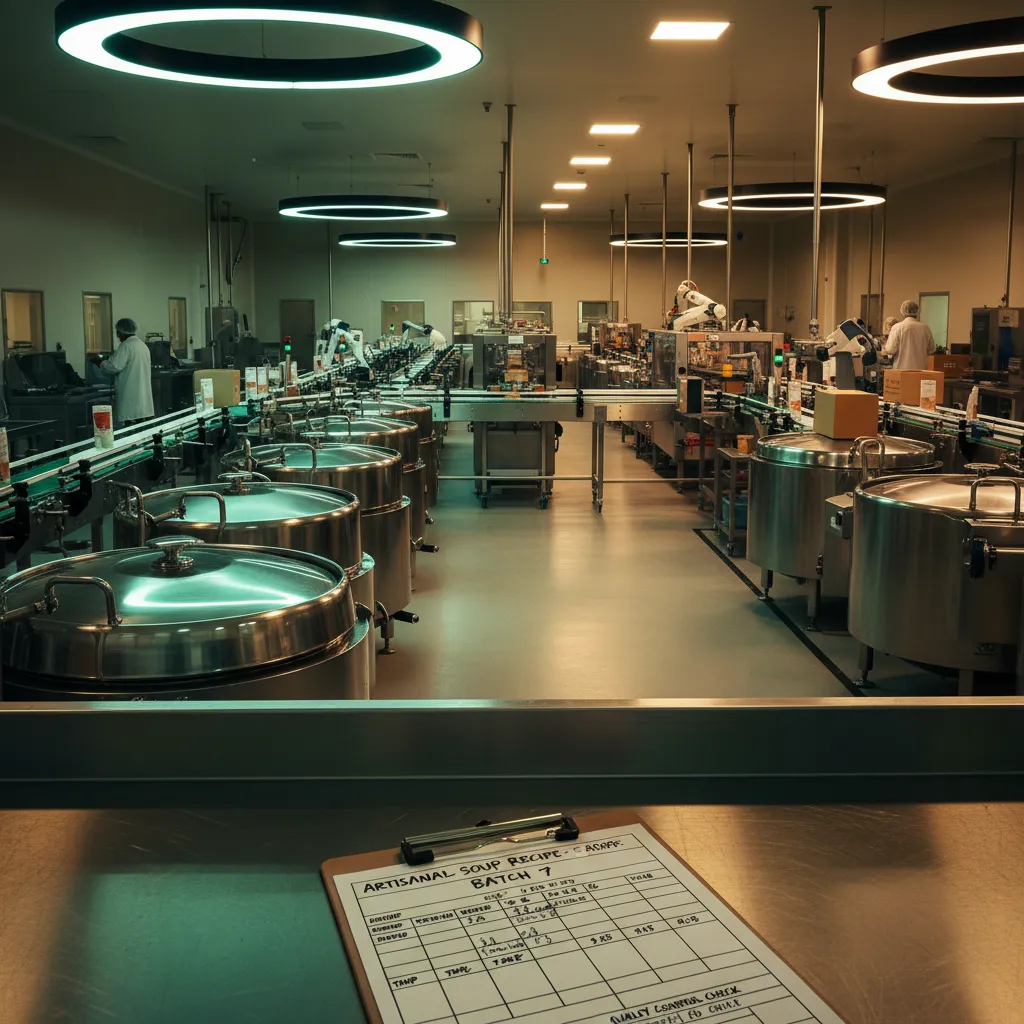
This is the most common trigger. Your hot sauce is perfect in a 2-quart batch, but when your co-packer runs it in a 200-gallon steam kettle, the flavor is flat, the consistency is off, or the color has shifted. Scaling isn't multiplication — it's reformulation. Heat transfer rates change. Cook times change. Ingredient behavior changes. A recipe developer who understands commercial equipment can bridge that gap without endless (and expensive) trial runs.
2. You Can't Get Your COGS Below a Sustainable Margin
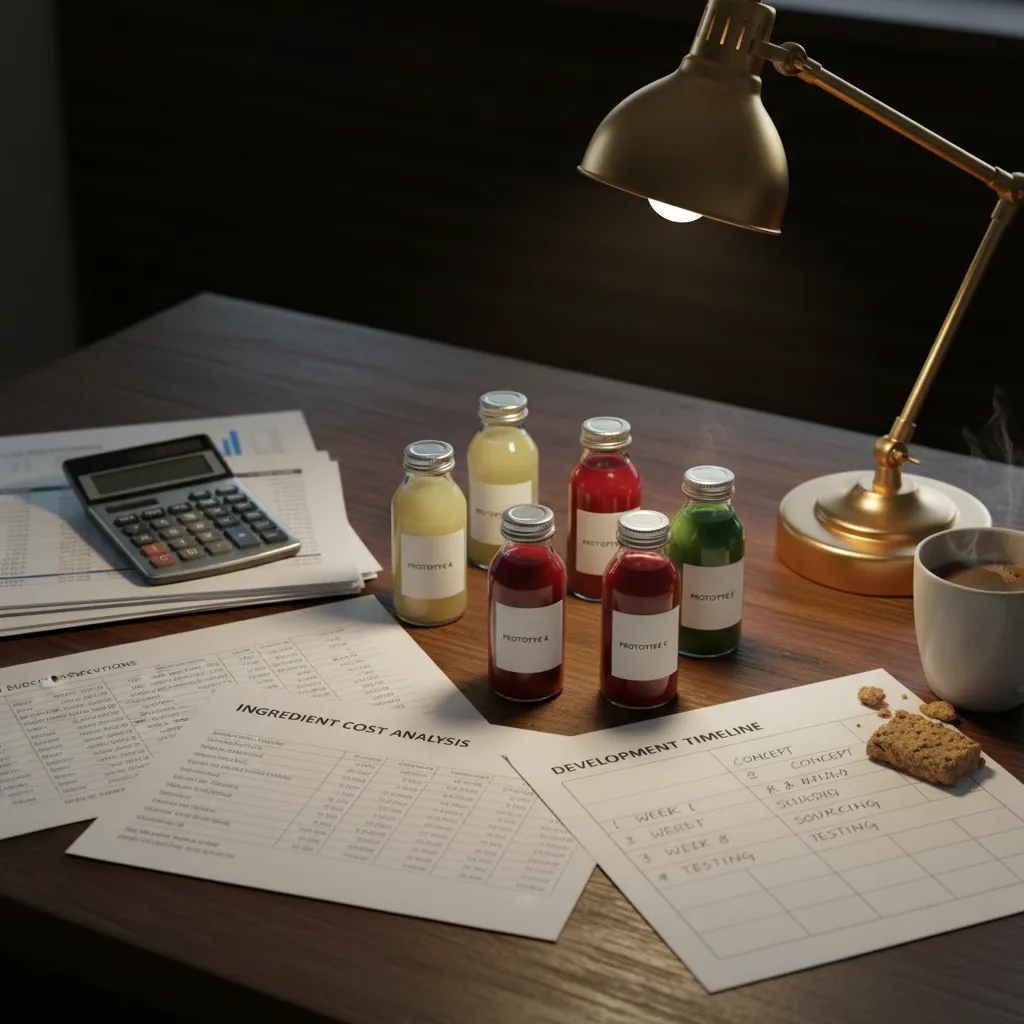
You've done the math and your ingredient costs eat up 55-65% of your wholesale price. That's not viable for retail. A skilled developer knows how to reformulate for cost without sacrificing the product's identity — swapping a high-cost ingredient for a functionally equivalent one, adjusting ratios, or finding processing techniques that reduce waste. I've helped brands cut COGS by 15-30% through reformulation alone, without any perceptible change in the finished product.
3. You Need a Nutrition Facts Panel and Process Authority Letter
Retail buyers, especially chains, require compliant labeling and documentation. If you're not sure how to get a lab-verified nutrition panel, a process authority review for your acidified or low-acid product, or allergen documentation, you need professional help. Getting these wrong doesn't just cost time — it can result in a recall.
4. Your Co-Packer Is Asking Questions You Can't Answer
When a co-packer asks for your target pH range, water activity specification, fill temperature, or thermal process schedule and you don't have answers, that's a red flag. Co-packers are manufacturing partners, not product developers. They need a production-ready formula with specifications — not a home recipe with "season to taste" in the instructions. If you're unsure what makes a recipe production-ready, start with what makes a recipe production-ready.
5. You Want to Launch a Product Line, Not Just One SKU
Expanding from one product to a full line introduces complexity that compounds fast: shared base formulas, ingredient consolidation, production scheduling efficiency, and cohesive flavor architecture. A developer can help you plan your budget and design a line that makes manufacturing sense, not just marketing sense.
What a Recipe Developer Actually Does (Beyond the Recipe)
When you hire a recipe developer, you're not just paying for a list of ingredients and instructions. Here's what a comprehensive engagement typically includes:
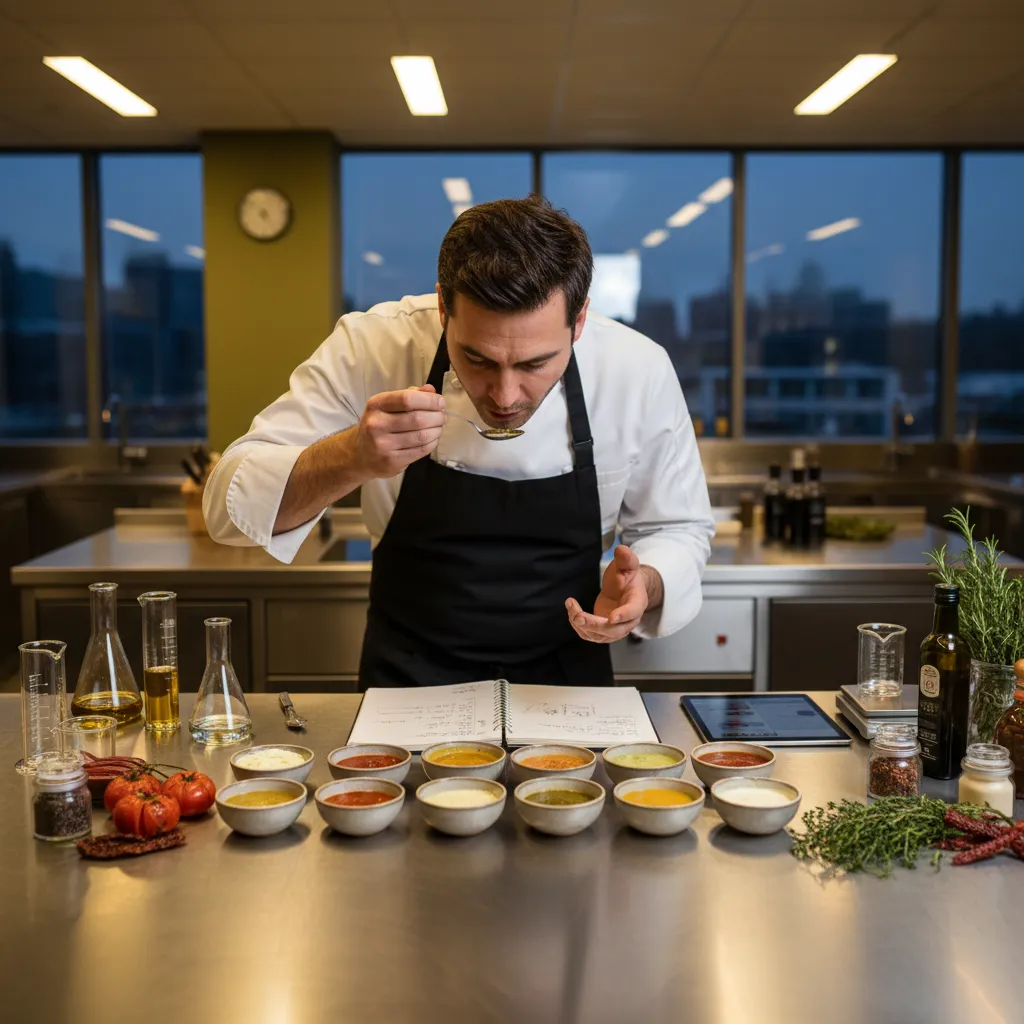
Benchmarking and discovery: Tasting your current product, understanding your brand positioning, identifying your target retail price, and evaluating your competitive landscape. I spend significant time here because a recipe without context is just a formula — it needs to serve a business strategy.
Formulation and iteration: Developing the recipe in a commercial-capable format, typically through 3-8 rounds of iteration. For kettle-cooked products like sauces and condiments, this means testing at small commercial scale (10-50 gallon batches), not just on a stovetop.
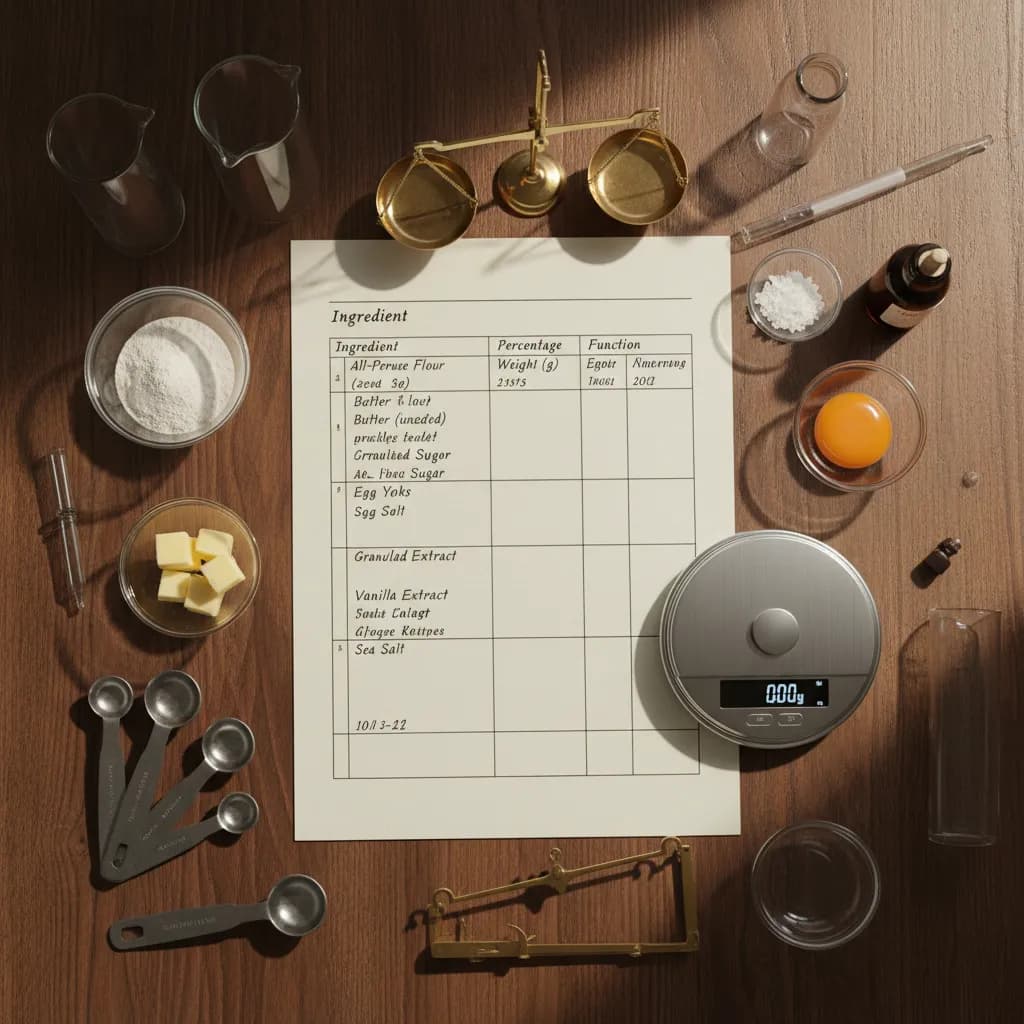
Specification documentation: Creating a complete production specification that includes ingredient percentages by weight, processing steps with time and temperature parameters, target pH and water activity, fill temperature, packaging requirements, and quality checkpoints.
Co-packer readiness: Translating your formula into the format your co-packer needs, including batch sheets scaled to their equipment. This is where many founders stumble — the recipe might be great, but if the co-packer can't execute it consistently, you'll face ongoing quality issues. For more on this relationship, see working with co-packers.
Shelf stability guidance: Recommending the appropriate preservation approach — whether that's hot-fill-hold, acidification, HPP, refrigerated with defined shelf life, or another method — based on your product's characteristics and your distribution model.
How to Choose the Right Food Product Development Consultant
Not all recipe developers are interchangeable. The food industry is broad, and someone who specializes in baked goods or frozen meals may not be the right fit for a kettle-cooked condiment. Here's what to look for:
Category experience: Ask specifically about products similar to yours. How many hot sauces, BBQ sauces, dressings, or soups have they developed? Do they understand the specific challenges of your product type — emulsion stability for dressings, Maillard reaction management for cooked sauces, particulate distribution in chunky salsas?
Commercial manufacturing knowledge: A consultant who only works in test kitchens may deliver a recipe that's delicious but impossible to manufacture efficiently. You need someone who has stood on a production floor and watched their formulas run through filling lines.
Co-packer relationships: Experienced developers have networks of co-packers and can recommend facilities that match your product type, volume, and budget. This matchmaking alone can save you months of searching.
Clean label fluency: If your brand values clean, recognizable ingredients, your developer needs to achieve functionality without relying on conventional shortcuts like modified food starches, artificial preservatives, or synthetic colors. This is a specialized skill — not every formulator can do it well.
Communication style: You should understand what your developer is doing and why. If they can't explain their formulation decisions in plain language, that's a problem. This is your product and your brand — you need to be an informed partner in the process.
What to Expect: Timeline, Process, and Deliverables
A typical engagement for a single SKU — from discovery through production-ready formula — takes 6-12 weeks. Here's a realistic breakdown:
Weeks 1-2: Discovery and benchmarking. Tasting sessions, competitive analysis, target specification development, and ingredient sourcing research.
Weeks 3-6: Formulation and iteration. Initial prototype development followed by 3-8 rounds of refinement. Each round typically involves producing a small batch, evaluating it against your specifications, and adjusting. For shelf-stable products, there's often a waiting period for accelerated shelf life testing.
Weeks 7-10: Specification and documentation. Creating the full production specification, nutrition facts panel (usually requiring a lab submission with 2-3 week turnaround), allergen documentation, and co-packer batch sheets.
Weeks 10-12: Co-packer trial support. Attending or supporting the first production run to ensure the formula translates correctly to the co-packer's equipment.
For a deeper look at costs, read budgeting for food product development.
Frequently Asked Questions
How much does it cost to hire a recipe developer?
For a single SKU of a kettle-cooked product (sauce, condiment, dressing), expect to invest $5,000-$15,000 for a comprehensive engagement that includes formulation, iteration, specification documentation, and co-packer trial support. Simpler products with fewer iterations fall on the lower end; complex emulsions, clean-label reformulations, or products requiring process authority review fall on the higher end. Some developers charge hourly ($150-$300/hr), while others work on project-based fees.
Can't I just give my home recipe to a co-packer and have them figure it out?
You can try, but most co-packers are not set up to do product development. They're manufacturers. Handing them a home recipe and asking them to "make it work" typically results in a product that doesn't taste like yours, multiple failed trial runs at $2,000-$5,000 each, and frustration on both sides. It's almost always cheaper to invest in proper development upfront. Learn more about what makes a recipe production-ready.
Do I lose ownership of my recipe if I hire a developer?
This depends entirely on the contract. Always ensure your agreement includes full IP transfer of the finished formula. Reputable developers expect this — the recipe is yours. You're paying for their expertise in creating it, not licensing it. Review the IP clause before signing and ensure it covers the formula, process specifications, and any derivative formulations.
What's the difference between a recipe developer and a food scientist?
There's significant overlap, but generally: a food scientist focuses on the technical aspects — shelf stability, food safety, regulatory compliance, and process optimization. A recipe developer focuses on flavor, texture, ingredient selection, and creating a product that consumers love. The best consultants for CPG brands combine both skill sets, because a product that's technically perfect but doesn't taste great won't sell, and a delicious product that isn't shelf-stable can't ship.
Should I hire a recipe developer before or after finding a co-packer?
Before, in most cases. A good developer will formulate with manufacturability in mind and can help you identify the right type of co-packer for your product. If you find a co-packer first and then develop the recipe, you may end up constrained by their specific equipment capabilities. That said, if you already have a co-packer relationship, bring your developer into the conversation early so they can formulate for that facility's equipment.
Need Help With Your Formulation?
Whether you're scaling your first recipe or reformulating an existing product, let's talk about how to get it right.
Book a Free Discovery Call