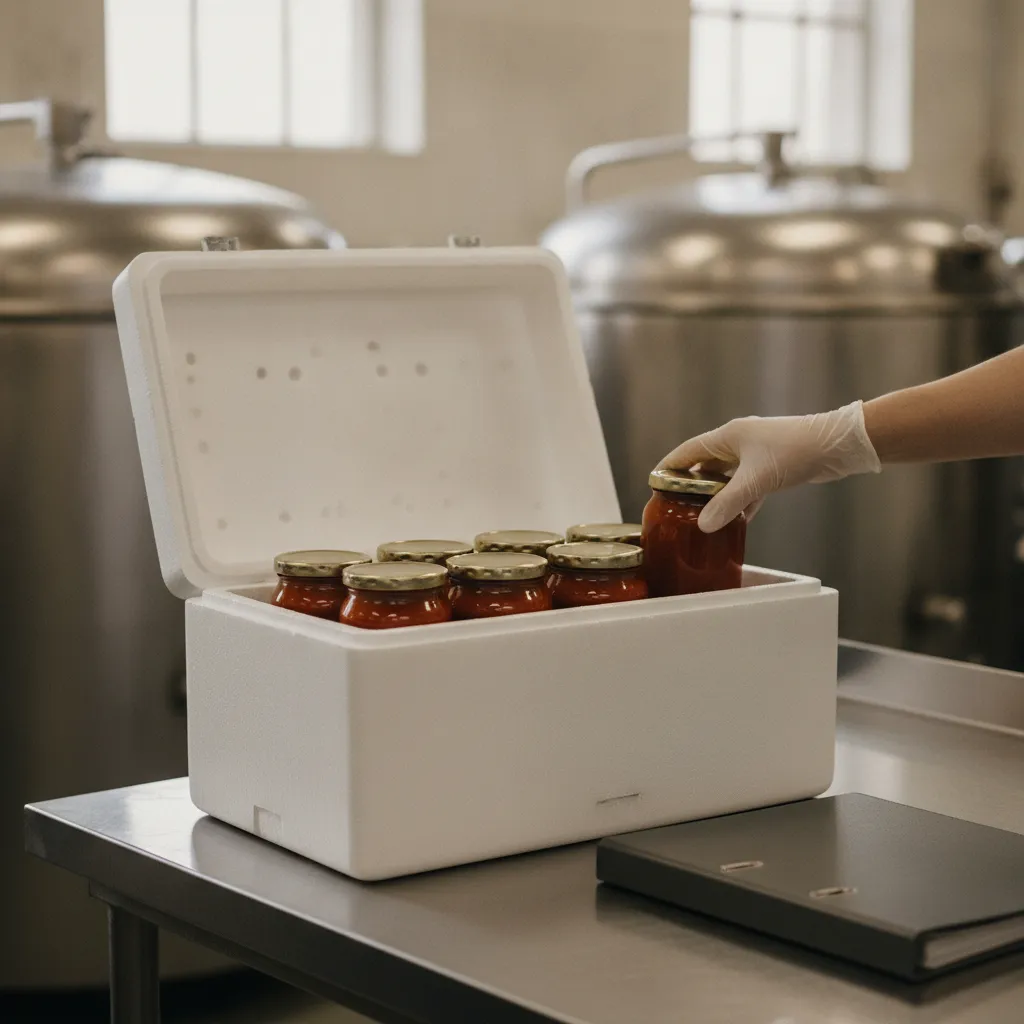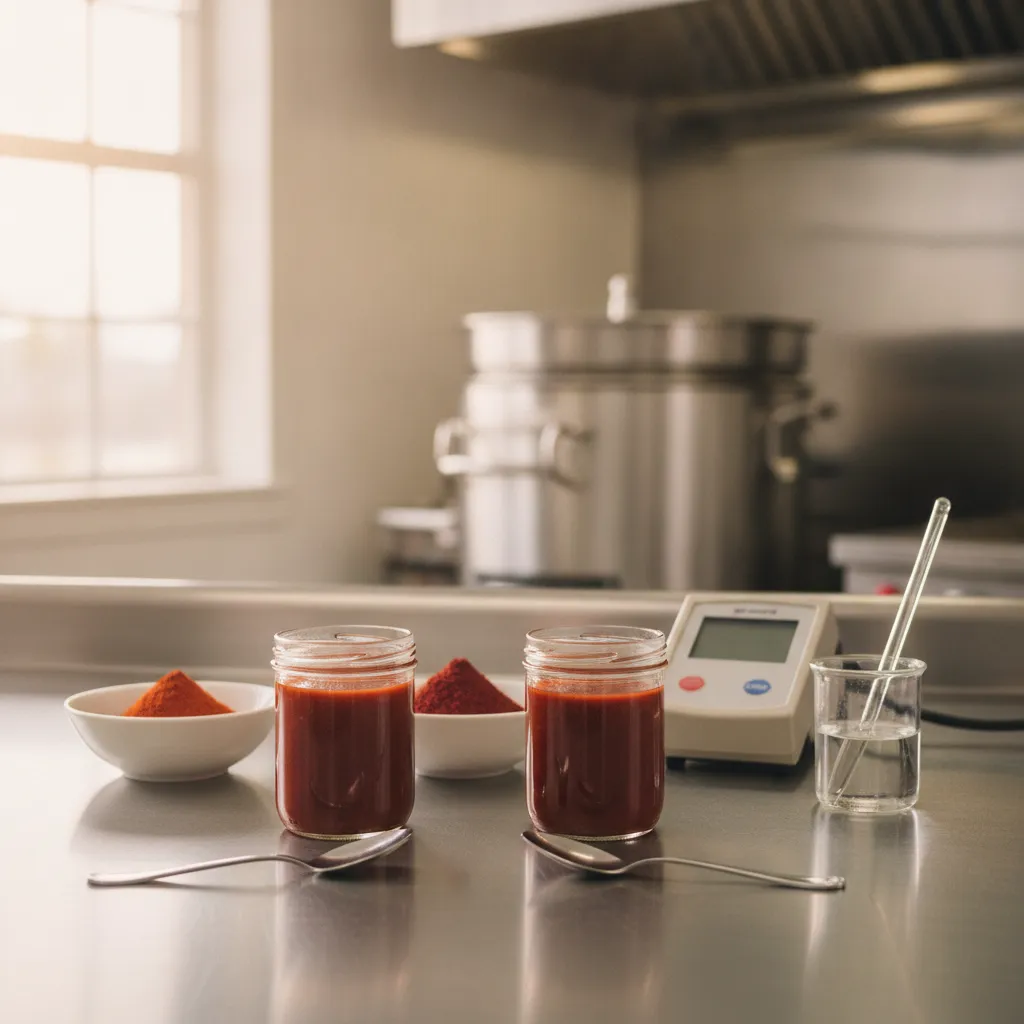
Moving a product from one plant to another has a finish line. The new plant passes its trial, the bridge inventory sells through, the old plant ships its last case, and the move is done. Adding a second co-packer has no finish line. Both plants keep making your product, run after run, on their own kettles and fillers, with their own ingredient lots and their own crews, and the job is keeping them matched for as long as the arrangement lasts.
Getting the second plant started works the same way as a full move: what to send and when, the NDA, the process authority question, the transfer package, and the side-by-side trial. I walk through those steps in switching co-packers without changing the taste, and I will not repeat them here. This article picks up where that one stops, with the ongoing work of one product, two plants, and one taste.
My part is the product. I do not choose the second plant, make the introduction, or negotiate either agreement; how to find a plant that fits is covered in how to find and vet a co-packer. What I do is make sure your spec can be run in two places, and help both plants land on the same gold standard.
Why the Second Plant Is There Shapes the Formula Work
Brands usually add a second co-packer for one of three reasons, and each one asks something different of the formula.
- Capacity. Demand outgrew the first plant's schedule. Both plants likely run the same products, so the matching work is at its heaviest.
- Geography. A plant closer to a region shortens freight and transit. Each plant may mostly serve its own region, but online orders and national accounts can still put both plants' product in the same kitchen.
- Risk. A fire, a flood, or a long equipment outage at a single plant can empty your shelves. A second qualified plant is insurance, and it may run only a slice of your volume in small, irregular runs. That makes matching harder, not easier, because the crew sees your product less often.
Whatever the reason, adding a plant is a business decision, not a judgment on the first one. Tell your current plant early and plainly, and tell them why. A plant that hears about a second facility secondhand has fair reason to wonder what else it has not been told. Before you approach anyone, read your current agreement with your attorney. Some co-packing agreements include exclusivity or volume commitments, and that is a legal question, not a formula one.
One Master Spec, Two Sets of Plant Notes
The structure that keeps two plants matched is simple to describe. There is one master spec, and you own it. It holds the formula by weight, the ingredient specs, the finished product targets and ranges, how each number is measured, and the gold standard. Neither plant has its own version of the formula.
Underneath the master spec, each plant keeps its own process notes for its own equipment: how their kettle reaches each checkpoint, their agitator settings, their fill line setup. Those notes can and should differ, because the equipment differs. What they cannot do is change a target. If plant two needs a longer cook to reach the Brix target (the sugar and dissolved solids reading) on its kettle, that goes in plant two's notes. If plant two wants a different Brix target, that is a change to the master spec, and it goes to both plants or to neither.
This is how a two-plant brand can end up with two products without anyone deciding to. A small adjustment gets approved at one plant to solve a local problem and never reaches the other. Then another. A year later the plants are running different formulas under one label, and the ingredient statement on that label has to be true for every jar, whichever plant filled it. Version numbers and a change log prevent this, as long as every approved change carries a note on what it means at each plant. I cover the mechanics in formula change control.
Where Two Plants Drift Apart
Even with one master spec, two plants will not make identical product without attention. Knowing where differences come from tells you where to look first.
Heat and evaporation
Kettles differ in size, jacket design, and steam supply. One heats faster, one holds heat longer after the cook, one loses more water to evaporation. That moves Brix, viscosity, color, and the aromatic top notes that are first to cook off. Quality checkpoints written as targets (reduce to a Brix, cook to a color) rather than fixed times let each plant get there on its own equipment. The safety steps in each plant's scheduled process are different: those are set with the process authority and followed as written.
Shear and handling
Pumps, agitators, mills, and fill heads all work the product differently. If your body comes from a starch or a gum, how it holds depends partly on how each line treats it. A plant with harder-working pumps or a longer hold can thin a texture that holds up fine at the other plant, and particulates can break down more on one line than the other.
Fill and cool
Fill temperature, how long product waits in a hopper, and how fast filled jars cool all touch color and flavor. A jar that cools slowly keeps cooking, so two plants with different cooling setups can turn the same formula into slightly different sauces.
Ingredients
Each plant has its own purchasing team and its own suppliers. Two plants buying "tomato paste" or "chili powder" to the same written spec can still bring in materials that taste different, especially crops that vary by season and growing region. For the ingredients that define your product, the most reliable approach is usually a shared approved supplier, or supplying those ingredients to both plants yourself. Where the plants do need different sources, qualify each one against the gold standard, the same way you would qualify a backup supplier. I go through that in qualifying an approved alternate ingredient.
Ingredient minimums get harder, too. Say a specialty ingredient comes by the pallet, and your one plant used to work through a pallet in a few months. Split that volume evenly across two plants and each now holds its own stock, so each pallet takes roughly twice as long to use. Check that the ingredient's own shelf life outlasts that, and work out with the vendor and both plants who can store what. In some formulas, oleoresins (concentrated spice extracts, such as paprika oleoresin) hold flavor, heat, and color more steadily than ground spices, which can also make it easier for two plants to land on the same heat and color. That is a formula change, though, so it goes through change control and reaches both plants together.
Measurement
This one hides in plain sight. If one plant calibrates its pH meter every shift and the other once a week, or they read viscosity at different temperatures or on different instruments, their numbers can disagree when the product does not, or agree when it does not. The master spec should say how each number is measured: the method, the temperature, and how long after fill. Now and then, have both plants measure jars from the same lot and compare the readings, to see whether their instruments still agree.
Match Both Plants to the Gold Standard, Not to Each Other
The tempting shortcut is to tune the second plant until its product matches the first plant's. Resist it. If plant two matches plant one, and plant one has drifted a little, you now have two plants matched to a drifted product. Match both plants to the gold standard: the physical reference you set on purpose, store under controlled conditions, and judge at the two-week mark.
The two-week mark matters more with two plants, not less. Two plants' products can taste further apart on day one than at week two, or the reverse, so let each batch settle and make your call at week two. The routine for setting a gold standard and keeping it honest as it ages is in gold standard and retained samples.
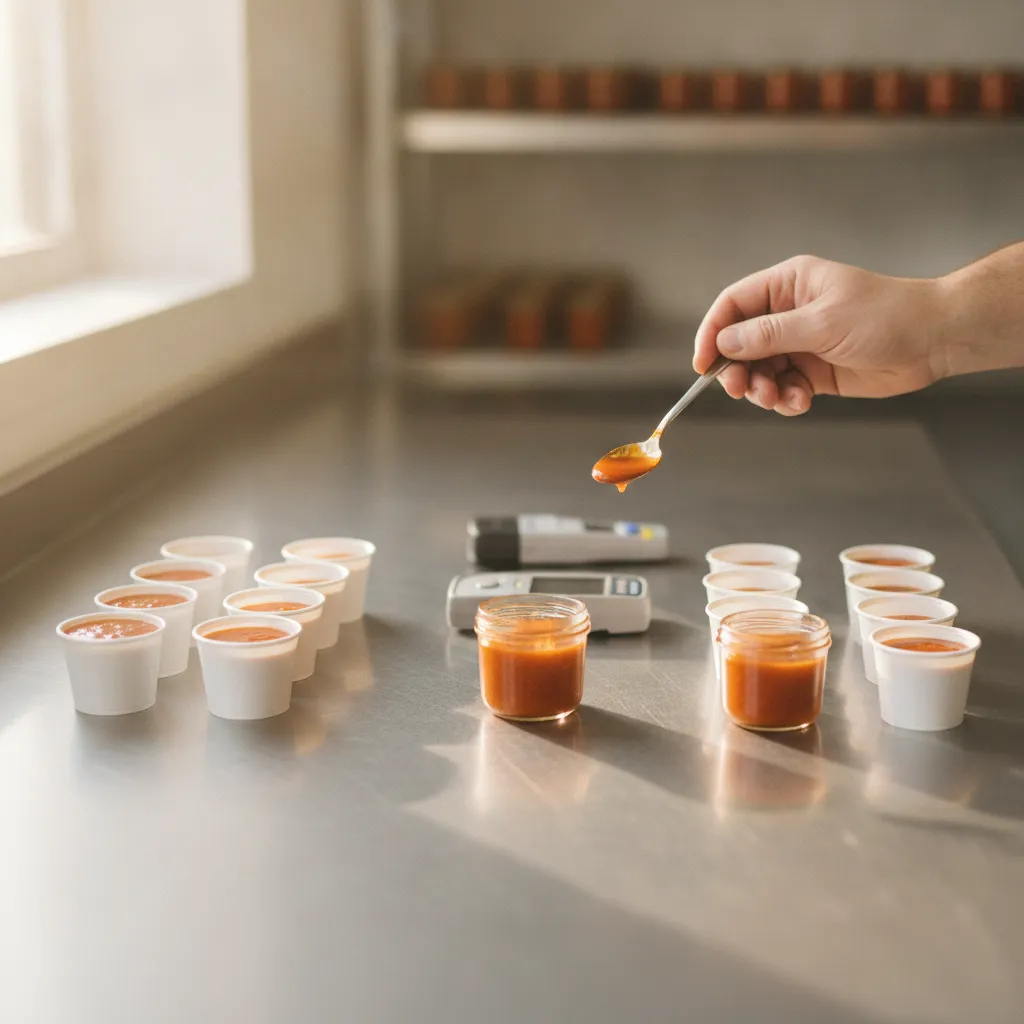
For the regular comparison, put three things on the bench together: the gold standard, the latest lot from plant one, and the latest lot from plant two. Code the cups so nobody tasting knows which plant made what. It keeps the session about the product, not about the plants.
A Sample From Every Batch, at Both Plants
Quality control is each plant's job, and each plant's team runs its own. Your part is asking for a sample from every batch, from both plants, and testing those samples yourself against the gold standard. With two plants, that habit does more than catch a bad batch. It shows you how the two plants compare over time.
Log every sample by plant, lot code, and date, with the numbers you measured and a short sensory note. Make sure your lot codes say which plant made each lot, so any question can be traced to the right line without guesswork. After a few months, the log answers questions no single batch can:
- Does one plant sit on one side of a range? Two plants can pass every batch while one runs at the thick end of your viscosity range and the other at the thin end. A customer who buys from both may notice, even though nothing failed. The fix is usually asking both plants to aim for the target rather than anywhere inside the range, and sometimes narrowing the range.
- Does a gap open up with the seasons, or when one plant changes an ingredient lot or supplier?
- Does one plant's product change more between day one and week two?
If your release criteria only say pass or fail, two plants can pass all year and still taste different. I cover targets, ranges, and what decides whether a batch ships in the finished product spec as release criteria.
Keeping Both Relationships Healthy
Two plants making the same product can start to feel like rivals. They do not have to, and how you share information decides a lot of it. Each plant will reasonably optimize for its own line; the master spec is what protects the product across both.
- Share findings as product notes, not scorecards. "The last three lots read at the thin end of the range; can we look at the hold?" lands far better than a comparison with the other plant.
- Treat each plant's equipment notes with care. How a crew runs your product on their line includes their own know-how. Ask before passing one plant's settings to the other.
- Let each plant own its quality control. Your samples are a check against the gold standard, not a second QC department. When your numbers disagree with theirs, compare methods before anything else.
- Send formula questions through one place. When either plant asks about the formula or proposes a substitution, the answer comes from whoever owns the master spec, so both plants hear the same thing.
- Be predictable. How you split volume between plants is a business decision, but sudden swings make both plants' planning harder.
Questions Brands Ask About Running Two Plants
Should both plants run every product?
Not necessarily. Some brands split their products between plants, so each one comes from a single place, which removes the matching work for those products. Others need both plants on the same core product for capacity or risk. Which split makes sense is a business decision. The formula point is that every product made at both plants needs its own matching routine.
Which plant's product is the gold standard?
Neither plant's current output. The reference usually starts from a lot of the product customers already know, which usually means a lot from the first plant. Once it is set, it belongs to the brand, and plant one is checked against it exactly like plant two.
Does a second plant affect my label?
It can. Beyond keeping one formula so the ingredient statement stays true, the plants may handle different allergens, which changes the cross-contact picture, and some certifications cover the facility as well as the product. Check both with each plant's food safety team, your certifier, and your regulatory counsel before the second plant's first run.
Can the second plant use its own suppliers?
For commodity ingredients, often yes, as long as each source meets the written spec and holds up against the gold standard. For the ingredients that make your product yours, I would rather see a shared approved supplier or stock you supply to both plants, so the hero ingredient is the same in every jar.
Closing a Gap Without Splitting the Formula
The structure here (one master spec, plant notes underneath it, both plants matched to one gold standard, a sample from every batch) works for most sauces, dips, dressings, and soups. The fine-tuning is product by product. Reading two plants' batch logs and deciding whether a gap comes from the formula, an ingredient lot, or the equipment, then working with each plant on process notes that close it without splitting the formula in two, depends on your product's chemistry and on both lines. That is the part I work through with brands, with real data from both plants on the table. Done well, the second plant gives you what you added it for, whether that is capacity, a shorter route to your customers, or a safety net, and your customers taste one product.
Need Help With Your Formulation?
Whether you're scaling your first recipe or reformulating an existing product, let's talk about how to get it right.
Book a Free Discovery Call