Why Most Founders Underestimate Product Development Costs
I've had hundreds of conversations with food entrepreneurs about their development budgets. Almost without exception, they underestimate the true cost of food product development by 40-60%. Not because they're careless, but because the visible costs — hiring a developer, buying ingredients — represent only a fraction of the total investment.
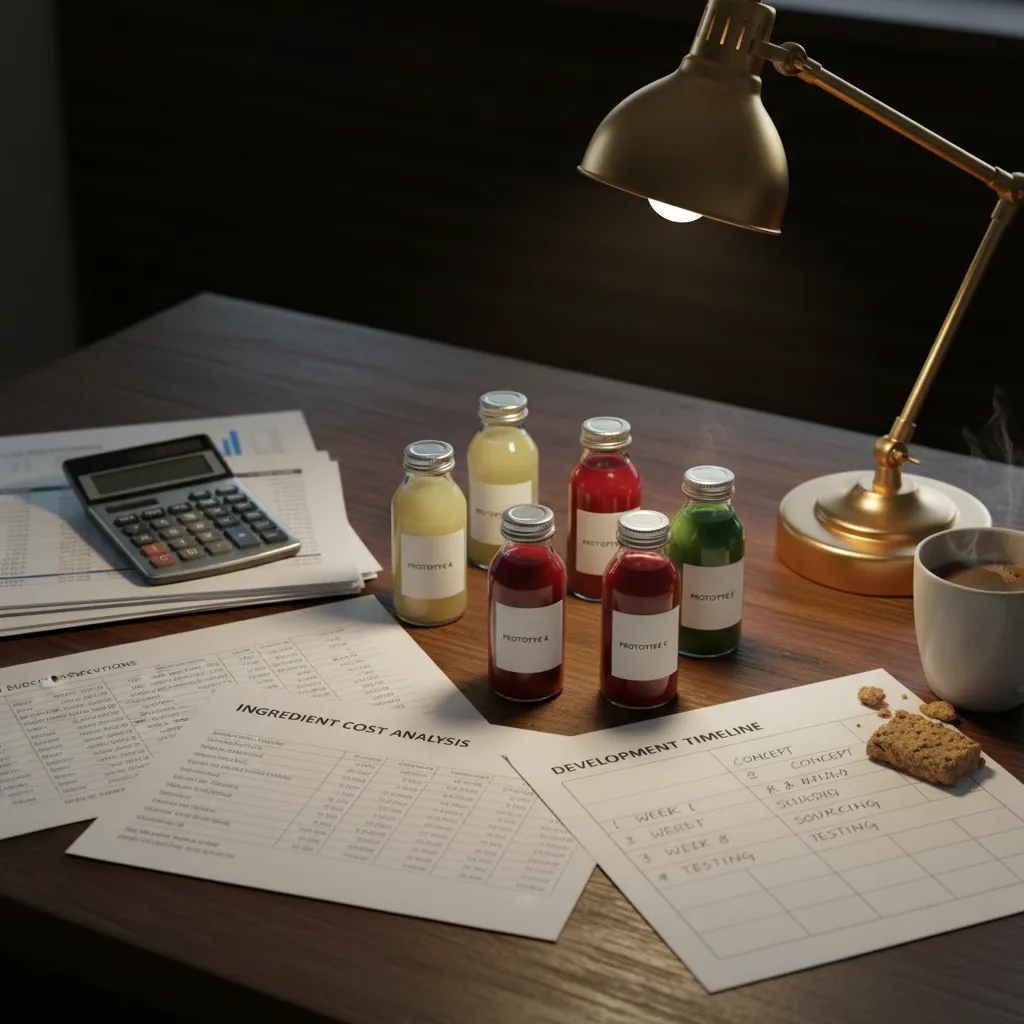
The real cost includes formulation and iteration, lab testing, regulatory compliance, packaging design and proofing, production trials, shelf life testing, and the time cost of managing the entire process. When I help a founder map out a realistic budget for bringing a kettle-cooked product from concept to retail-ready, the number is almost always higher than they expected. But it's also almost always lower than what they'd spend fumbling through the process without a roadmap.
This article lays out the real numbers — what each phase actually costs, where the hidden expenses live, and how to budget effectively so you don't run out of resources before your product hits the shelf.
Phase-by-Phase Cost Breakdown
Phase 1: Recipe Development and Formulation ($5,000-$15,000)
This is the foundation. A professional recipe development engagement for a single SKU of a kettle-cooked product (sauce, condiment, dressing, soup) typically includes:
Discovery and benchmarking ($1,000-$2,500): Tasting your existing recipe (if you have one), analyzing competitor products, understanding your target price point, and defining the specification your product needs to meet. This phase sets the direction for everything that follows.
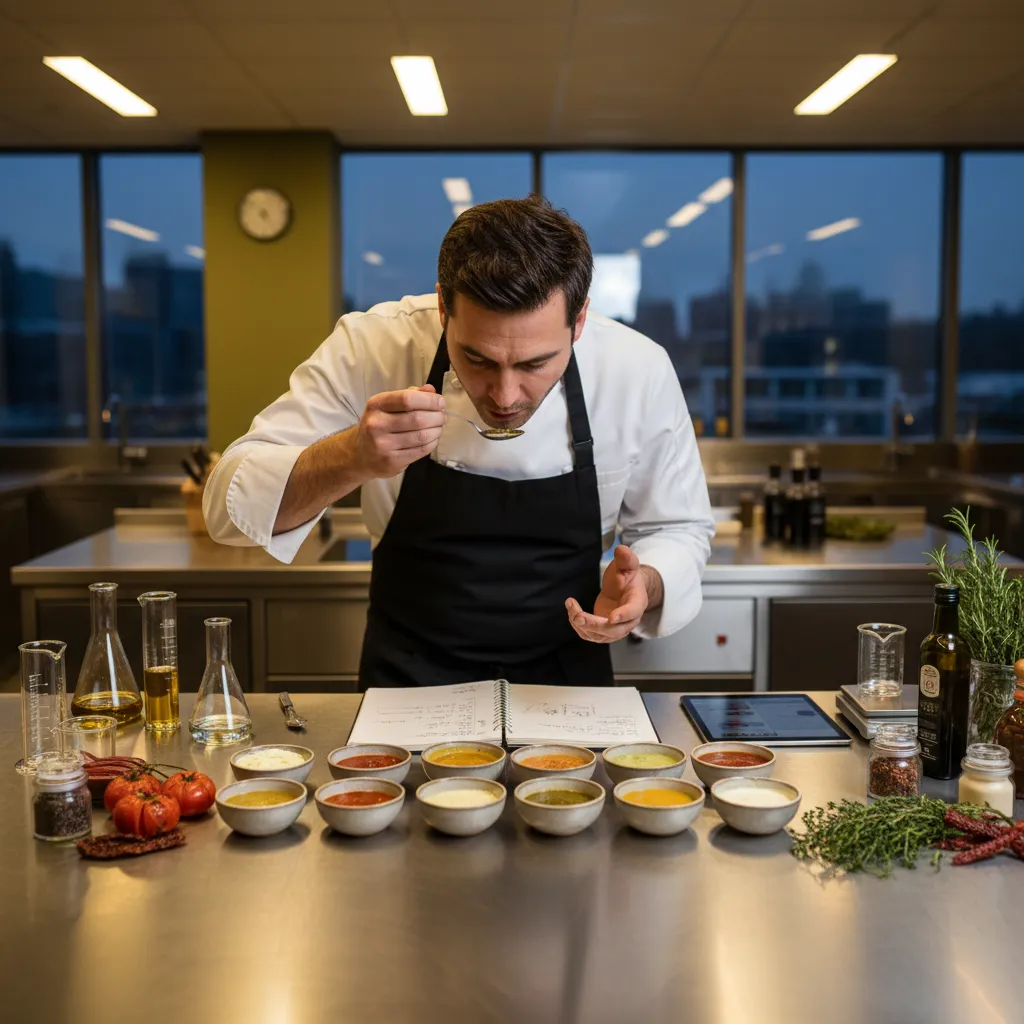
Formulation and iteration ($2,500-$8,000): This is where the bulk of the creative and technical work happens. Expect 3-8 rounds of iteration, each involving small-batch production, evaluation, and adjustment. The range is wide because some products nail the formula in 3 rounds (simple vinegar-based hot sauces, for example) while others take 8+ (complex emulsified dressings, cream-based sauces with clean labels). Ingredient costs for prototyping typically run $200-$500 across all iterations.
Specification documentation ($1,500-$3,000): The complete production specification package — formula in weight percentages, processing parameters, quality checkpoints, and co-packer batch sheets. This document is what makes your recipe production-ready. Skimping here is the most expensive mistake you can make because it leads to failed trial runs downstream.
To understand what goes into a production specification, read when to hire a recipe developer.
Phase 2: Lab Testing and Regulatory Compliance ($1,500-$5,000)
Nutrition facts panel ($300-$800 per SKU): A lab-verified nutrition panel based on your actual formula. You'll send a sample to an accredited lab (Medallion Labs, Covance, Merieux NutriSciences) and receive results in 2-3 weeks. Don't use database-calculated panels for retail — they're not accurate enough and buyers may question them.
Process authority review ($500-$2,000): Required for shelf-stable acidified and low-acid products. A process authority evaluates your formula and prescribes a thermal process to ensure food safety. This includes pH testing, potentially water activity testing, and documentation that your co-packer and any auditor will need.
Shelf life testing ($500-$2,000): Accelerated shelf life studies expose your product to elevated temperatures to simulate aging. A basic study includes evaluations at multiple timepoints over 8-12 weeks. More comprehensive studies include microbial testing at each checkpoint.
Allergen testing ($200-$500 per allergen): If your product makes allergen-free claims ("gluten-free," "dairy-free"), you need lab verification. ELISA testing for specific allergens costs $200-$500 per test.
Phase 3: Packaging Design and Production ($3,000-$10,000)
Packaging is where many budgets get ambushed because founders think of it as "just a label."
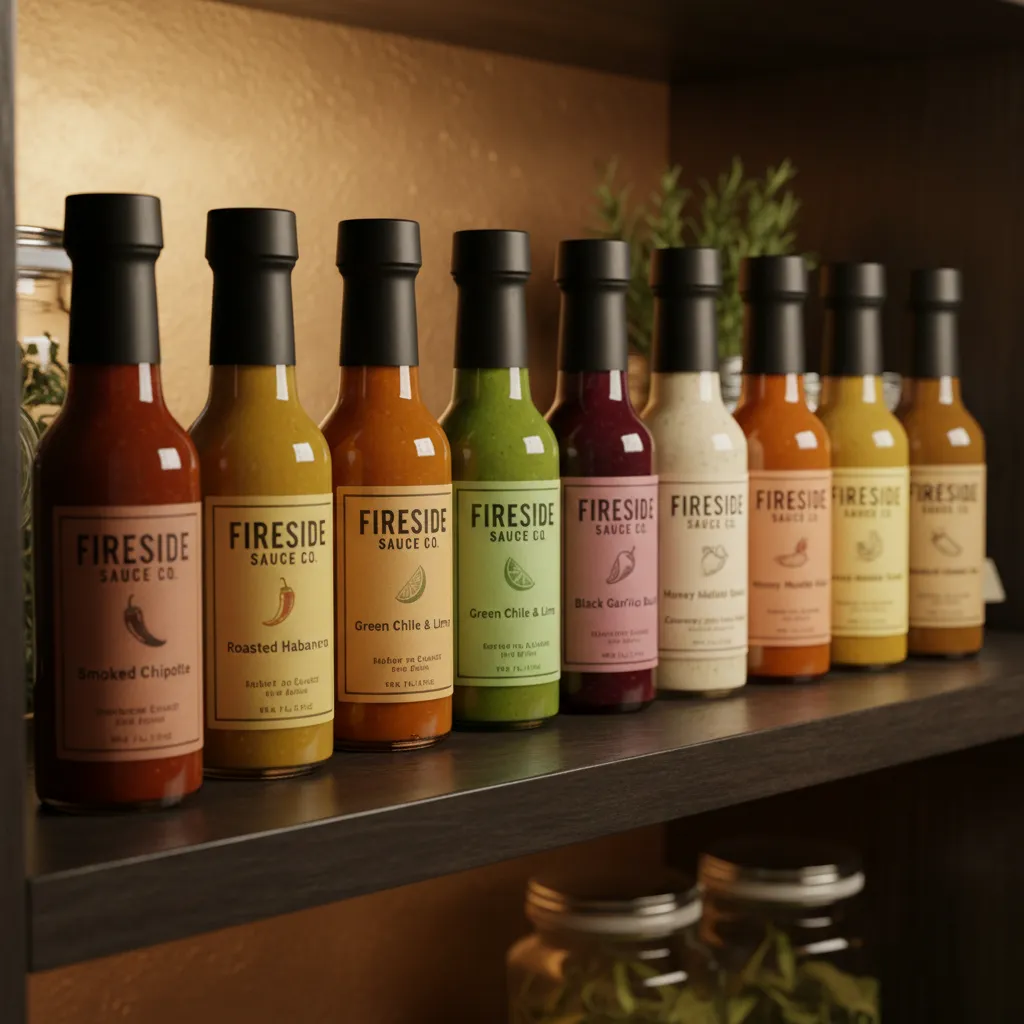
Label design ($1,500-$5,000): Professional design for a retail-ready label, including front panel, back panel with nutrition facts and ingredient statement, UPC barcode, and any required regulatory elements. This should be done by a designer who understands FDA labeling requirements, not just someone who makes things look pretty.
Label printing ($500-$2,000 for initial run): Minimum print runs vary by printer and label type. Pressure-sensitive labels for bottles typically have minimums of 1,000-5,000 labels. Digital printing has lower minimums but higher per-unit cost. Budget for at least 2 rounds of proofing before final print.
Packaging materials ($1,000-$3,000 for initial order): Bottles, jars, caps, shrink bands, case boxes. Packaging suppliers have minimum order quantities — typically 1,000-5,000 units for glass, sometimes higher for custom shapes. Your first order will likely cost more per unit because you're buying at the minimum.
Phase 4: Production Trials ($2,000-$8,000)
A production trial (also called a test run or pilot run) is your first time manufacturing at your co-packer's facility with your actual formula. This is not the same as a production run — it's a test to verify your formula works at scale.
Trial run fee ($1,000-$3,000): Most co-packers charge a minimum fee for trial runs that covers their labor, equipment time, and overhead. Some credit this fee against your first production run.
Ingredient costs ($500-$2,000): You'll typically need to supply or pay for the ingredients for your trial batch, which is usually their minimum batch size.
Packaging for trial ($500-$1,500): You need packaging on hand for the trial run — bottles, caps, labels. Even if you can't fill your entire minimum packaging order, you need enough for the trial output.
Budget for 1-2 trial runs if you have a properly developed production formula, or 3-5 if you're going in with a less refined recipe. At $2,000-$5,000 per trial, this is where inadequate upfront formulation becomes very expensive.
Phase 5: First Production Run ($5,000-$20,000)
Your first real production run — the one that produces sellable product — has its own cost profile:
Production costs ($3,000-$10,000): Co-packer fees based on their minimum batch size and your product's complexity. A simple hot sauce in a standard bottle might run $3,000 for a minimum run. A complex emulsified dressing in a specialty container could be $10,000+.
Ingredients ($1,500-$5,000): Raw ingredient costs for your first batch. Scaled to minimum production quantities.
Packaging ($1,000-$5,000): Enough packaging materials for your full production run. Remember — you'll often need to order more packaging than you need for one run due to supplier minimums.
The Hidden Costs Nobody Tells You About
Beyond the line items above, several costs consistently surprise first-time founders:
Freight and logistics ($500-$2,000): Getting ingredients to your co-packer, getting finished product to your warehouse or distribution center. LTL (less than truckload) freight for a pallet of product can run $200-$500 depending on distance.
Insurance ($500-$2,000/year): Product liability insurance is required by most retailers and co-packers. Expect $500-$2,000 annually depending on your product type and projected revenue.
UPC/barcode registration ($250-$750): GS1 US membership and barcode registration. The annual fee depends on your company size and number of products.
Business licensing and registration ($200-$1,000): State food manufacturing licenses, business registration, FDA facility registration (free but required), and potentially state-level certifications.
Samples and trade spend ($500-$2,000): Buyer samples, demo product, trade show costs, and retailer slotting fees. Getting your product on shelves requires investment beyond just making it.
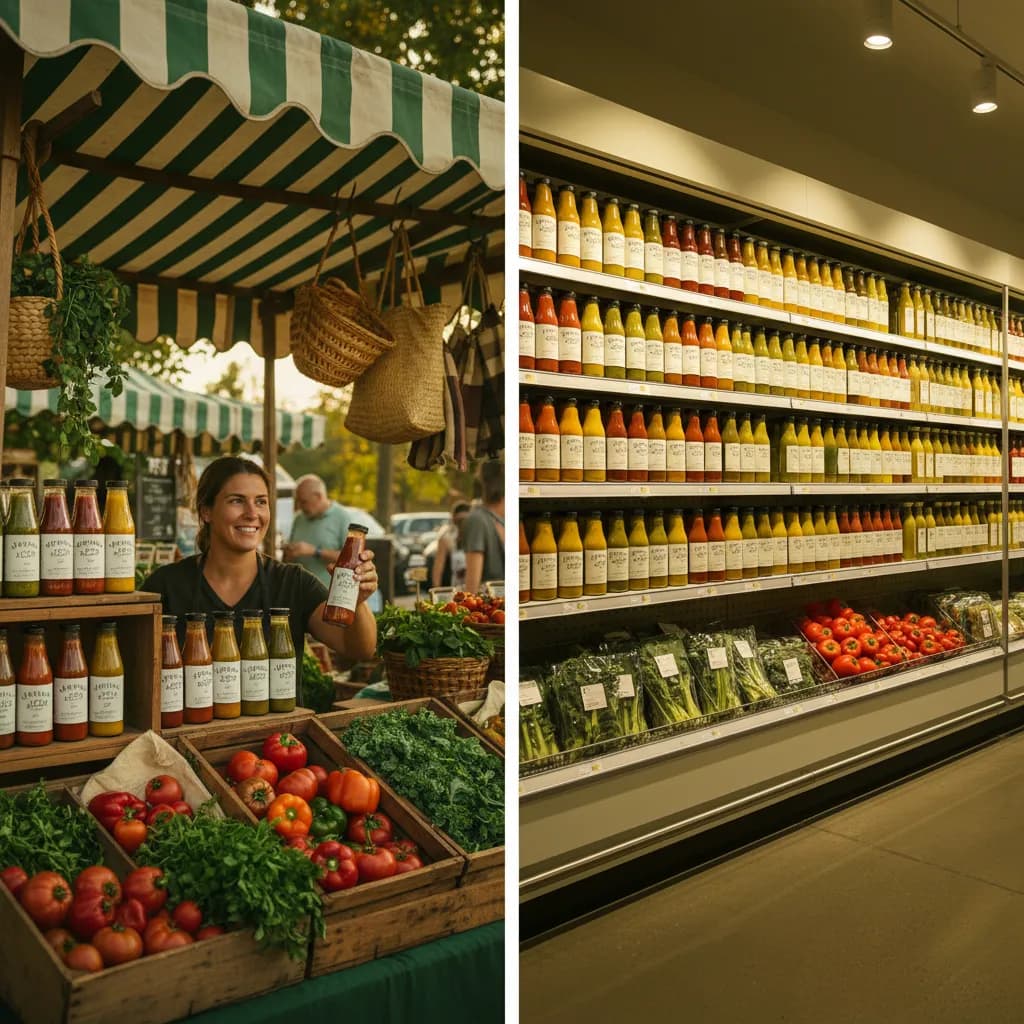
Your time: This is the biggest hidden cost. Managing a product development project takes 10-20 hours per week for 3-6 months if you're doing it without professional guidance. For guidance on transitioning from direct sales to retail, see going from farmers market to retail shelf.
Total Investment: What to Realistically Budget
Adding it all up for a single SKU of a kettle-cooked product from concept to retail-ready:
Conservative estimate (simple product, experienced team): $15,000-$25,000
Mid-range estimate (moderate complexity, professional support): $25,000-$40,000
Premium estimate (complex formulation, clean label, premium packaging): $40,000-$65,000
For multiple SKUs developed simultaneously (which I recommend — see our guide to product line expansion), costs per SKU decrease because of shared development work, consolidated lab testing, and packaging efficiencies. A 3-SKU line might cost 2-2.5x a single SKU, not 3x.
These numbers might seem high if you're comparing them to "I developed my recipe for $500 in my kitchen." But that kitchen recipe isn't retail-ready. The investment above covers the gap between a recipe that works on your stove and a product that can consistently, safely, and profitably sit on a retail shelf.
How to Spend Smart: Budget Optimization Strategies
Invest heavily in upfront formulation. This is counterintuitive — spending more on recipe development feels like it increases costs. But a well-developed production formula reduces trial run failures, speeds up co-packer onboarding, and prevents the reformulation cycles that eat up $5,000-$15,000 in wasted trials. The $12,000 formulation engagement that saves you $20,000 in failed trials is your best investment.
Negotiate co-packer trial credits. Many co-packers will credit your trial run fee against your first production run. Ask about this upfront — it effectively makes your trial free if you commit to producing with them.
Start with digital labels. Digital printing has higher per-unit costs but much lower minimums (sometimes as low as 500 labels). For your first few runs, pay the premium per label to avoid ordering 10,000 labels before you've finalized your design. You can switch to flexographic or lithographic printing when your volumes justify it.
Time your lab work strategically. Don't order nutrition panel testing until your formula is final. I've seen founders pay for 3-4 nutrition panels because they kept modifying the recipe after each test. Wait until your formula is locked, then test once.
Bundle professional services. A consultant who can handle formulation, specification documentation, and co-packer matchmaking as a single engagement is typically more cost-effective than hiring separate specialists for each phase. The continuity also reduces errors and miscommunication.
Funding Your Development: Common Approaches
Self-funding / bootstrapping: The most common approach for first-time CPG founders. If you're bootstrapping, the budget optimization strategies above are critical. Prioritize spending on formulation and skimp on nothing related to food safety.
Small business grants: USDA Value-Added Producer Grants (up to $75,000), state-level food innovation grants, and accelerator programs (like Chobani Incubator or Target Forward Founders) can offset development costs. These are competitive but worth pursuing.
Friends and family rounds: Common for raising $10,000-$50,000 in early capital. Having a detailed budget breakdown (like the one in this article) makes these conversations much more credible.
Revenue from direct sales: If you're already selling at farmers markets or DTC, reinvesting that revenue into product development for retail is a proven path. The advantage is that you're validating demand while funding development.
Small business loans and lines of credit: SBA microloans (up to $50,000) and community development financial institution (CDFI) loans are accessible options for food businesses with modest capital needs.
Frequently Asked Questions
Can I develop a food product for under $10,000?
It's possible for very simple products where you're doing significant work yourself — developing the recipe in your kitchen, designing your own labels, working with a co-packer who offers development support. But $10,000 is tight for anything retail-ready. You'll likely need to cut corners on professional formulation, which often costs more in the long run through failed trial runs and reformulation cycles. A more realistic minimum for a retail-ready kettle-cooked product is $15,000-$20,000.
What's the most expensive part of food product development?
It depends on your product, but production trials and the first production run typically account for 40-50% of total costs. This is why upfront formulation investment is so important — every failed trial run adds $2,000-$5,000 to your total. The second most expensive phase is packaging, especially if you need custom molds or specialty containers.
How do recipe development costs change for multiple SKUs?
Developing multiple SKUs simultaneously is significantly more cost-efficient than developing them sequentially. If SKUs share a common base formula (which they should, for manufacturing efficiency), the base development is done once and each variant adds incremental cost. Expect $3,000-$8,000 per additional SKU when developed alongside your first product, versus $5,000-$15,000 for a standalone new product. Lab testing, packaging design templates, and co-packer negotiations also benefit from bundling.
Should I budget for reformulation after launch?
Yes. Plan for at least one reformulation cycle in your first 18 months. Almost every product needs some adjustment after real-world market feedback — whether that's a COGS optimization, a shelf life fix, or a tweak based on consumer feedback. Budgeting $3,000-$8,000 for post-launch reformulation prevents a cash crunch when it inevitably becomes necessary. See our full guide on hiring a recipe developer to understand what that engagement looks like.
What costs can I defer to reduce upfront investment?
You can defer some costs but not others. Never defer food safety spending — process authority review, proper labeling, and adequate shelf life testing. You can defer premium packaging design (start with simple, professional labels and upgrade later), trade show participation, and aggressive marketing spend. Some founders start with farmers market or DTC sales using simpler packaging and reinvest that revenue into retail-grade packaging and expanded distribution. The key is knowing which expenses are investment-grade (formulation, safety, compliance) and which are deferrable (premium aesthetics, marketing channels).
Need Help With Your Formulation?
Whether you're scaling your first recipe or reformulating an existing product, let's talk about how to get it right.
Book a Free Discovery Call