The Scaling Journey Most Food Founders Underestimate
You're crushing it at the farmers market. Your booth has a line every Saturday. You've outgrown your commercial kitchen rental, and retailers are asking when they can stock your product. This is the moment every food founder dreams about — and it's also the moment where the most common and expensive mistakes happen.
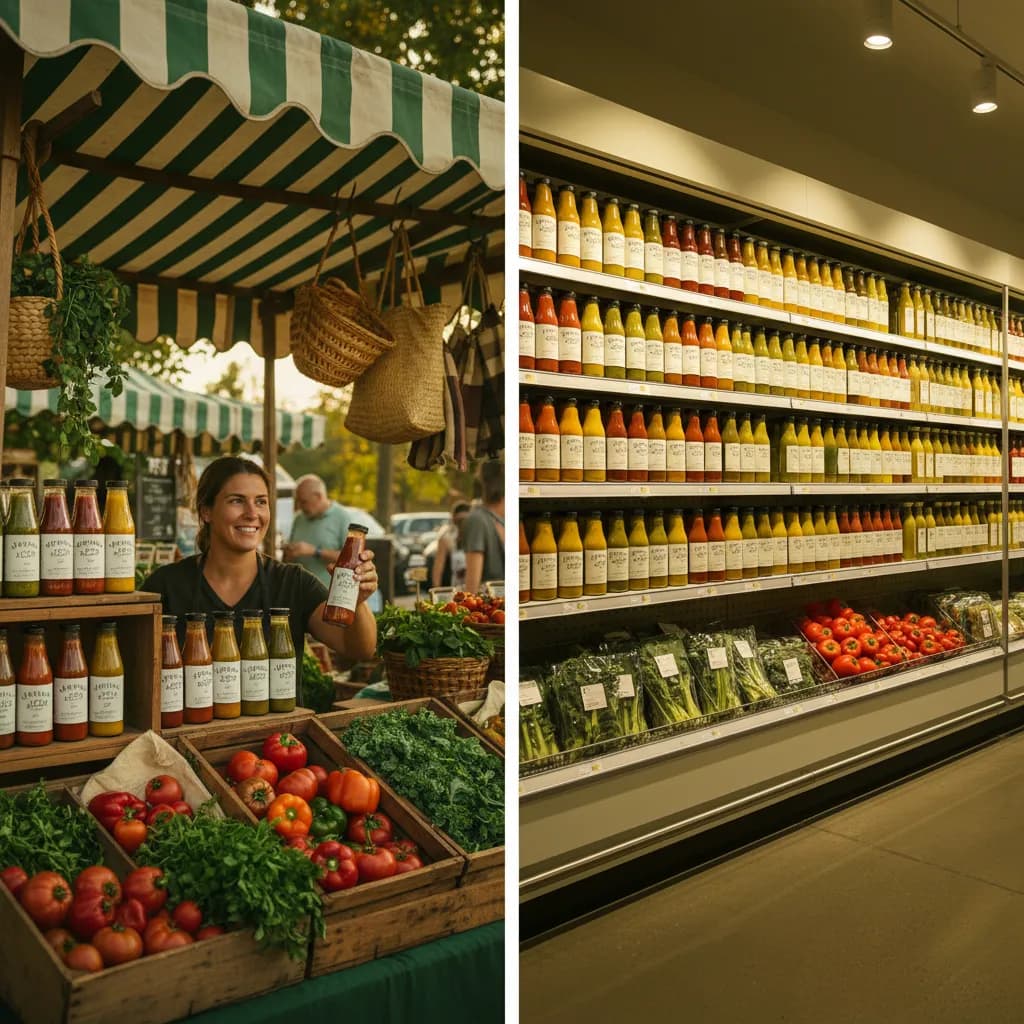
Going from farmers market to retail shelf isn't just about making more product. It's a fundamental transformation of your business model. At the farmers market, you're a direct-to-consumer brand. You control the production, the packaging, the sales pitch, the pricing, and the customer relationship. On a retail shelf, you're one SKU among thousands, your product has to sell itself from a label, and there are two or three intermediaries between you and the consumer — each taking a margin.
I've guided dozens of food brands through this transition, and the founders who succeed share a common trait: they treat retail readiness as a project that requires planning, investment, and professional support. The founders who struggle are the ones who assume everything that worked at the market will work at retail. It won't — and here's the roadmap for navigating the differences.
Phase 1: Validate Before You Scale
Know Your Numbers at the Farmers Market
Before investing in retail readiness, make sure your product actually has the economics to support retail distribution. Retail requires a minimum 4x markup from COGS to shelf price for the math to work: you sell to a distributor at roughly 2x your cost, the distributor marks up 25-30%, and the retailer marks up 30-40%.
At the farmers market, you sell direct — that $12 bottle of hot sauce goes straight to the consumer. At retail, if your COGS is $3 per bottle, the chain looks like: you sell to the distributor at $6, the distributor sells to the retailer at $7.80, the retailer prices it at $10.99. Your margin dropped from $9 per bottle to $3 per bottle. Can your business survive on that margin at the volume retail requires?
If the answer is no, you have two options: reformulate to reduce COGS (a good recipe developer can often find 15-30% cost reductions without quality compromise), or reposition as a premium/specialty product that commands higher shelf prices. Either path requires honest number-crunching before you spend money on retail-ready packaging.
Validate Repeat Purchase Behavior
Farmers market success can be misleading. The personal connection, the free samples, the weekend-outing energy — these drive trial purchases that don't translate to retail. The question is: do customers come back week after week for your product? If you have a core group of regulars who buy every time you're at the market, that's a repeat purchase signal. If your sales are mostly to new customers who are trying something interesting, retail may be a tougher environment for your product.
Phase 2: Make Your Product Retail-Ready
Recipe Scaling and Production Readiness
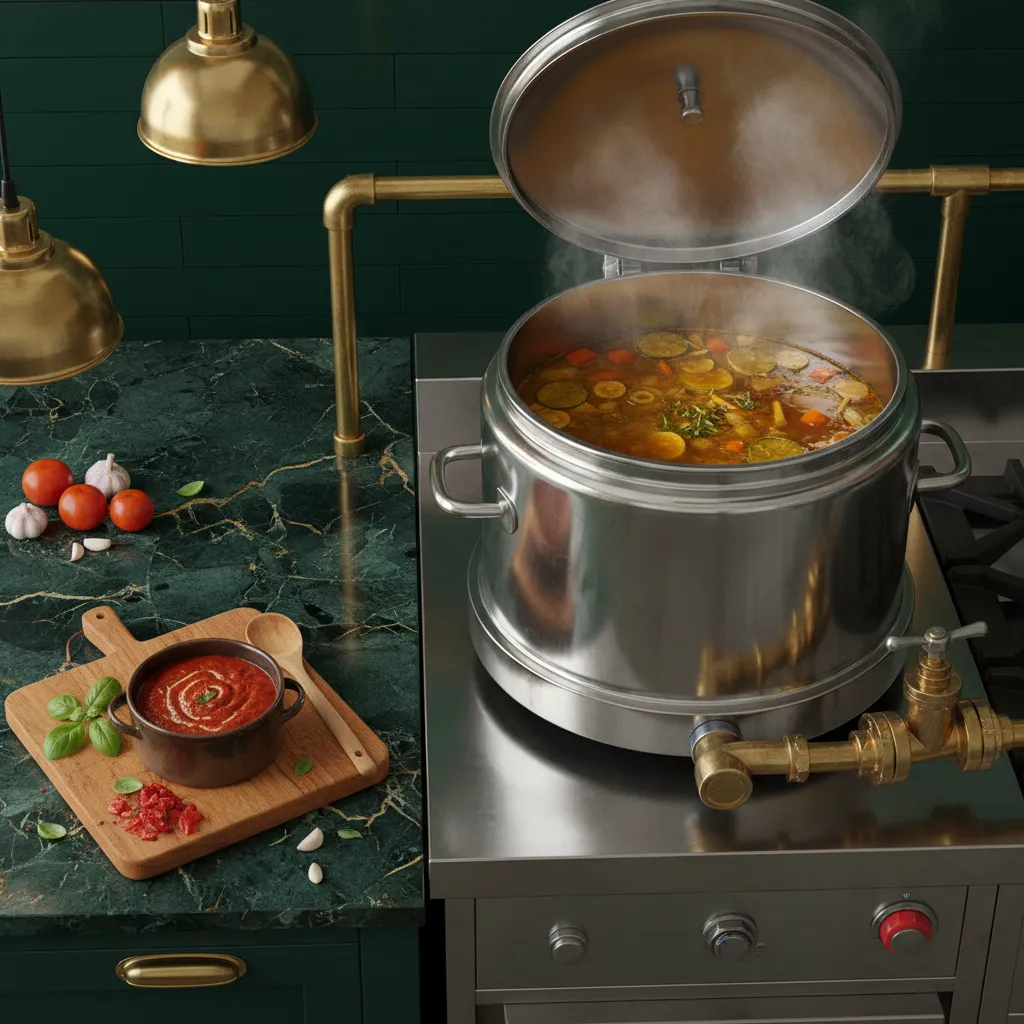
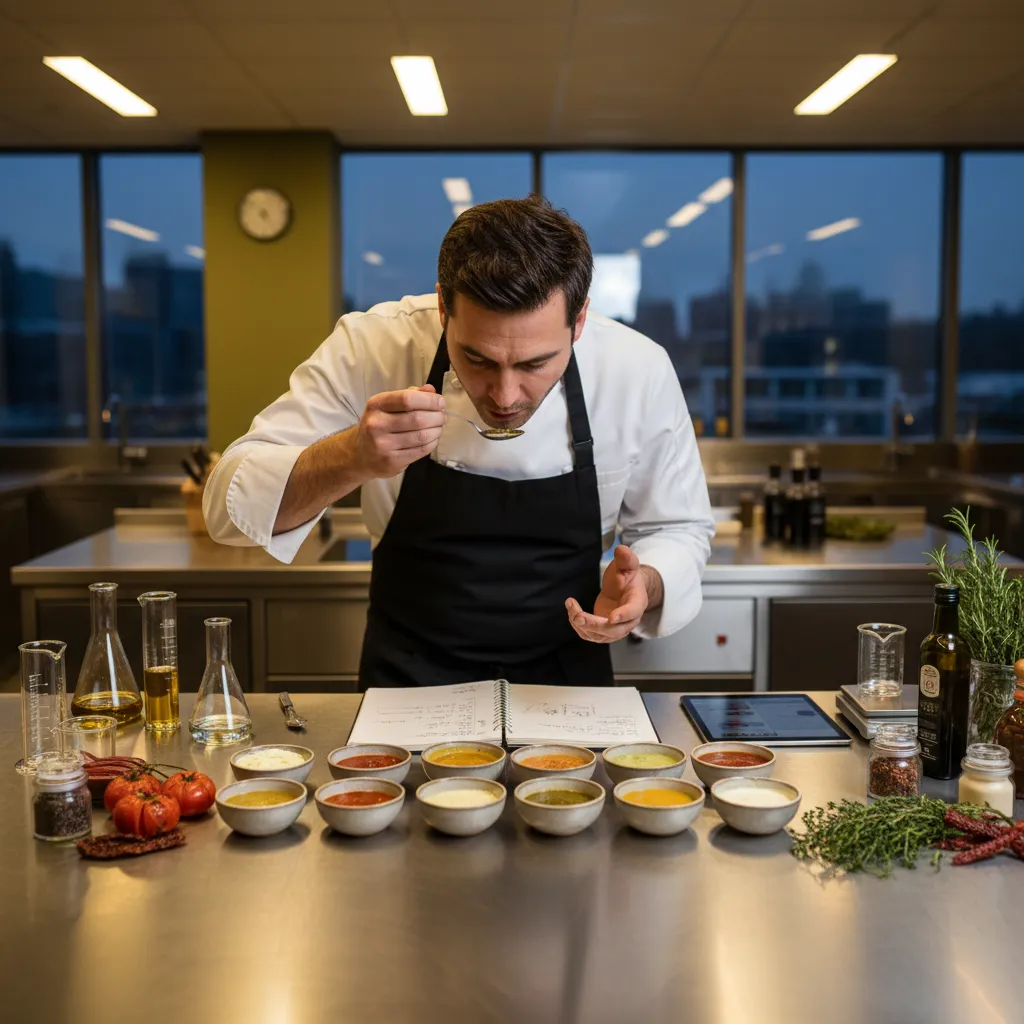
This is where most of my work happens. Your farmers market recipe — made in 5-gallon batches in a rented commercial kitchen — needs to be transformed into a production-ready formula that can be manufactured consistently at commercial volumes by a co-packer. This process involves:
- Converting to percentage-based formulation with complete ingredient specifications
- Scaling and adjusting for commercial equipment behavior (the full scaling guide covers this in detail)
- Pilot batching to validate the formula at intermediate volumes
- Shelf life testing — retailers require documented shelf life (typically 12-18 months for shelf-stable sauces)
- Process authority filing for acidified food products
- Nutrition facts panel development and verification
This phase typically takes 6-10 weeks and is the most important investment in your retail launch. Skipping or rushing it leads to the problems I describe in my article on what makes a recipe production-ready.
Packaging for Retail
Your charming hand-labeled farmers market jars won't work on a retail shelf. Retail packaging needs to:
- Comply with FDA labeling regulations: Nutrition facts panel, ingredient statement, allergen declarations, net weight, manufacturer information, UPC barcode
- Survive distribution: Palletization, warehouse storage, truck shipping, shelf stocking — your packaging needs to handle being moved 5-7 times between production and the consumer's hands
- Sell from the shelf: You have about 3 seconds of consumer attention in a grocery aisle. Your label needs to communicate what your product is, why it's different, and why someone should try it — without your charming sales pitch
- Meet retailer specifications: Specific shelf-space dimensions, case pack configurations, and sometimes even label placement requirements
Budget $3,000-$8,000 for professional packaging design and label production for your first retail-ready SKU. This is not where you cut corners — your package is your salesperson on the shelf.
Food Safety and Regulatory Compliance
Farmers market regulations vary by state and are generally less stringent than retail requirements. Moving to retail means you need:
- FDA Food Facility Registration (for your co-packer, if using one)
- Scheduled process filing for acidified foods
- Product liability insurance ($1-2 million is standard for retail distribution)
- Food Safety Plan compliant with the FDA's Preventive Controls rule (if your revenue exceeds the exemption threshold)
- State-specific licenses depending on where you produce and sell
Phase 3: Find Your Co-Packing Partner
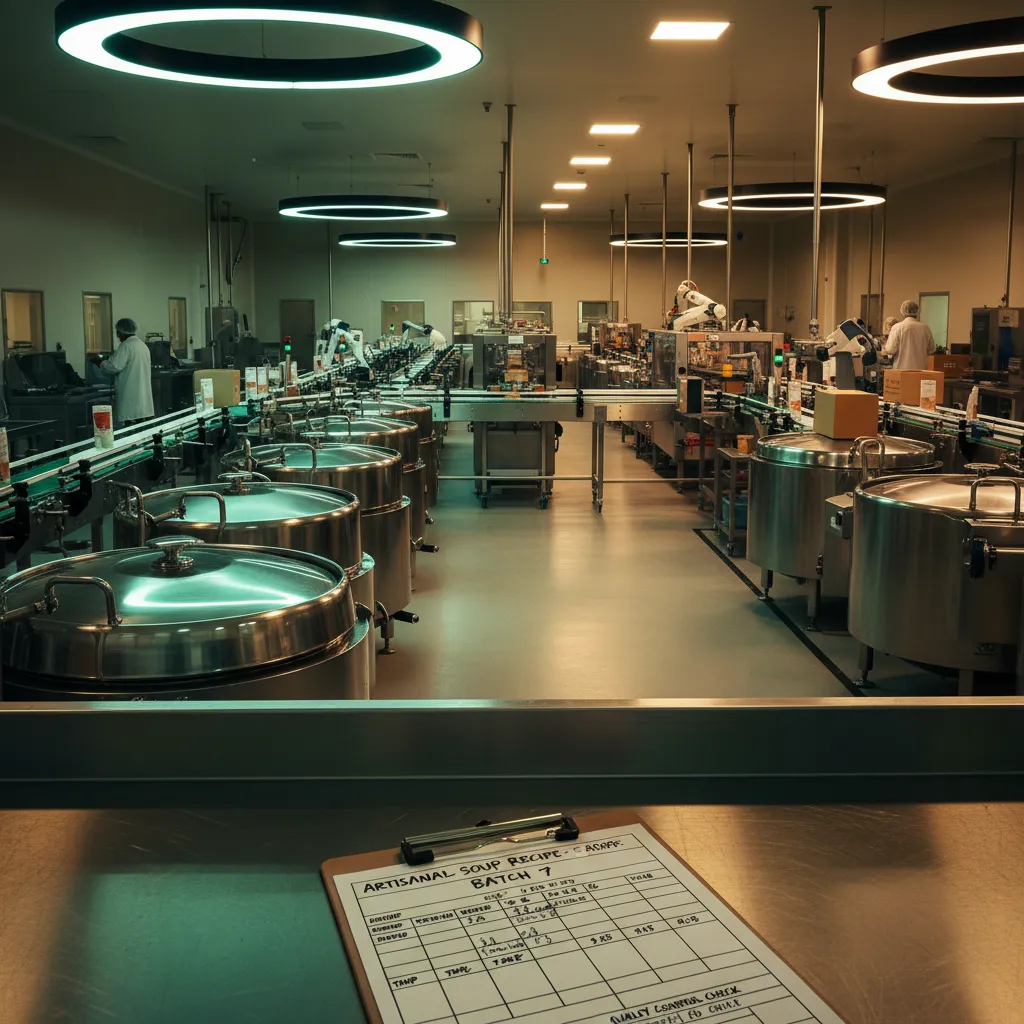
Unless you're building your own production facility (which I don't recommend for most founders at this stage), you need a co-packing partner. The right co-packer for a brand transitioning from farmers market to retail is one with:
- Low minimum order quantities: You're not ordering 50,000 units yet. Find a co-packer comfortable with 300-1,000 unit runs.
- Appropriate equipment: Kettle size, filling capabilities, and packaging equipment that matches your product and container format.
- Flexibility: Willingness to schedule small, frequent runs as you build retail volume rather than requiring large quarterly commitments.
- Relevant certifications: Whatever your target retailers require (SQF, organic, kosher, etc.).
Plan to visit potential co-packers in person. Walk the production floor. Taste products they've made for other clients (if allowed). The quality of their work on someone else's product is the best predictor of the quality you'll receive.
Phase 4: Build Your Distribution Strategy
Start Local and Prove the Concept
The biggest mistake I see founders make at this stage: trying to get into Whole Foods nationally before they've proven the product sells at their local independent grocery store. Start with independent retailers in your region — natural food stores, specialty grocery shops, gourmet food sections of local chains. These stores are more willing to take a chance on a local brand, their buyers are more accessible, and you can service them directly (direct-store delivery) without a distributor.
Direct-store delivery lets you control everything: merchandising, pricing, inventory rotation, and the customer feedback loop. It's labor-intensive, but it generates the sell-through data you'll need to approach distributors and larger retailers.
Understand Distributor Economics
Distributors typically take a 25-30% margin on the price they sell to retailers. They also charge fees: slotting fees (pay-to-play for warehouse space), promotional allowances, spoilage deductions, and sometimes minimum order requirements. Before signing with a distributor, model the full cost impact on your margins. Many emerging brands maintain a hybrid approach — distributor for accounts they can't service directly, direct delivery for local accounts where they can capture the distributor margin.
Demo and Promote Relentlessly
Your product won't sell itself at retail the way it does at the farmers market. In-store demos are the retail equivalent of your farmers market sample booth, and they're the most effective way to drive trial purchases. Budget for regular demos at your retail accounts — every 4-6 weeks at minimum. Track the sales lift from each demo to understand which stores respond best to sampling.
Phase 5: Scale Systematically
Once you're in 10-20 local stores with consistent reorder rates, you have a proof of concept that supports broader distribution. This is when you approach regional distributors, apply to chains, and potentially look at hiring a recipe developer to expand your product line with complementary SKUs.
Key metrics that retailers and distributors want to see:
- Units per store per week: 1-2 units/store/week is baseline for a specialty sauce. 3+ is strong.
- Reorder rate: What percentage of stores reorder after the initial purchase? Above 70% is a strong signal.
- Demo conversion rate: What percentage of people who try a sample buy a bottle? Above 20% is good; above 30% is exceptional.
- Category velocity: How does your product's turn rate compare to other sauces in the same category at the same retailer?
Scale into demand, not ahead of it. Every case of product sitting in a warehouse is cash tied up in inventory instead of marketing, demos, and sales. The farmers-market founders who succeed at retail are the ones who grow their production in lockstep with proven sales velocity, not the ones who produce 10,000 units because the per-unit cost was better.
The Timeline and Investment
Here's a realistic timeline for the farmers market to retail transition:
- Months 1-2: Financial modeling, recipe documentation, begin recipe scaling process ($3,000-$10,000 for professional recipe development)
- Months 2-4: Pilot batching, shelf life testing, process authority filing, packaging design ($5,000-$12,000 for packaging and regulatory)
- Months 4-5: Co-packer selection, trial production run, label proofing ($3,000-$8,000 for first production run)
- Months 5-6: First retail placements (independent stores), begin in-store demo program ($2,000-$5,000 for initial inventory and demos)
- Months 6-12: Build sales data, expand to additional local retailers, evaluate distributor partnerships
Total investment for the first year of retail: $15,000-$40,000, depending on product complexity, packaging quality, and marketing intensity. This isn't a side-hustle budget — it's a business launch investment. But compared to other small business launches, a food product going from proven farmers market demand to retail shelf is one of the lower-risk entrepreneurial bets available, because you already know people want to buy it.
Frequently Asked Questions
How long does it take to go from farmers market to retail shelves?
Realistically, 5-8 months from the decision to pursue retail to your first product on a store shelf. The biggest time commitments are recipe scaling and shelf life testing (6-10 weeks), packaging design and printing (4-6 weeks), and co-packer scheduling (4-8 weeks lead time). Trying to compress this timeline usually means cutting corners on recipe development or shelf life validation, which creates expensive problems later.
How much inventory should I produce for my first retail run?
For your first production run, produce enough to fill your confirmed retail placements plus 20% buffer. If you have commitments from 10 stores that will each take one case (typically 12 units), produce 150 units — enough to fill orders with a small reserve for demos and replacements. Don't produce thousands of units ahead of confirmed sales. Storage costs money, shelf life is counting down, and cash sitting in a warehouse isn't growing your business.
Do I need a distributor to get into retail stores?
Not initially. Most emerging food brands start with direct-store delivery (DSD) to independent retailers. You deliver product yourself, manage the relationship directly, and keep the distributor margin. As you grow beyond 15-20 accounts or expand outside your delivery range, a distributor becomes necessary. Some retailers (particularly chains) require you to go through their authorized distributors, but independent stores are usually flexible about receiving direct deliveries from local brands.
What's the biggest financial mistake founders make during this transition?
Overproducing before proving retail sell-through. I've seen founders invest $20,000+ in a large production run to get the best per-unit price, only to find that their product moves slowly at retail and they're sitting on 8,000 units with a ticking shelf-life clock. The per-unit savings from a larger run are meaningless if you can't sell the product before it expires. Start small, prove velocity, then scale production to match demand.
Should I continue selling at farmers markets after getting into retail?
Yes, absolutely — at least initially. Farmers markets remain your highest-margin sales channel (no distributor or retailer taking margin), your best source of direct customer feedback, and your most effective marketing tool. Customers who discover your product at the market and then see it at their local grocery store are far more likely to buy at retail. Many successful sauce brands maintain a farmers market presence even after broad retail distribution for exactly these reasons. The market booth becomes a marketing expense that pays for itself.
Need Help With Your Formulation?
Whether you're scaling your first recipe or reformulating an existing product, let's talk about how to get it right.
Book a Free Discovery Call