The Strategic Case for Expanding Beyond One SKU
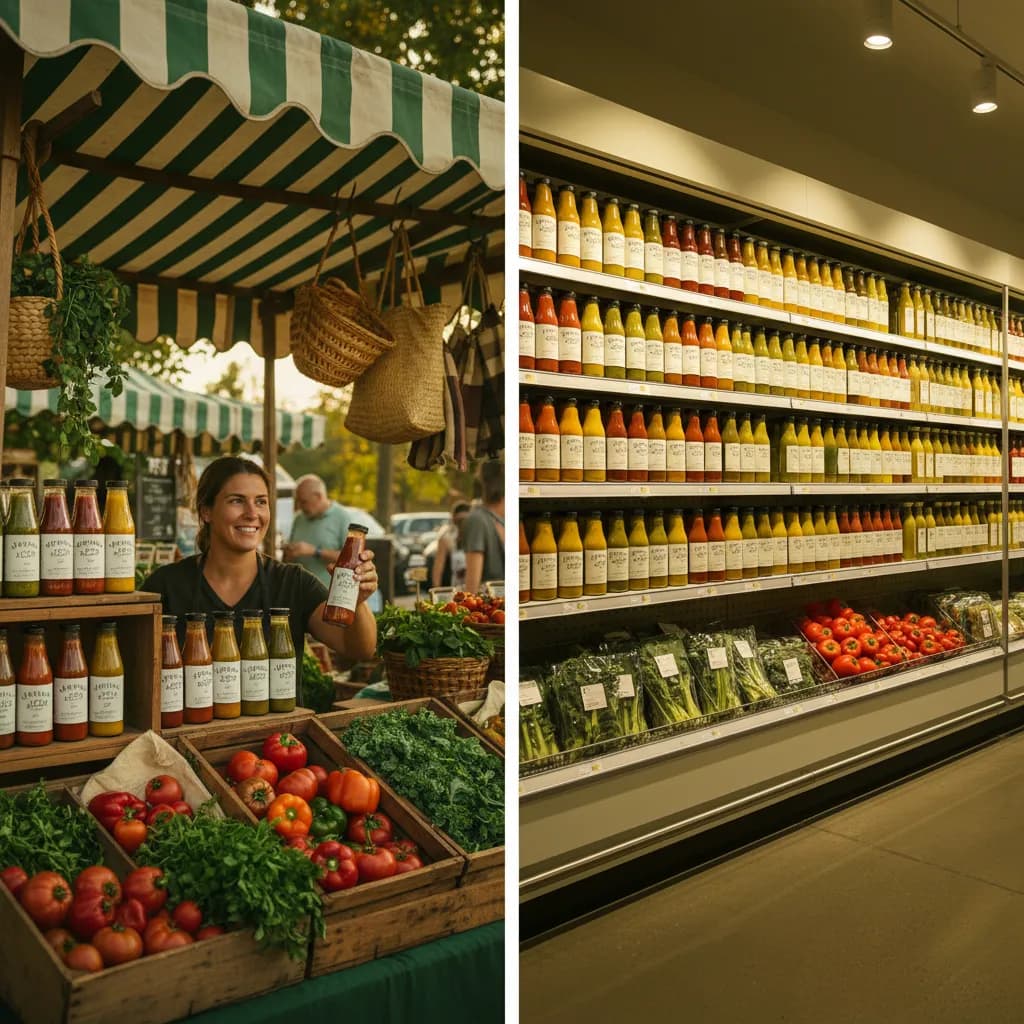
Your first product is selling. You've got traction at farmers markets, a few retail accounts, or growing DTC orders. The natural next question: should you add more flavors or products?
The answer is almost always yes — eventually. But the timing, sequencing, and execution of your product line expansion will determine whether it accelerates your growth or fractures your focus. I've helped brands expand from a single hot sauce to a full condiment line, from one soup flavor to a seasonal rotation, and from a flagship dressing to a family of five. The ones who succeed plan the line before they develop the second SKU.
Here's what I've learned from guiding dozens of CPG product line strategies: expanding too early kills as many brands as never expanding at all. The sweet spot is when your first product has proven demand, your supply chain can absorb complexity, and you have a clear strategic reason for each new SKU.
When You're Actually Ready to Expand
Your First SKU Has Consistent, Repeatable Sales
Before adding products, your flagship needs to be operationally stable. That means consistent production runs, reliable co-packer relationship, predictable ingredient supply, and sales velocity that's growing or at least steady. If you're still troubleshooting quality issues or scrambling to fill orders on your first product, adding a second one will multiply those problems.
Retail Buyers Are Asking for More
When a buyer says "we love your sriracha — do you have a milder option?" or "could you do a seasonal flavor?", that's market-driven demand. Buyer requests are the strongest signal that expansion makes sense, because they come with implicit distribution commitments. Don't fabricate demand — respond to it.
You've Identified a Gap Your Brand Can Credibly Fill
Not every adjacent product is a good fit. If you make an exceptional chimichurri, expanding to a romesco and a zhug makes brand sense. Expanding to a chocolate sauce does not. Your line should tell a coherent story, and each new SKU should reinforce your brand positioning, not dilute it.
If you're still in the single-product phase, make sure you've nailed the transition from farmers market to retail before adding complexity.
Designing a Line That Makes Manufacturing Sense
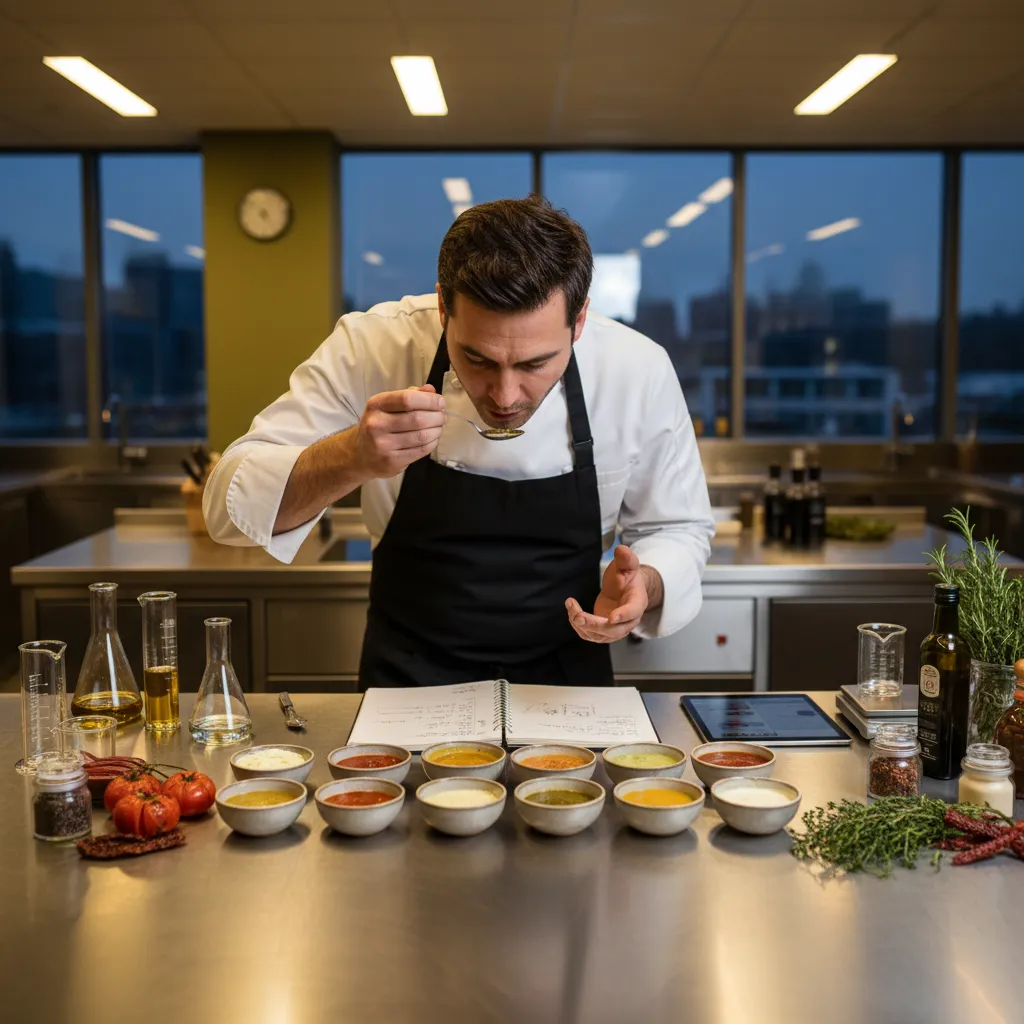
This is where most founders get it wrong. They design their line from a marketing perspective — "what flavors would look good on a shelf?" — without considering the manufacturing implications. A well-designed product line optimizes for shared ingredients, shared processes, and production efficiency.
The Shared Base Formula Approach
The most efficient product lines share a common base and diverge only at a finishing step. For example, a line of kettle-cooked BBQ sauces might share 70% of their formula — tomato base, vinegar, sweetener, spice blend foundation — with each variant adding a unique flavor component (chipotle, mustard, fruit addition) in the final stage of cooking.
This approach offers massive advantages: fewer raw ingredients to source and store, the ability to run multiple SKUs in a single production day by making one large base batch and splitting it, and simplified quality control because your base is consistent across the line.
Ingredient Consolidation
Every unique ingredient in your line adds cost — not just the ingredient itself, but sourcing, receiving, storage, inventory management, and potential waste. When I design a product line, I map every ingredient across every SKU and look for consolidation opportunities. Can two different vinegars become one? Can a specialty spice that appears in one SKU be replaced with something already used in another? Fewer unique ingredients means lower minimum order quantities and less dead stock.
Production Scheduling Efficiency
Co-packers charge for changeover time — cleaning lines between products, especially when allergens or strong flavors are involved. A line designed with production scheduling in mind groups similar products together and sequences them to minimize changeovers. Light flavors run before dark ones. Non-allergen products run before those containing allergens. Your recipe developer should be thinking about this during formulation.
The SKU Expansion Roadmap: Phasing Your Growth
Phase 1: The Core Trio (SKUs 1-3)
Your first expansion should typically take you from one product to three. Why three? It's the minimum number that reads as a "line" on shelf, gives buyers variety to merchandise, and lets you test flavor preferences without overwhelming your operations. For a sauce brand, this might be your original flavor, a spicier variant, and a milder or sweeter option.
Timeline: Develop and launch SKUs 2 and 3 simultaneously, 3-6 months after your first product is stable. Developing them together ensures formula and packaging consistency.
Phase 2: Strategic Extensions (SKUs 4-6)
Once your core trio is established and selling, you can add strategic extensions. These might be seasonal limited editions (which create urgency and test new flavors with lower risk), a different format (switching from 12oz to a 5oz sampler or a 32oz foodservice size), or a product that addresses a specific buyer request.
Timeline: 6-12 months after your core trio launch. Use sales data from your first three SKUs to inform what comes next.
Phase 3: Category Expansion (SKUs 7+)
This is where you might move from sauces into adjacent categories — dressings, marinades, or condiments. This phase requires careful evaluation because each new category may require different co-packing capabilities, different packaging, and different buyer relationships. Don't rush this. Many successful brands stay in the 3-6 SKU range for years.
Common Mistakes in Product Line Expansion
Launching too many SKUs at once. I've seen brands go from 1 to 8 SKUs in a single launch. The result: inventory management chaos, cash flow strain from minimum production runs across 8 products, and buyer confusion. If a buyer has budget for 3 facings and you present 8 options, they'll often just take your original flavor and pass on the rest.
Cannibalizing your own sales. If your new mild hot sauce takes sales from your original hot sauce rather than bringing in new customers, you've added cost and complexity without growing revenue. Each new SKU should expand your addressable market, not slice your existing one thinner.
Ignoring the COGS impact. Smaller production runs per SKU mean higher per-unit costs. If you're splitting a 2,000-unit production run into four 500-unit runs, your per-unit cost goes up significantly. Make sure your pricing model accounts for this. Consider whether reformulating your existing product might be a smarter investment than adding a new one.
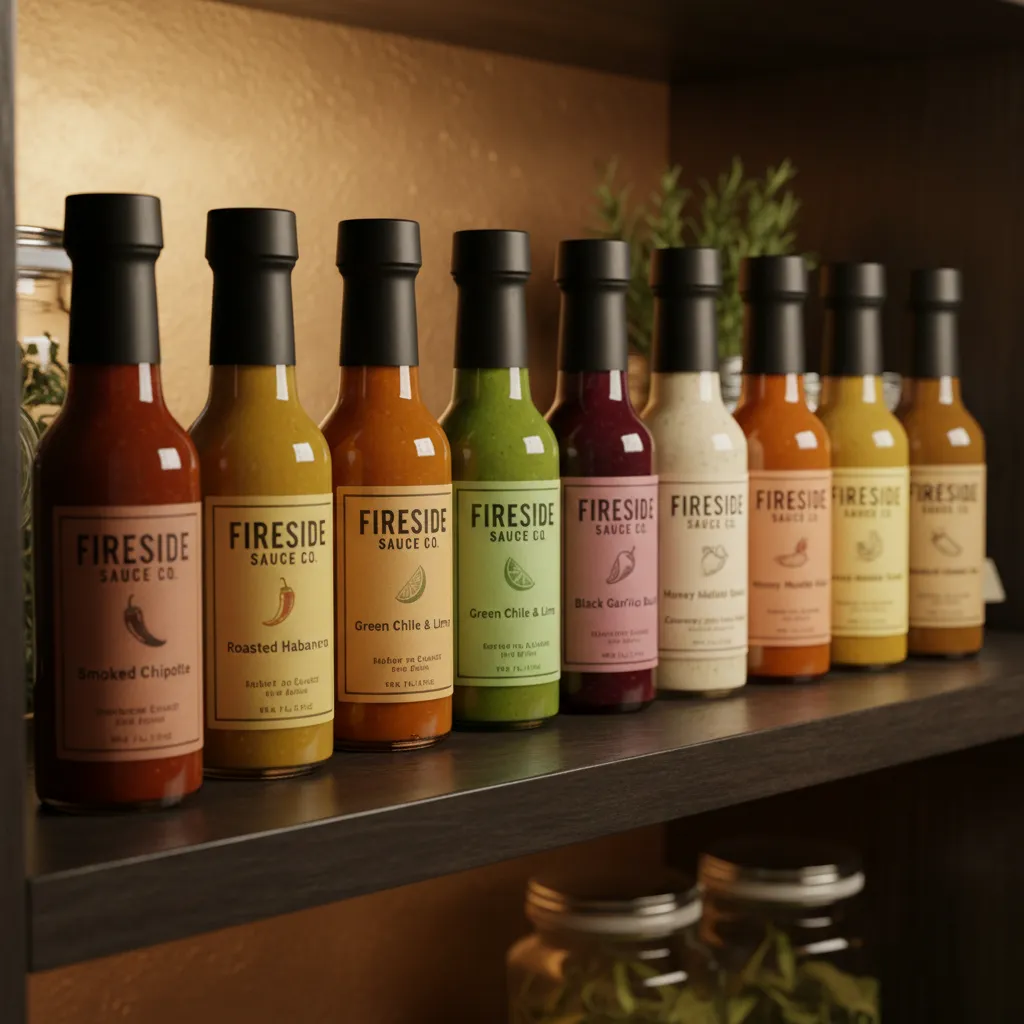
Inconsistent branding across the line. Your products should look like siblings, not strangers. Invest in packaging design that has a consistent structure with variable elements (usually color coding) so your line reads as a cohesive family on shelf.
Neglecting your flagship. In the excitement of new products, don't forget the one that got you here. Your original product should still receive attention, marketing support, and continuous improvement.
Budgeting for Line Expansion
Expanding from one to three SKUs is not three times the cost of developing one product, but it's more than most founders expect. Here's a realistic breakdown:
Recipe development: If your new SKUs share a base with your existing product, development costs per SKU drop significantly — typically $3,000-$8,000 per variant versus $5,000-$15,000 for a completely new formula.
Packaging: New label designs, potentially new packaging sizes. Budget $2,000-$5,000 per SKU for design and initial print runs.
Production trials: Each new SKU needs at least one trial run at your co-packer, typically $2,000-$5,000 per trial.
Inventory: Minimum production runs across multiple SKUs tie up significantly more cash. If your co-packer's minimum is 1,000 units and you have 3 SKUs, you need cash flow to support 3,000 units of inventory.
Testing and compliance: Each new product needs its own nutrition panel, allergen documentation, and potentially process authority review. Budget $500-$1,500 per SKU for lab work.
Frequently Asked Questions
How many SKUs should a new CPG food brand have?
Start with one, prove it works, then expand to three. Three SKUs is the minimum viable line for most retail channels — it gives buyers variety and fills a shelf section. Stay at 3-6 SKUs until each one is pulling its weight in sales velocity. I've seen too many brands stretch to 10+ SKUs with only 2-3 actually driving meaningful revenue.
Should I launch new flavors or new product formats first?
Flavors first, almost always. New flavors within the same format (same bottle, same production process, same category) add less operational complexity than a new format. A new format — say, moving from bottles to squeezable pouches or adding a foodservice size — introduces new packaging suppliers, potentially new co-packing lines, and different buyer conversations.
How do I decide which flavors to add to my line?
Use a combination of market data and direct feedback. Look at what's trending in your category (trade shows, SPINS data if accessible, retailer planograms). Listen to customer requests at farmers markets and in DTC reviews. Test concepts through limited editions before committing to permanent SKUs. And always validate that a new flavor expands your customer base rather than just splitting existing customers across more options.
Can I use the same co-packer for all my SKUs?
Ideally, yes — and designing your line for a single co-packer's capabilities is a major efficiency advantage. But as you expand into different product categories (e.g., from hot sauces to dressings that require cold processing), you may need a second facility. Before formulating new SKUs, confirm your co-packer can handle them. Learn more in our guide to hiring a recipe developer who can design with your manufacturing constraints in mind.
What's the biggest mistake brands make when expanding their product line?
Expanding for ego instead of strategy. Every SKU needs a business case — who is the customer, what need does it fill that your current line doesn't, and does your supply chain support it? The second biggest mistake is not consolidating ingredients across the line during formulation, which inflates COGS and creates inventory management headaches.
Need Help With Your Formulation?
Whether you're scaling your first recipe or reformulating an existing product, let's talk about how to get it right.
Book a Free Discovery Call