Why MOQs Are the First Real Wall Founders Hit
You have a recipe the market loves. You've identified a co-packer who can make it. And then they send over a quote: minimum order quantity, 5,000 units. Or 10,000. Or a full day of kettle time priced at $18,000 before ingredients. Suddenly the plan you had for a gentle launch turns into a capital decision.
This is the wall. Almost every CPG founder hits it, and most are unprepared for how high it sits. The good news: co-packer MOQs are more negotiable, more explainable, and more survivable than they look at first glance — if you understand what drives them.
What a Co-Packer MOQ Actually Represents
An MOQ isn't an arbitrary number. It's the co-packer's best estimate of the smallest run that makes their facility's time worth booking for you. Several costs roll into that calculation:
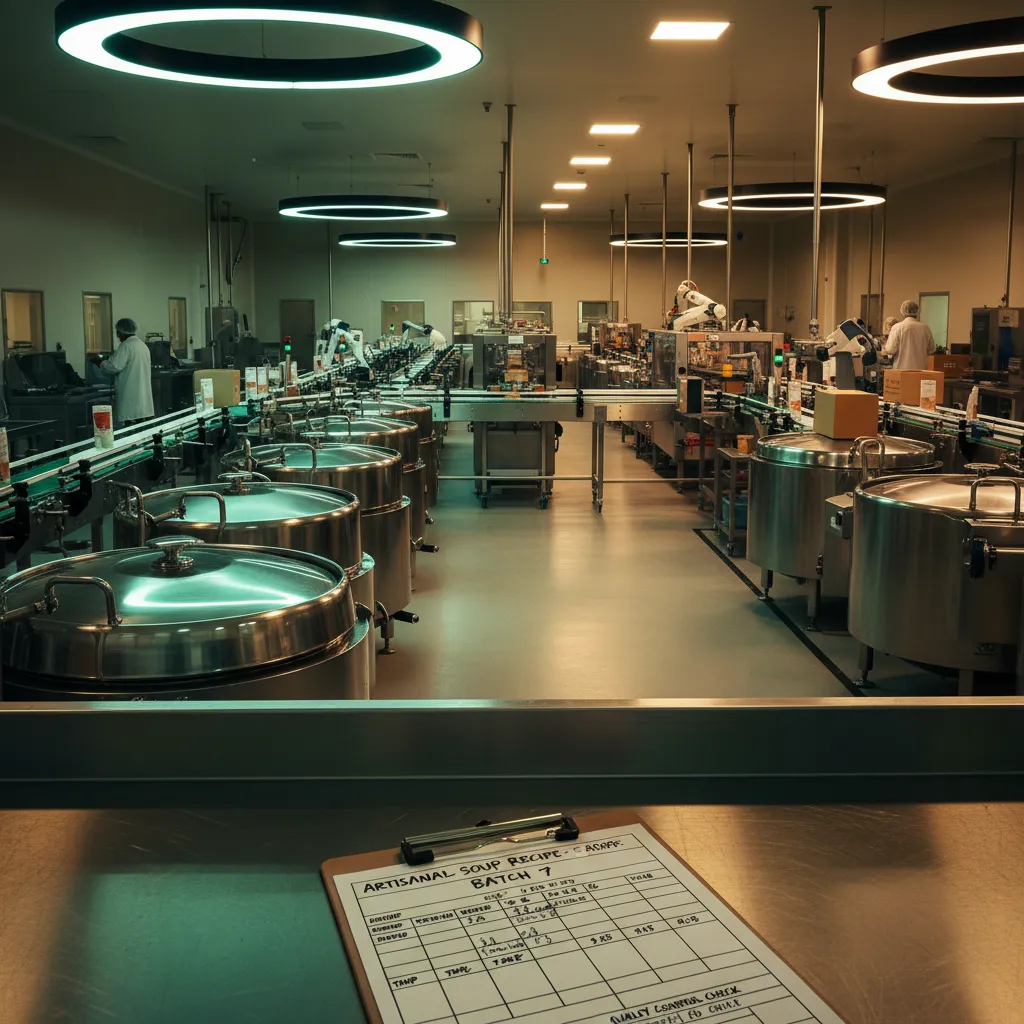
Kettle time and changeover
A steam-jacketed kettle has a fixed minimum cycle — the time it takes to heat, cook, cool, transfer, and sanitize regardless of whether you're making 50 gallons or 500. Short runs don't reduce the changeover burden proportionally, so co-packers typically price a minimum batch near the kettle's efficient fill point.
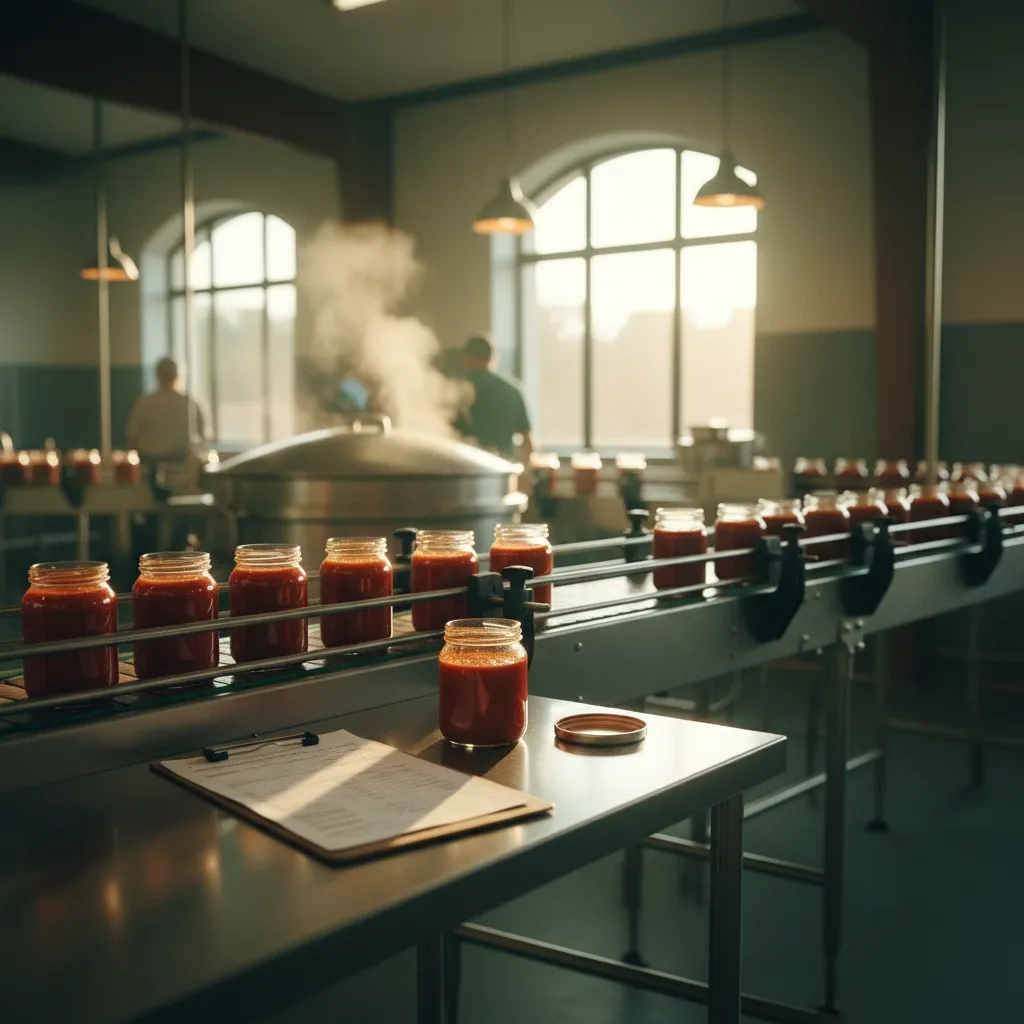
Fill line economics
Filling lines are often the bottleneck. Setup and teardown of a filler — calibrating fill weights, swapping caps, sanitizing, and verifying seal integrity — can take 45-90 minutes before a single jar moves. Amortizing that setup across 2,000 units is expensive per unit; across 20,000 it's trivial.
Ingredient minimums upstream
Your co-packer isn't buying bespoke quantities either. Their suppliers have MOQs: pallets of tomato paste, drums of vinegar, cases of specific spices. If they have to open a fresh drum for a short run and the rest goes unused, that cost lands on your invoice.
Packaging minimums
Glass jars, labels, cases, and shippers almost always arrive in pallet quantities. A typical minimum from a jar supplier is 5,000-10,000 units per SKU. This is usually the hardest MOQ to move.
How to Read a Co-Packer Quote Without Panicking
When a co-packer sends you a quote, the MOQ is one number — but there are usually three levers you can work with:
Unit MOQ: The smallest number of finished units they'll produce per run.
Batch minimum: The smallest volume they'll cook in a kettle, which may be larger than your unit MOQ (meaning you'll get more product than you wanted, split across runs or flavors).
Annual commitment: Some co-packers want a minimum number of runs per year, separate from any single run size. Skip a quarter and you lose your slot.
Know which number you're negotiating before you push back.
Practical Ways to Make a First Run Affordable
Share a cook, split the fill
If your co-packer runs a base recipe that's close to yours, ask about a base + finish structure: cook one large shared base, then split it into smaller filled lots with different finishing ingredients. I use this approach to help founders get two or three SKUs out of a single production day without paying three separate changeovers.
Start in a smaller format
A 5oz sampler bottle has a much lower dollar floor than a 16oz jar, even at the same unit MOQ. Retailers often welcome a small-format launch because it lowers their on-shelf risk, and you've tested the market with a fraction of the capital exposure.
Find a co-packer sized to your stage
The biggest mistake I see is founders approaching a 500-gallon-kettle, nationally focused co-packer for a first run. There are regional, smaller co-packers — sometimes called craft co-manufacturers or commissary partners — whose entire business model is sub-5,000-unit runs. They exist in almost every region, but they don't always market aggressively.
Co-finance the first run
Some co-packers will extend partial terms or accept a percentage upfront against a commitment of multiple runs over 6-12 months. This isn't advertised, but it's worth asking about once you've built a rapport.
Use pre-orders strategically
A pre-order campaign that funds the production run before ingredients are purchased is one of the healthiest cash-flow patterns for a first launch. You're not borrowing, you're not diluting, and your demand signal is proven before a kettle turns on.
Red Flags When a Co-Packer's MOQ Feels Off
Not every MOQ is structured honestly. A few things to watch for:
MOQs that scale with your panic. A co-packer who quotes one MOQ in the discovery call and a much higher one once they sense you're committed isn't someone you want to be married to.
Vague batch-versus-unit language. If you can't get a clear answer on whether the MOQ is measured in gallons, pounds, or units, that's a sign of immature operations.
All-or-nothing minimums. A healthy co-packer relationship usually includes some flexibility — a willingness to adjust by 20-30% if your ingredient forecast moves. Zero flexibility is a yellow flag.
For deeper context on finding the right manufacturing partner, see working with co-packers and the companion piece on what makes a recipe production-ready.
Frequently Asked Questions
What's a typical co-packer MOQ for a sauce or condiment?
This varies enormously by facility, but craft and regional co-packers often run in the 1,500-5,000 unit range, while mid-sized national co-packers typically start at 8,000-20,000 units per SKU. High-volume, big-brand co-packers can start at 50,000+ units. Treat any single number as a starting point, not an industry rule.
Can I get a co-packer to run a 500-unit test batch?
Rarely as a full commercial run, but sometimes as a pilot — a smaller trial at a different price-per-unit, used to validate that the recipe scales. Pilot runs aren't usually profitable for the co-packer, so they're more common with partners you have a longer-term relationship with.
Why is the per-unit price so much higher on a small run?
Because the fixed costs — changeover, setup, QC, ingredient minimums — get divided across fewer units. A run with 10x the volume doesn't cost 10x the overhead, so per-unit cost drops sharply. This is also why retail-margin math often doesn't work at founder-stage volumes until you grow.
Is it better to own my packaging or let the co-packer source it?
Founders who can manage packaging directly often save money and gain control, but it adds complexity: inventory, storage, delivery timing, and quality checks. Co-packer-sourced packaging is simpler and often the right starting point. You can bring packaging in-house later as you grow.
A Note on What This Article Can't Do
MOQ math depends on your specific co-packer's equipment, your exact ingredient mix, your packaging format, and the commitments you can make around forecasted volume. The frameworks above are a starting map — the specific numbers for your product come out of a quoting process with real facilities. If you want help evaluating a co-packer quote or structuring a first run that doesn't over-commit your capital, that kind of review is what a discovery call is for.
Need Help With Your Formulation?
Whether you're scaling your first recipe or reformulating an existing product, let's talk about how to get it right.
Book a Free Discovery Call