Production-Ready Means More Than Just a Good Recipe
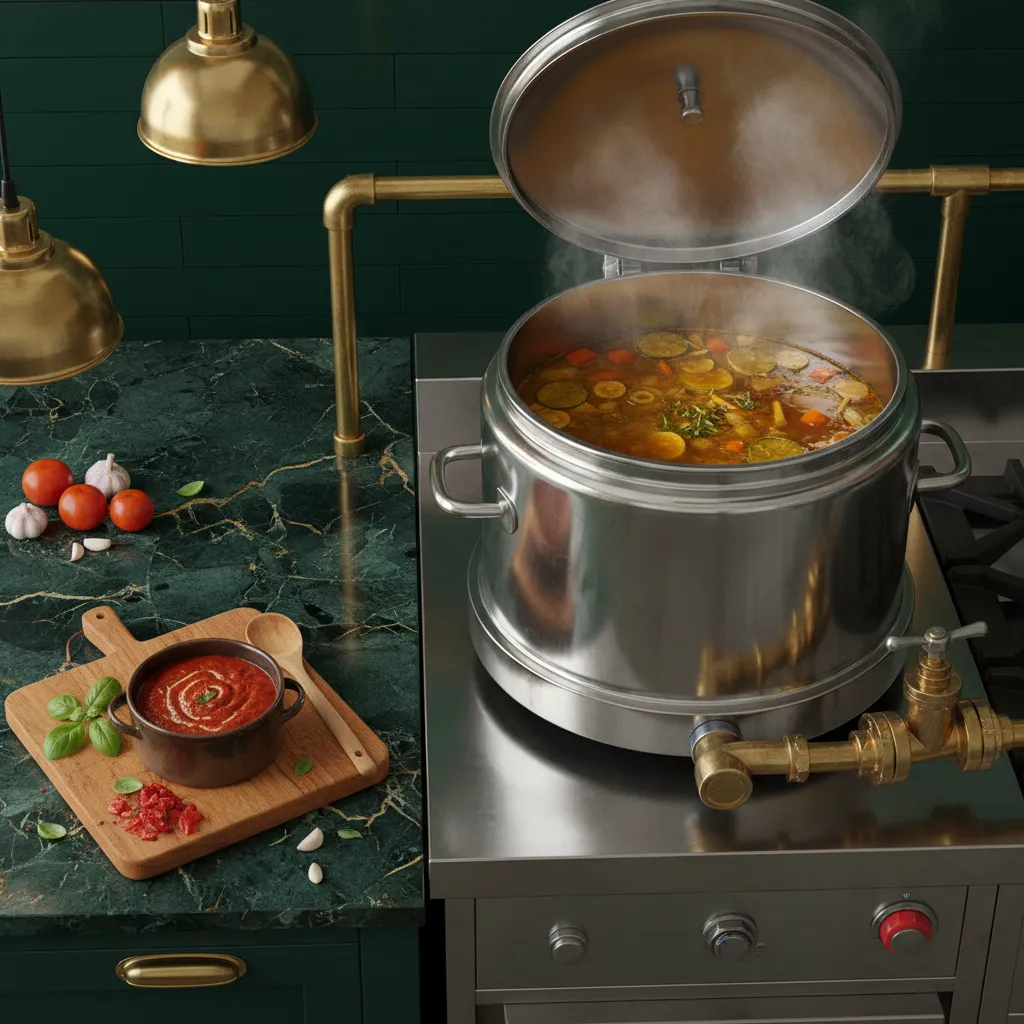
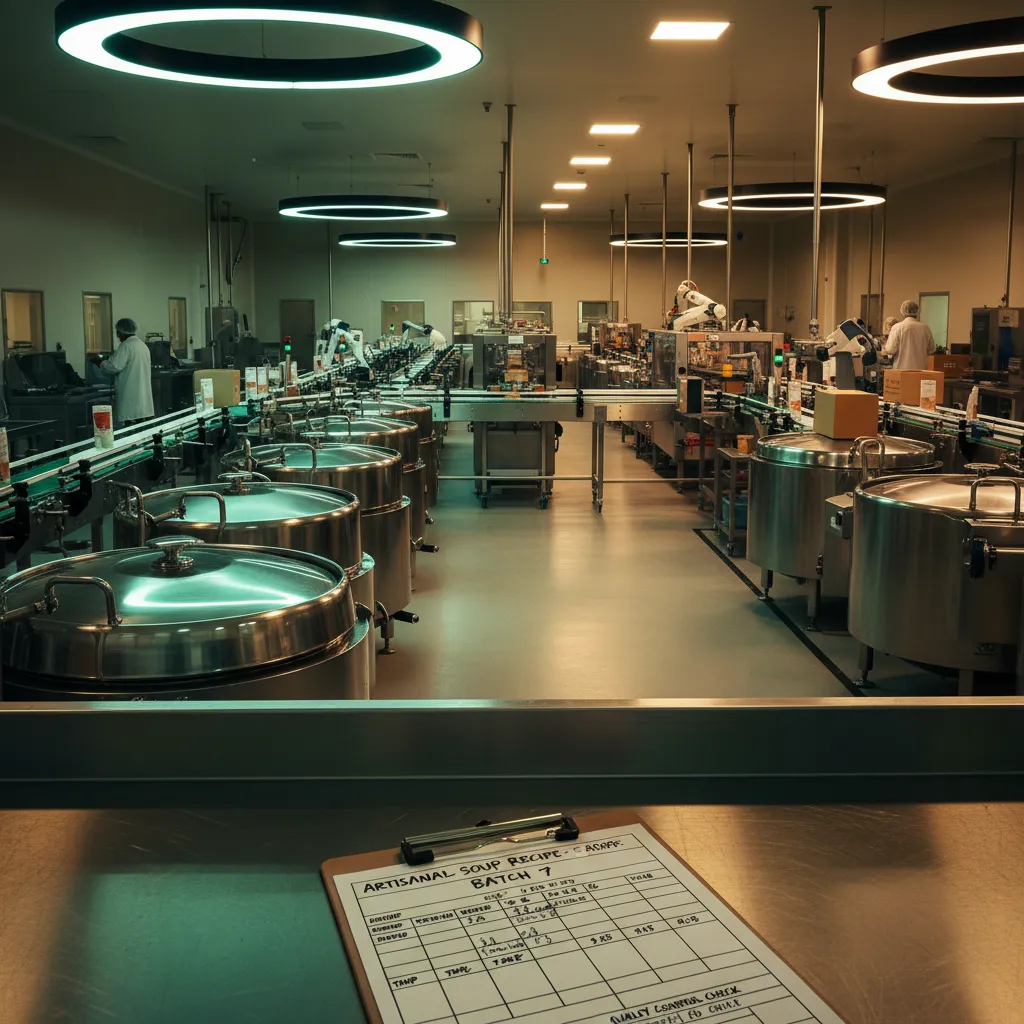
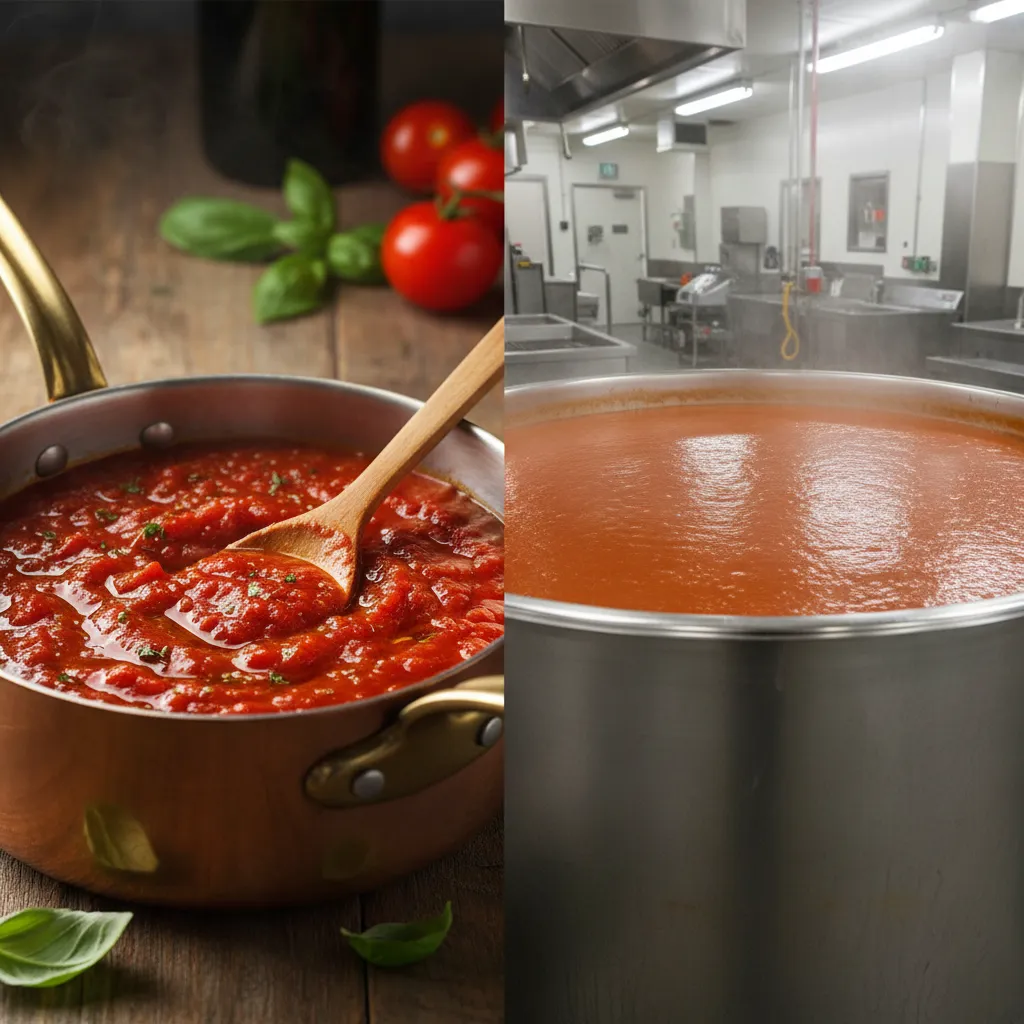
You've developed a fantastic product. Customers love it. Maybe you've even successfully scaled it up from your kitchen to larger batches. But having a recipe that tastes great at scale is only half the equation. A production-ready recipe is one that can be manufactured consistently, safely, and profitably — by someone other than you.
I've reviewed hundreds of recipes that founders describe as "ready for production." Most of them aren't. They're missing critical documentation, they lack food safety validation, or they include process steps that are impractical on commercial equipment. The gap between "this recipe works for me" and "this recipe works for any trained operator at any equipped facility" is where production readiness lives.
Making a recipe production-ready isn't glamorous work. It's the food industry equivalent of engineering drawings — precise, detailed, and exhaustively documented. But it's the single most important investment you'll make before entering commercial production, because every problem you don't solve at this stage becomes ten times more expensive to solve during a production run.
The Complete Production-Ready Recipe Package
The Master Formula
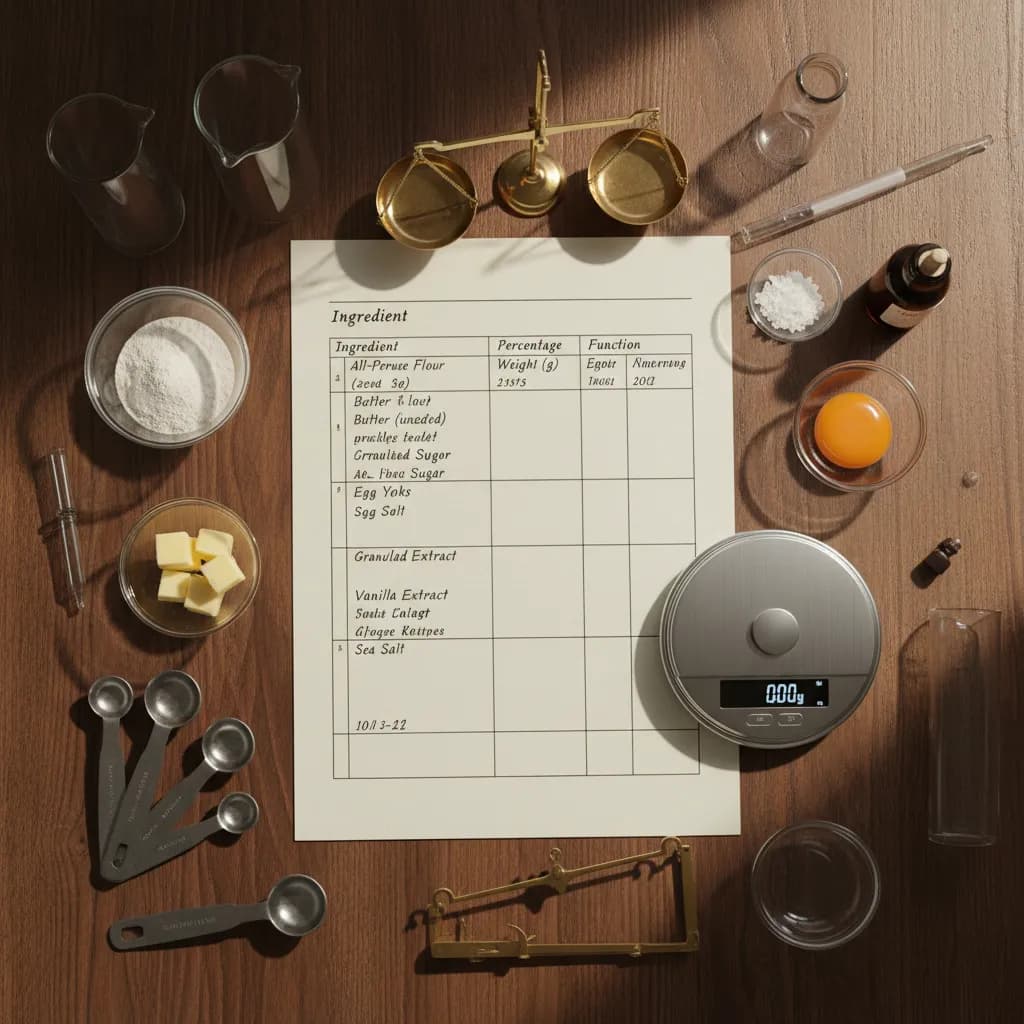
Your master formula expresses every ingredient as a percentage of total batch weight. Not cups, not tablespoons, not "a handful." Percentages. This format is universal — it scales to any batch size and is the standard format that co-packers, regulatory consultants, and process authorities expect to see.
Each ingredient in the master formula needs a complete specification:
- USDA-standard ingredient name (the name that will appear on your nutrition label)
- Supplier specification: Brand, grade, form (powder vs. granular, diced vs. pureed, grain strength for vinegar)
- Acceptable substitutions: If your primary supplier is out of stock, which alternatives are approved without reformulation?
- Receiving specifications: What should the ingredient look like when it arrives? What's the acceptable temperature range, color, particle size, or Brix?
This level of detail eliminates the guesswork that causes batch-to-batch variation. When a co-packer's purchasing manager orders "distilled white vinegar," they need to know you require 100-grain, not 50-grain — because that substitution would halve the acidity of your product and potentially create a food safety issue.
The Manufacturing Procedure
The manufacturing procedure is a step-by-step process document that tells an operator exactly how to make your product. Think of it as a recipe written for someone who has never tasted your product and never will — they're going to follow the numbers, not their instincts.
Every step should include:
- Ingredient addition order: Which ingredients go in first, at what temperature, and why the order matters
- Temperature targets: Specific temperatures for each process phase (not "medium heat" — "185F +/- 5F")
- Time parameters: How long to hold at each temperature, how long to mix, how long to cook
- Mixing specifications: Agitator speed (RPM), type of mixing action (scraping vs. folding vs. high-shear), duration
- Sensory checkpoints: What the product should look, smell, and feel like at key stages
- Critical control points: Where food safety measurements must be taken and what the pass/fail criteria are
Quality Specifications
Your quality spec defines what "right" looks like in numbers. For a typical kettle-cooked sauce, the quality specification includes:
- pH: Target and acceptable range (e.g., 3.65 +/- 0.15)
- Brix: Soluble solids content, which correlates with flavor concentration and viscosity
- Viscosity: Measured with a specific instrument at a specific temperature (e.g., Bostwick consistency at 20C)
- Water activity (aw): Critical for shelf stability and microbial safety
- Color: Measured by instrument or matched to a visual standard
- Fill weight: Target weight per container with acceptable tolerance
- Headspace: The air gap between the product surface and the lid, which affects vacuum seal and shelf life
Each parameter has a target value, an acceptable range, and a corrective action for when a batch falls outside the range. This is the document your quality team (or the co-packer's quality team) will use to approve or reject every batch.
Food Safety Documentation
The Scheduled Process
If your product is an acidified food (which includes most sauces, condiments, dressings, and salsas), federal law requires a scheduled process filed with the FDA. This document, prepared by a recognized process authority, validates that your manufacturing procedure consistently produces a safe product.
The scheduled process covers: the thermal treatment (time and temperature) your product receives, the equilibrium pH your process achieves, and any critical factors (ingredient ratios, fill weights, container sizes) that affect product safety. Without this filing, you cannot legally sell your product in interstate commerce.
HACCP Plan
Your Hazard Analysis and Critical Control Points plan identifies every biological, chemical, and physical hazard in your production process, and establishes monitoring procedures, critical limits, and corrective actions for each hazard. Most co-packers have a facility-wide HACCP plan, but your specific product may introduce hazards their standard plan doesn't cover (allergens, unique ingredients, novel processing steps).
Allergen Management
If your product contains any of the major food allergens (milk, eggs, fish, shellfish, tree nuts, peanuts, wheat, soybeans, sesame), your documentation needs to address cross-contact prevention, label declarations, and supplier allergen verification. This isn't just regulatory — it's a liability issue that can destroy a food brand if mismanaged.
Shelf Life Validation
Your recipe isn't production-ready until you know how long the finished product remains safe and high-quality. Shelf life isn't a guess — it's determined through accelerated and real-time testing.
Accelerated shelf life testing stores your product at elevated temperatures (typically 100F) to simulate months of shelf life in weeks. Real-time testing stores product at the intended storage conditions and evaluates it periodically. For a hot-filled, shelf-stable sauce, I typically recommend testing at 0, 3, 6, 9, and 12 months for pH, color, flavor, texture, and microbial load.
Retailers will ask for your shelf life data. Distributors will ask for it. Your product liability insurance underwriter may ask for it. And if you can't provide validated shelf life data, you're either not getting on the shelf or you're taking on significant risk.
Costing and Yield Documentation
A production-ready recipe includes a detailed cost model that accounts for:
- Ingredient costs at production volume: Not your kitchen prices — what your co-packer pays for 500 pounds of tomato paste, not what you paid for a #10 can at the restaurant supply store
- Processing losses: Product left in the kettle, on the filling line, in the piping — typically 2-5% for sauces
- Evaporation losses: If your process involves open-kettle cooking, you lose water weight. This affects both yield and final product concentration
- Packaging costs: Bottles, caps, labels, shrink bands, cases, pallets
- Production fees: The co-packer's per-unit charge for labor, equipment, utilities, and overhead
I see too many founders set their retail price based on kitchen-scale ingredient costs, then discover their actual cost of goods sold (COGS) at production leaves no room for distributor and retailer margins. Getting the costing right at the formula stage prevents painful pricing surprises later. This is especially important when you're negotiating with co-packers — you need to know your numbers cold.
The Production-Ready Checklist
Before I consider a recipe production-ready, every item on this list must be complete:
- Master formula in percentages with full ingredient specifications
- Manufacturing procedure with temperatures, times, and mixing parameters
- Quality specifications with targets, ranges, and corrective actions
- Scheduled process filed with FDA (for acidified and low-acid foods)
- HACCP plan addressing product-specific hazards
- Allergen assessment and cross-contact prevention plan
- Nutrition facts panel (generated from the formula and verified by lab testing)
- Shelf life validation data (accelerated and/or real-time)
- Costing model with yield calculations and loss factors
- Packaging specifications with supplier information
If any of these items are missing, your recipe isn't production-ready. It might be a great recipe. It might taste incredible. But production readiness is about the entire package — the documentation, validation, and specifications that allow your product to be manufactured consistently, safely, and profitably. Skipping any element invites the kind of mistakes that cost founders thousands of dollars in failed batches and delayed launches.
Frequently Asked Questions
What's the difference between a recipe and a production-ready formula?
A recipe tells a cook how to make a dish. A production-ready formula tells a manufacturing facility how to produce a safe, consistent, legally compliant food product at scale. It includes percentage-based ingredient formulations, complete manufacturing procedures with precise temperatures and times, quality specifications with measurable targets, food safety documentation, and shelf life validation. The recipe is the creative starting point; the production-ready formula is the engineering blueprint.
Do I need a process authority for my sauce or condiment?
If your product is an acidified food — meaning it has a finished pH below 4.6 achieved by adding acid (vinegar, citric acid, lemon juice) to low-acid ingredients (vegetables, meat, beans) — then yes, federal regulations require a scheduled process established by a recognized process authority. Most sauces, hot sauces, salsas, condiments, and dressings fall into this category. The process authority evaluates your formula and process, then files the scheduled process with the FDA. This is a legal requirement, not an optional quality measure.
How much does it cost to make a recipe production-ready?
Professional recipe development and production-readiness documentation typically costs $3,000-$15,000 depending on the product's complexity. A simple hot sauce with five ingredients on the lower end; a complex emulsified dressing with multiple spice components on the higher end. This investment includes formula development, pilot batching, lab testing, process authority filing, and complete documentation. Compared to the cost of failed production runs ($5,000-$20,000+ each), professional development is overwhelmingly the more cost-effective path.
Can my co-packer make my recipe production-ready?
Some co-packers offer in-house R&D services, but most don't. Co-packers are manufacturing specialists, not product developers. Asking your co-packer to develop your formula is like asking a printer to design your book. They can do a competent job in some cases, but it's not their core expertise, and you may end up with a product that works on their equipment but can't be transferred to another facility. Working with an independent recipe developer ensures your formula is facility-agnostic and protects your intellectual property. Read more about the complete scaling process.
How do I know if my current recipe documentation is sufficient?
Ask yourself: could a competent operator who has never met you produce your product to your quality standards using only your written documentation? If the answer is no — if they'd need to call you, taste-test, or use their judgment on any step — your documentation isn't sufficient. Production-ready documentation eliminates subjectivity. Every measurement is a number, every process step has a parameter, and every quality checkpoint has a pass/fail criterion. If your recipe includes phrases like "season to taste," "cook until done," or "add enough thickener," it needs more work.
Need Help With Your Formulation?
Whether you're scaling your first recipe or reformulating an existing product, let's talk about how to get it right.
Book a Free Discovery Call