The Funk in Your Best Batch Is a Living Process, and Living Processes Fight Scale
You built something people cannot stop talking about. A hot sauce, or a fermented condiment, with a depth that reads nothing like the vinegar-and-pepper stuff on the shelf next to it. There is a savory hum underneath the heat, a sourness that feels round instead of sharp, and a complexity that makes people ask what is in it. The honest answer is time, salt, chilies, and a few trillion bacteria doing work no ingredient statement can capture.
Then a buyer wants a purchase order, or a co-packer asks for your pH and your scheduled process, and the questions get uncomfortable fast. Is it shelf stable, or does it need refrigeration? Will it keep fermenting in the bottle? What happens to the flavor at a hundred gallons instead of two quarts? Is it even legal to sell the way you make it now?
Fermentation is a real-ingredient superpower for flavor, arguably the deepest one we have. It is also biology, and biology does not care about your production calendar. Here is how I build a fermented sauce that keeps the magic and survives a real supply chain.
What Fermentation Actually Does to a Chili
Lacto-fermentation is not a flavoring you add. It is a controlled environment where naturally occurring lactic acid bacteria (the Leuconostoc and Lactobacillus families, mostly) eat the sugars in your chilies and vegetables and produce lactic acid, carbon dioxide, and a long list of aromatic byproducts. You are not seasoning the pepper. You are letting microbes rebuild it.
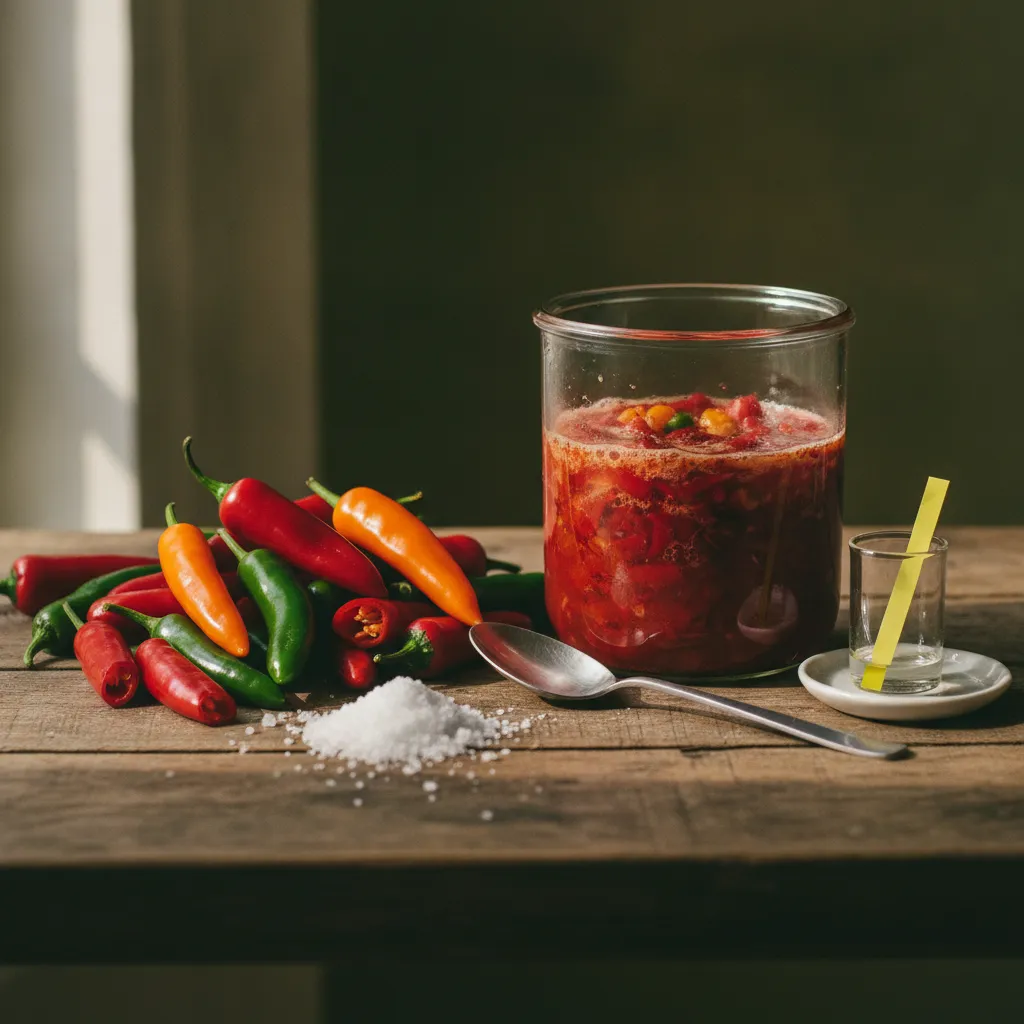
The mechanism is elegant. You submerge chilies, whole or as a mash, in a salt brine, seal out most of the oxygen, and wait. Salt-tolerant lactic bacteria outcompete spoilage organisms, and as they multiply they pump out lactic acid. The pH falls, the flavor transforms, and the acid itself becomes a natural preservative. It is the same process behind sauerkraut, kimchi, real dill pickles, miso, and the aged pepper mashes behind some of the most famous hot sauces in the world.
What makes this a real-ingredient technique in the truest sense is that every bit of it is whole foods acting on themselves: chilies, salt, water, and native or cultured bacteria. No artificial flavor system, no lab-built acidulant, no synthetic umami is doing the heavy lifting. That is why the flavor is so hard to counterfeit, and why it deserves protecting as you scale.
The Salt and the Brine Are the Whole Ballgame
Salt is the single most important variable you control, and it does three jobs at once: it draws water and sugars out of the plant tissue through osmosis, it suppresses the pathogens and spoilage yeasts that would otherwise take over, and it selects for the salt-tolerant lactic bacteria you actually want. Most chili ferments live in the range of roughly 2 to 5 percent salt by weight of the total mass. Around 2 percent is often cited as a practical floor for favoring lactic bacteria and getting a reliable acid drop, while higher percentages slow the ferment, push it toward a cleaner profile, and buy more safety margin. These are working ranges, not safety rulings. Confirm any target you productionize with a process authority, because the right number depends on your formula, temperature, and process.
Brine ferment versus mash ferment
A brine ferment keeps chilies whole or in large pieces under liquid. It runs cleaner and more predictable, and it is easier to keep submerged and anaerobic. A mash ferment blends chilies with salt into a paste, which gives more surface area, a faster and often funkier ferment, and a more concentrated flavor, but demands more attention to keep oxygen out. Neither is better; they are different flavor and risk profiles, and the choice shapes everything downstream.
The founder mistake I see most is measuring salt by feel. At two quarts you can get away with a heavy pinch. At a hundred gallons, salt percentage is a spec, weighed to the gram against total batch mass and written into the batch sheet. Salt here is not the seasoning. It is the safety hurdle and the microbial gatekeeper.
Time and Temperature Are Your Two Dials
Once salt is set, time and temperature shape the finished character, and they trade against each other. Temperature sets the pace and the personality. A warmer ferment, in the mid-70s Fahrenheit, moves fast, drops pH quickly, and develops bold, funky, sometimes aggressive notes. A cooler ferment, down in the mid-60s, crawls but often produces a cleaner, more layered result. Warmth is speed. Coolness is nuance. A co-packer holding your ferment at ambient warehouse temperature will not give you the sauce you developed in a 64-degree basement.
Time is depth. A few days gets you bright acidity and a light tang. One to four weeks builds the rounder sourness and savory complexity most craft sauces chase. Aging measured in months develops the deep, almost aged-cheese or soy-adjacent character that defines the most prized pepper mashes. The trade-off is that time is inventory sitting still, capital tied up, and tank capacity you cannot reuse. A recipe that needs eight weeks of ferment is a fundamentally different business than one that needs eight days, and that has to be designed in early.
The Complexity You Genuinely Cannot Fake
Here is the part that matters most to how I formulate. As the bacteria work, proteins break down and release free glutamates, the same savory umami backbone you taste in aged cheese, soy sauce, and miso. Sugars convert to a spectrum of acids that read as complex sourness rather than the one-note sharpness of straight vinegar. Fermentation throws off esters and other aromatics that give the sauce its lift. The result has real dimension: acid, umami, funk, and fruit at once, built entirely from real food acting on itself over time.
You can approximate a fermented note with added glutamate sources or a splash of vinegar, but approximation is exactly what a discerning customer tastes through. A real ferment commands a premium and builds a following because it delivers what the shortcut cannot. When I design a fermented product for scale, the whole goal is to protect that complexity through production, not sand it off for convenience. If you are still shaping the core flavor direction, my piece on developing a signature hot sauce is a good companion to this one.
Consistency Batch to Batch: The Real Production Problem
This is where fermentation gets genuinely hard at scale. You are not manufacturing a sauce. You are managing a living population, and living populations vary. Chili sugar content shifts with the harvest, ambient temperature drifts across seasons, and native microbial loads differ from one lot of peppers to the next. Uncontrolled, all of that shows up as a sauce that tastes different from run to run, the fastest way to lose a retail buyer who expects the jar to taste the same every time.
The tools that tame this are what craft fermenters and large producers both rely on:
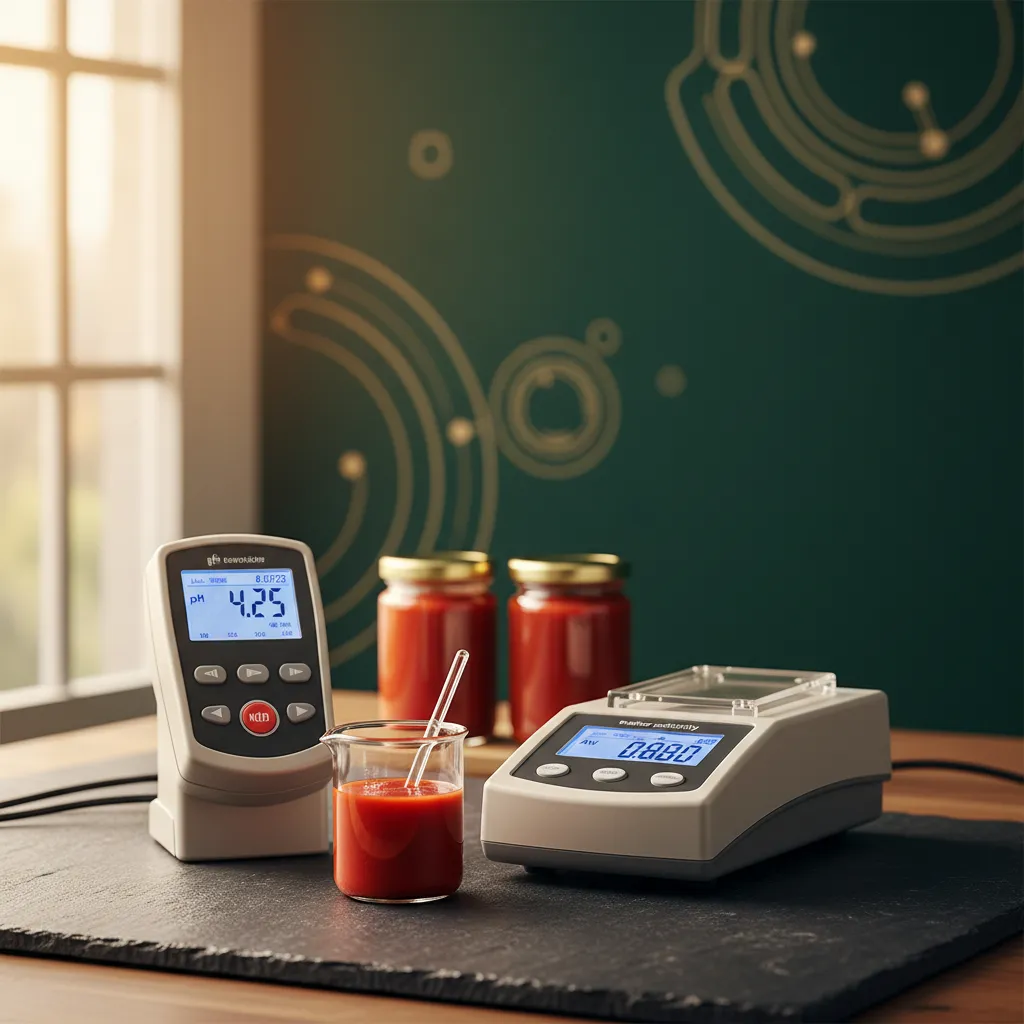
- Endpoint by measurement, not calendar. Instead of "ferment for 14 days," you specify a target pH endpoint (and often a target titratable acidity) and ferment until you hit it. The clock is a guide; the pH meter is the decision. Two lots that reach the same acidity taste far more alike than two fermented for the same number of days.
- Starter cultures. Wild fermentation is romantic and unpredictable. Inoculating with a defined, food-grade lactic starter culture (a real bacterial culture, not an ultra-processed additive) gives you a consistent microbial community batch to batch. It is one of the biggest levers for reproducibility, and still entirely a real-ferment approach.
- Temperature control. A climate-controlled fermentation space removes the largest source of seasonal drift, and is often the difference between a co-packer who can hold your spec and one who cannot.
- Ingredient consistency. Locking chili variety, ripeness window, and supplier tightens the input side so the ferment has less to react against.
pH, Safety, and the Question Everyone Eventually Asks
Fermentation is a preservation method precisely because of the acid it produces. As lactic acid accumulates, the pH of a chili ferment commonly falls into roughly the 3.2 to 3.8 range, comfortably under the pH 4.6 line that is the central threshold in this category. Below that threshold the environment does not permit the growth of the organism everyone worries about, Clostridium botulinum, or the formation of its toxin. Salt, low oxygen, and cold conditions each add further hurdles on top of acidity.
I want to be plain here, because this is where confident internet advice gets people in trouble. Those numbers are well-established anchors, but whether your specific product is safe and legal depends on your formula, process, equilibrium pH across the whole batch, water activity, and packaging, and none of that is something a blog post can certify. This is exactly the point to bring in a process authority. Treat pH as a measured, documented, verified critical control point, not a number you assume you cleared because a batch tasted sour. For how acidity works alongside moisture, see my piece on water activity versus pH.
Live or Stabilized: The Fork That Defines Your Business
Every fermented sauce founder hits the same decision, and it shapes your logistics, shelf life, label, and flavor. Do you keep the product live, or stabilize it? There is no universally right answer, only the right one for your channel and brand.
Keep it live
A live sauce is the purest expression of the craft. The culture is still active, the flavor keeps evolving in the bottle, and the label story is as clean as it gets. The cost is logistics. A live product keeps producing carbon dioxide, so it generally needs cold-chain handling and refrigeration to slow activity and protect the package, which narrows retail options and raises your cost to serve. For a premium brand in refrigerated specialty sets, that trade can be worth it: the natural acidity does the preservation, exactly the real-food-first approach, and the cold chain protects the living character rather than killing it.
Stabilize it
Stabilizing means stopping the biological activity so the product can live on an ambient shelf. There are two honest routes, each with real trade-offs.
Pasteurization. A controlled heat step kills the active culture and locks the product where it is. This is a legitimate, widely used, real-ingredient-compatible way to make a ferment shelf stable, and it adds nothing at all. The trade-off is flavor: heat drives off some delicate volatile aromatics and can soften the vivid, live edge. Dialed in carefully to the minimum effective treatment, a pasteurized ferment can still be excellent. Done carelessly, it flattens the very thing you fermented to create.
Acidification. The other route lowers and locks the pH by adding acid, usually vinegar, sometimes citric acid, so the product sits reliably below the safety threshold. Vinegar is a real, recognizable ingredient many classic sauces are built on. My honest guidance is to let the ferment do the primary work and use added acid as a targeted backstop for consistency and safety margin, not the whole strategy. When added vinegar becomes the main event, you have quietly built an acidified sauce with a fermented note rather than a true fermented sauce, and a good palate can tell. There is also a regulatory consequence, which I come to below.
On chemical preservatives specifically (potassium sorbate, sodium benzoate, and the like): they exist, they work, and plenty of shelf-stable sauces use them. They are not where I start. A well-fermented, properly acidic, well-packaged sauce often does not need them, and for a real-ingredient brand they read as a compromise on the exact promise you are making. There are usually real-food and process levers to pull first, the whole subject of my piece on extending shelf life without artificial ingredients.
Gas and Packaging: The Detail That Bursts Bottles
Carbon dioxide is a fact of fermentation, and it does not politely stop when you fill the bottle. If any live activity remains in a sealed, ambient-stored package, gas keeps building. That pressure can push product past the seal, bulge the container, cause messy overflow when a customer opens it, and in the worst case crack or burst glass. It is one of the most common ways a fermented sauce embarrasses a young brand in the field.
Packaging strategy follows directly from the live-versus-stabilized decision. A fully stabilized product, pasteurized or reliably acidified so activity has genuinely stopped, can go into standard shelf-stable packaging. A live product needs a plan for the gas: cold-chain handling, adequate headspace, closures and liners suited to a product that may hold slight pressure, clear consumer guidance to keep it refrigerated, and sometimes a controlled degassing step before filling. The wrong move is to bottle a still-active ferment into a tight ambient package and hope, which tends to arrive as a call from a retailer about leaking cases.
Related Reading
If you are working through a fermented product for retail, three companion pieces go deeper on the pillars this article touches: the FDA process authority letter for acidified foods, developing a signature hot sauce, and water activity versus pH for shelf stability.
Frequently Asked Questions
Is a fermented product the same as an acidified product to regulators?
Not automatically, and the distinction matters. A food that reaches a finished pH at or below 4.6 through fermentation alone has generally been treated differently from a food you drive below 4.6 by adding acid, which is the definition of an acidified food and pulls you into specific requirements, including a scheduled process and a process authority filing. The catch: the moment you add vinegar or another acid to guarantee the pH, you can shift the product's regulatory classification. This is genuinely nuanced and depends on your formula and process, so verify your classification and requirements with a qualified process authority before you productionize.
Do I have to keep my fermented hot sauce refrigerated?
It depends on whether it is live or stabilized. A live, still-active sauce generally needs refrigeration to slow fermentation, manage gas pressure, and protect flavor. A properly pasteurized or reliably acidified sauce can often be shelf stable at ambient temperature. Confirm which path fits against your measured pH, water activity, and packaging with a process authority, rather than assuming.
How do I keep my fermented sauce tasting the same batch to batch?
Ferment to a measured endpoint rather than a fixed number of days, typically a target pH and often titratable acidity. Control fermentation temperature, consider a defined starter culture for a consistent microbial community, and tighten your chili sourcing so the inputs vary less. Consistency in a living process comes from measuring what correlates with flavor and safety, not from watching the calendar.
Does pasteurizing ruin a fermented sauce?
It changes it, but it does not have to ruin it. Heat kills the live culture and drives off some delicate aromatics, so a pasteurized version reads a little softer than the live one. Dialed in carefully to the minimum effective treatment, it can still be excellent and gains real shelf-stability and distribution advantages. The goal is the gentlest process that achieves stability while preserving the most character.
Where This Becomes Real Work
A fermented sauce or condiment is one of the most exciting things a founder can build, because the flavor is real, earned, and almost impossible to copy. It is also one of the most demanding to scale, because you are asking a co-packer to reproduce a living process, hold a safety-critical pH, choose between a live and a stabilized product, and package around a gas that does not want to sit still. Done right, it all holds together and the jar tastes like the one that started the whole thing. If you have a ferment people love and you are staring down the gap between your crock and a real production run, that is exactly the work I do with founders. Book a Free Discovery Call and let us map the path from your batch to a shelf-ready product without losing what makes it worth bottling.
Need Help With Your Formulation?
Whether you're scaling your first recipe or reformulating an existing product, let's talk about how to get it right.
Book a Free Discovery Call