Two Numbers That Decide Almost Everything
There are two measurements on every shelf-stable food product that matter more than almost any other specification you'll track: pH and water activity (Aw). Together, they determine whether your product can sit on an unrefrigerated shelf for 12 months or has to ride refrigerated trucks, whether pathogens can grow in it, and whether a co-packer can even produce it without additional safety intervention.
Most founders know vaguely that pH is about acidity and water activity is about "how wet" something is. That's enough for a dinner conversation — it's not enough for a production spec. Let's fix that.
What pH Actually Measures
pH is a scale of hydrogen ion concentration, running from 0 (extremely acidic) to 14 (extremely alkaline), with 7 as neutral. For food safety, the number that matters most is 4.6. Below pH 4.6, the bacterial spore most feared in shelf-stable food — Clostridium botulinum — generally cannot germinate and produce toxin. Above 4.6, it can, unless another barrier is in place.
This is why acidified food regulations (21 CFR 114 in the U.S.) target products that are intentionally acidified to a pH at or below 4.6. Vinegar sauces, salsas, pickled products, and many dressings fall into this category.
What Water Activity Measures (And Why It's Not the Same as Moisture)
Water activity is a measure of available water — water that microorganisms can actually use to grow. It runs from 0 to 1.0, where pure water is 1.0 and a totally dry product approaches 0.
Two products can have the same total moisture and very different water activities. Honey is ~17% water but has an Aw around 0.6 because the sugars bind the water so tightly that microbes can't access it. Fresh meat is ~70% water but has an Aw above 0.95 — a bacterial paradise.
Key thresholds to remember:
Aw below 0.85: Below this, pathogenic bacteria generally can't grow. This is a common hurdle for jams, preserves, dried fruit, and thick sauces.
Aw below 0.60: Below this, neither bacteria nor most molds can grow. True dry-shelf-stable territory.
How pH and Water Activity Work Together
Neither number operates in isolation. The FDA recognizes several categories of shelf-stable food defined by the combination:
High-acid foods (pH ≤ 4.6 naturally): Foods like vinegar, lemon juice, or certain fruits. Safe on the acid side alone.
Acidified foods (pH ≤ 4.6 with added acid): Many sauces, salsas, hot sauces, and pickled products. These typically require a scheduled process filed with the FDA.
Low-acid canned foods (pH > 4.6 and Aw > 0.85): Soups, broths, beans, meat-based sauces in some cases. These require a much more rigorous thermal process (think pressurized retort) and specialized process authority work.
Low-moisture foods (Aw ≤ 0.85): Jams, fruit leather, dry snack mixes. Shelf-stable via water activity rather than acid.
A reputable production-ready formulation specifies both numbers, with a target range and a safety margin.
The Practical Failure Modes
Drifting above 4.6
Your recipe tested at pH 4.2 in the kitchen. A production batch hits 4.7 because the tomato lot was less acidic than expected or the cook time pushed off some volatile acid. Now your product is legally low-acid, and the thermal process you designed is inadequate. This is how founders end up with batches that fail QC or, worse, pass QC and get recalled.
Water activity creep
A sauce designed for Aw 0.83 can drift to 0.87 if ingredient moisture or cook yield varies. Mold colonies appearing under the cap months into shelf life are almost always a water activity control story.
Emulsion separation masking pH drift
In dressings and emulsified sauces, different phases can have different local pH values. A surface measurement might look safe while pockets of higher-pH product sit within the matrix. This is why representative sampling matters.
For related shelf-life topics, see extending shelf life without artificial ingredients and natural preservatives that actually work.
Building a Safety Margin Into Your Spec
Good CPG formulations don't hit the hurdle on the nose — they bake in margin. For an acidified product, I typically want a production spec with a target pH of 4.0-4.2 and a hard ceiling of 4.3, not 4.6. That buffer absorbs ingredient variability, measurement error, and process drift. The same principle applies to Aw: if 0.85 is the hurdle, you want a target closer to 0.80-0.82.
The specific numbers for your product depend on category, packaging, thermal process, and distribution model. A generic "aim below 4.6" target is exactly the kind of shortcut that bites founders when production variability shows up.
Frequently Asked Questions
Can I test pH and water activity myself?
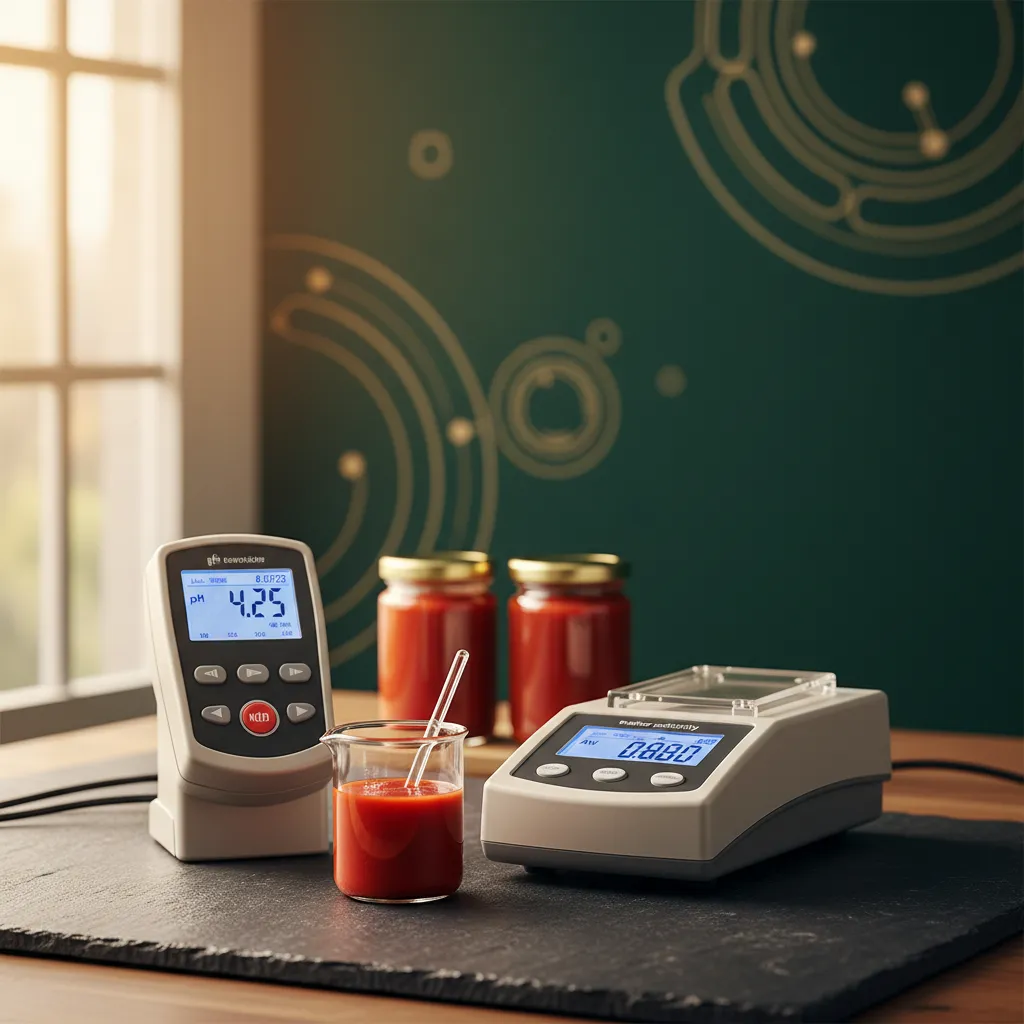
pH you can measure with a calibrated benchtop meter — just don't trust pH strips for regulatory decisions. Water activity requires a dedicated Aw meter, which is a separate instrument running in the $3,000-$10,000 range. Many founders send samples to a food lab for Aw testing rather than buying a meter early on.
Does a lower pH mean a longer shelf life?
More acidic products are generally more resistant to microbial growth, but shelf life also depends on oxidation, color stability, flavor degradation, and packaging. You can have a beautifully safe product at pH 3.8 that still loses flavor in 6 months because the aromatics oxidize. Shelf life is a multi-factor problem.
What's "hurdle technology"?
Hurdle technology is the idea that food safety often depends on multiple simultaneous barriers, not one. A product might rely on moderate pH + moderate Aw + a natural preservative + proper packaging, none of which alone would be sufficient. Designing a hurdle system is part of what a formulator does when building a clean-label, shelf-stable product.
My co-packer is asking for a "pH/Aw spec." What do I give them?
A production specification with a target value and an acceptable range for each, plus a rejection threshold — e.g., "Target pH 4.0, acceptable range 3.8-4.2, rejection above 4.3." Same structure for Aw. If you don't have those numbers documented, that's a sign the recipe isn't ready for commercial production yet.
Where the Framework Ends and the Craft Begins
The framework above is the shared vocabulary of food safety. The craft — choosing which acid delivers the flavor you want at the pH you need, balancing Aw with texture, holding aromatics through thermal processing — is where formulation becomes specific to your product. Those calibrations are what I work through with founders inside an engagement, not in a blog post. If you're wrestling with either number and you can't get clean readings, start with a discovery call.
Need Help With Your Formulation?
Whether you're scaling your first recipe or reformulating an existing product, let's talk about how to get it right.
Book a Free Discovery Call