Three Roads to a Stable Product
If you're producing a sauce, dressing, soup, or condiment for retail, you're going to make a thermal-process decision that shapes your product for its entire commercial life. The three most common paths in the U.S. specialty food world are hot-fill-hold, high pressure processing (HPP), and retort. Each one is a different deal — different equipment, different cost, different flavor impact, different co-packer ecosystem, different shelf-life ceiling.
Most founders inherit a process choice from whichever co-packer they meet first. That's not always wrong — but it's worth understanding the trade-offs so you're choosing intentionally.
Hot-Fill-Hold: The Workhorse
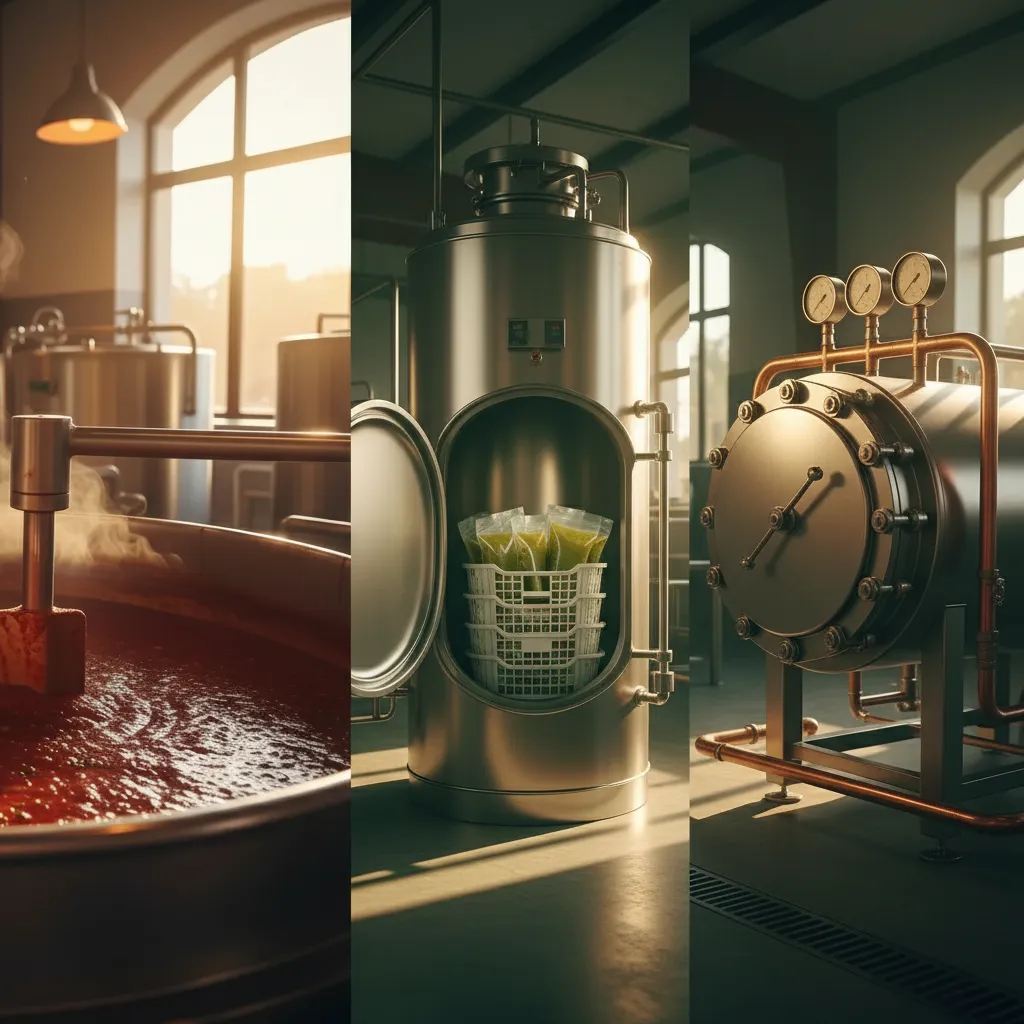
Hot-fill-hold is the dominant process for shelf-stable acidified foods — sauces, salsas, hot sauces, dressings, condiments. The idea is simple: cook the product to a high enough temperature, fill it into containers above a defined temperature, seal, and hold at that temperature long enough to deliver the thermal kill needed for the product's pH category.
What it does well
It's mature technology, widely available across co-packers, relatively low capital cost, and well-suited to acidified products. It produces a fully shelf-stable product when properly designed and validated. Kettle-cooked sauces and condiments live here.
What it does to the product
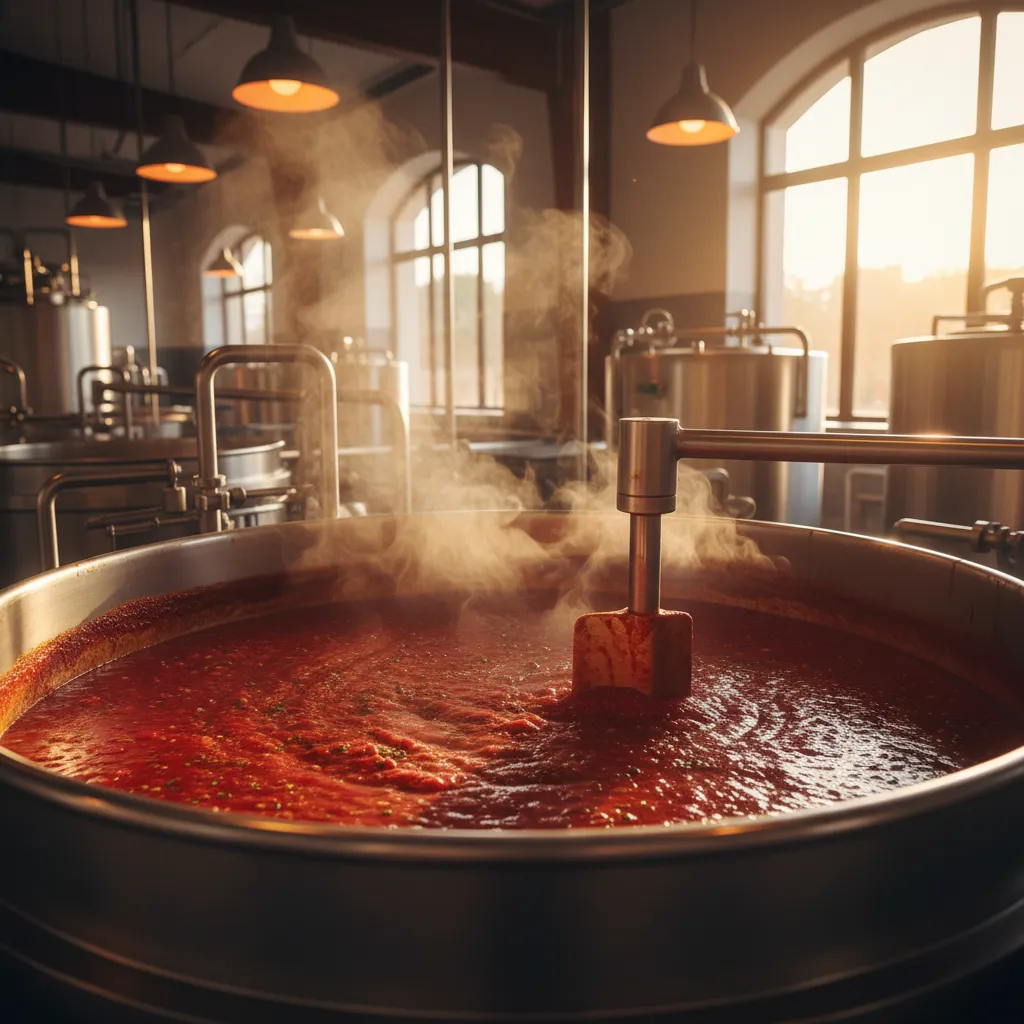
The cook itself develops Maillard depth, color, and aromatic concentration. The fill temperature is high enough that some heat-sensitive top notes can be diminished if you're not protecting them with late additions or stabilization. For most sauces and salsas, this is a familiar trade and a workable one. For more on the kettle craft itself, see why kettle cooking produces better sauces.
What it requires
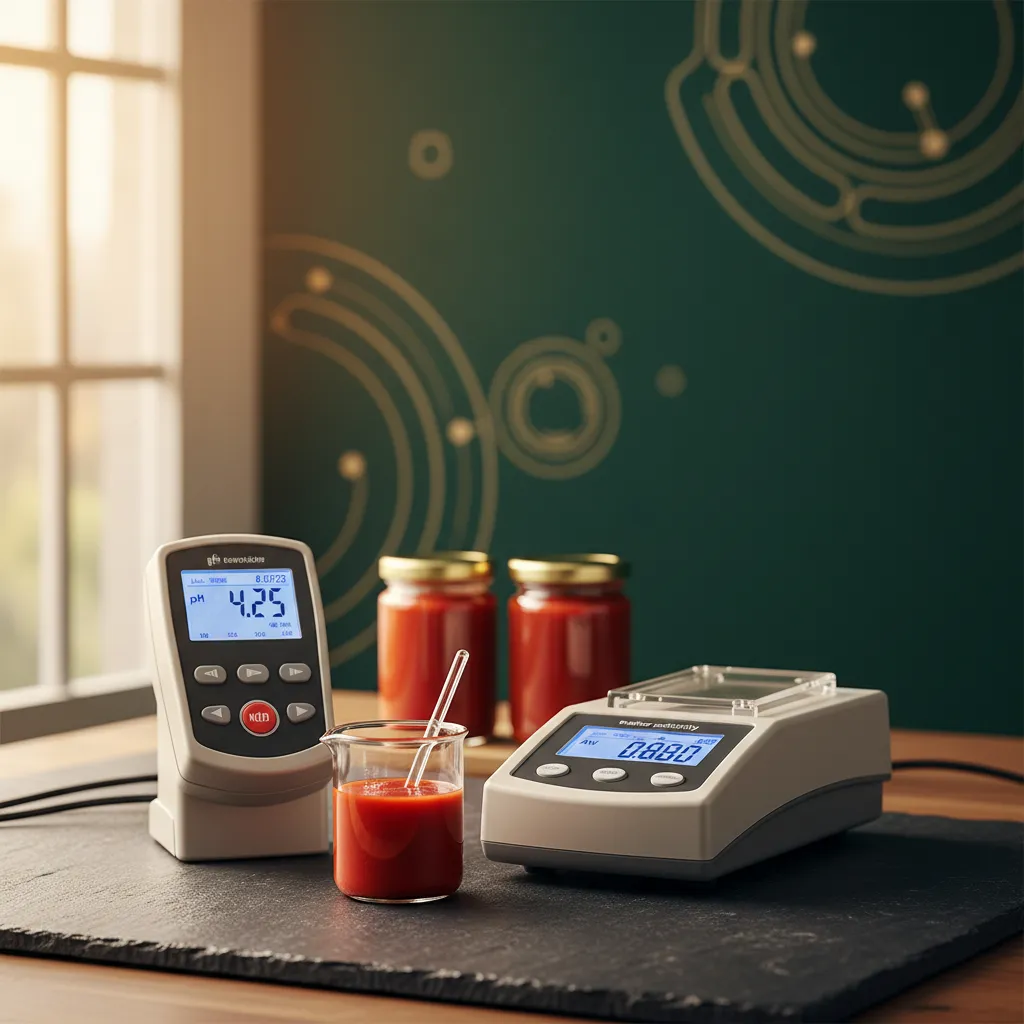
For acidified products, a scheduled process and process authority letter — see FDA process authority letters for acidified foods. You also need pH and Aw discipline; see water activity vs pH.
HPP (High Pressure Processing): Cold-Friendly, Format-Limited
HPP is a non-thermal process: sealed product is loaded into a vessel and exposed to extreme hydrostatic pressure (typically 87,000 psi range) for several minutes. The pressure inactivates many pathogens and spoilage organisms without heat — which means a fresher-tasting product with a much shorter "cooked" character.
What it does well
It preserves color, flavor, and texture beautifully — especially for products where heat dulls the experience (cold-pressed juices, fresh dips, guacamole, some salsas, salad dressings, refrigerated entrees). It extends refrigerated shelf life dramatically without preservatives, which matches the clean-label playbook.
What it doesn't do
It generally does not produce shelf-stable product on its own. Most HPP products live in refrigerated distribution. It also limits packaging — the container and closure have to survive the pressure cycle, which usually means flexible plastic or specific PET containers, not glass.
Cost structure
HPP is a per-cycle, per-vessel cost. There are fewer HPP toll processors than hot-fill co-packers, and minimums can be steep. Some HPP processors run on shared days where multiple brands batch into the same cycle. Per-unit cost is meaningfully higher than hot-fill in most cases.
Retort: For Low-Acid, High-Risk Products
Retort is a high-temperature, high-pressure thermal process used for low-acid canned foods (pH above 4.6 with Aw above 0.85). Soups, beans, meat-based sauces, dairy-containing products in some cases — anything where the pathogen-of-concern profile demands a much more aggressive thermal kill than acidified hot-fill can deliver.
What it does well
It produces fully shelf-stable, ambient-storage product across product categories that hot-fill cannot safely cover. It's the only practical path for many low-acid products at retail scale.
What it does to the product
It's intense heat for an extended time. Texture, color, and flavor profiles change significantly — chunks soften, colors shift, and aromatic profiles flatten. Recipe development for retort-bound products is its own discipline; the recipe you'd hot-fill is rarely the recipe you'd retort.
What it requires
Process authority involvement at a deeper level than acidified products, BPCS-certified operators, and a co-packer set up for low-acid canned food production (LACF). The barrier to entry is higher and the co-packer pool is smaller.
How to Choose
The honest answer is that the choice mostly chooses you — based on your product category, your retail channel, your shelf-life requirement, and your distribution reality.
If your product is acidified and shelf-stable for grocery: hot-fill-hold is the default starting point.
If your product is fresh, refrigerated, and clean-label: HPP is worth pricing alongside refrigerated hot-fill.
If your product is low-acid and needs ambient distribution: retort is usually the necessary path. There are alternative low-acid processes (aseptic, for example) but they require even more specialized facilities.
If you can't decide: get pricing from at least one co-packer in each relevant category before committing. The cost difference can be a 2-3x swing on a per-unit basis.
Common Misconceptions
"HPP makes anything shelf-stable." Generally no. HPP extends refrigerated shelf life and reduces pathogen load — it doesn't replace the heat treatment required for ambient shelf stability in most categories.
"Hot-fill is bad for clean label." Not inherently. Most clean-label sauces, salsas, condiments, and dressings on shelf are hot-fill products. The "freshness" premium HPP delivers is meaningful but not free.
"Retort always tastes terrible." Retort recipes designed for retort can taste excellent. Recipes designed for hot-fill that get force-fit into retort almost never do.
Frequently Asked Questions
Can I switch processes later?
Yes, but it's substantial work. The recipe usually needs reformulation, the packaging may change, the process authority documentation has to be redone, and your co-packer relationship typically resets. Plan for this if you anticipate growing into a different process down the line.
What's the difference between HPP and aseptic processing?
HPP uses pressure at ambient temperature; aseptic uses brief high-temperature processing of the product and the package separately, then combines them in a sterile environment. Aseptic is common for shelf-stable juices and certain dairy products. Both are specialized.
Is one process more "natural" than another?
"Natural" is a marketing word, not a technical one. All three processes are widely used in clean-label products. The honest claim is the process you actually use — labels that imply otherwise can attract regulatory scrutiny.
How much capital do these processes cost a brand?
You're not buying the equipment — your co-packer is. Your cost is the per-unit price your co-packer charges. HPP is typically the highest per-unit cost of the three. Hot-fill is typically the lowest. Retort sits in the middle but with higher minimums.
Where Specifics Take Over
The category-level comparison is shared knowledge. The specifics — which co-packer in your region runs both hot-fill and HPP and is good at both, which retort facility will engage at founder-stage volumes, how to design a recipe so it can move between processes if needed — those come from working through your specific product. If you're at a thermal-process decision point and want help thinking it through, a discovery call is a reasonable starting place.
Need Help With Your Formulation?
Whether you're scaling your first recipe or reformulating an existing product, let's talk about how to get it right.
Book a Free Discovery Call