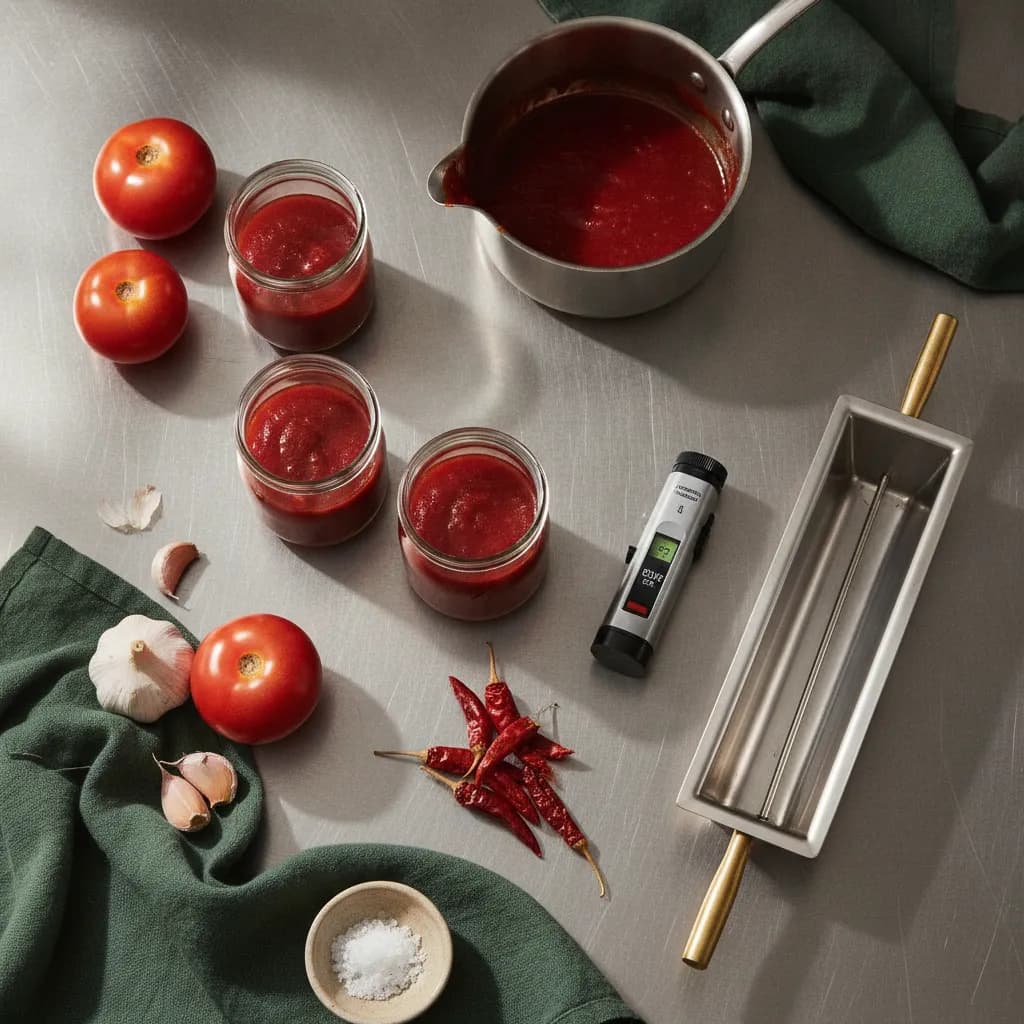
Some brands are handed a product instead of building it. A co-founder who did all the cooking leaves. You buy a sauce line from the person who started it. The developer who built the dressing moves on, or the plant that has made the salsa for years turns out to be the only place the real numbers live. The product keeps selling until someone asks a question nobody in the building can answer: what exactly is in this, in what amounts, and how is it made?
Thin documentation is not a crisis while the plant keeps running the product the way it always has. It turns into one when something moves: an ingredient goes short, the plant changes owners, a buyer asks for a full specification, or you try to add a flavor and realize you do not know what the base actually is. The fix is to rebuild the formula from evidence, verify it against the product your customers already buy, and write it down in a form you hold.
A Word on Ownership Before You Start
Before you ask anyone for documents, get clear on what you have a right to. If you bought the brand, the purchase agreement says what came with it. If a partner left, your partnership or operating agreement does. If a co-packer or an outside developer did some of the development, their contracts may say who owns that work, and part of what the plant runs may be its own house base. Those are legal questions for a food-industry attorney. Ask them early, so you know what you can request and from whom.
I am a chef and formulator, not a lawyer. The general picture is in who owns your recipe when you work with a co-packer, but your own agreements decide your situation. Whatever the legal answer, a formula that nobody can write down is hard to move, protect, or improve. Rebuilding it is the technical half of the job, and that is what the rest of this article covers.
Gather Everything Before You Change Anything
Reconstruction is detective work: collect the evidence before you disturb the scene. Do not tweak the product, change suppliers, or move plants while you are still finding out what it is. Here is what to look for, roughly in order of how much it tends to tell you.
- Plant batch records. The batch sheets the plant fills in for each run are often the closest record of what actually goes into the kettle: weights, ingredient lot numbers, cook temperatures, hold times, and pH and Brix readings. Ask for several batches from different months, not just the latest, so you can see the spread. How much the plant can share may depend on your agreement with them, so ask respectfully and in writing.
- Process authority documents. For an acidified sauce, salsa, or dressing, the process authority's review describes the formula and process as they stood when reviewed. It may be the most detailed technical document that exists for the product, and depending on who arranged the review, the plant or the brand may hold it. See what a process authority letter is and what it covers.
- Ingredient specifications. Supplier spec sheets tell you identity, grade, and form: which tomato paste at what solids, which vinegar at what strength, whether "paprika" means ground spice or an oleoresin (a concentrated extract). The label usually will not tell you that.
- Certificates of analysis. COAs from recent ingredient lots show the actual numbers the plant has been working with, and they can explain differences between batches. See reading a certificate of analysis if they are unfamiliar.
- Current and past labels. The ingredient statement lists ingredients in descending order by weight, so it gives you a ranking. The exception is a group of minor ingredients listed at the end after a statement such as "contains 2 percent or less of." Those do not have to follow weight order, so their order tells you little, but the statement does cap each of them at the stated percentage. The Nutrition Facts panel puts rough bounds on sugar, sodium, and fat. Old labels show what changed over time, and roughly when.
- Purchasing records. Ingredient invoices set against the number of units produced over the same months can show roughly how much of each ingredient the product uses. It is a crude tool, but it is a useful cross-check on the batch sheets.
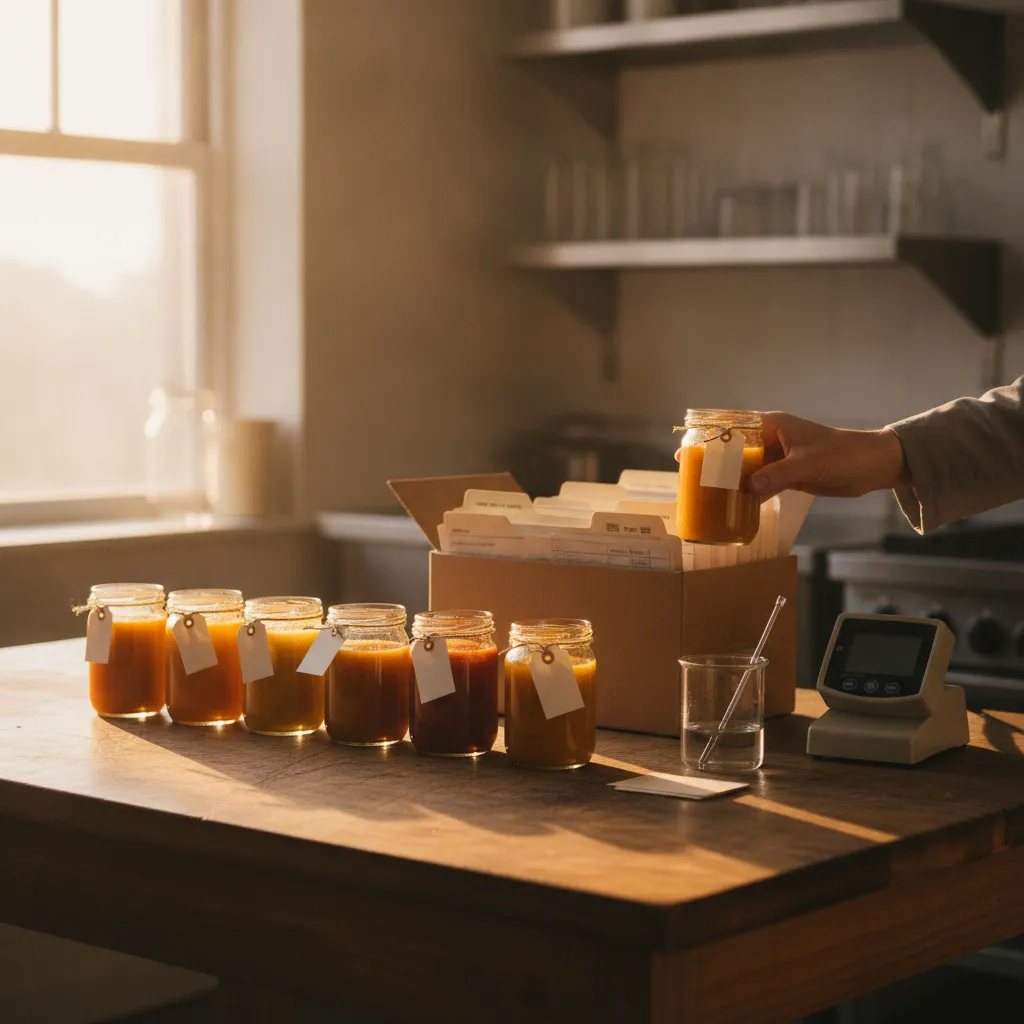
- Retained samples. The plant's retains by lot, and any cases in your own warehouse, with lot codes and dates. These are your physical evidence.
- Everything else. Old recipe cards, notebooks, emails with the plant, shelf-life study reports, the complaint log, certification files, and spec forms filled out for retail buyers. A form sent to a buyer years ago may hold the only written pH target anyone ever set.
- People. The plant's production lead or quality manager who has run the product many times often knows things no document holds: the real order of addition, what the batch looks like when it is right, which correction they reach for most. Ask them. If you can reach the original developer, and your agreements allow it, ask them too, especially about why the formula is the way it is.
Put all of it in one folder, organized by source and date, before you draw any conclusions. Expect the documents to disagree with each other. The disagreements are where the real information is.
Decide What the Product Actually Is
The reference for your rebuild is not any recipe you find. It is the product your customers are buying, or more precisely, the version of it you decide is right. That is not always obvious. If the product has drifted, the jar on the shelf today may not be the one that built the brand, and complaints that say "it used to be spicier" deserve a careful read. Pick the version you are rebuilding, write down why, and then pin it down physically.
- Pull samples from several recent lots and taste them side by side. Notice how much they differ. A tight spread means there is a stable product to match. A wide spread means the plant has been making a range of products under one name, and part of your job is choosing the center.
- Measure what you can. pH, Brix, viscosity, color, salt, and water activity where it matters for your product. Record each lot separately rather than averaging them.
- Account for age. A retained jar at month eight is not what a fresh batch tastes like, so compare fresh to fresh where you can. And give any new batch its two weeks to settle before you judge it.
- Set aside a reference. Once you have chosen the version to match, keep a supply of it, stored properly and clearly marked, as the gold standard for the rebuild.
Know what a lab can and cannot do here. A lab can measure moisture, fat, sugars, sodium, and protein, and those numbers are good cross-checks. It usually cannot tell you which paprika it is, what order things went into the kettle, how long the batch held at temperature, or exactly which starch gives that texture. The label will often just say "modified food starch" or "spices." The rest comes from the records and the bench.
Rebuild on the Bench, Then Prove It in the Plant
With the evidence gathered and a reference chosen, the rebuild follows a logic worth understanding even if someone else does the bench work.
Start from the most reliable source. Usually that is the plant's batch sheets together with whatever the process review documented. Cross-check them against the label's ingredient order, the panel's bounds, and the purchasing data. Where the sources agree, lean on the number. Where they conflict, you have a question to answer at the bench.
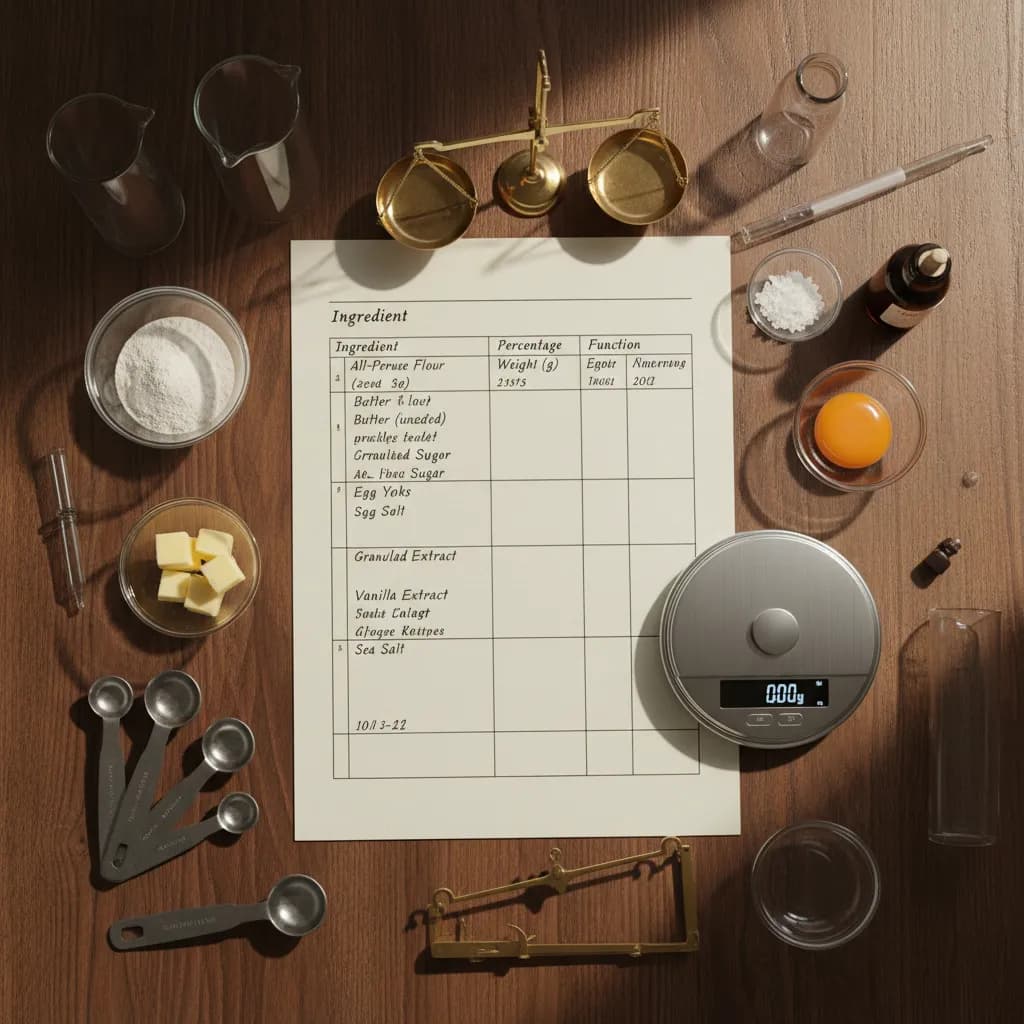
Convert everything to weight. If any source is written in cups, scoops, or "one bag," translate it into weight percentages of the batch. Volume measures are a common place for inherited recipes to go vague, because a cup of a coarse spice and a cup of a fine one are not the same amount.
Pin down each ingredient's identity. A formula that says "vinegar" or "chile" is not finished. Every ingredient needs a specification: what it is, its grade and form, and what job it does. This matters most for ingredients doing technical work. A starch or gum is there because it survives this product's acidity and this plant's cook and handling, so "a starch that seems similar" is a guess, not a reconstruction.
Close the gaps one variable at a time. Make bench batches against the reference, change one thing per trial, and judge at week two. It is slow on purpose. Change three things at once and you will not know which one closed the gap.
Verify at production scale. A formula that matches on the bench still has to match out of the plant's kettle. Run a verification batch, or follow the next scheduled batch closely against the reference, and compare at week two. If the two do not match, find out why before going any further.
One situation needs real care. If the rebuild shows that what the plant runs today differs from what the process authority reviewed, whether in the formula, the acid, the fill temperature, or the container, do not decide on your own what that means. Bring it to the plant's food safety team and to the process authority. The same goes if you cannot find a process review at all. That conversation comes before any other change.
Turn the Rebuild Into a Formula You Hold
A reconstructed recipe in a notebook is progress, not the finish line. The goal is a documented formula you hold, understand, and could hand to any qualified plant. In practice that means:
- A master formula in weight percentages, with a specification for every ingredient and any approved alternates.
- Process notes written for the kettle and line the product actually runs on: order of addition, temperatures, hold times, fill, and the corrections the plant is allowed to make.
- Finished-product targets with ranges for pH, Brix, viscosity, color, and anything else that decides whether a batch ships. If your plant approves batches by eye today, setting release criteria in a finished product spec is the natural next step.
- A gold standard reference sample, judged at week two, with a plan to replace it before it ages out.
- A version number. The rebuilt formula becomes version 1.0, and every change after that goes through written change control with a log and sign-off.
For the full picture of what a finished package covers, including the food safety and shelf-life documents, see what makes a recipe production-ready. An inherited product will often have some of those pieces and not others. The gaps become your to-do list.
One honest caution. Writing the formula down makes it usable. It does not, by itself, settle who owns it. That still runs through your agreements and your attorney. What documentation does is make sure that whatever you own, you can actually use.
What Not to Do While You Rebuild
- Do not improve it yet. The temptation to fix the thing you never liked is strong. Rebuild first. Improvements come later, as version 2.0, tested against a reference you trust.
- Do not move plants mid-rebuild if you can avoid it. The current plant, its records, and its operators are your best evidence. Leaving before the formula is on paper means leaving the evidence behind.
- Do not circulate the rebuilt recipe. Once you have it, protect it. If you are talking to new co-packers, hold the full recipe until you are close to signing with an NDA in place, and use a product brief without the recipe for early conversations.
- Do not assume the current label is current. Check it against the rebuilt formula. If the ingredient statement, the allergen statement, or the panel no longer matches what is in the jar, take it to your label and regulatory help right away.
Frequently Asked Questions
The co-packer has the formula. Can we just ask for it?
You can ask, and you should, politely and in writing. What they share, and in what form, depends on your agreement with them and on whether part of the product is their own house base or process. If they decline or the answer is unclear, that is a question for your attorney, not a reason to sour the relationship. A plant that has made your product well for years is often your best partner in rebuilding it.
Do we need a new process authority review after the rebuild?
Not necessarily. If the formula and process you documented match what was reviewed, the existing review may still apply. If anything differs, or the review cannot be found, ask your process authority and the plant's food safety team. That decision belongs to them, not to you or your formulator.
We bought the brand and the seller is still reachable. What should we ask for?
Every document on the list above, plus the reasoning behind the formula: ingredients they tried and rejected, problems they solved, suppliers they trusted and why. The why is usually missing from the paperwork and is the hardest thing to rebuild. What the seller is obliged to hand over is set by your purchase agreement, so keep your attorney involved in that part.
Reading the Evidence Is the Skilled Part
Your team can gather most of what this article lists. The harder part is reading it: noticing that a batch sheet's starch weight cannot produce the viscosity in the jar, that the label's ingredient order rules out the old recipe card, that a lot-to-lot spread points to an ingredient rather than the process. Turning that evidence into a formula that matches the product your customers know and runs cleanly in the plant is the work I take on with brands inside a project, alongside the plant team and the process authority.
Sources: eCFR, 21 CFR 101.4, Food; designation of ingredients, on listing ingredients in descending order of predominance by weight and the exception for ingredients at 2 percent or less.
Need Help With Your Formulation?
Whether you're scaling your first recipe or reformulating an existing product, let's talk about how to get it right.
Book a Free Discovery Call