A Label Decision That Sounds Small and Isn't
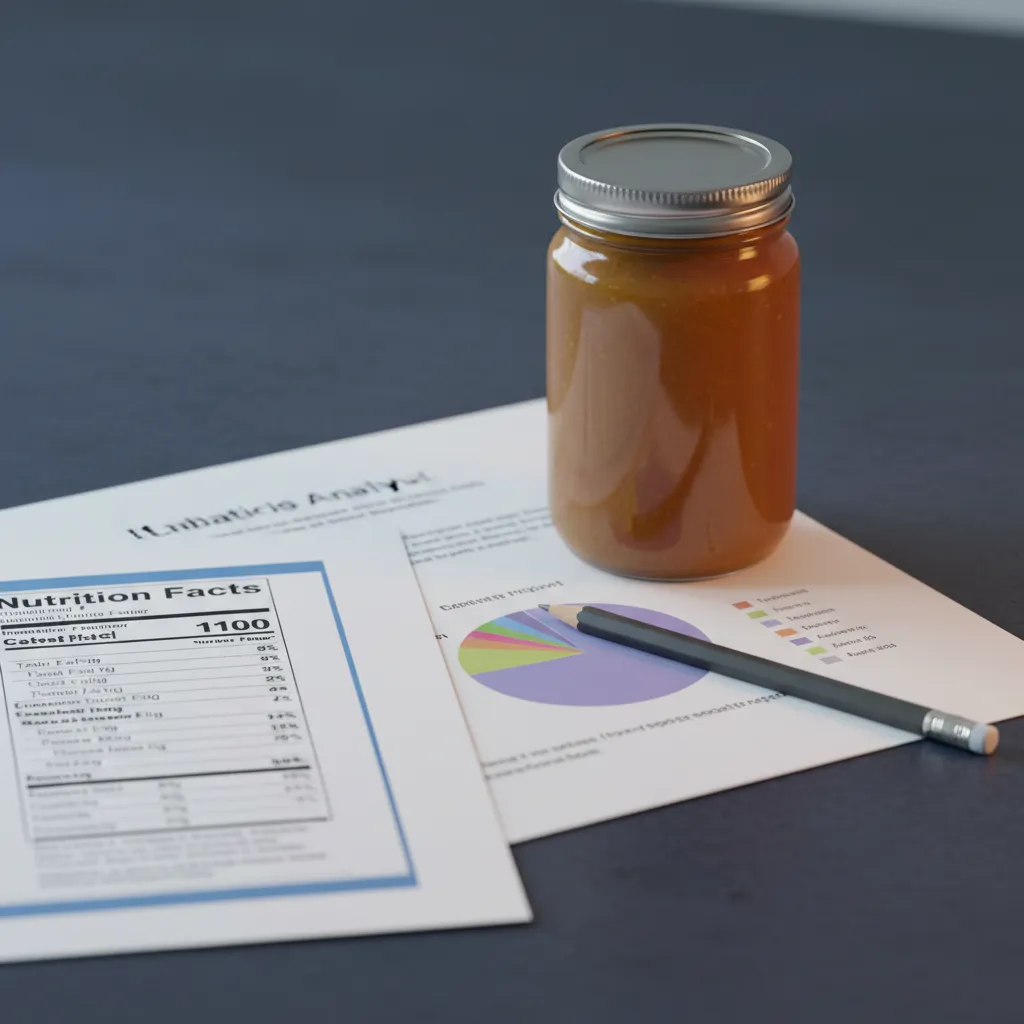
Every packaged food sold in the U.S. needs a Nutrition Facts panel that complies with FDA labeling regulations (NLEA and the 2016 rule updates). Every founder eventually hits the question: do I pay for lab testing, or do I calculate it from a database? The difference matters for cost, timeline, accuracy, and — in some cases — legal exposure.
The Two Paths
Lab testing
A food lab runs your finished product through analytical testing for each regulated nutrient (calories, total fat, saturated fat, trans fat, cholesterol, sodium, carbohydrate, dietary fiber, total sugars, added sugars, protein, and specific vitamins and minerals). The result is a nutrient profile based on actual measurement of your product.
Typical cost: $700-$2,500 for a standard panel, depending on the lab and the specific nutrients required. Timeline: 2-4 weeks. Some retailers and certifications require lab-tested panels specifically.
Database calculation
A qualified nutritionist or software package calculates the nutrient profile from your recipe, using standardized databases (USDA FoodData Central, supplier-provided nutrient data for branded ingredients). The calculation accounts for cooking losses, evaporation, and finished yield.
Typical cost: $200-$800, often bundled with label layout services. Timeline: 1-3 weeks. Accepted by the FDA when performed correctly, though some retailers still prefer lab testing.
When Each Path Makes Sense
Database calculation tends to fit when:
Your recipe is mostly well-documented, commodity ingredients with solid database coverage. Cook losses and evaporation are predictable. Finished yield is stable. You need the panel quickly or for a smaller launch. Your retail channel accepts database-derived panels.
Lab testing tends to fit when:
Your product includes proprietary or unusual ingredients without clean database matches. Retailer or certifier policy requires it. You're making specific nutrient claims that invite enforcement scrutiny (high protein, low fat, no added sugars, a %DV claim that's close to a regulatory threshold). You're approaching foodservice or institutional customers who ask for lab panels. You're a sufficiently large brand that the incremental cost is immaterial and the liability protection is worth it.
The Accuracy Conversation
Lab testing captures the real chemistry of your finished product. Database calculation uses reference values that are representative but not specific to your exact batch, lot, or process. In practice, the two methods usually come within a few percent of each other — sometimes closer. But in nutrient claim territory, small differences matter.
If your label claims "low sodium" (under 140 mg per serving), and your database calculation lands at 128 mg while a lab test on production product returns 147 mg, you have a compliance problem. For products that rely on claims, lab testing provides a more defensible record.
FDA compliance ranges
The FDA allows a compliance tolerance of ±20% on most nutrient values (Class II nutrients) with tighter ranges on things like added vitamins and minerals. But if your declared value is the basis for a health claim, enforcement attention narrows. Work with a qualified labeling consultant or regulatory advisor for your specific claim structure.
Common Pitfalls Either Way
Using a single lab sample as gospel. Batch-to-batch variation is real. A single lab panel can be off from the "true" average value for your product. Some brands run multiple lots and average the results.
Calculating from a home recipe rather than the production recipe. Cook losses, evaporation, and ingredient substitutions in production change the nutrient profile. The calculation has to match what you actually make.
Ignoring rounding rules. FDA rounding rules are specific and non-obvious (calories round to the nearest 5 or 10 depending on value, sodium rounds to nearest 5 mg under 140 mg, etc.). Getting rounding wrong is a surprisingly common label error.
Missing added sugars. The 2016 rule update created a separate "Added Sugars" line, and it's easy to misclassify (juice concentrates count as added sugars in many contexts, honey does, etc.). Get this one right.
Not updating after reformulation. If you change ingredients or ratios, your panel may need to update. Small changes are often within tolerance; larger ones aren't.
Serving Size — The Other Thing That Trips People Up
Serving size isn't a creative choice. It's set by the FDA based on the Reference Amount Customarily Consumed (RACC) for each food category. If the RACC for a sauce is 2 tablespoons, that's your starting point — you don't get to declare 1 tablespoon to make your sodium number smaller. The RACC table is published in 21 CFR 101.12 and worth reading if you're not sure which category applies to your product.
For more on what a production-ready formulation includes (and why your nutrition panel is part of the package), see what makes a recipe production-ready. For related context on ingredient documentation, see reading a certificate of analysis.
Frequently Asked Questions
Is a lab-tested panel legally required?
No, not categorically. The FDA allows several methods for generating a compliant Nutrition Facts panel, including database calculation, provided the method is sound. Some retailers or certifying bodies require lab testing — that's a private-standard issue, not a federal one.
How often do I need to re-test or re-calculate?
If your recipe, ingredients, or process change materially, your panel may need to update. Some brands re-verify annually regardless, as a quality check. There's no universal rule; it depends on your product and your retailer requirements.
Can I just use my co-packer's nutrition panel?
Only if the co-packer generated it specifically for your product. A panel for their house product isn't transferable to yours, even if the recipes are similar.
What about labels for Canada or other countries?
Labeling regulations vary country to country. Canada's Nutrition Facts table format, serving size rules, and allergen requirements differ from the U.S. If you're selling cross-border, budget for region-specific labeling work.
A Final Note
Nutrition labeling is one of those areas where a single bad decision can quietly carry through thousands of units before someone catches it. The rules are specific, the enforcement pattern varies, and "good enough" often isn't. A qualified labeling consultant or regulatory advisor is the right expert for your exact product — this article is a starting framework, not a compliance playbook. If you'd like help thinking through which path fits your situation, a discovery call is a reasonable place to start.
Need Help With Your Formulation?
Whether you're scaling your first recipe or reformulating an existing product, let's talk about how to get it right.
Book a Free Discovery Call