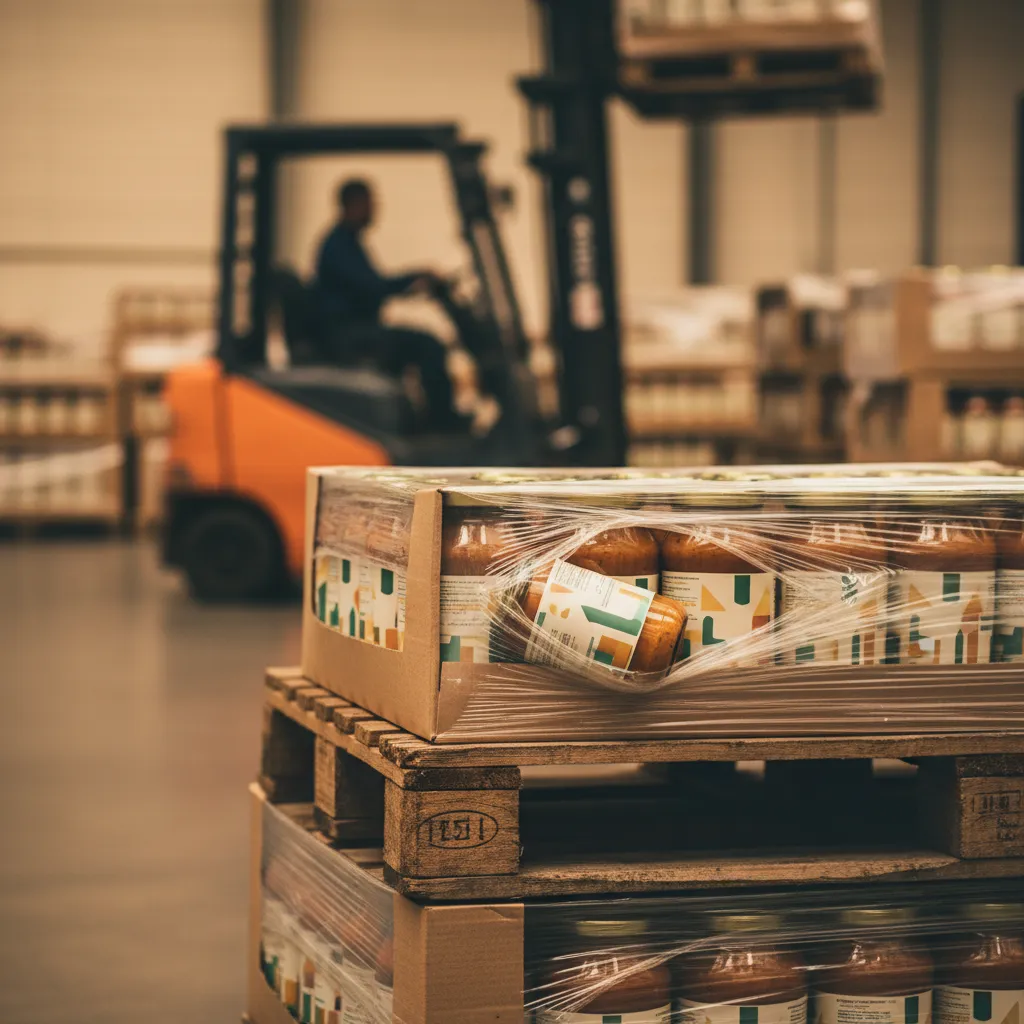
The Cost You Locked In Before You Knew It Existed
When a founder approves case dimensions, they are usually thinking about two things: does the product fit, and does the case look right on a shelf display. Nobody in that meeting says the words "freight class."
But that decision is permanent in a way most packaging decisions are not. The case dimensions determine how many cases fit on a pallet. The pallet pattern determines how many pounds ride in how many cubic feet. That ratio determines your freight classification. And your freight classification is a multiplier on every less-than-truckload shipment you make for the life of the SKU.
I have watched brands spend months negotiating a distributor margin and never once look at a number they could have improved permanently by changing a case from twelve units to nine.
How Freight Classification Actually Works
For less-than-truckload freight in the United States, the classification system is the National Motor Freight Classification, published by the NMFTA, the National Motor Freight Traffic Association. It assigns commodities to a set of classes running from 50 at the low end to 500 at the high end. Lower class means cheaper to ship, and the scale runs in the direction people find counterintuitive: dense freight gets a low class number.
Historically, classification weighed four characteristics: density, stowability, handling, and liability. Density is how much the shipment weighs per cubic foot. Stowability is how well it loads with other freight. Handling is how difficult it is to move. Liability covers value, fragility, and the risk of damaging other freight.
That system changed significantly. In Docket 2025-1, effective July 19, 2025, the NMFC moved a large number of commodity-based items to density-based classification and replaced the previous eleven-tier density scale with a thirteen-subprovision scale, which added classes at the dense end. Under the revised structure, densities from 30 up to 35 pounds per cubic foot fall in one subprovision at class 60, densities from 35 up to 50 pounds per cubic foot at class 55, and densities of 50 pounds per cubic foot or greater at class 50. Thousands of commodity codes were affected.
For a food brand this is mostly good news, and it makes the calculation worth running yourself instead of accepting whatever class ends up on a bill of lading.
The Calculation, and the Part Everyone Gets Wrong
Density is the weight of the shipment divided by its cubic feet.
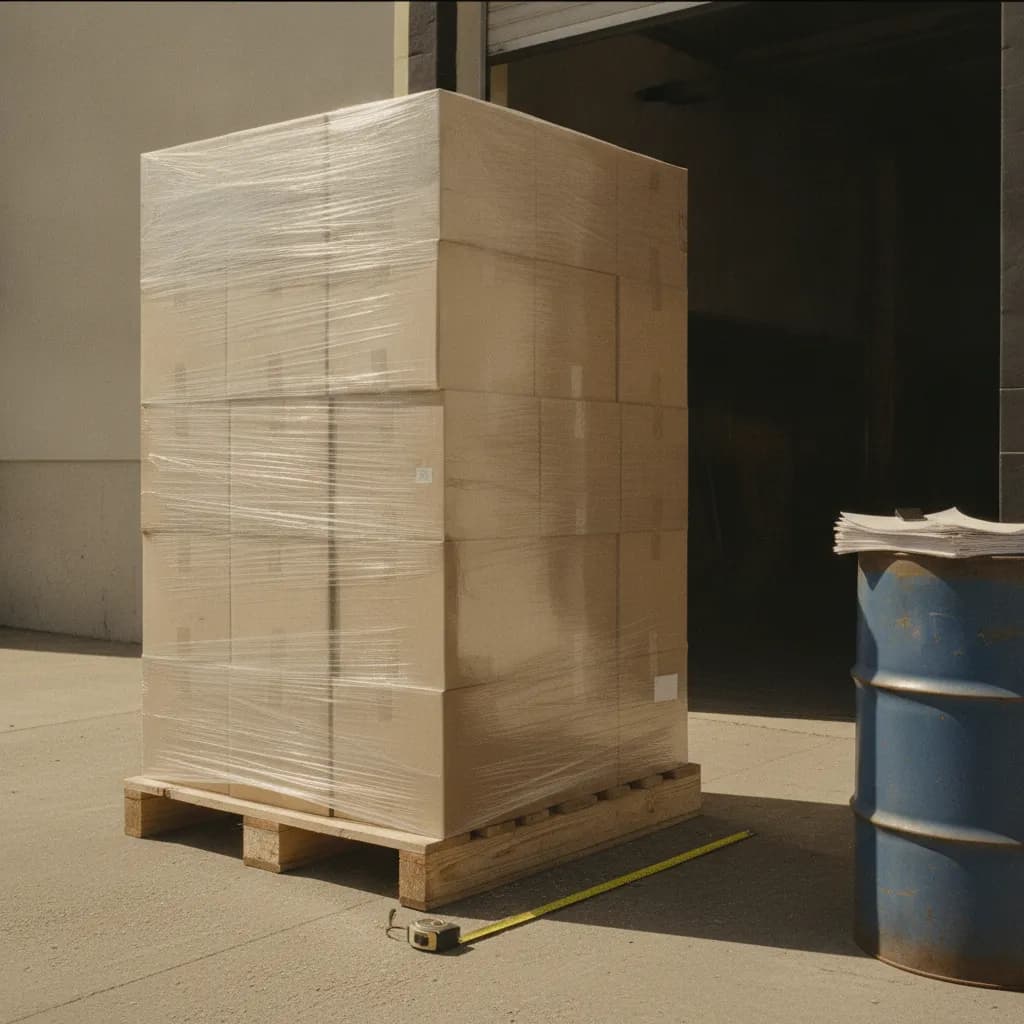
Here is the part that trips up nearly every founder: the cubic feet are the dimensions of the shipping unit as tendered, including the pallet and any overhang. Not the cases. Not the product. The whole thing, floor to top of load, edge to edge.
So the calculation is:
- Measure the finished pallet: length, width, and total height including the pallet deck.
- Convert to cubic feet (length times width times height in inches, divided by 1,728).
- Weigh the finished pallet including the pallet itself.
- Divide pounds by cubic feet.
That number is your density, and under a density-based item it drives your class.
Which leads to the single most expensive mistake in small-brand shipping: you pay for the air. A pallet stacked four feet high with a load that only fills three feet of usable cube is charged as if all four feet were freight. Half-built pallets, unnecessary void space, and a tall stretch-wrapped load with nothing in the top foot are all real money.
And it cuts the other way too. A product like shelf-stable sauce in glass is heavy for its volume. Run the numbers before you assume you are an expensive shipper, because a well-built pallet of sauce often lands in a favorable class, and brands who never calculated it sometimes ship for years at a worse classification than they were entitled to.
The Pallet Itself
The United States default is the 48 by 40 inch GMA pallet. It is the default for a good structural reason: two 48 inch pallets sit side by side across the interior width of a 53 foot dry van, and the 40 inch dimension runs lengthwise, which is how a standard trailer holds 26 of them floor-loaded in a single layer. It also fits standard warehouse racking.
That is not the only pallet in the world, but deviating from it needs a reason, because everything downstream (racking, pallet jacks, trailer loading, distributor slotting) is built around it.
Some practical points:
Pallet quality and type. Whitewood pallets, heat-treated pallets for certain shipments, and pooled rental pallets from the major pool operators all exist, and some retailers and distributors specify which they will accept. Ask before you build a shipment; a load on the wrong pallet can be refused.
Ti and Hi. The pallet pattern is expressed as cases per layer (Ti) and number of layers (Hi). Multiply them for cases per pallet. Distributors ask for these numbers in item setup, as covered in what UNFI and KeHE onboarding really involves, and they need to be right, because the warehouse builds its pick logic around them.
Overhang is a real problem. Cases that hang over the pallet edge lose the support of the deck boards, which is where crush damage starts, and it also means your tendered dimensions are larger than the pallet. Underhang wastes cube. Both cost money, in different ways.
Height limits. Warehouse racking, trailer interior height, and whether your load can be double-stacked in a trailer all constrain how tall you build. A pallet that cannot be stacked on top of another ships less efficiently, and some brands pay for a "do not double stack" instruction they could have designed around.
Weight limits. Trailers have legal gross weight limits, which means a heavy product can reach the weight limit before it fills the space. In freight terms, you either "weigh out" or "cube out." Glass-packed sauce brands usually weigh out, which is worth knowing when you plan a full truckload.
The Case Is the Decision That Cascades
Everything above is downstream of one choice: your case geometry.
Round containers waste cube. A round jar in a square case leaves air in the corners. A squared-off or oval bottle packs tighter. That is a genuine trade-off against the shelf presence and the tooling cost of a custom container, and I am not going to tell you the freight always wins. But it should be in the conversation, not discovered afterward.
Case count matters more than it seems. Twelve units per case is a convention, not a law. A case count that produces a case footprint dividing cleanly into 48 by 40 inches is worth real money over the life of a SKU, because it eliminates the wasted strip of pallet deck that a poorly sized case leaves on every single layer.
Corrugate specification is a structural decision. The board strength that holds up under stacking is what lets you build taller pallets without crushing the bottom layer. Under-specifying corrugate to save a few cents per case shows up as damage claims, which is one of the failure modes catalogued in packaging that fails.
Slip sheets, layer pads, corner boards, and wrap pattern are the difference between a pallet that arrives intact and one that leans. None of this is glamorous and all of it is cheaper than a rejected load.
Reweigh and Reclass: The Charge Nobody Budgets
Carriers inspect freight. If they measure your pallet and weigh it and find a density that does not match what you declared on the bill of lading, they reclassify it and bill the difference, often with an inspection fee attached.
This happens constantly to small brands, for a boring reason: someone guessed the class once, put it in a template, and it has been copied onto every bill of lading since. Then the case changed, or the pallet pattern changed, or a shipment went out half-built, and the declared class stopped being true.
The fix is not complicated. Measure and weigh a finished, wrapped, representative pallet. Calculate the density. Keep the numbers with your item specification alongside case dimensions and case cube. Update them whenever packaging changes. And when a carrier reclassifies you, read the inspection report rather than paying it reflexively, because they are not always right either.
Where This Sits in Your Economics
Freight is a line in your landed cost, and it is one of the few lines you can improve without touching the product. Ingredient savings usually cost you something on the plate. A better case footprint costs you nothing except the work of designing it before the tooling is ordered.
That puts it in the same category as the process-side savings in cutting COGS without touching flavor, and it belongs in the cost stack described in unit economics for a shelf-stable sauce brand.
The timing is the whole point. Once the jar is tooled, the case is printed, and the distributor has your item dimensions in their system, changing any of it is a project. Before that, it is a spreadsheet and an afternoon. If you are anywhere near approving packaging right now, build the pallet on paper first and calculate the density. It is the cheapest hour of freight work you will ever do.
Sources: NMFTA, National Motor Freight Traffic Association · NMFTA, NMFC Classification FAQs · NMFTA, density and class breaks for the 13-sub structure · NMFTA, 2025 NMFC Changes · GS1 US, standards for logistics and item data
Need Help With Your Formulation?
Whether you're scaling your first recipe or reformulating an existing product, let's talk about how to get it right.
Book a Free Discovery Call