The Milestone That Is Not a Milestone
A founder emails me: "We got accepted by KeHE." There is champagne in the message. I am genuinely glad, and I also know what the next ninety days look like.
Getting accepted by a natural-channel distributor feels like the door opening. What it actually is, is the beginning of a setup process with real cost, real paperwork, and ongoing charges that will show up on your remittances for as long as the relationship lasts. Founders who understood that going in do fine. Founders who thought a listing was a revenue event get a hard education.
I am going to describe cost categories rather than numbers, because every one of these is negotiated per supplier and quoting a figure I cannot verify for your situation would be worse than useless.
First, What These Companies Are
UNFI and KeHE are wholesale distributors serving the natural, organic and specialty grocery channel in the United States. They buy product from brands, warehouse it across a network of distribution centers, and sell it to retailers who order from their catalogs.
The consequence to internalize: their customer is the retailer, not you. The programs, fees and compliance requirements all exist because they run a logistics business at scale, and your item has to fit the system the way every other item does. That framing explains almost everything that follows.
If the distinction between a distributor, a broker, and DSD is not yet crisp, start with broker versus distributor versus DSD, because the mistake I see most often is a brand expecting sales work from a company that does logistics.
How You Actually Get In
The submission route is public. Both companies run supplier pages with a new supplier inquiry path, and product submissions commonly flow through a platform such as RangeMe, which KeHE points suppliers toward. Filling in the form is the easy part.
What actually gets a brand accepted is almost never the form. It is pull: a retailer who wants to order you and needs a distributor to do it through. A brand that shows up with three stores asking for them is a straightforward yes. A brand with a beautiful deck and no accounts is a maybe that takes a year. Go get the retail demand first, then bring it to the distributor. It inverts the conversation entirely.
Category reviews also run on a calendar, with new items considered in set windows, which is one of the genuine services a good broker provides.
The Item Setup Packet
Once you are accepted, you get a packet. It is long, it is exacting, and errors in it cause delay and fees. What it typically wants:
Company and compliance documents. W-9, a signed supplier agreement, and a certificate of insurance meeting their liability requirements. That insurance requirement is a real cost line and it catches brands operating on a basic policy.
Item identification. A GS1-issued GTIN and UPC for every unit and case. Not a barcode from a free website. A real GS1 prefix, because the number has to be globally unique and resolvable, and item data is commonly exchanged through a GDSN-connected data pool.
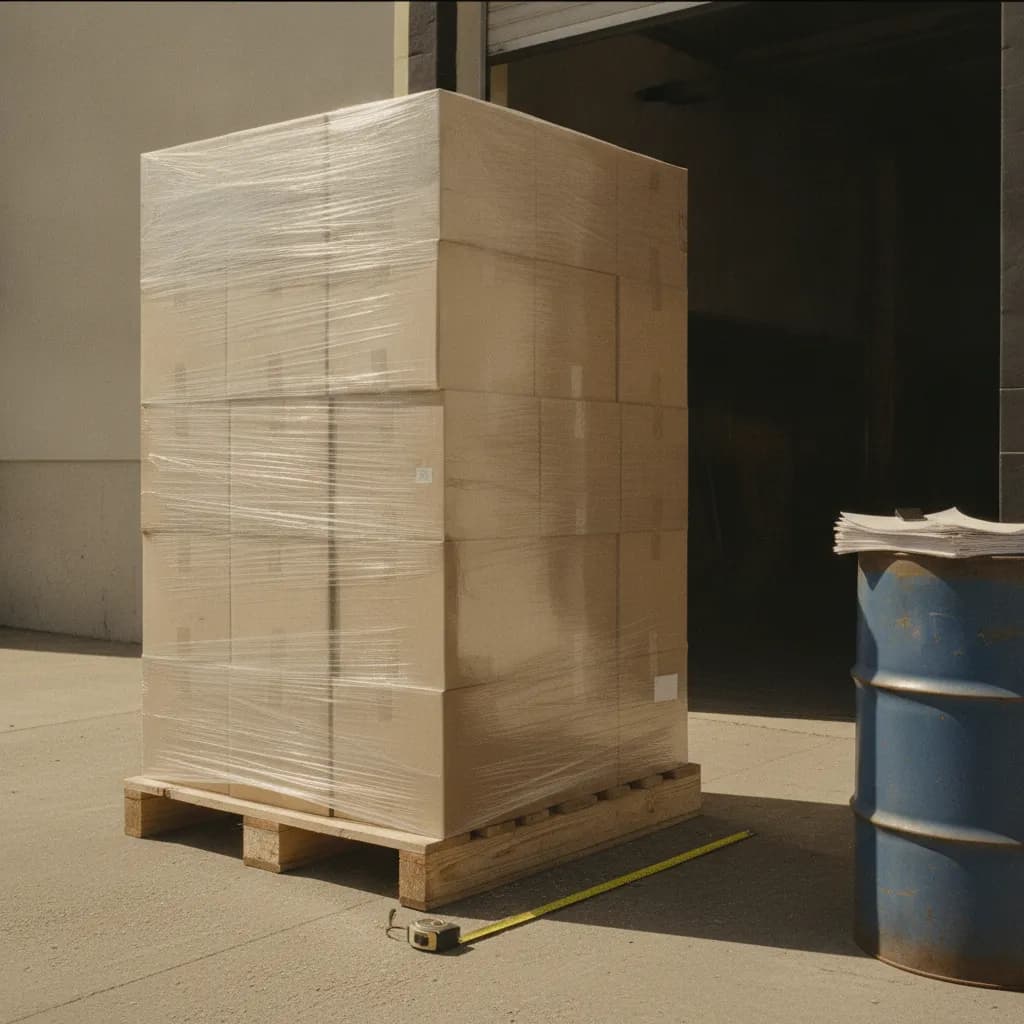
Full item attributes. Unit dimensions and weight, case pack, case dimensions and weight, case cube, the pallet pattern (cases per layer and number of layers, often written as Ti and Hi), pallet height and weight, and shelf life. These are not busywork: they determine how your product is stored, picked, and freighted, which is the subject of pallet configuration, case cube, and freight class.
Product data. Ingredient statement, allergen declaration, nutrition panel data, certifications with certificates attached, country of origin, storage requirements, and product images to their specification.
Shelf life at receipt. Distributors generally require a minimum amount of remaining shelf life when product arrives at the DC, commonly expressed as a percentage of total shelf life. Get the exact requirement in writing, because product made too far ahead of a PO can be refused. If your shelf-life claim is soft, this is where it becomes a business problem, which is why shelf life testing matters more than founders expect.
EDI capability. Purchase orders, advance ship notices, and invoices typically flow electronically. If you are not EDI-capable, you will need a service provider, and that is a recurring cost.
Every one of these fields has to be right. Errors in GTINs, case dimensions, pallet patterns, or insurance documentation are the most common cause of delay and added fees during setup, and they are entirely self-inflicted.
The Cost Categories to Model
Here is the part to build into a spreadsheet before you commit. I am naming categories and how they behave. Get your actual numbers from the distributor.
Distributor margin. The spread between what they pay you and what the retailer pays them. This is the core economics of the relationship and it comes off your wholesale price.
New item, slotting, or free fill. The cost of getting the item into the system and onto the shelf initially. "Free fill" means exactly what it sounds like: you provide the initial stocking quantity without charge. Whether it appears as a fee, as free goods, or both varies. Treat it as a launch investment with a velocity target attached, not as a sunk cost of doing business.
MCB, the manufacturer chargeback or merchandise cost buydown. This is the one founders least expect. The distributor offers the retailer a promotional price, and the difference is billed back to you, frequently with a handling fee on top. Promotional pricing you agreed to in principle arrives months later as a deduction, and if you did not accrue for it, it lands on a month you had already counted as profitable.
Freight. Who pays, on what terms, and with what minimums. You will be quoting either prepaid (you arrange and pay) or collect, and there may be a freight allowance expressed against weight or as a percentage. There is usually an order minimum below which freight economics change sharply. Model your actual lanes to the actual DCs you will serve, not a national average.
Deductions and chargebacks. A category, not a fee. Common headings include routing compliance, delivery window adherence, pallet and labeling standards, documentation and EDI accuracy, shortages, damages, and spoils or returns allowances. Individually small. Collectively, for a brand not watching them, meaningful. Deductions also have dispute windows, and an unchallenged deduction becomes permanent.
Promotional calendar commitments. Ad features, deal periods, demo programs, and distributor trade show participation. Some is genuinely valuable exposure, some is a cost of being taken seriously. Decide which is which deliberately.
Data and portal fees. Access to sales reporting and supplier portals. You need the data to manage the account, but it is a line item.
Payment terms. Net terms mean you are financing the inventory for that period. This is a cash flow constraint more than a cost, and it is the one that most often surprises a founder whose sales are up and whose bank balance is down.
The Failure Mode: A Listing Without Pull
Here is the scenario I most want founders to avoid.
You get listed. You pay setup and free fill. Product ships to a DC. Then very little is ordered, because no store has a reason to order it. Your product ages in their warehouse, approaches the shelf-life threshold, and comes back as a return or a spoils deduction. Your first year in distribution is a net negative, and your velocity data, the only currency that opens the next door, now says your item does not move.
A distributor is a pipe, not a pump. Brands that put the listing first and the demand second pay for the privilege of proving they do not sell. The healthier sequence is the one in farmers market to retail shelf: build real accounts and real reorder velocity, then let distribution serve demand you can already demonstrate.
Practical Advice From Watching Brands Do This
Start narrow. One or two distribution centers where you actually have retail accounts. National availability with regional demand is a cash bonfire.
Build the landed cost model before you sign. Base margin, program fees, freight to those specific DCs, promotional accruals, and a realistic deduction allowance. If the model only works with zero deductions, the model is wrong.
Accrue for promotions when you agree to them. The lag between agreeing to a deal and seeing the MCB is what turns a good quarter into a surprise.
Read every remittance line. Deduction codes are learnable and disputes have deadlines. This is worth an hour a month, and for many brands it is the highest hourly return available.
Ask about the shelf-life-at-receipt requirement before you plan production. It determines how far ahead you can make product, which determines your run sizes, which changes your cost per unit through the mechanics in the co-packer MOQ guide.
Get the agreement reviewed. These are real contracts with real obligations on both sides.
Is It Worth It?
For a brand with genuine retail pull, yes, and there is often no practical alternative at regional scale. The friction a distributor removes is exactly what lets a store buy your jar without setting you up as a vendor.
For a brand without pull, it is a premature expense that produces a bad data trail. I have told founders to wait, and the ones who did came back a year later with velocity numbers that made the conversation easy. Distribution rewards a brand that already works. It is not a mechanism for becoming one.
Sources: UNFI, Suppliers · UNFI, New Supplier Inquiry · KeHE, Suppliers · KeHE, Services and Support for Suppliers · GS1 US, Get a GS1 Company Prefix and barcodes · FDA, Food Labeling and Nutrition
Need Help With Your Formulation?
Whether you're scaling your first recipe or reformulating an existing product, let's talk about how to get it right.
Book a Free Discovery Call