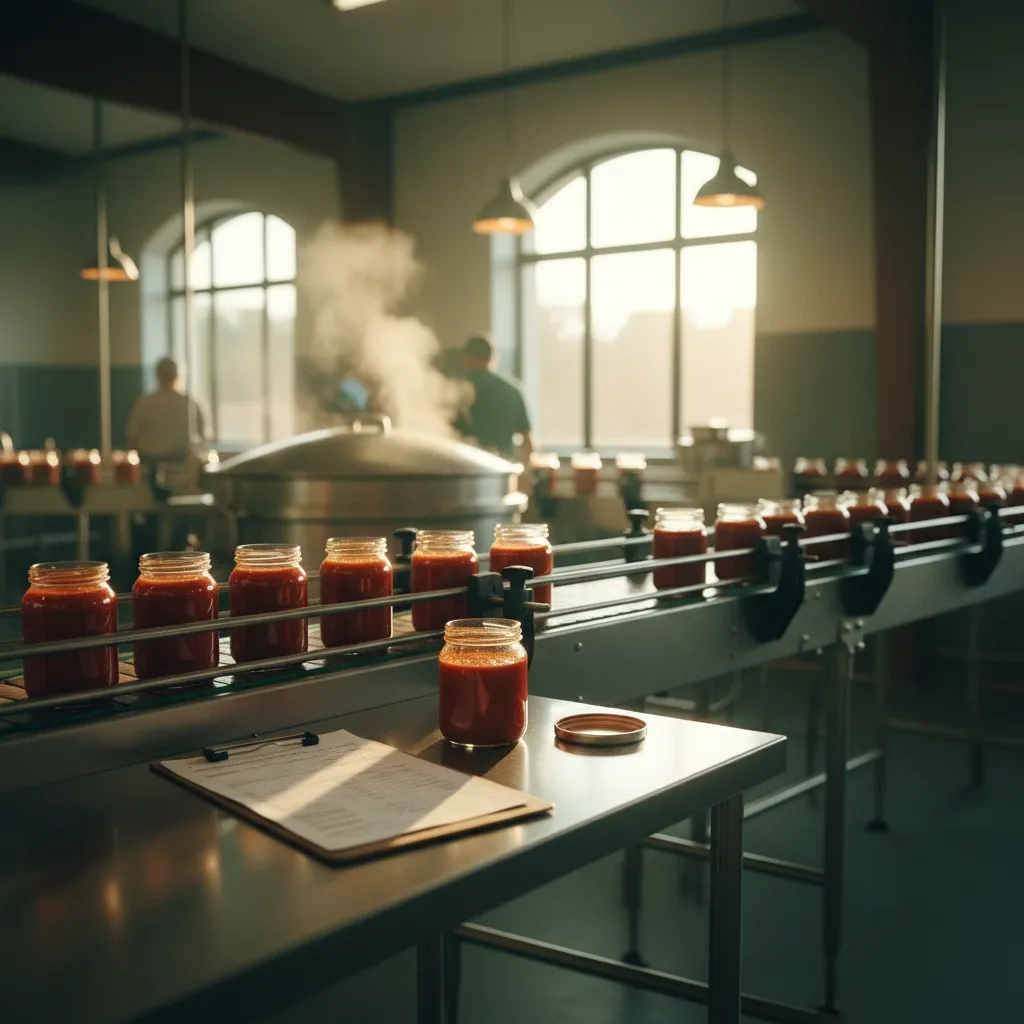
The Quote That Reads Like a Foreign Language
You finally get the co-packer quote you have waited three weeks for. You open the PDF expecting a clean price per jar, and instead you get a wall of line items: a tolling fee, a per-case charge, an ingredient markup, a setup fee, a changeover charge, a yield allowance, a QC line, a storage rate, and payment terms asking for half up front. Somewhere in there is the number that decides whether your product makes money, and it is not labeled "your margin."
This is the moment I watch founders freeze. The quote reads like it was written for someone who already speaks the language, because it was, for buyers who read these documents for a living. You are reading your first one with your whole business riding on it. The good news: it is not that complicated once you know what each line pays for, which charges flex, and where a quiet decision can strip the real ingredients out of your product. Let me walk you through it.
First, Know Which Pricing Model You Are Reading
Before you read a single number, figure out which of two structures the quote is built on, because everything downstream depends on the answer.
Turnkey (the co-packer sources everything)
The co-packer buys your ingredients and packaging, produces the product, and hands you finished cases. You pay one blended price that folds in ingredients, labor, and their margin on the materials. Simpler to read and easier to reorder, but you pay a markup on every ingredient and see less of what they actually paid.
Tolling (you supply, they process)
You buy and ship the ingredients and packaging yourself, and the co-packer charges only for processing: the run, the labor, the fill. That is the "tolling fee." You take on the sourcing and storage risk, but you control ingredient quality directly and cut out the materials markup. For a real-ingredient brand, tolling is often worth the effort because it keeps you in control of what goes into the kettle.
Most real quotes are a blend: the co-packer sources commodities (sugar, salt, standard vinegar, generic packaging) while you supply the ingredients that define your product. Know which model you are in before you compare any line, because a high per-unit price in a turnkey quote may just include ingredients a tolling quote leaves out.
The Line Items, Decoded
The run fee (also called the tolling fee or batch charge)
The base cost of firing up the kettle and running your batch: equipment time, utilities, and core labor. It is largely fixed regardless of unit count, which is what makes small runs expensive and why per-unit cost drops sharply as batch size grows.
Per-unit or per-case charge
The variable cost of each finished unit: filling, capping, labeling, and casing (often 12 units to a case). In a turnkey quote it also carries ingredient and packaging cost, so when one co-packer looks "cheaper per case," check whether both quotes even include ingredients. See CPG unit economics for a sauce brand.
Ingredient cost and markup
In a turnkey quote, ingredients are listed at cost plus a markup, often 10 to 30 percent depending on the item and the relationship. It deserves close attention, because this is exactly where ingredient quality quietly gets negotiated, which is why it gets its own section below.
Batch minimum, setup, and changeover fees
The batch minimum is the smallest run the co-packer will schedule. Not a fee, but it sets the floor on the inventory and cash you commit: a 500-case minimum against 80 sales a month is half a year of working capital tied up in one production day. Setup and changeover fees cover preparing and cleaning the line for your product, and allergen changeovers cost more because the line has to be broken down and verified clean. Both are semi-fixed, so they hurt most on small batches. See the co-packer minimum order quantity guide.
Waste, yield, and overage allowance
Yield allowance acknowledges you will not get 100 percent of theoretical output: product clings to the kettle and is lost in transfer and at fill startup. A co-packer may assume 92 to 96 percent, and you pay ingredients on the full batch, not just the filled units. Ask for the assumed yield in writing, because a quote that assumes 97 percent and delivers 90 percent has quietly raised your cost per jar.
QC and lab charges
In-line pH and Brix checks, fill-weight verification, and finished-product lab work like water activity or a shelf-life panel. Some fold basic QC into the run fee and bill outside labs separately. This is one line I rarely want a founder to cut: it is your cheapest insurance the batch is safe and in spec.
Packaging handling and storage
Even when you supply the packaging, the co-packer charges to receive, inspect, and stage your jars, caps, and labels, and glass and closures arrive with defect rates someone has to sort out. Finished cases and raw materials then sit in their warehouse, usually billed per pallet per month. A few weeks is often free; on a large minimum run you may store product for months, so the low per-unit price is partly paid back in pallet rent.
Payment terms and deposits
First runs commonly require 50 percent up front and the balance on completion; established relationships move toward net 30. A big minimum with half due at scheduling can strain a young brand more than the per-unit price does, and it is one of the most negotiable items in the quote.
How Run Size Changes the Per-Unit Number
The single biggest lever on your per-unit cost is not negotiation, it is batch size. The run fee, setup, and changeover are largely fixed per batch, so they spread across however many units you make. Say those fixed charges total $1,200 and the variable cost is $2.50 per unit including ingredients. At 1,000 units the fixed cost adds $1.20 each, so you land at $3.70; at 3,000 units it adds only 40 cents, so you land at $2.90. Same recipe, same co-packer, a 22 percent swing purely from run size.
This is why co-packers push larger minimums. The counter-pressure is real: every extra case is cash tied up in inventory, storage, and a shelf-life clock ticking. The right run size balances a workable per-unit cost against inventory you can actually sell before it ages, so do not let a seductive number at high volume leave you with a year of stranded stock.
What Is Negotiable and What Is Not
Not every line moves. Knowing which is which saves your goodwill for the lines that flex.
Usually negotiable
- Payment terms and deposit size, especially as you build a track record.
- Ingredient markup percentage, particularly on high-value items you could supply yourself.
- Storage fees and the length of the free-storage window.
- The per-case charge at higher committed volumes or against a forecasted reorder schedule.
- Setup and changeover fees if you can batch runs back to back.
Usually fixed
- The base run fee, which reflects real equipment and labor time.
- Batch minimums tied to kettle capacity (a 200-gallon kettle will not run 30 gallons economically).
- Required QC and food-safety testing (you do not want this one negotiable).
- Regulatory and compliance costs the facility has to carry regardless.
Your most effective lever is volume and predictability. A founder who shows up with a clean brief, a firm forecast, and a real intent to reorder is a lower-risk account, which earns better pricing. That brief is the single best thing you can bring, because it answers the questions that make a co-packer pad a quote. See the co-manufacturing brief template for founders.
Red Flags I Tell Founders to Watch For
A quote also signals how a co-packer will treat your product. What I flag when I read one with a founder:
No yield or overage assumption stated. If the quote does not say what yield they expect and how overage is handled, your real cost is unknowable and disputes are baked in.
Loose ingredient substitution language. A clause that lets them substitute "equivalent" ingredients at their discretion is a quality risk. Equivalent to whom, judged how? Pin it down in writing.
Vague QC or an all-in price with no breakdown. "Standard quality checks" is not a specification, and a single blended number is impossible to negotiate or audit. Ask for named tests at named intervals and an itemized quote.
Deposits that front-load your cash before you have seen a pilot. Paying for a full run before proving the recipe on their equipment is how founders end up with cases they cannot sell.
None of these mean the co-packer is bad, only that you have questions to ask before you sign. And to be direct: a co-manufacturing agreement is a legal document, and this article is not legal advice. Have an attorney review the terms and verify any food-safety item with your process authority and the co-packer.
Keeping Real Ingredients From Being Value-Engineered Out
This is the part of quote negotiation that matters most to me, and the part most likely to hurt a brand built on real food. When savings get hunted, the ingredient line is the fattest target, and the easiest cuts are the ones that quietly strip out the real ingredients that made the product worth buying.
It rarely arrives as "let us make your sauce worse." It arrives as reasonable-sounding value engineering: swap fresh roasted garlic for garlic powder, replace real fruit with concentrate and a flavor, drop the cane sugar for a sweetener and a bulking agent, rebuild the body with a modified starch. Each swap saves a few cents; together they turn a product a customer chose for its ingredient list into something that tastes like everything else on the shelf.
My approach is to protect quality before the negotiation starts, not after. A few things that work:
- Specify real ingredients by identity and grade in the brief, not just by name. "Roasted garlic, fresh, at X percent by weight" is a spec the co-packer has to price and cannot quietly swap. The word "garlic" alone invites the powder.
- Supply the defining ingredients yourself through tolling so they cannot be substituted for margin. Let the co-packer source the commodities; you keep control of the chili, the honey, the single-origin element that is the reason the product exists.
- Find the savings in the process, not the ingredients. Right-sizing the run, tightening yield, and cutting changeovers usually free up more real money than shaving the ingredient deck, without touching flavor. See reducing COGS without changing flavor.
- Know the true cost of the cheap swap. A substitution that saves three cents a jar but softens the flavor and nudges up returns is not a savings. It is a slow leak. See the hidden cost of cheap ingredients.
To be clear about where I stand: high-intensity sweeteners, modified starches, and manufactured flavors exist, and they have a place when a real-food route genuinely cannot hit a safety, cost, or stability target. But they are the last resort, not the opening move. The default is to solve the problem with real food first: concentrate real fruit for sweetness and body, build savory depth from tomato, mushroom, miso, or roasted alliums, thicken with a native starch, and balance with acid and salt. A quote negotiation should sharpen your economics, not sand the real ingredients out of your product.
For the surrounding decisions that shape the same numbers, see the co-packer minimum order quantity guide, CPG unit economics for a sauce brand, and the co-manufacturing brief template for founders.
Frequently Asked Questions
Should I get more than one co-packer quote?
Yes, ideally two or three. The range shows what is normal, and the questions each co-packer asks reveal how carefully they will run your product. Just compare the same model, because a tolling and a turnkey quote look wildly different for the same product.
Is the tolling fee negotiable?
Less than you would hope. The run fee reflects real kettle time and labor, which the co-packer cannot give away. What moves is your per-unit cost as you scale, plus payment terms, storage, and markup. Push there, not on the base run.
What does a co-packer markup on ingredients usually run?
It varies widely, often 10 to 30 percent depending on the item and the relationship, and it is not automatically unfair, since it covers purchasing and carrying cost. But on high-value ingredients it is frequently cheaper to supply them yourself, which also protects the ingredient that defines your product.
Do I need a lawyer to review the agreement?
For anything beyond a trivial first run, yes. A co-manufacturing agreement covers liability, ingredient ownership, recall responsibility, and minimums, and this article is not legal advice. Have an attorney read it and verify food-safety terms with your process authority and the co-packer.
Reading a Quote Is the Start of a Relationship
A co-packer quote is not just a price. It is your first real look at how a manufacturing partner thinks and where your product could quietly drift from the one you built. Read every line, ask what each one pays for, negotiate the parts that flex, and hold firm on the real ingredients that are the whole point. Do that well and the quote becomes the foundation of a partnership rather than something you signed under pressure and regretted at the first reorder.
If you are staring at a quote and want a second set of eyes on which lines are normal and where ingredient quality is at risk, that is exactly the kind of work I do with founders. Book a Free Discovery Call and bring the quote with you.
Need Help With Your Formulation?
Whether you're scaling your first recipe or reformulating an existing product, let's talk about how to get it right.
Book a Free Discovery Call