Why "I Tasted It at Six Months and It Was Fine" Isn't a Shelf Life Study
Almost every founder I've worked with has, at some point, kept a few jars of their product in a cabinet for a year and pulled one out to check. That's a casual sniff test, and it doesn't qualify as shelf life validation. Retailers want a study. Insurers want a study. A regulator who asks won't be satisfied with anecdote either.
A real shelf life testing program is structured: defined storage conditions, defined sample pulls, defined sensory and analytical evaluations, and a written protocol that someone else could repeat. Done right, it produces a defensible "Best By" date you can put on a label and explain to a buyer.
What Shelf Life Actually Means
Shelf life is the period during which the product retains the quality, safety, and sensory characteristics declared on the label, when stored under the conditions specified. Several things can end shelf life:
Microbial. Spoilage organisms grow to detectable or unsafe levels.
Chemical. Oxidation, Maillard browning over time, vitamin degradation, preservative loss.
Physical. Separation, syneresis, settling, viscosity changes, color shift.
Sensory. Flavor, aroma, color, texture drift to a point a consumer notices and rejects.
A product almost always loses sensory or physical quality before it loses safety. That's why shelf life is usually a quality decision, not a microbial one — and why your "Best By" date is normally well inside the safety window. For the underlying chemistry, see water activity vs pH.
Real-Time Shelf Life Studies
The cleanest method is also the slowest: store product under realistic conditions and pull samples at defined intervals.
How it works
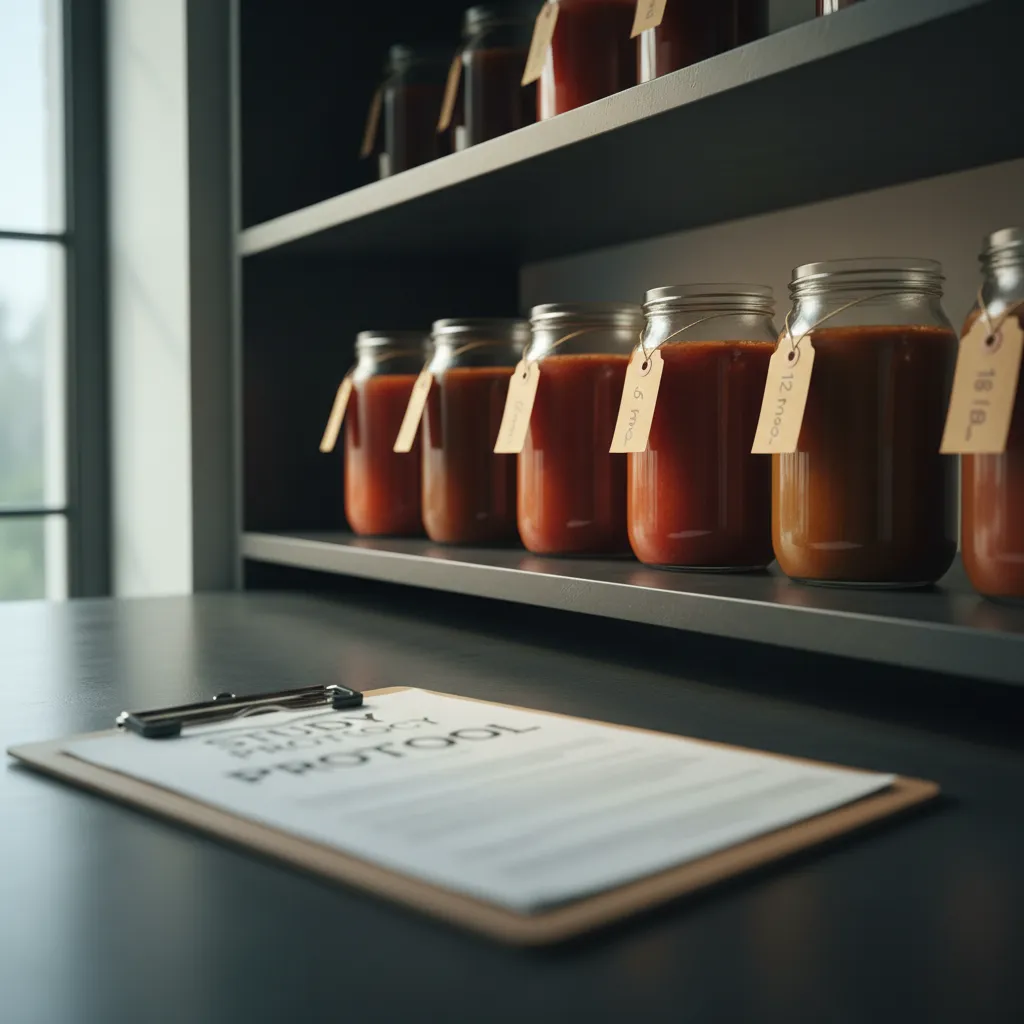
Bottle finished product from a real production batch (not a kitchen sample). Store at typical retail/storage temperatures — usually 70-75°F (21-24°C) for ambient products, or 35-40°F (2-4°C) for refrigerated. Pull samples at intervals: 0, 1, 2, 3, 6, 9, 12, 18 months, etc. Evaluate each pull against a defined panel.
Strengths
Most defensible data. Mirrors actual product behavior in real distribution. Often required for retail claims that haven't been backed by accelerated data.
Weaknesses
Slow. If you want to claim 18 months of shelf life, a real-time study takes 18 months. Founders who need a launch claim before then turn to accelerated testing.
Accelerated Shelf Life Testing (ASLT)
ASLT exposes product to elevated temperature (commonly 95-110°F / 35-43°C, though it depends on category) to speed up the chemical and physical reactions that drive quality loss. The idea is that for many degradation pathways, reaction rates roughly double for every 10°C rise — so a few weeks at 100°F can predict many months at 70°F.
How it works
Store samples at one or more elevated temperatures, pull at defined intervals, and use Q10 modeling or Arrhenius kinetics to extrapolate to ambient shelf life. Compare each pull to a control kept at ambient.
Strengths
Fast. A 6-12 week ASLT can predict 12-24 months of shelf life for many products. This is the path most founders use to support a launch claim while real-time data accumulates.
Weaknesses
Not every degradation pathway accelerates uniformly. Some failure modes only show up at room temperature; some only at elevated temperature. ASLT works best when you've validated the model for your category. Pure ASLT without any real-time backup is treated skeptically by some retailers and regulators.
What a Real Study Includes
A written protocol describing samples, storage conditions, pull schedule, and evaluation criteria.
Sensory panel data — typically a trained panel scoring color, aroma, flavor, texture, and overall acceptance against a baseline. Some studies use consumer panels for go/no-go thresholds.
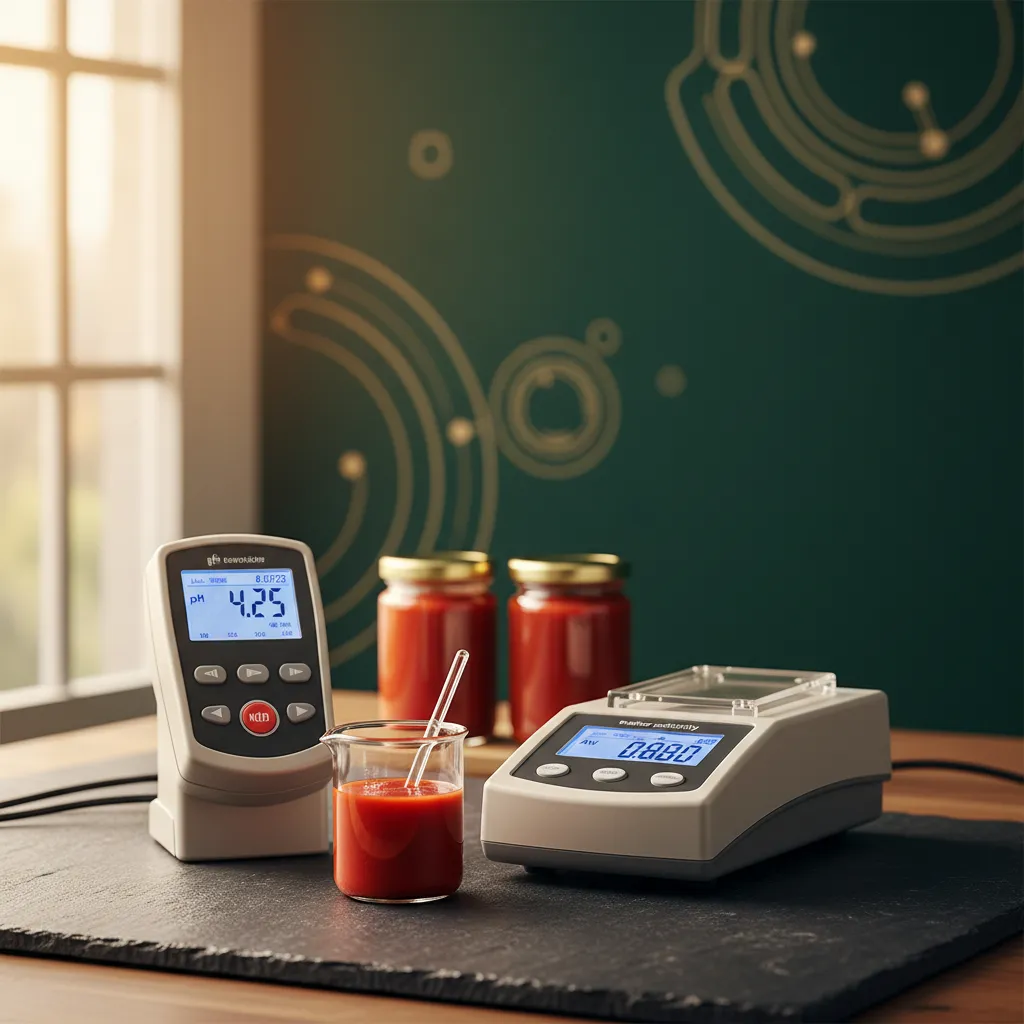
Analytical data — pH, Aw, viscosity, color (Hunter or CIELAB), microbial counts, and any nutrient claims that need to remain accurate over time.
Pass/fail criteria — defined in advance, not invented after the data comes in.
Documented results — ideally in a report you can share with a retailer or co-packer.
Common Mistakes
Studying the wrong product. A bench-batch sample doesn't behave like a real production batch. Use product from a representative co-packer run.
Underspecifying the panel. "It tasted fine" is not data. Use a structured scoring sheet or a trained panel with defined acceptance thresholds.
Ignoring packaging. The same product in glass behaves differently from the same product in plastic, and same product in a clear bottle behaves differently from one in amber. Test in the actual final packaging.
No control samples. If you're storing product at elevated temperature, you need a parallel control set at ambient to compare against.
Assuming ASLT covers everything. ASLT is a model. For meaningful claims, validate the model against real-time data over time. For related context on preservation strategies, see extending shelf life without artificial ingredients.
What This Costs and Takes
For a single SKU, a competent ASLT study at a third-party food lab typically runs $2,500-$8,000 depending on the scope of testing, number of pulls, and analytical depth. Real-time studies cost similarly per pull but stretch over a much longer time frame. In-house programs can cost less in cash but require equipment, panel training, and discipline.
Frequently Asked Questions
Do I have to do shelf life testing if I'm not making a "Best By" claim?
Most jurisdictions don't legally require a Best By date on shelf-stable food (with category exceptions like infant formula). But retailers, distributors, and insurers usually require evidence that the product remains safe and acceptable through its expected distribution and on-shelf life. Skipping the study often blocks distribution.
Can my co-packer's existing shelf life data cover my product?
No. Shelf life is product-specific. Your formulation, your packaging, and your process produce results that are unique to your product. Co-packer data on similar products is interesting context, not a substitute.
How long should I claim?
The honest answer: as long as your data supports, with margin. If your study supports 24 months, claiming 18 builds in cushion against batch variability. Retailers prefer slightly conservative claims that hold up over claims that are aggressive and degrade.
What if my product fails before the target shelf life?
Several options: shorten the claim, reformulate to address the failure mode, change packaging (oxygen barrier, light protection), or move to refrigerated distribution. Each choice is a trade-off between shelf identity, cost, and channel access.
A Closing Note
Shelf life testing is one of those areas where doing it half-well is worse than not doing it at all. Half-well data leads to overconfident claims and brand-damaging surprises later. If you'd like help designing a study that actually supports the claim you want to make, a discovery call is a reasonable starting point — and the lab work itself should always go through a qualified analytical partner.
Need Help With Your Formulation?
Whether you're scaling your first recipe or reformulating an existing product, let's talk about how to get it right.
Book a Free Discovery Call