The Yolk Was Quietly Doing Three Jobs at Once
You built a vegan mayo in the kitchen that people could not believe was egg-free. It was glossy, thick, tangy, and it held on a spoon like the real thing. Then you scaled it up or sent it to a co-packer, and it broke. Maybe it separated in the jar after a week, or went thin and weepy on the delivery truck.
This is one of the most common formulation surprises I work through with founders building egg-free condiments, and it almost never means the recipe is bad. It means the ingredient that carried the hard job for free, egg yolk, is gone. When you pull the yolk you are not removing one thing but three: an emulsifier, proteins that build body, and a natural stabilizer, all in one spoonful. To replace it well you replace each of those jobs on purpose, and my preference is to do it with real, recognizable food before reaching for the additive shelf.
What Egg Yolk Was Actually Doing
Mayonnaise is an oil-in-water emulsion. That sounds backwards, because mayo is 65 to 80 percent oil by weight, but the oil is broken into millions of tiny droplets suspended inside a continuous water phase, and what keeps those droplets from merging back into a puddle is the emulsifier coating each one.
Egg yolk plays three roles at once. Its lecithin is a natural surfactant that stabilizes the droplet surface. Its proteins unfold at that interface and form a physical film that adds mechanical strength. And its solids thicken the water phase, which slows the droplets so they cannot drift together as easily. Pull the yolk and you have a job opening for all three, and the mistake I see most often is replacing only the surfactant.
Real Emulsifiers That Come From Whole Foods
This is where I always start, because the strongest egg-free mayos I have made lean on ingredients that read like food.
Aquafaba (chickpea water)
Aquafaba is the viscous liquid left from cooking or canning chickpeas, and it is the closest single-ingredient analog to egg function the plant world offers. It carries chickpea proteins (the same ones that let it whip into a meringue), naturally occurring saponins that act as mild surfactants, and dissolved carbohydrates and starch that add body, so it can emulsify and thicken at once, the double duty the yolk used to pull. The catch at scale is consistency, because aquafaba varies wildly with how much water cooked off. The fix is to standardize it to a target solids reading, so every batch starts from the same protein load.
Mustard
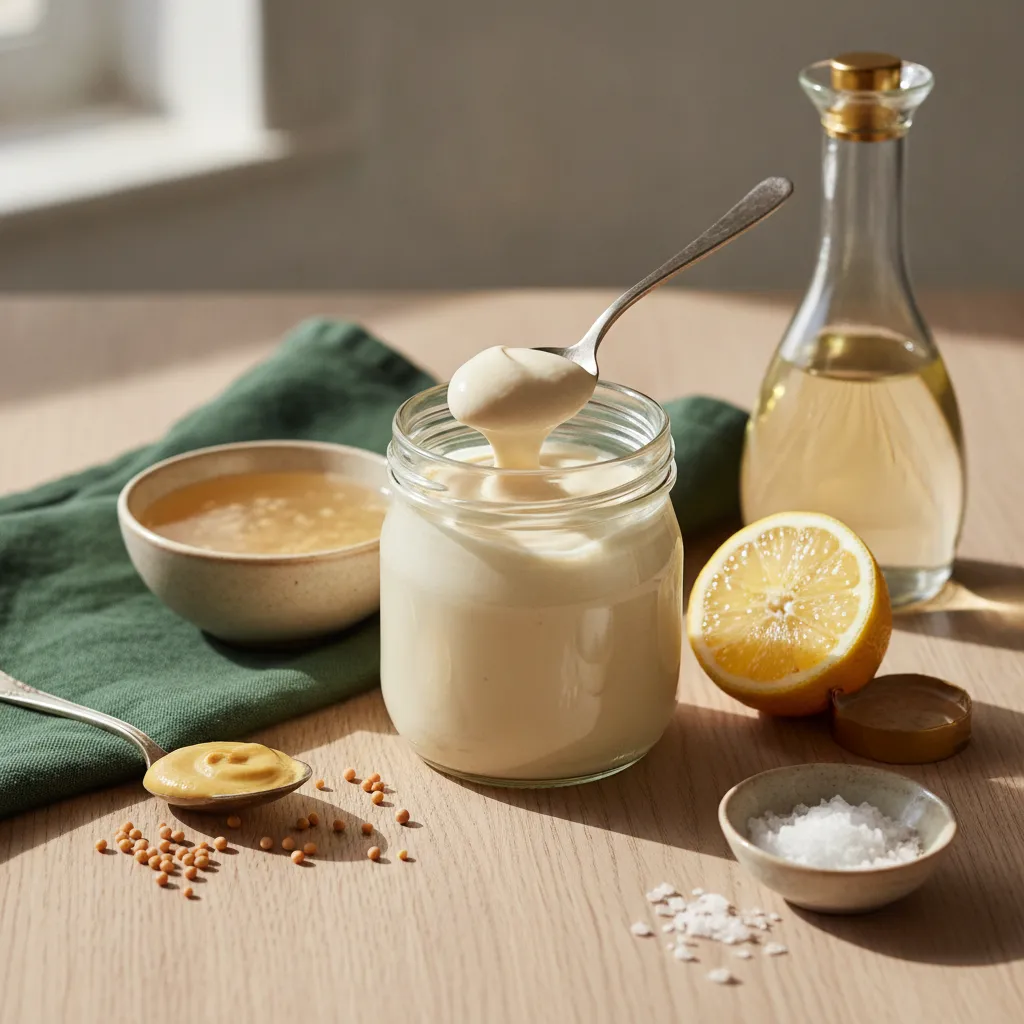
Mustard earns its place twice. The seed coat contains a natural mucilage that is a genuine emulsifier and stabilizer, and mustard also brings the sharp, savory backbone that reads as classic mayo or aioli flavor. A small amount gives the emulsion a head start, and nobody blinks at mustard on a label.
Plant lecithin
If yolk's lecithin was the missing surfactant, plant lecithin is the most direct real-food replacement. Sunflower lecithin and soy lecithin are derived from those seeds and are recognizable, widely accepted ingredients. Sunflower has an edge in the clean-label and allergen conversation because it avoids the soy allergen, and a fraction of a percent goes a long way. Think of it as a bridge ingredient: real enough for a clean label, purified enough for reliable droplet coverage.
Pea and other plant proteins
Where you need more of the protein-film strength yolk supplied, functional plant proteins step in. Pea protein and soy protein build the interfacial film that reinforces each droplet, and pea protein has become a workhorse in egg-free condiments because it is reasonably neutral and widely available. These are more processed than a chickpea liquid, so I treat them as recognizable functional ingredients rather than whole foods, but they are still plant-derived and far more label-friendly than a synthetic emulsifier. Watch the flavor, since some isolates carry a beany note to balance with acid and aromatics.
Emulsifier Versus Structure Builder: Aquafaba, Starch, and the Water Phase
An emulsifier coats the oil droplets and keeps them from merging. A structure builder thickens the water phase so the whole system moves slowly and the droplets cannot drift together fast. Confusing the two is why founders keep adding emulsifier when what they needed was body in the water phase.
Aquafaba does both, which is part of why it is so useful. A cooked starch is almost purely a structure builder: a native starch (rice, tapioca, or the residual starch in aquafaba) gelatinizes and thickens the water phase, slowing droplet movement and adding a spoonable body that is especially valuable in reduced-oil versions. But most native starch does not coat oil droplets, so starch alone will not hold a high-oil emulsion. The reliable pattern is to pair them: an emulsifier that owns the droplet surface plus a structure builder that owns the water phase. One honest note: octenyl succinic anhydride (OSA) modified starch genuinely does emulsify, but it is a modified additive, not a whole food, so I reach for a real emulsifier first.
Building the Oil-in-Water Emulsion So It Actually Holds
The process is where egg-free emulsions are won or lost. You are chasing small, uniform droplets, because small droplets cream and merge more slowly than big ones.
Order of addition matters. Build a stable water phase first, aquafaba or plant protein, mustard, acid, salt, any lecithin and starch, blended uniform. Then add the oil slowly while shearing hard, because if oil goes in faster than the emulsifier can coat it you get large droplets and a fragile emulsion. A kitchen blender manages this; at production scale the shear comes from a colloid mill or high-shear inline homogenizer, which drives droplet size down far enough for a premium, glossy, stable product. Raise this with your co-packer early: a facility set up for chunky salsas is not set up for a fine mayo emulsion.
Mouthfeel and gloss
Gloss and that clingy mouthfeel come from three levers: droplet size (finer is glossier), oil fraction (more oil reads richer, up to a point), and water-phase body. A reduced-oil vegan mayo can be delicious, but the richness you lose with the oil has to be rebuilt with structure in the water phase, which is exactly where the temptation to over-rely on gums creeps in.
Choosing Your Oil for Flavor and Shelf Life
Oil is the majority of the formula by weight, so it drives flavor, cost, and how long the product lasts before it tastes rancid. In a jar that is mostly oil, oxidation is the slow clock on your shelf life even when the emulsion is perfectly stable, and founders underestimate it constantly.
For flavor, most mayo uses a neutral base oil (refined sunflower, canola or rapeseed, light avocado) so the mustard, acid, and salt define the character. Aioli often wants a fraction of olive oil for its signature note, but pure extra-virgin olive can turn bitter under high shear, so many aiolis blend it over a neutral oil. For shelf life, oxidative stability is what quietly matters: oils high in polyunsaturated fats (soybean, standard sunflower, flax) oxidize faster, while high-oleic oils (sunflower, canola, avocado) are more stable and hold flavor longer, so I lean toward them. My real-first antioxidants are natural, rosemary extract and mixed tocopherols (a form of vitamin E), backed by packaging that keeps oxygen and trace metals out. The processed options exist, BHA, BHT, and calcium disodium EDTA are common in conventional mayo, and I will name them honestly as tools that function, but they are a clean-label compromise, not my default.
Acid, pH, and the Safety Question
This is the part you cannot improvise on. Shelf-stable mayonnaise is a low-acid, protein-containing, high-moisture product, and it is kept safe primarily by acidification. Traditional mayo relies on acetic acid from vinegar plus salt to hold the water phase at a low pH that suppresses microbial growth, and an egg-free version does not escape this. A plant-protein water phase makes disciplined acid control more important, not less.
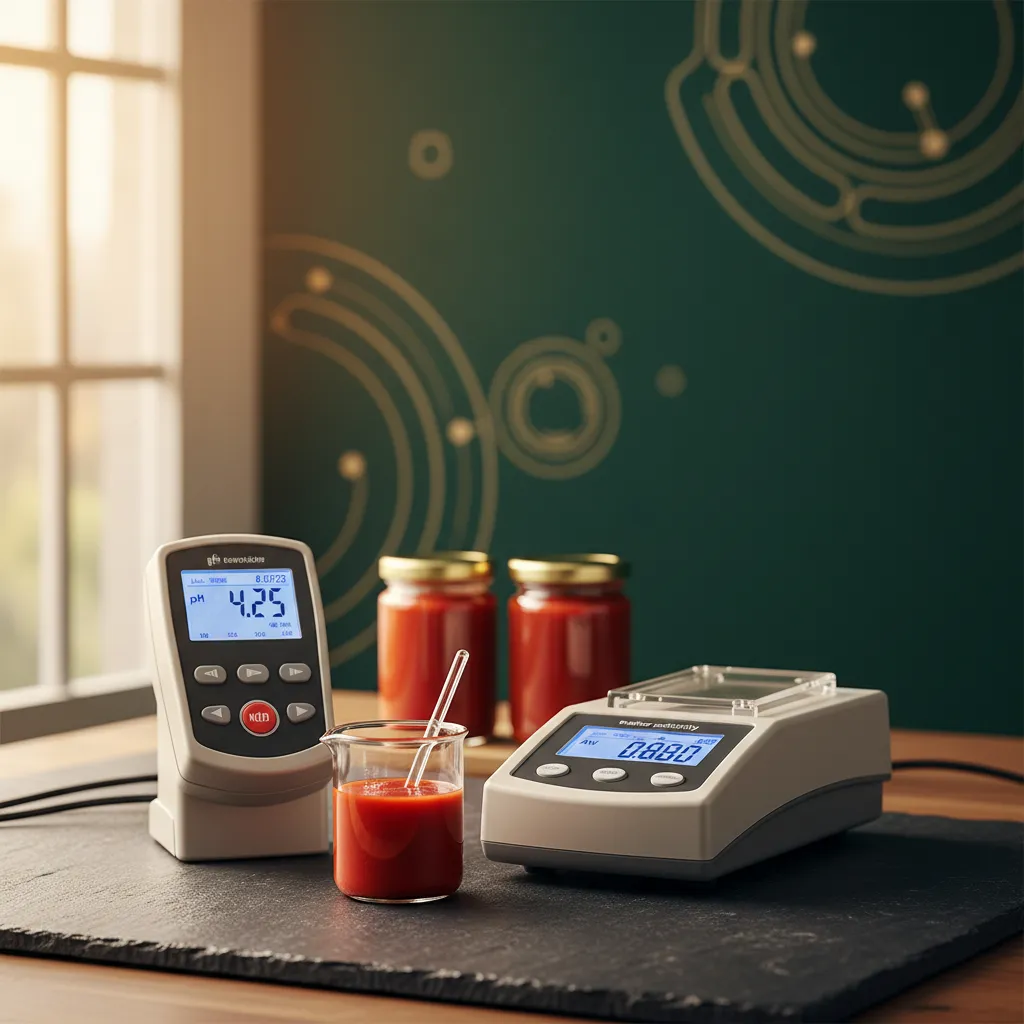
My real-first acids are vinegar and lemon juice, which carry flavor that belongs in mayo and aioli, with citric acid as a supporting tool to lock pH consistently when vinegar drifts. For acidified foods the relevant regulatory threshold concerns pH at or below 4.6, and shelf-stable mayo is typically formulated well under that in the water phase, with a margin. But the exact target, the buffering of your specific proteins, and whether your product even falls under acidified-food rules all depend on your formula and facility, and current rules change and vary by category. Do not take a number from an article, including this one, as a green light: measure finished pH, and validate the whole process with a qualified process authority and your co-packer before you produce or sell. For the filing itself, see FDA process authority letters for acidified foods.
Keeping It Together Across Shelf Life
An emulsion that looks perfect at fill can still fail over weeks in a jar, and egg-free versions are less forgiving than yolk-based ones. Plan against a few failure modes.
Creaming and oiling off. Oil droplets are lighter than water and drift upward over time. If the water phase has enough body and the droplets are small enough, this happens too slowly to matter; if not, you get a layer of free oil on top. The defenses, in priority order, are smaller droplet size, more water-phase structure, and adequate emulsifier coverage.
Coalescence. Droplets that touch can merge, and once they start, the emulsion unravels. Enough emulsifier to fully coat the total droplet surface is the guard, and under-dosing is a common cause of a product that separates at week six.
Temperature abuse. Heat thins the water phase and speeds droplet movement, and freezing is worse: ice crystals rupture the emulsion and it breaks irreversibly on thaw. That is what shelf-life testing is for: hold real production samples at real-world temperatures and pull them at intervals for separation, flavor drift, and rancidity. A mayo that still tastes right at week eight and beyond, not just at day zero, is the one you can sell.
The Honest Talk About Gums and Stabilizers
A pinch of purified hydrocolloid buys a stable-looking emulsion, and this is exactly where a lot of egg-free mayos quietly go wrong for a clean-label brand. Xanthan gum, guar gum, and gellan are effective water-phase thickeners, and at very low levels they can genuinely help, but leaned on too hard they produce that slimy, over-stabilized texture that reads as cheap and push your label toward the additive-heavy look you were trying to avoid.
My honest position: use them minimal and last, after the real-food structure is doing most of the work. If aquafaba, mustard, a cooked native starch, and a fine emulsion get you most of the way, a whisper of xanthan (often in the low tenths of a percent) to lock the last bit of stability is a reasonable compromise. What I will not do is start with the gum and treat real ingredients as the afterthought: we solve it with real food first, and only borrow from the additive shelf when the food genuinely cannot finish the job.
Related Reading
For the closely related problem of holding a pourable dressing together, see the clean label dressings emulsion challenge. For the broader trade-off between flavor and shelf stability in a condiment, see condiment formulation for flavor and shelf stability. And for the safety science underneath all of it, see water activity vs pH.
Frequently Asked Questions
Can I really make a shelf-stable vegan mayo without any gums at all?
Often yes at full oil load: standardize your aquafaba, use a real emulsifier like mustard and plant lecithin, drive droplet size down with shear, and control pH and oxidation. Reduced-oil versions are harder to hold on real food alone, so those are where a minimal amount of gum most often earns its place.
Is aquafaba consistent enough for a commercial product?
It is used commercially; the two problems to solve are consistency and safety. Standardize it to a target solids reading so every batch starts the same, and treat it as part of your acidified, validated process. Confirm your specific process and any pathogen controls with a process authority before you scale.
Why does my egg-free mayo separate after a couple of weeks?
Almost always droplet size, emulsifier dose, or water-phase body. A blender makes larger droplets than a colloid mill, so a batch that looks fine at fill can cream or oil off over weeks. Check whether your shear is fine enough, whether you have enough emulsifier for all that oil surface, and whether the water phase is structured enough to hold it.
What oil should I use for the longest shelf life?
Lean toward high-oleic oils such as high-oleic sunflower, canola, or avocado, because they resist oxidation better than polyunsaturated-heavy oils. Support them with rosemary extract and mixed tocopherols, keep oxygen and light out with good packaging, and confirm the real number with shelf-life testing.
Where This Becomes Real Work
A great egg-free mayo or aioli is a stack of decisions that all have to agree: which real emulsifier carries the droplets, how you build body in the water phase without going gummy, which oil survives your shelf life, and how you land a safe, validated pH without flattening the flavor. Get one wrong and the jar separates or tastes off before it sells through. This is exactly the kind of puzzle I solve with founders: real ingredients first, stabilizers minimal and honest, safety-critical numbers verified. Book a Free Discovery Call if you want a hand building an egg-free mayo or aioli that holds on the shelf and still reads clean on the label.
Need Help With Your Formulation?
Whether you're scaling your first recipe or reformulating an existing product, let's talk about how to get it right.
Book a Free Discovery Call