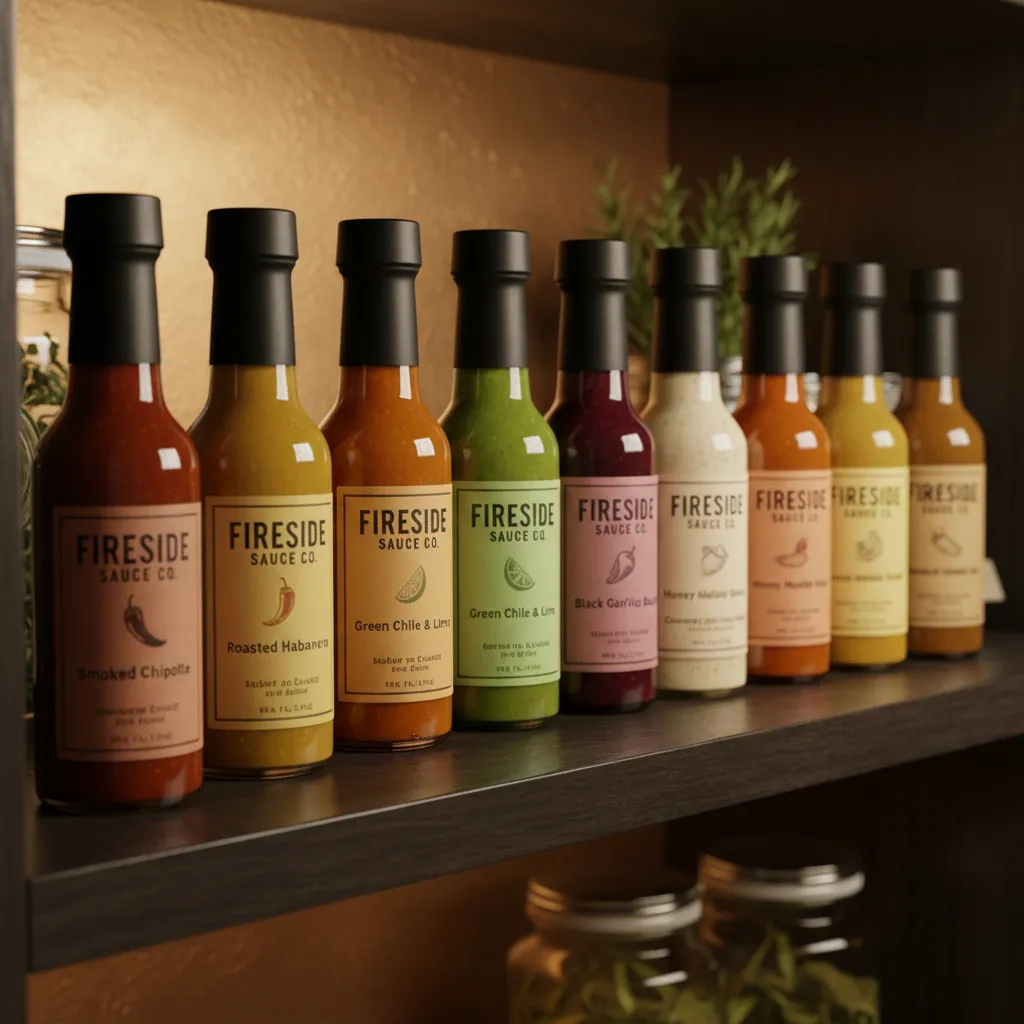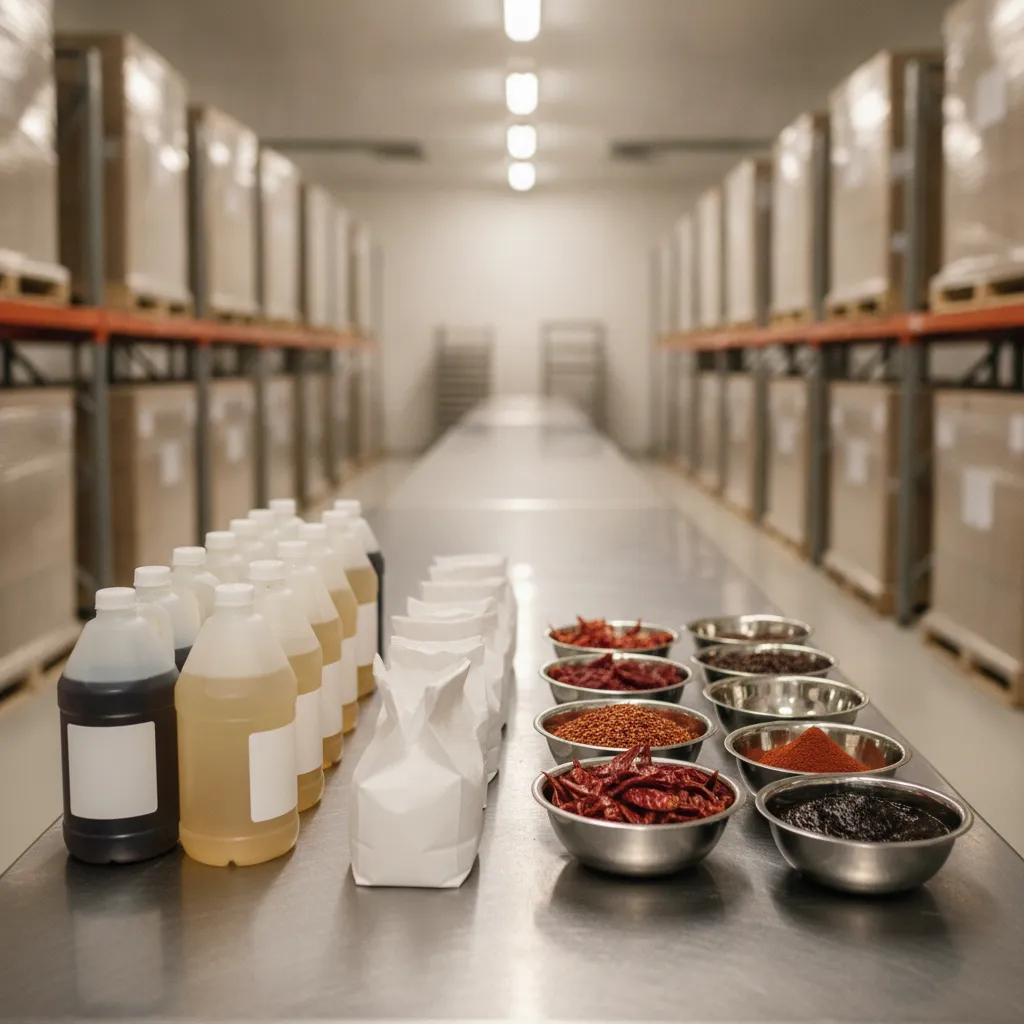
Pull the ingredient list for every SKU you make and lay them side by side. If your line grew one flavor at a time, you may find something like this: three vinegars, two starches, four forms of chile (a chipotle powder, an ancho powder, a flake, and a paste), cane sugar from two different suppliers, and garlic powder in one SKU sitting next to granulated garlic in another. None of those choices was wrong when it was made. Each flavor was developed at a different time, sometimes by a different person or for a different plant, and each one used what made sense then.
The cost of that sprawl doesn't show up on any single formula. It shows up in the warehouse, in the paperwork, and at the plant. Every distinct ingredient is its own minimum, its own certificate of analysis, its own allergen and certification documents, its own supplier for the co-packer to approve, and its own partial pallet aging somewhere. This article is about cleaning up the ingredient side of your recipe deck: finding the near-duplicates, merging the ones that can merge without anyone tasting a difference, and recognizing the ones that only look like duplicates.
If lowering cost is your main goal, my playbook for cutting COGS without touching flavor covers the full set of cost levers, consolidation among them. Here the focus is how to actually do it across a multi-SKU line.
Build an Ingredient Matrix for the Whole Line
A spreadsheet is enough. Put every ingredient down the side and every SKU across the top. The rows are ingredients as purchased: the specific item, from the specific supplier, in the specific pack size. Two SKUs that both say "distilled vinegar" on the label might be buying two different acid strengths from two different vendors, and the label will never tell you that. In each cell, note whether that SKU uses the ingredient and what share of the formula it makes up.
Then add the columns that make the matrix useful:
- The job the ingredient does in each SKU where it appears (acid, sweetness, body, heat, color, thickening, aroma)
- Supplier, pack size, and the minimum you have to buy
- The ingredient's own shelf life, and roughly how long one purchase lasts at your current pace
- Allergen status, including sub-ingredients
- The certifications it carries (organic, Non-GMO, kosher, gluten-free) and which of your claims depend on it
- Where it is stored, and who owns that inventory
Now sort the rows into families: acids, sweeteners, starches and other thickeners, oils, tomato and fruit bases, chiles and other heat, alliums, dried spices and herbs. The near-duplicates appear as soon as related rows sit next to each other. Don't skip compound ingredients. A seasoning blend that contains salt, sugar, and garlic powder is three more rows hiding inside one, and you may already buy all three on their own.
One caution: the matrix has to reflect what the plant actually runs, not what the oldest version of your formula says. If those two disagree, settle that first, because consolidating from the wrong starting point only spreads the error across more SKUs.
Sort Every Duplicate Into One of Three Groups
Not every duplicate is the same kind of problem. I sort them into three groups, because each needs a different amount of work.
True duplicates
The same ingredient, to the same spec, bought from two suppliers or in two pack sizes for no reason anyone remembers. One SKU buys cane sugar in bags and another buys the same sugar from a different vendor in bulk. These are usually the easy wins: settle on one source with your co-packer and update the specs. Even here, run one side-by-side batch before you drop a supplier, since two products sold to the same spec can still taste a little different. If you keep the second source as a backup, give it the same discipline as any approved alternate from a second supplier rather than leaving it as an informal fallback.
Near-duplicates
The same family with a different spec. A 50-grain vinegar in one SKU and a 100-grain vinegar in another (grain is the trade's measure of acid strength, so 100-grain is twice as strong). Two native starches from two suppliers. Granulated garlic and garlic powder. Chipotle powder in one SKU and chipotle flakes in another. These can often merge, but merging means reformulating at least one SKU, because a different strength, particle size, or form changes how much you need and how it behaves in the kettle. The vinegar selection guide shows why a change in strength is never just a swap.
Look-alikes doing a real job
Two ingredients that look redundant on the matrix but aren't. These are the ones to protect, and recognizing them is the most important judgment in the whole exercise.
How to Tell When a Duplicate Is Earning Its Place
Before you merge anything, ask what each version does that the other can't. If any of these is true, the duplicate is probably doing real work:
- It defines a SKU's flavor. Rice vinegar might be the soft, slightly sweet acid that makes your ginger dressing taste like itself, while distilled vinegar does a purely structural job in your hot sauce. Swapping in the distilled to save a row on the matrix removes the reason that dressing exists. Every product has hero ingredients, and consolidating one of them away is reformulating the product, not tidying the deck.
- It survives a different process. Two thickeners can look redundant on a spreadsheet and still be fitted to very different conditions. A starch that performs in a high-acid dressing through a high-shear mixer may be the wrong choice for a soup that sits hot in the kettle through a long hold before filling, even though both are sold as thickeners. Two starches on your matrix may be two correct answers to two different processes.
- It carries a claim or meets a retailer rule. One SKU may use the organic version because that SKU is certified organic, or a particular supplier because a retailer carrying that SKU expects a certificate the other supplier can't provide.
- It holds a safety number. If the ingredient is the acid that sets finished pH, or a large share of the solids that keep water activity in check, merging it changes something your process authority reviewed. You can still do it, but deliberately, with their input.
- It keeps heat or color steady. An oleoresin in one SKU and a ground spice in another can look like a duplicate pair. Oleoresins are concentrated spice extracts, such as paprika oleoresin, and they can hold flavor, heat, and color more steadily over the shelf life than the ground spice does. If one SKU is more color-sensitive or sits on the shelf longer, that difference may be the whole point.
If none of these apply, and the two versions are on your matrix only because they were picked at different times, you have found a real candidate for consolidation.
Consolidate Where the Flavor Allows
For each family with real candidates, pick the survivor. Usually that is the version that already does the most jobs across the line, meets your strictest claim and retailer requirements, and comes from the supply you would most like to rely on. Then move the other SKUs onto it, one SKU at a time.
- Bench it side by side. Make the SKU with its current ingredient and with the survivor, changing only that one thing, plus any adjustment the change forces, such as a different amount of a vinegar at a different strength.
- Measure it against that SKU's own targets. Every flavor in a line has its own pH, Brix, and viscosity targets. The question isn't whether the new version matches your flagship; it's whether it still meets its own spec.
- Judge it at two weeks. Let each trial batch settle before you trust your palate. A consolidation that tastes off on day one can be right on target at week two, and the reverse happens too. Compare the week-two batch with that SKU's gold standard, blind if you can.
- Confirm it on the plant's line. A merged starch or a different chile form can behave differently in a full kettle than on the bench. Ask your co-packer how they want to trial it.
- Run it through change control. Each consolidation is a formula change, with a version number, a sign-off, and a record of everything it touches. My piece on formula change control covers how to manage that cleanly with your plant.
Sequence the work so the risk climbs slowly. Start with true duplicates, which are mostly paperwork. Move to near-duplicates in SKUs where the ingredient plays a supporting role. Leave anything that touches a hero flavor or a safety number for last, with the most testing and your process authority involved. And don't change five SKUs in the same production cycle. If something goes wrong, you want to know which change caused it.
Fewer Pallets and Less Expiring Stock
This is where consolidation pays back on the ordering side. Ingredient suppliers often sell by the pallet, even when a SKU needs only a few pounds of something per batch. A specialty item used by one slow-moving SKU can outlive its own shelf life before you finish it, and someone has to store it in the meantime. Fold that item into one the whole line already uses, and you buy fewer distinct items, each one turns over faster, and less of it ages past its date.
Here is an illustrative example, not a real case. Say two of your SKUs each use a different ground chile in a supporting role, each bought by the case, and at your current pace each case outlasts the chile's best-by date. If both SKUs can run on the same chile without anyone noticing at week two, one case serves both, it empties faster, and you stop throwing out the tail end of two cases. The numbers depend entirely on your volumes and your suppliers, but the logic is the same anywhere a low-volume ingredient lives in a single SKU.
Two conversations follow. Talk to your vendors about how a larger, simpler order changes your minimums and lead times, and to your co-packer about what they have room to store for you. Those conversations, and any pricing that comes out of them, belong to you or your sourcing partner. My part is identifying which ingredients can merge in the formula and which can't. I don't negotiate pricing, minimum order quantities, or supplier contracts.
Simpler Allergen and Certification Paperwork
Every ingredient you buy arrives with documents: an allergen statement, sometimes a shared-facility statement, a certificate for each claim it supports, and the plant's own supplier approval records. Certificates expire, statements get revised, and each distinct ingredient is one more set of documents to chase and one more place a lapse can hide.
Consolidation shrinks that pile, and sometimes it does more:
- Standardize on the version that meets your strictest requirement. If one SKU's starch comes with Non-GMO verification paperwork and another's doesn't, moving both to the certified version simplifies the line and keeps doors open with retailers who expect it. The rules of the retailers you sell to, and your own brand values, should decide which version survives, not convenience.
- Look for an allergen that only one ingredient brings in. If a single ingredient is the only source of a major allergen in a SKU, and the line already uses an allergen-free ingredient that does the same job, consolidating may take that allergen out of the formula. Removing an allergen from a recipe isn't the same as removing it from the plant, though, so the label decision belongs with your co-packer's allergen program and whoever handles your labeling. My article on allergen control in co-packing explains the difference.
- Bring your certifier in early. If you hold organic, Non-GMO, or gluten-free certification, ingredient and supplier changes typically have to be reported to your certifier, and some need approval before they are used. The certification guide covers what each seal involves.
- Plan the label changeover. When an ingredient statement changes, that SKU's printed labels become obsolete, so time the switch with whoever manages your labels.
Keep the Pantry Small as the Line Grows
Once the matrix exists, keep it, because it becomes your best tool for adding SKUs. A new flavor starts from the ingredients you already buy, and every new row has to earn its place: either it is a hero ingredient for the new product, or it does a technical job nothing in the current pantry can do. That habit keeps the sprawl from growing back. Revisit the matrix whenever you add a product, move a SKU to another plant, or change a key supplier.
The Calls a Spreadsheet Can't Make
Anyone on your team can build the matrix, and it can show you where the sprawl is. What it can't tell you is whether an ancho powder can stand in for the guajillo in your medium salsa without anyone noticing at week two, whether your soup's starch will survive the plant's hold if you swap in the one from your dressing, or how much a vinegar at a different strength will shift the balance of a sauce that already sits near the top of its pH window. Those answers come from bench work against each SKU's gold standard, one change at a time. That is the part I do inside client work: turning a tidy spreadsheet into a line the plant can run with fewer ingredients and the same flavors your customers already buy.
Need Help With Your Formulation?
Whether you're scaling your first recipe or reformulating an existing product, let's talk about how to get it right.
Book a Free Discovery Call