Vinegar Is Doing More Work Than You Think
In a shelf-stable sauce or condiment, vinegar is rarely just a flavor ingredient. It's a safety hurdle, a flavor carrier, a color modifier, and a meaningful line item on your COGS sheet. The vinegar you choose changes your finished pH, your scheduled process filing, your label story, your retail-channel fit, and the per-unit cost of every jar that leaves the line.
Most founders pick a vinegar based on the kitchen recipe and stop thinking about it. Then a co-packer asks for the acetic acid percentage, and the conversation suddenly involves chemistry, regulations, and a budget number you didn't see coming.
Acetic Acid Percentage: The Number That Matters Most
Vinegar is fundamentally a dilute acetic acid solution. Commercial vinegars are sold by acetic acid strength, almost always expressed as a percentage by weight or as grain (where 10 grain equals 1 percent acetic acid).
Common strengths you'll encounter:
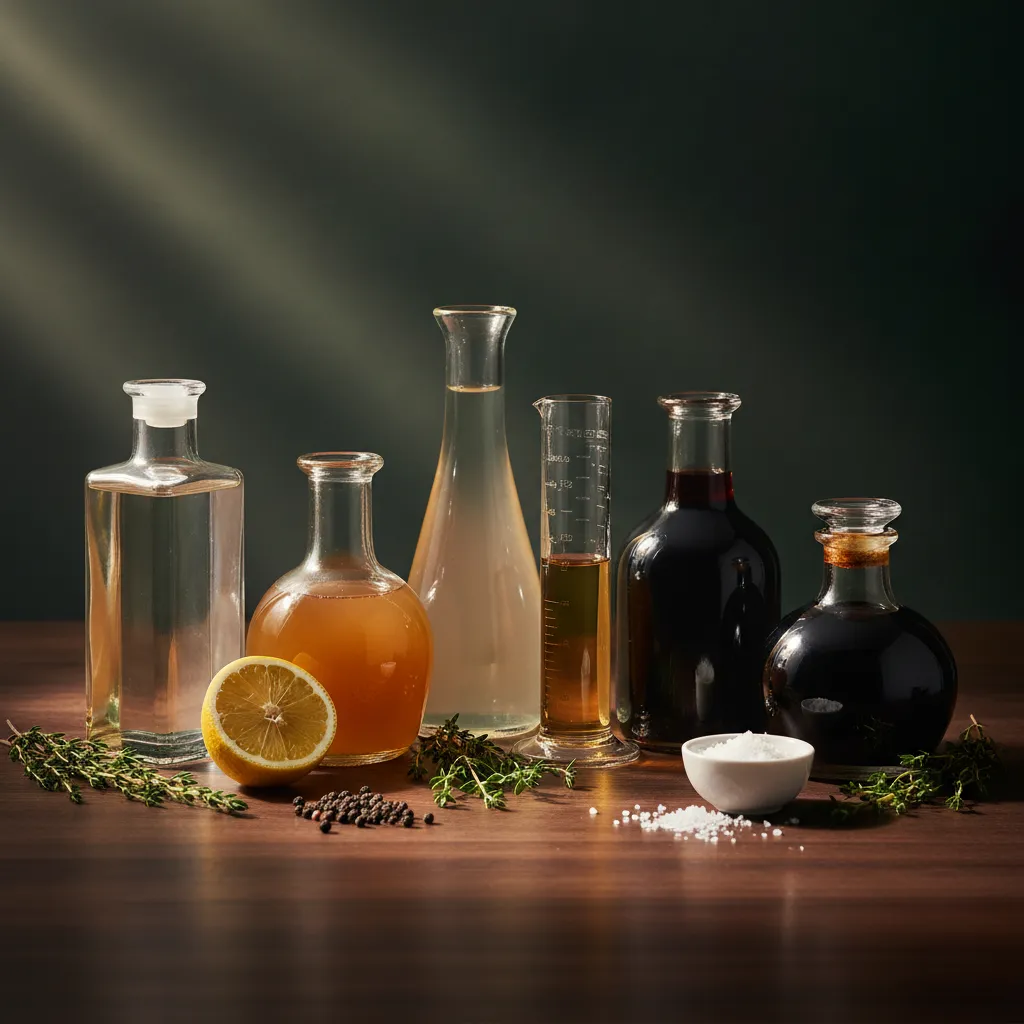
Distilled white vinegar: typically 5 percent acetic acid (50 grain) at retail, and 10 to 20 percent (100 to 200 grain) for industrial use.
Apple cider vinegar (ACV): 5 percent at retail, 10 percent at industrial scale.
Rice vinegar: 4 to 5 percent, generally not available in industrial high-strength versions.
White wine vinegar: 5 to 7 percent.
Red wine vinegar: 6 to 7 percent.
Malt vinegar: 4 to 8 percent.
Balsamic vinegar (industrial-grade, not traditional): 6 percent, with significant non-acid solids.
The acid contribution of a vinegar to your finished product depends on both the percentage of acetic acid in the vinegar and the percentage of vinegar in your recipe. A recipe that calls for "1 cup of vinegar" delivers very different acid loads depending on whether it's 5 percent ACV or 10 percent industrial white.
This is why industrial production frequently uses higher-strength vinegar (often 10 or 20 percent) and dilutes to taste rather than buying retail-grade vinegar. The economics, the storage, and the consistency are all better.
pH Targeting With Vinegar
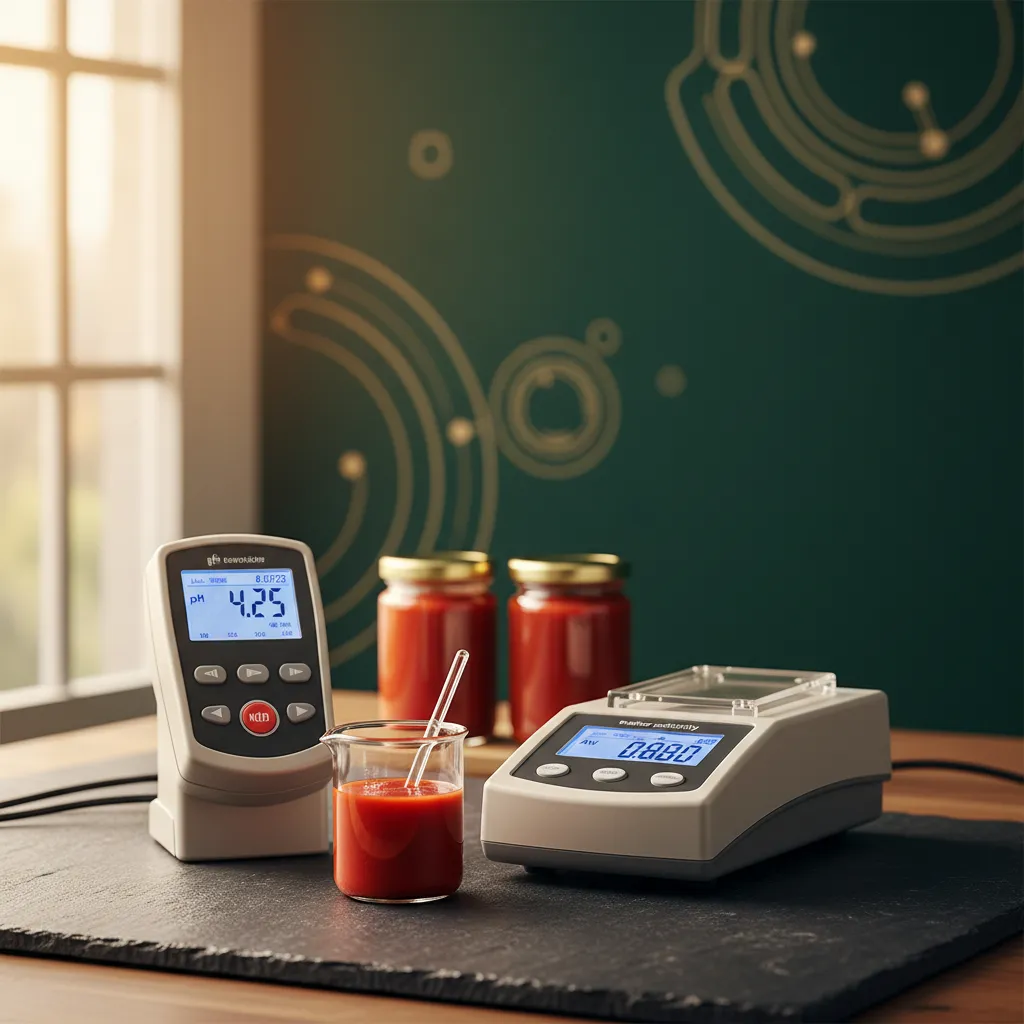
If your product is acidified to pH 4.6 or lower, vinegar is usually the primary tool getting you there. The relationship between vinegar percentage and finished pH is non-linear and depends on the buffering capacity of your other ingredients (especially proteins, dairy, vegetables with significant alkalinity, and salts). You can't calculate finished pH from vinegar percentage alone; you measure it.
The practical workflow: develop the recipe to flavor target, measure finished pH, adjust vinegar (or add a secondary acid) until pH is in spec with a safety margin. For acidified foods, the typical safety margin is a target pH 0.3 to 0.5 units below the regulatory threshold of 4.6, so a target of 4.0 to 4.3, with a hard ceiling of 4.4.
For deeper context on the pH side, see water activity vs pH and FDA process authority letters for acidified foods.
Flavor Profile Differences That Actually Matter
Distilled white vinegar
Sharp, clean, neutral. The closest thing to "pure acid" in flavor terms. Use when you want the acid to play a structural role without contributing flavor character. Common in classic ketchups, vinegar-forward hot sauces, and most pickling brines. Inexpensive, widely available, and the easiest vinegar to source at industrial strength.
Apple cider vinegar (ACV)
Soft, slightly fruity, with a faint sweetness from residual apple compounds. Reads "natural" on a label, which has marketing value in the natural channel. Slightly more expensive than distilled, and the flavor character can drift batch to batch with apple supply. Unfiltered ACV with "the mother" has stronger label appeal but creates challenges for a clear, consistent finished product. Most commercial use is filtered ACV.
White wine vinegar
Crisp, cleaner than red wine vinegar, with light fruit notes. Common in dressings, vinaigrettes, and lighter-bodied condiments. Cost is moderate.
Red wine vinegar
Deeper, more complex, with tannic notes from the wine base. Works well in heartier sauces, marinades, and Mediterranean-leaning condiments. Color contribution matters in light-colored products.
Rice vinegar
Mild, slightly sweet, with low sharpness. Common in Asian-inspired sauces and dressings. Lower acetic acid percentage means you may need more volume to hit pH targets, which can shift other flavor balances.
Malt vinegar
Strong, malty, distinctly British. Niche but durable. Pairs with brown sugars and savory pickles.
Balsamic vinegar (industrial)
Sweet, dark, and viscous due to grape must content. Industrial balsamic differs significantly from traditional balsamic of Modena (which is aged for years). Industrial-grade is suitable for sauces and dressings; traditional aged balsamic is generally too expensive for commercial CPG.
Reduced and Aged Options
Some founders develop a flavor signature around reduced vinegars: cooking down a vinegar (often balsamic, red wine, or fruit vinegar) to concentrate flavor and increase viscosity. This is delicious. It is also a meaningful complication at scale. Reductions raise the cost-per-pound dramatically, change the acetic acid percentage (typically increasing it as water evaporates), and can shift the regulatory profile of the finished sauce. If your kitchen recipe relies on a reduced vinegar, talk to your formulator about whether to recreate the flavor with a different combination at production scale, or to reduce in-line during the cook (which changes co-packer process design), or to source a pre-reduced vinegar product.
Aged vinegars (sherry vinegar, traditional balsamic, certain craft vinegars) carry similar trade-offs at amplified cost.
Cost at Scale
Approximate ranges for industrial purchasing (these vary regionally and by supplier):
Distilled white vinegar (10 percent): often the cheapest mainstream option, in the $3 to $6 per gallon range at small drum quantities, lower at tank-quantity volume.
Apple cider vinegar (10 percent industrial): moderately higher, $5 to $10 per gallon.
White wine vinegar: $7 to $15 per gallon, varies with wine cost.
Red wine vinegar: similar to white wine, sometimes higher.
Rice vinegar: $8 to $15 per gallon for commercial-grade.
Industrial balsamic: $10 to $30 per gallon depending on grade.
For a product that uses 15 to 25 percent vinegar by weight, the choice between distilled and rice vinegar can swing COGS by several percentage points. That's real money on a sauce brand's P&L.
How Vinegar Choice Changes Process Authority Filings
For acidified-food products, the specific acid used to drive pH below 4.6 is part of your scheduled process documentation. Switching from white vinegar to ACV mid-stream isn't a paperwork-free swap; it's potentially a process change that requires a reformulation review and possibly a new process authority sign-off. Likewise, a switch from a 10 percent vinegar to a 5 percent vinegar changes the volume needed to hit pH and changes the acid load profile in ways that may matter to your filing.
Plan vinegar choices early, and avoid the late-stage swap that triggers a rework of compliance documents.
Common Reformulation Traps
Switching to a "cleaner" vinegar without recalculating pH. Going from 10 percent industrial white vinegar to 5 percent organic ACV halves the acid load at the same volume. Your finished pH will move. This catches founders trying to upgrade label optics without re-engaging the formulator.
Assuming all 5 percent vinegars perform the same. Acetic acid percentage is one variable; flavor compounds, salts, and trace ingredients also affect mouthfeel and pH buffering. Test before locking.
Not specifying vinegar grade in the production sheet. "1 cup vinegar" is not a production spec. "Distilled white vinegar, 10 percent acetic acid, food-grade" is.
Sourcing locally instead of industrially. Retail-strength vinegar at retail prices is brutal economics for a commercial run. Always evaluate industrial sources before locking the recipe.
Related Reading
For the broader formulation picture, see condiment formulation, clean label dressings, and cutting COGS without touching flavor.
Frequently Asked Questions
Can I use citric acid instead of vinegar to hit pH targets?
Often, yes. Citric acid is faster, more concentrated, and easier to control to a target pH. The trade-off is flavor: citric reads tart and clean, where vinegar contributes complexity. Some clean-label products combine both: vinegar for character, citric acid as a buffer to lock pH consistently across batches.
Does organic vinegar make my product organic?
Not by itself. USDA Organic certification requires the entire product and supply chain to meet specific standards, with documentation. Using organic vinegar in a non-certified product is fine for label transparency, but it doesn't grant you organic claims.
Why is industrial vinegar so much cheaper than retail?
Industrial vinegar is sold in larger volumes (drums, totes, bulk tankers), at higher concentrations (so you ship less water), without retail packaging or branding. The supply chain is shorter and more efficient.
How do I know what acetic acid percentage my recipe needs?
You don't, until you measure finished pH against a target with a defined safety margin. A formulator can model the starting point, but final percentage gets dialed during recipe development with real measurements. Don't try to back-calculate from a kitchen recipe alone.
Where the Vinegar Choice Earns Its Keep
The right vinegar locks pH, supports your label story, hits a reasonable cost target, and stays consistent across batches. The wrong vinegar costs you on every front simultaneously. Most of the work is in picking once, picking carefully, and specifying it tightly. Book a Free Discovery Call if you want help mapping the right vinegar for your product and channel.
Need Help With Your Formulation?
Whether you're scaling your first recipe or reformulating an existing product, let's talk about how to get it right.
Book a Free Discovery Call