The Quote That Makes Founders Reconsider Real Vanilla
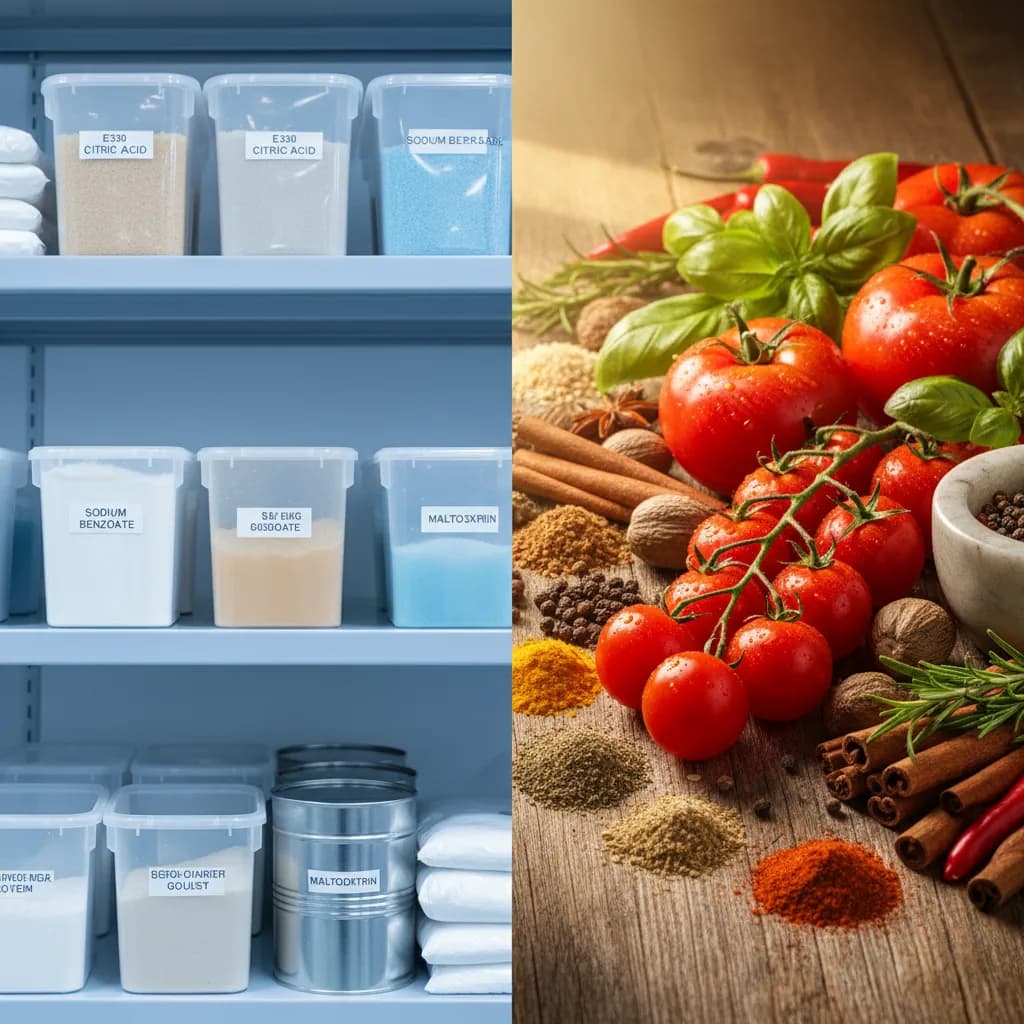
You built the product around real vanilla and a spice profile you can taste with your eyes closed. Then the co-packer's costed bill of materials comes back, and the vanilla line alone is eating a chunk of margin you didn't plan for. Somewhere in the same email is a gentle suggestion: we can hold the same flavor for a fraction of the cost with a vanilla flavor and a standard spice blend. It sounds reasonable. It is also the moment a real-ingredient brand quietly turns into something else.
This is one of the most common crossroads I work through with founders, and the honest answer is neither "always buy the most expensive thing" nor "cut wherever the spreadsheet says." The useful question is: on this specific product, where does real earn its keep, and where is a lesser grade genuinely fine?
Real vanilla, premium spices, and botanicals can fit inside a sane COGS. My default is real, because whole-food ingredients are what your label promise is built on and usually what made the kitchen version special, but "real everywhere at any cost" is a way to price yourself off the shelf. The method is to sort every ingredient into three groups: spend up on the flavors that define the product's identity, hold a sensible mid-grade on the supporting cast, and be honest about the few places a lower grade does the same job. What follows is how to tell them apart, vanilla first, because that is where the biggest mistakes get made.
Real Vanilla: What You Are Actually Paying For
Vanilla is where founders feel cost pressure hardest, because real vanilla is genuinely expensive and the synthetic alternative is genuinely cheap. Understanding the forms, and what each costs you in flavor and dollars, is the whole game.
Pure vanilla extract
In the United States, "pure vanilla extract" is a defined standard, not a marketing phrase. The FDA standard of identity (21 CFR 169.175) requires a single-fold extract to be made with the extractive of at least 13.35 ounces of vanilla beans (at 25 percent moisture) per gallon and to contain at least 35 percent alcohol by volume. Anything below that alcohol threshold has to be labeled "vanilla flavor," not "extract." Extract is the workhorse for most sauces, glazes, and dressings that need a clean vanilla presence without visible seeds.
Vanilla bean paste
Paste is extract plus vanilla seeds (the "caviar") suspended in a thickened base. It gives you the flecks that read as premium and homemade, plus a rounder flavor than extract alone, at a higher cost because you are paying for the seeds and the presentation. Paste earns its place when the specks are part of the brand story and is overkill when nobody will ever see them.
Whole vanilla beans
Beans give the deepest, most complete flavor because you get the full aromatic profile, not just what alcohol pulled out. They are also the most expensive form, the most labor-intensive at scale (splitting, scraping, and steeping do not love a production kettle), and the most variable lot to lot. Most co-packed products use extract or paste made from beans under controlled conditions rather than whole beans directly. If your identity truly depends on whole-bean character, budget for it and expect an ongoing sourcing conversation.
The honest reality of vanillin and natural-flavor shortcuts
Here is where I have to be straight, because this is the pressure point. The vast majority of "vanilla" flavor in packaged food is not vanilla at all. It's vanillin, a single aromatic molecule that happens to be the dominant note in real vanilla, manufactured at industrial scale from wood lignin or petrochemical feedstocks at a tiny fraction of the cost, often on the order of a hundred times less per unit, which is exactly why it is everywhere. Then there is "natural flavor" and "natural vanilla flavor (WONF)," meaning with other natural flavors. Some are genuinely built on real vanilla extended with other natural aromatics, but the label term alone tells a customer almost nothing about how much real vanilla is in the jar.
My position: real vanilla first when the product's identity leans on vanilla. Vanillin tastes flat next to the real thing because real vanilla is a chorus of hundreds of compounds and vanillin is one voice singing alone. If vanilla is a hero note, a synthetic shortcut is a downgrade your customer will feel even if they can't name it. The one place a natural-flavor or vanillin route can be a defensible compromise is a product where vanilla is a faint background note and the real version would price you off the shelf. Make that call with eyes open, label it honestly, and keep testing whether you can earn the real version back as volume grows.
Spice Grades and Volatile-Oil Content
"Spices" on a spec sheet hides an enormous quality range, and the most useful number for cutting through it is volatile oil content. The volatile (essential) oils in a spice are where most of the aroma and flavor live, and reputable suppliers will give you a minimum volatile-oil percentage on the certificate of analysis.
A couple of examples. Black pepper is often graded partly on piperine and volatile oil, and a high-grade pepper carries far more aromatic punch than a cheap, dusty one at the same weight. Most "cinnamon" in the US market is cassia, bold and sweet-hot and higher in a compound called coumarin, while true Ceylon cinnamon is softer, more citric, and pricier. Neither is wrong, but they are different ingredients, and a co-packer who swaps one for the other because it was cheaper that week can move your whole flavor profile.
The takeaway: do not spec a spice by name alone. "Black pepper" is not a specification. "Black pepper, ground, minimum volatile oil percentage, specified mesh size, cleanliness compliant" is. Buy to a volatile-oil minimum and you are buying flavor per pound rather than powder per pound, which is what protects your recipe from silent downgrades.
Whole vs Pre-Ground: The Freshness Math
The moment a spice is ground, its surface area jumps and the volatile oils start to oxidize and off-gas. A whole spice holds its aroma for a long time; the same spice pre-ground can lose a meaningful share of its punch over months of storage, warehouse heat, and light. A tired pre-ground spice can read as half the ingredient you thought you bought, and it shows up as a product that tastes flatter than the kitchen sample even though the recipe "matches."
At home the answer is easy: buy whole, grind fresh. At scale it is a trade-off. Grinding in-house or fresh-ground-to-order preserves flavor but adds cost, handling, and equipment; pre-ground bulk is cheaper and simpler but starts the clock on aroma loss the day it is milled. The workable middle path for most brands:
- For the hero aromatics that define the product, buy whole or fresh-ground-to-order, in quantities you will use inside a sensible window rather than a year's supply that ages on a shelf.
- For high-turnover background spices, pre-ground in bulk is usually fine, as long as you specify a volatile-oil minimum and a reasonable time from milling.
- Either way, write storage conditions and a use-by expectation into your spec. A premium spice stored badly is a commodity spice by the time it hits the kettle.
Lot-to-Lot Variation and Why It Bites at Scale
Spices and botanicals are agricultural products, and agricultural products vary. Crop year, growing region, rainfall, harvest timing, and curing all move the flavor, color, and heat of a given lot. A chili from one origin and season can be noticeably hotter or fruitier than the same chili from another. This is invisible at kitchen scale, where you taste and adjust by instinct. It becomes a real problem at production scale, where you ship the same product batch after batch and the co-packer follows a fixed recipe.
The professional answer is to design for variation rather than pretend it away:
- Buy to a specification with ranges, not just a name, so incoming lots are checked against agreed targets (color, heat level for chilies, volatile oil, mesh size, moisture).
- Taste and, where relevant, measure incoming lots against a retained gold-standard reference before they go into a batch.
- Build small adjust-to-target steps into the process where it is safe, so a slightly milder lot can be corrected rather than shipped weaker. Keep any adjustment inside what your food-safety plan allows and verify changes with your process authority or co-packer.
- Where you can, lock a larger buy of a single lot for a hero ingredient so a whole season runs on consistent material.
None of this requires artificial standardizers. It requires specs, sampling, and a supplier who will actually hold to them.
Working With a Spice House
Most founders start by buying spices the way they cook: retail jars, or a restaurant-supply bag. That does not scale, on price or consistency. The upgrade is a real spice house, a supplier whose entire business is sourcing, cleaning, grinding, blending, and specifying spices and botanicals for manufacturers. A good one changes what is possible for a small brand:
- Specifications and a certificate of analysis on every lot: volatile oil, moisture, color, mesh size, microbial counts, and cleanliness against recognized standards.
- A sterilization choice that matters to your label and safety plan. Steam is generally the cleanest-label option; some suppliers offer irradiation or fumigation, which carry their own labeling and market considerations. Ask, match the method to your channel, and verify any food-safety implication with your process authority.
- Custom blends made to your formula under one line item, which protects your recipe (the co-packer gets "Blend 47," not your full breakdown) and simplifies handling.
- Consistency programs, where the house blends across lots to hold a target profile, so your incoming material varies less than the raw crop does.
On fair pricing and volume: spice pricing drops meaningfully as you move from retail jars to food-service bulk to true manufacturing quantities, but the biggest early lever is not squeezing the supplier, it's buying the right grade for each role and not over-speccing the ingredients that do not need it. Do not accept a suspiciously cheap quote without asking what grade and cleanliness spec sit behind it. Cheap spice is usually cheap for a reason, and that reason shows up in the jar.
Where to Spend Up and Where a Lesser Grade Is Fine
This is the part that protects your margin: put money where a customer will taste it, and save it where they never will.
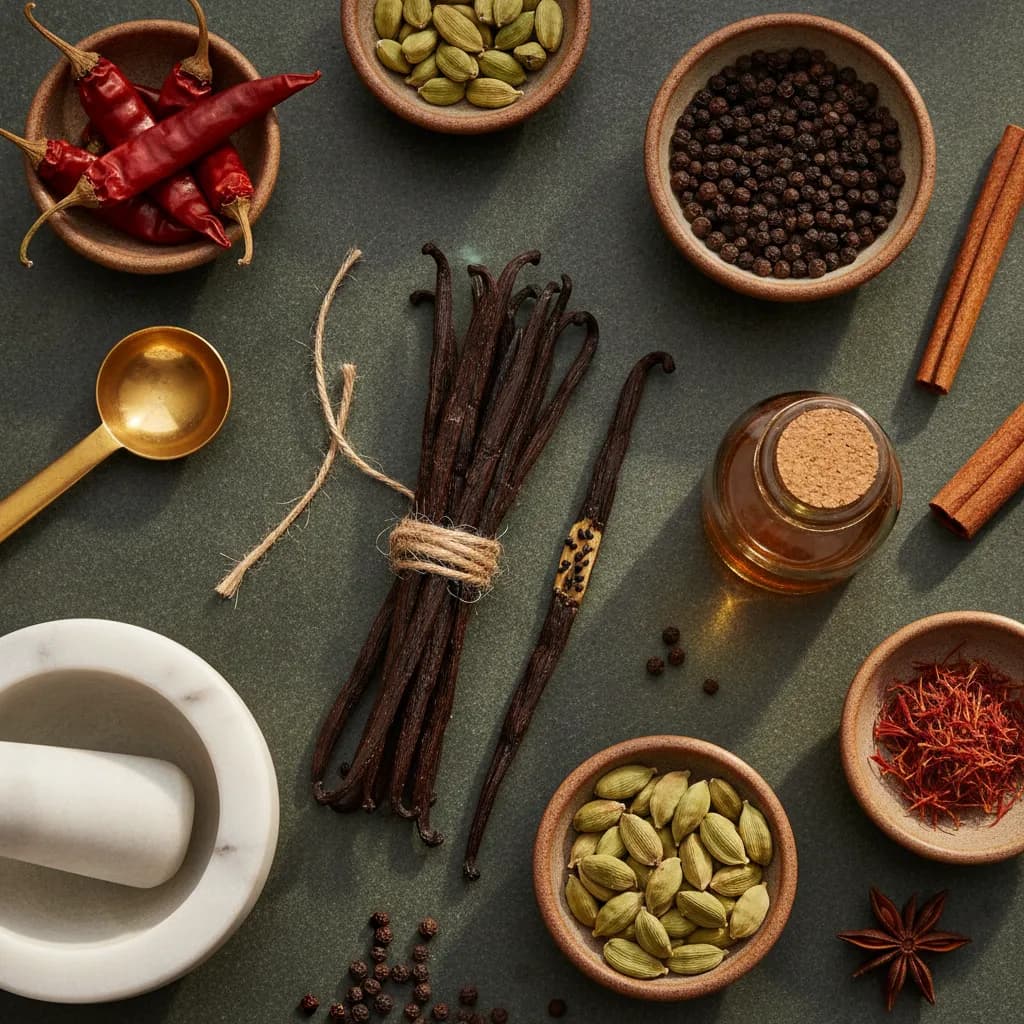
Spend up on the identity ingredients. The hero note a customer would name if you asked what your product tastes like. If it is a real vanilla dessert sauce, vanilla is not the place to save; if it is a black-pepper-forward steak sauce, buy the good pepper; if saffron, cardamom, or a specific single-origin chili is the thing people remember, that is your money spot. Cutting the grade on a hero ingredient is the fastest way to hear "it used to taste better."
Hold a sensible mid-grade on the supporting cast. The spices that build the background, garlic and onion powder, salt, common warm spices in small amounts, usually do not need the top grade, but they still need a real spec and a volatile-oil floor so they do not silently drift down. Mid-grade with a spec beats premium without one.
A lesser grade is genuinely fine in a few honest places. Where a spice is present mostly for color or bulk rather than aroma (a paprika added largely for hue), a lower flavor grade can do the job as long as color and cleanliness meet spec. Where a spice is a whisper that would be undetectable a grade up or down, do not pay for the top tier. The skill is telling these apart from the hero ingredients honestly, not convincing yourself everything is a background note because the budget is tight.
The throughline: real ingredients first, real specs always, and money spent where the tongue can find it.
Related reading: for the fuller argument on why the cheapest ingredient is rarely the cheapest decision, see the hidden cost of cheap ingredients. For the broader toolkit on trimming cost without touching the flavor a customer notices, see how to reduce COGS without changing flavor. And for how all of this ties back to what you can promise on the label, see ingredient transparency as a brand promise.
Frequently Asked Questions
Is real vanilla always worth the cost over vanillin?
When vanilla is a hero note, in my experience it almost always is, because real vanilla is a full chorus of aromatics and vanillin is a single note that reads flat next to it. The honest exception is a product where vanilla is a faint background element and the real version would price you off the shelf. There, a natural-flavor or vanillin route can be a defensible compromise, made with eyes open and labeled honestly, not a default you reach for first.
What is the difference between vanilla extract, paste, and beans for production?
Extract is the workhorse: clean flavor that doses easily in a kettle. Paste is extract plus visible seeds, worth it when the flecks are part of the brand story. Whole beans give the deepest flavor but are expensive, variable, and labor-intensive at scale. Match the form to how central vanilla is and whether the customer will see the seeds.
How do I stop my co-packer from silently downgrading my spices?
Specify, do not just name. Write a real spec for each meaningful spice: a volatile-oil minimum, mesh size, color where it matters, and a cleanliness standard, ideally sourced through a named spice house as a defined blend. Then check incoming lots against a retained reference. When you buy flavor per pound instead of powder per pound, a cheaper substitution shows up on the certificate of analysis before it shows up in the jar.
Do I need a spice house, or can I just buy bulk spices?
Bulk retail or restaurant-supply spices work for the kitchen and very early runs, but they give you no specifications, certificates of analysis, consistency programs, or manufacturing-grade pricing. Once you are at real volume, a spice house usually improves consistency and cost at once, and lets you protect your recipe as a single custom blend. It is one of the higher-leverage supplier upgrades a growing food brand makes.
Where This Turns Into Real Work
Sourcing real vanilla, premium spices, and botanicals without wrecking margin is not a single decision, it's a map: which ingredients carry the identity, what grade and volatile-oil floor each role needs, where whole or fresh-ground is worth the handling, and how to write specs a spice house and a co-packer will actually hold to. Get it right and you keep a genuinely premium, real-ingredient product inside a cost structure that lets you sell it. Get it wrong and you either bleed margin on grades nobody can taste or quietly hollow out the flavor that made the product yours. If you are staring at a costed bill of materials trying to decide where real is worth it and where a lesser grade is fine, that is exactly the kind of work I help founders sort out. Book a Free Discovery Call and we will walk your ingredient list together.
Need Help With Your Formulation?
Whether you're scaling your first recipe or reformulating an existing product, let's talk about how to get it right.
Book a Free Discovery Call