Whether it's a new flavor or a new jar size, a new SKU usually passes five steps before it ships: the formula, a trial at your plant, a review by a process authority (the qualified expert who decides how the product must be made to be safe), a shelf-life test, and a nutrition and label review. Different people or companies do the work, and for two of the steps, who arranges it depends on what you and your plant agree. So before the first bench batch, write down who owns each step, by name. The step nobody owns is the one that holds up the launch.
The same goes for a change to a product you already sell. Switch the vinegar or cut the sugar, and the product can go back through several of these steps.
I'm the formulator in that list. When a brand asks whether I also handle FDA compliance, the process authority and shelf-life testing, the answer is no. I'm not a co-packer either: I don't make, fill or label anything. I build the formula, set its targets and write the spec sheet your plant runs. The other steps belong to people with their own training and sign-off, and I'd rather you know who they are up front than assume I've got them covered.
The Five Steps and Who Does Them
This is the usual pattern for a brand that already works with a co-packer. Your plant may take on more than this, or less.
| Step | Who usually does the work | Who usually arranges it |
|---|---|---|
| Formula and spec sheet | A formulator: your team, the plant's, or an outside one | You |
| Plant trial | The plant's production and quality team | You ask, the plant schedules |
| Process authority review | A university or private process authority | Varies: the plant or you |
| Shelf-life test | A testing lab or university program | Varies: you or the plant |
| Nutrition panel and label review | A nutrition label service and a label adviser | You |
| Certification, if the label claims one | The certifier | You, with paperwork from suppliers and the plant |
The last row applies only if the label will claim a certification. Settle the two rows marked "varies" first, because each side can fairly assume the other has them. Say you're adding a mango habanero to a line of three sauces. The formula is approved and the trial ran well. You assumed the plant would send jars from the trial to a lab, since it handled the paperwork on your first sauce. The plant assumed you would, since the buyer asked you for the shelf-life result. Nobody pulled jars for the lab, so the study can't start until the next run.
What the Formula Step Includes
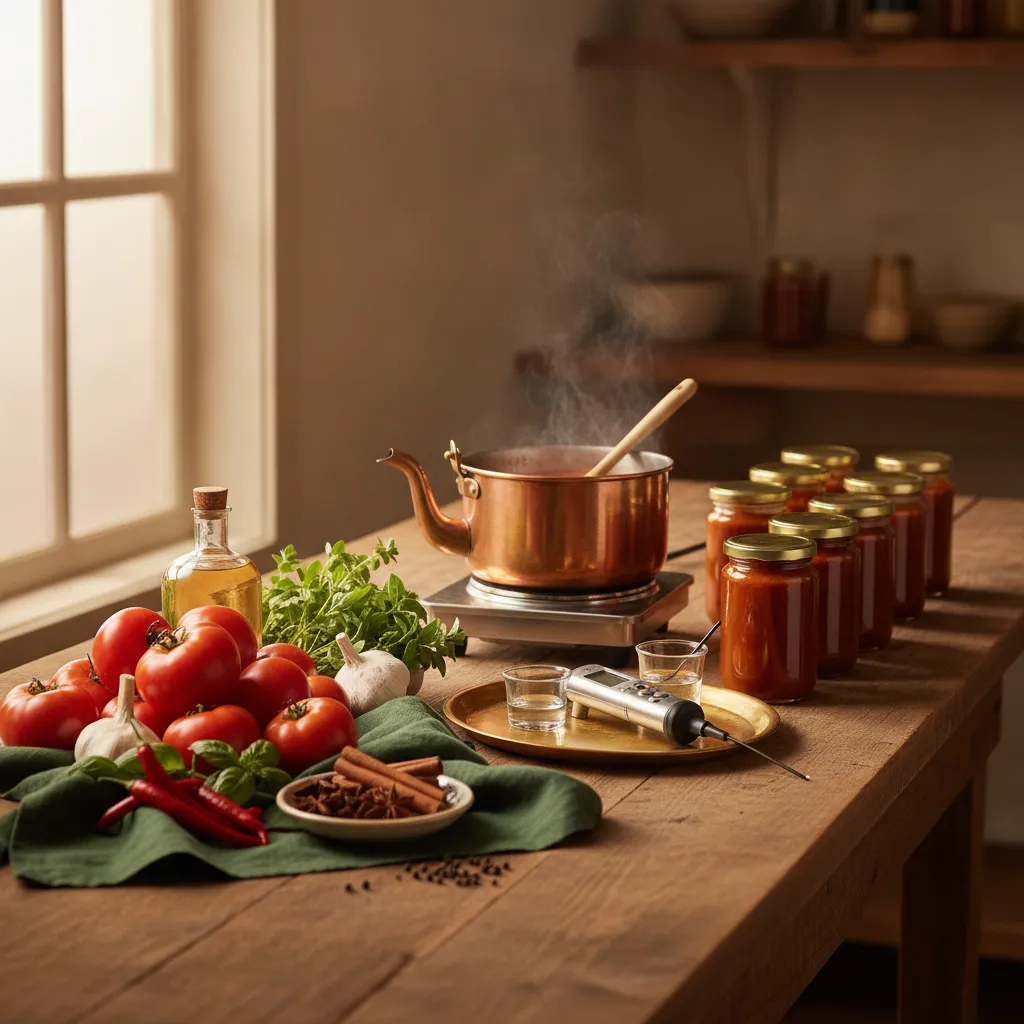
When the formula is mine to write, the work starts at the bench, by weight. I taste and measure each version the day it's made, again at one week and again at two weeks. The flavor settles over about two weeks, so the week-two jar is the one to judge. The version you approve becomes your gold standard, the reference jar every later batch is compared against.
Then come the numbers for this SKU alone. Every new flavor gets its own pH, Brix (a reading of dissolved solids, mostly sugar) and viscosity targets, with ranges, even when it shares a base with your best seller, because added fruit or peppers can move all three. Each ingredient spec says what that ingredient does in the jar and which form and grade to buy. The process notes are written for the plant's own equipment, and all of it goes into a spec sheet the plant can run from without guessing what I meant.
For a change to an existing product, this step means a new version number and an entry in your formula change log, and that one change can reach as far as the allergen statement and the process review.
After that, the work leaves my hands. The spec sheet goes to the plant, and the formula and process notes go to the process authority through whoever arranges that review. Your label service and designer get the final ingredient list. I don't run the plant or its quality control, file anything with the FDA, write nutrition panels, check labels for compliance, design packaging or choose your co-packer.
Who Decides What at the Plant Trial
The trial is the first time the new SKU runs on real equipment at real speed. The plant's production lead runs it, and its quality control tech measures the product against your spec. It's also the first proper test of the thickener. I choose starches and gums for the plant's heat, the shear of its pumps and the time a batch sits hot before filling, and the trial shows whether the texture holds up to all of it.
Two separate calls come out of a trial, and they belong to different people. The plant decides whether it can run the product as written, safely and the same way every batch. You decide whether it tastes like the gold standard, so be there, or send someone who knows the product by taste.
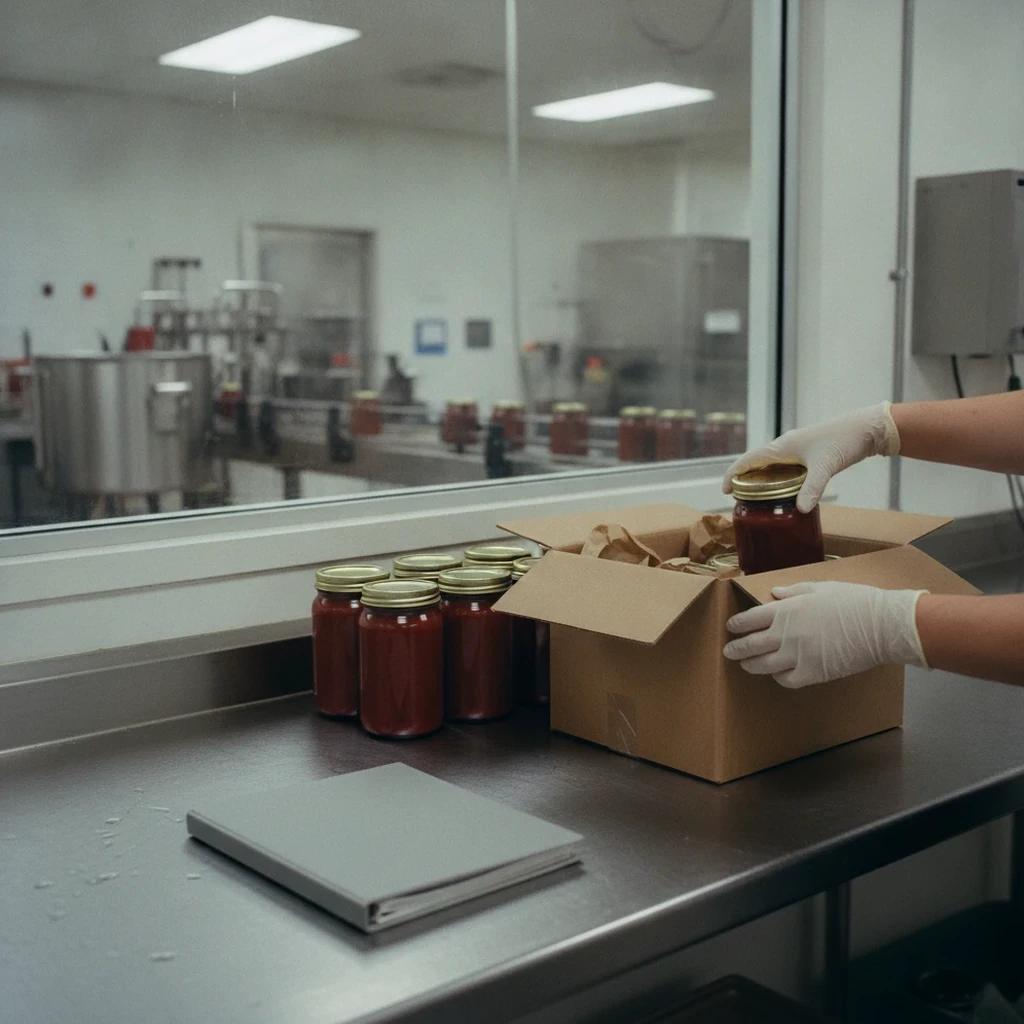
The trial also produces what the next two steps need. Your process authority may want pH readings from product made on the plant's line, and the lab needs jars from a real run, because a bench batch doesn't age the way plant product does.
When Your Current Plant Can't Run the New Product
Sometimes a new SKU needs a process your plant doesn't run. Say your sauces are kettle-cooked and hot-filled, and the new product is a cold-filled dressing. The trial row has no owner yet, because there's no line to run it on.
Start by asking your current co-packer who they'd suggest. Your ingredient suppliers or process authority may know a plant too, and trade associations, trade shows and co-packer directories are worth a look. One I'm connected to is Co-Packer Match, a sister company of my studio, Molly Mills Creative. The directory lists U.S. plants by state and a code instead of by name. You can browse its cold-fill co-packers or the plants that run other processes, and each plant sets its own price and minimums.
When you first talk with a new plant, send a product brief that describes the product without the recipe. Hold the full formula until you're close to signing and a non-disclosure agreement (NDA) is in place.
The Process Authority Review Can Fall to You or the Plant
The process authority looks at the formula, the plant's process and the container, then sets out in writing how the product has to be made. That document is the process authority letter. Many sauces, salsas and dressings are acidified foods, meaning they rely on added acid for their safety, and they need this review. Expect each new flavor to go in as its own formula.
Sometimes the co-packer arranges the review with a process authority it already works with, and sometimes it asks the brand to. Either way works if both sides know which applies to this SKU. Don't assume it'll go the way it did on your first product. Ask again, and find out whether the cost is in your quote or billed to you separately, so it's in your budget before the review starts.
Before the review, I set the pH target with room to spare. The ceiling I've seen most process authorities and co-packers ask for is a finished pH of 4.0 to 4.3, because pH can drift after the product is made. I also supply the formula by weight and the process notes the review needs. If you change the formula later, the process authority decides whether it needs another look.
Someone Has to Order the Shelf-Life Study
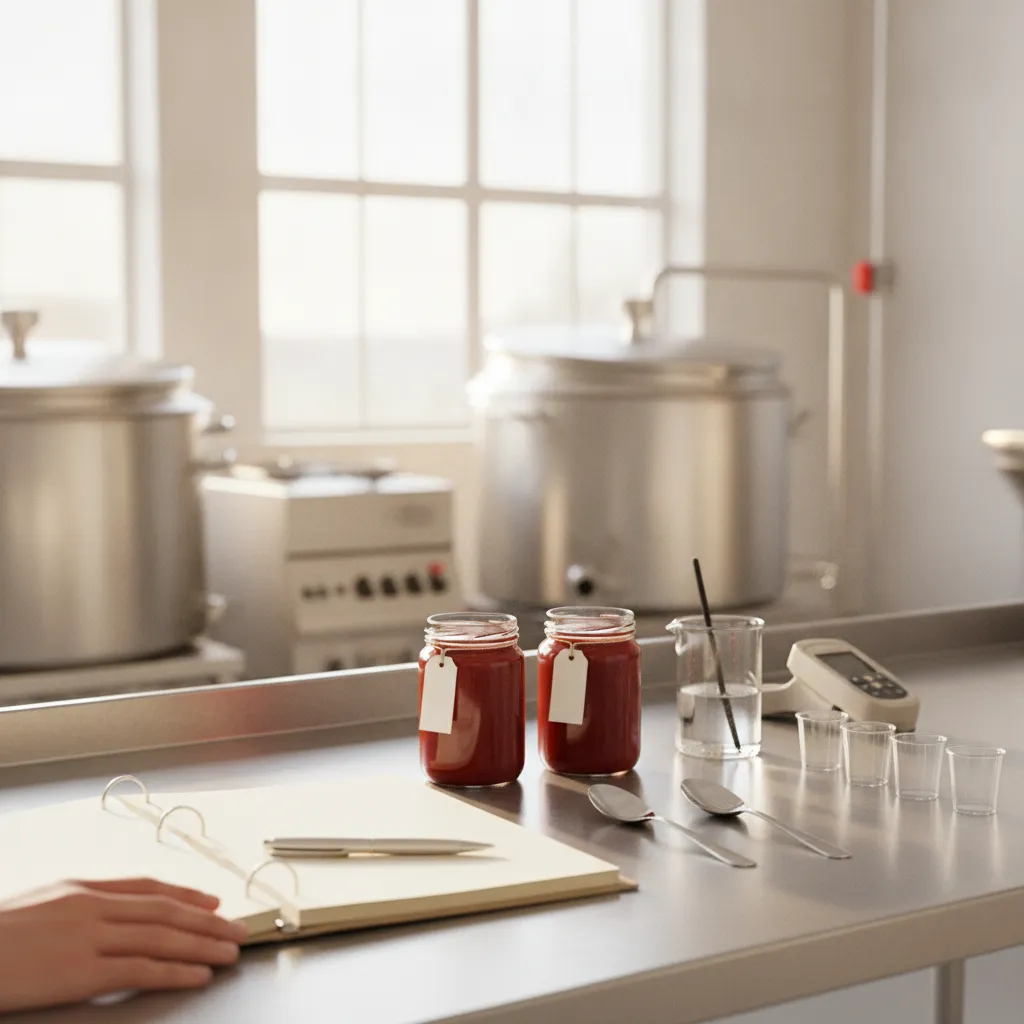
A shelf-life study puts jars from a real run into set storage conditions and checks them over time for safety, flavor, color and texture. A testing lab or a university food science program does the work. Buyers may ask for the result, and the date you print on the jar should come from it.
A lab starts a study when someone orders it, and that order can fall between you and the plant. Some plants arrange studies for the brands they make, and others leave it to the brand. A plant that never said it would order one hasn't dropped anything.
From the formula side, I can tell you and the lab what this product is likely to lose first (a bright herb note, say, or its color), so the study is set up to watch for it.
The Nutrition Panel and the Rest of the Label
A nutrition label service builds the Nutrition Facts panel, either by calculating it from the formula or by testing the finished product. A label or regulatory adviser reviews the rest of the label: the ingredient statement, the allergens, the claims and the product's name. Some names carry a standard of identity, a rule about what a product must contain to be called that, so check the name before the formula is locked. Your packaging designer lays it all out.
All of this waits on a final formula. Take out some sugar or swap one spice blend late, and the panel and the ingredient statement may have to be redone, so tell your label service a change is coming before it happens. If the new SKU will carry a certification such as organic or Non-GMO, the certifier will want paperwork on the ingredients from your suppliers and from the plant, and someone at your brand has to collect it.
What Your Brand Keeps
Besides arranging the reviews that fall to you and signing off the final label, three jobs stay with your brand no matter who does the rest.
- Approving the flavor. A formulator gets you to a gold standard, but you decide whether it's the flavor that goes out under your name.
- The master spec. One person at your brand keeps the current version of the formula and spec. When the plant adjusts something and you accept it, the change gets written back into that copy.
- A sample from every batch. Quality control is mostly your co-packer's job, and a good plant does it on every run. Ask for a sample from each batch anyway and taste it against your gold standard.
Write the Owner Sheet Before the First Bench Batch
The sheet is one page with a row per step, and it only answers who. Dates belong on your product development timeline. Here's how I'd put the sheet together.
- List the steps for this SKU. Start from the rows in the table above. For a change to an existing product, ask the people in those rows which of their steps still apply.
- Put a person's name in every row. Name the plant's quality manager, for example, not just the plant, so everyone knows whom to call.
- Add who arranges and who pays. This matters most in the two rows that can belong to either you or the plant.
- Write down each handoff. For every row, note what that owner needs and who gives it to them: the formula and process notes to the process authority, jars from the trial to the lab (and how many), the final formula to the label service.
- Send it to everyone named. That includes the plant. Ask each person to correct their own row.
- Give the sheet a keeper. The person who keeps your master spec is a good fit. When an answer changes, they update the sheet.