The Sunday You Cannot Cook Fast Enough
There is a specific moment I watch founders hit, about a year into self-producing. You are renting time in a commissary kitchen, running your own kettles, filling and labeling by hand, and the orders have finally outrun the clock. To fill next month you would need to be in that rented kitchen five days a week, and you already have a job, or a family, or three retail accounts each wanting more than the last. The product is working. That is the problem. The demand is real, and your two hands cannot meet it.
This is the commissary-to-co-packer decision, one of the most consequential calls a growing food brand makes. Move too early and you hand your craft to a stranger before you have documented what makes it yours. Move too late and you burn out, cap your growth, and start declining the orders that would have funded the next stage. Let me lay out what each side actually is, the honest trade-offs, the signals it is genuinely time to jump, and how you protect the real-food quality of your product when someone else starts making it.
What a Commissary Kitchen Actually Gives You
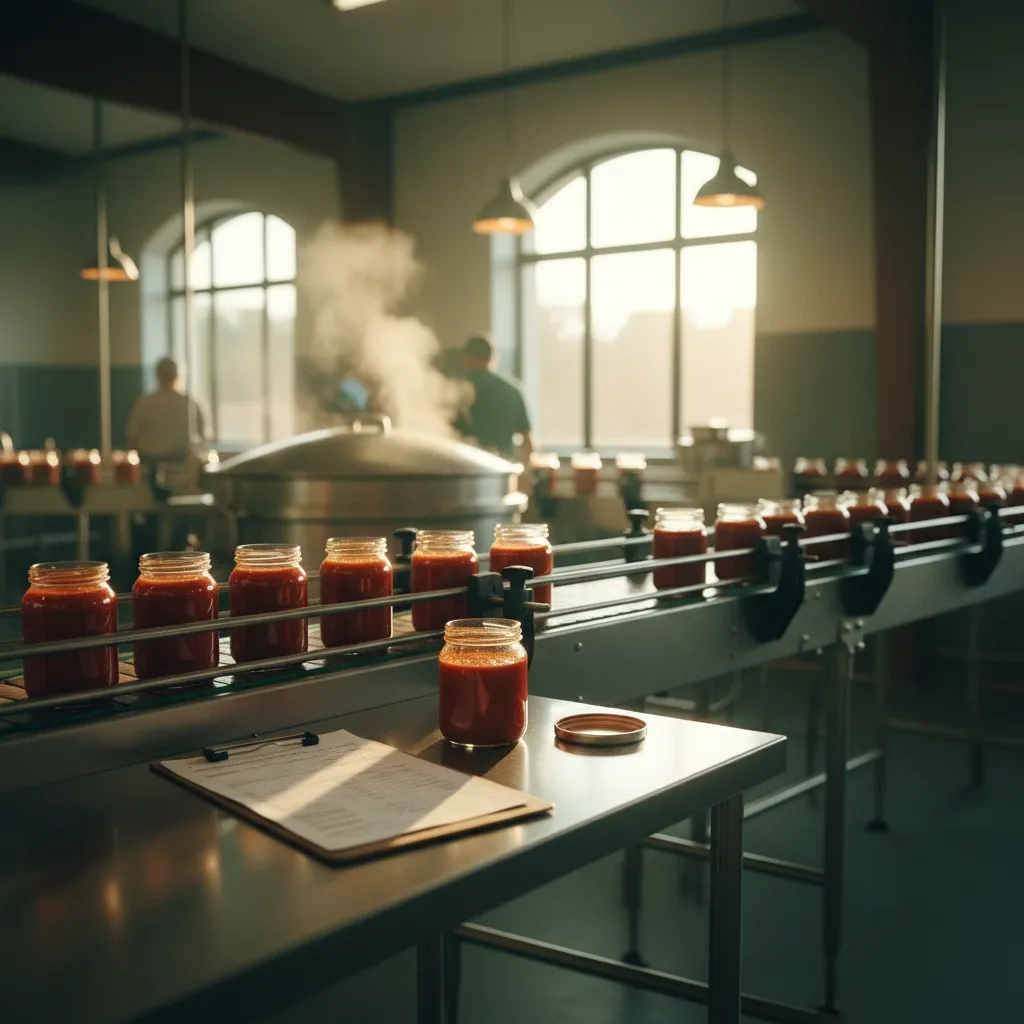
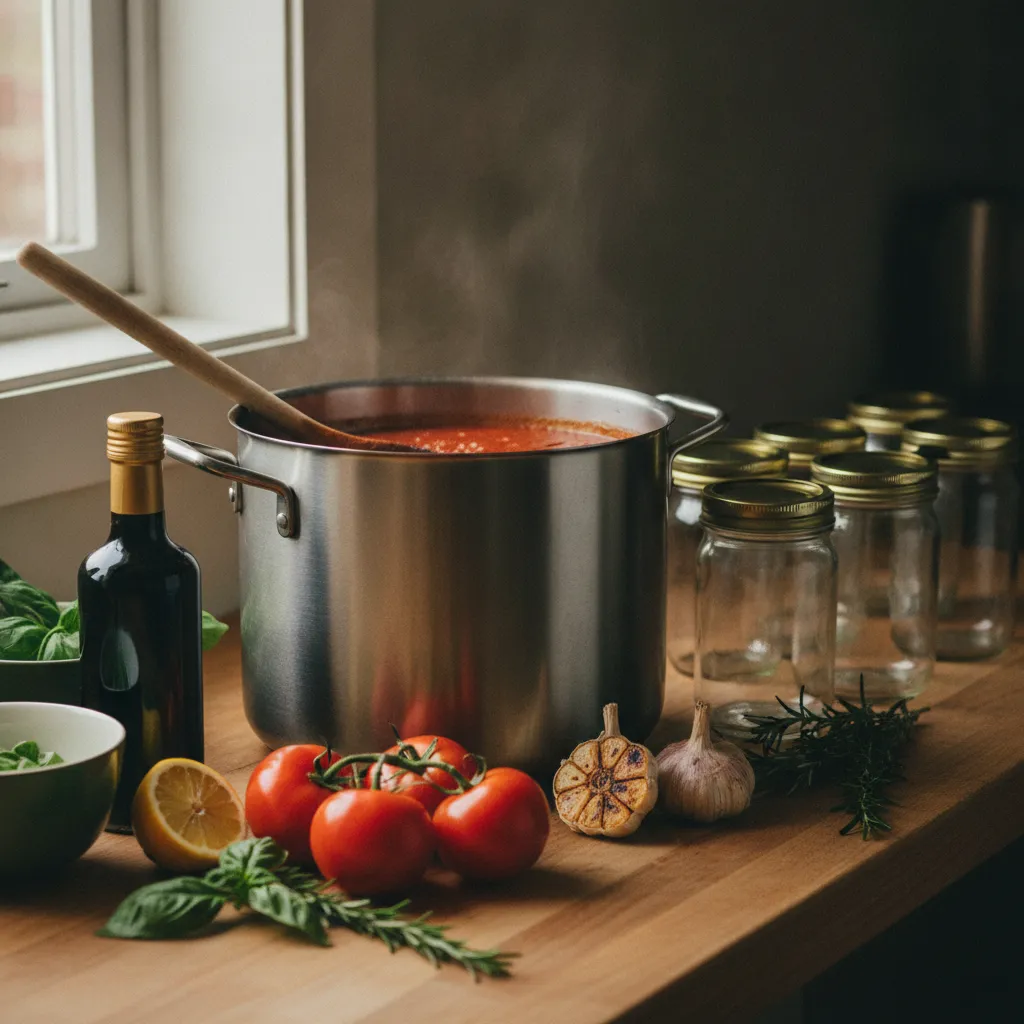
A commissary or shared commercial kitchen is a licensed, inspected space you rent by the hour or by a monthly membership. You bring your ingredients, run the equipment, and make your product with your own hands. In 2026, hourly rates commonly run around $15 to $50 per hour, and memberships often land near $300 to $1,500 a month depending on the market, the equipment, and how much cold and dry storage you need. Verify the specifics locally, because these vary widely by city and facility.
What you get for that money is control, and control is not a small thing. You taste every batch and adjust on the fly when the tomatoes are more acidic this week or the peppers came in hotter than last time. You can run 12 jars or 120, and your minimums are effectively zero, so you can test a new flavor at farmers-market scale without committing to a pallet of inventory. For a brand still learning what it is, that flexibility is the whole point.
What you also get is a hard ceiling. You are trading your labor for every single unit, capped by kettle size, by the hours you can stand at the line, and by how many jars you can fill, cap, cool, and label before you fall over. The cost per jar looks great on a spreadsheet only because you are not paying yourself a real wage. The day you value your time honestly, the economics bend.
What a Co-Packer Actually Gives You
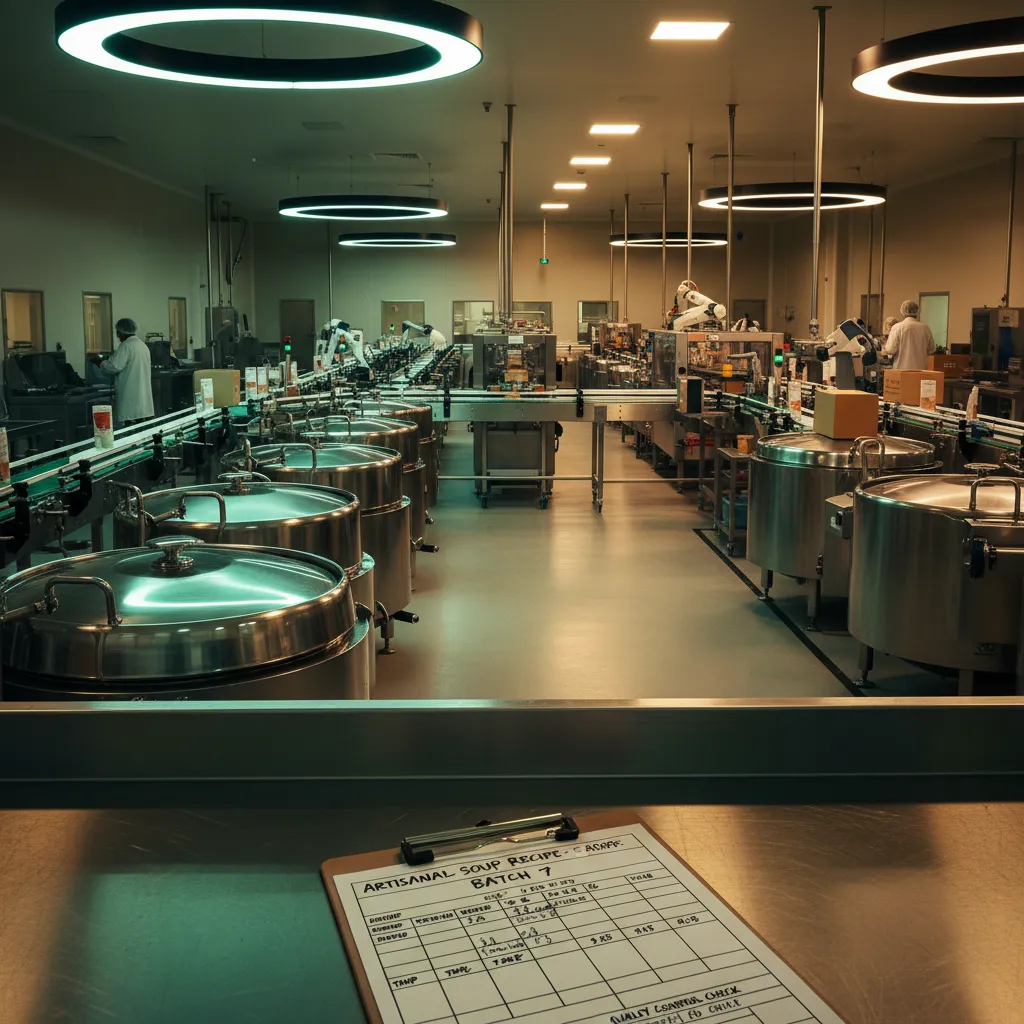
A co-packer, also called a co-manufacturer, makes your product for you at scale, on their equipment, to your specification. You hand them a recipe and a spec sheet, they run hundreds or thousands of units in a shift, and you walk away with palletized, labeled, retail-ready inventory. This is how almost every brand on a grocery shelf is actually produced. For the fuller picture, see my piece on working with co-packers.
The upside is scale and consistency. A steam-jacketed kettle and a real fill line turn a two-day hand-fill marathon into a few hours. A good co-packer holds tighter tolerances than you can by hand, hits the same fill weight jar after jar, and delivers the volume a serious retail order requires. Your time comes back to you for the parts only you can do: selling, building the brand, developing the next product.
The trade-offs are just as real. You lose hands-on control, and you are now one account among many, producing on their calendar rather than yours. You also run into minimums. These vary enormously, but even the accessible ones frequently start around 100 to 200 gallons per run, roughly a thousand units or more in a single batch, and larger facilities require far more. That is real inventory and real cash committed up front, which is why I break the numbers down in the co-packer minimum order quantity guide.
The Signals It Is Actually Time to Jump
Founders often ask me for a revenue number that triggers the move. There is not one; the trigger is rarely revenue. It is a set of pressures, and when two or three show up at once, the decision usually makes itself.
Demand is outrunning your hours
The clearest signal. You are turning down orders, delaying restocks, or working nights and weekends to fill the orders you already accepted. When the binding constraint on your growth is the hours you can stand at a kettle, you have outgrown self-production. A co-packer converts your time back into a resource you can point at growth instead of labor.
Retail is asking for volume you cannot hit
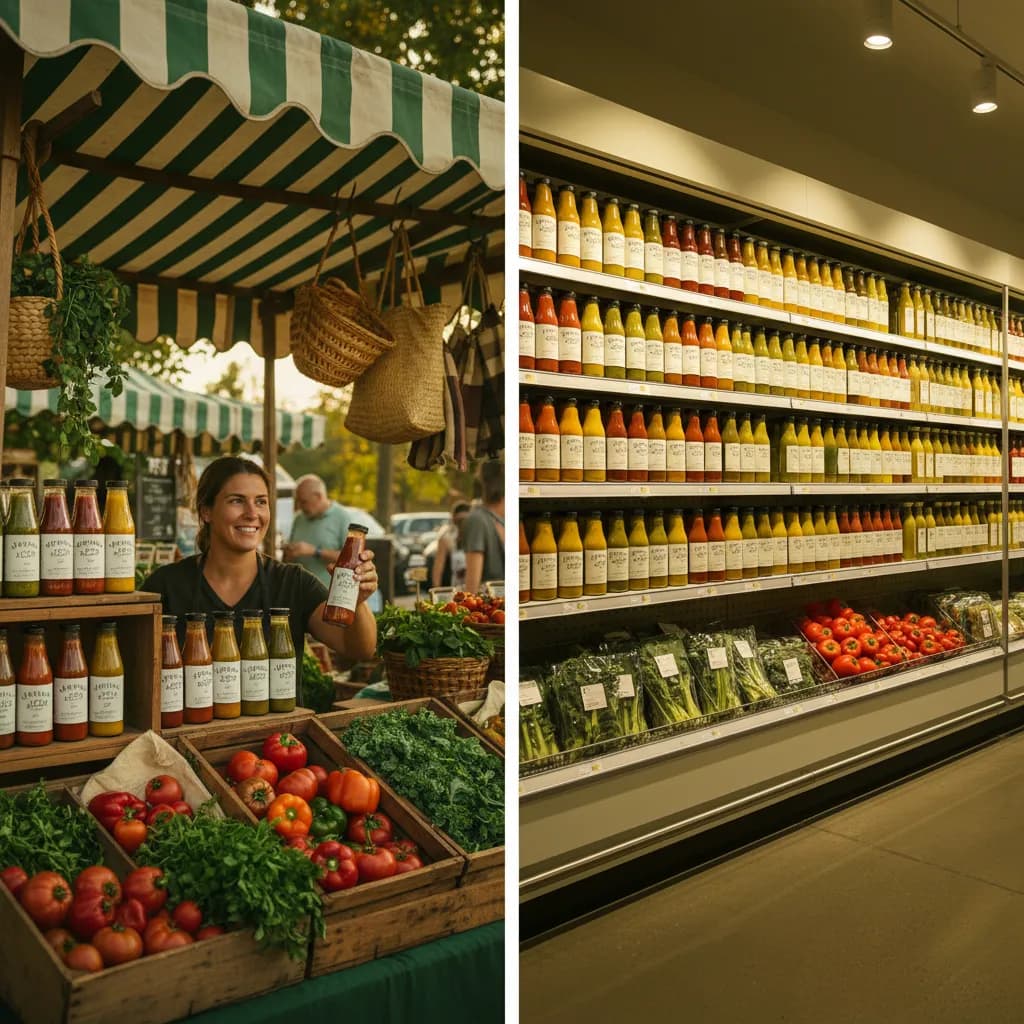
A regional chain wants you in 40 stores. A distributor wants a standing monthly order. These are the wins you have been chasing, and they quietly require production capacity a commissary cannot deliver, plus paperwork many buyers now expect: consistent lot codes, third-party food-safety documentation, reliable fill. My piece on going from farmers market to retail shelf covers what buyers look for. When a real buyer asks for volume you cannot promise, the market is telling you to scale.
Your unit economics are breaking
At small scale you buy near-retail, you cannot access pallet or drum pricing, and your labor per jar is enormous even if you are not paying yourself for it. As volume climbs that math gets worse, not better, because you are scaling the most expensive version of production. A co-packer unlocks bulk ingredient pricing and spreads fixed costs across a big batch. When you honestly cannot make the margin work by hand, the fix is usually a different production model, not a higher price.
Quality is slipping under fatigue
Subtle, and it matters most. When you are exhausted and behind, batches drift. The reduction goes long one day and short the next. The sear on the alliums is rushed. The product that was gold-standard when you had time to baby it starts to wobble. A well-run co-packer working from a tight spec can be more consistent than a burned-out founder. If the quality you are proud of only exists on your best-rested days, it is time to make it repeatable.
The Middle Ground Most Founders Miss
The decision is rarely all-or-nothing, and the smartest transitions I have run use an intermediate step rather than a hard cutover. It helps to know that not every co-packer is a giant facility; smaller craft co-packers and some commissaries offer co-packing at minimums low enough to bridge the gap.
Co-manufacture a base, finish it yourself
One of my favorite bridges: have a co-packer produce the labor-intensive, high-volume base, then finish it in your commissary where the craft lives. If your signature is a slow-roasted tomato and pepper base that you fold fresh herbs and a specific finishing acid into, let the co-packer nail the base at volume and reserve the character-defining steps for your own hands. You get most of the scale and keep your fingerprints on the part that actually differentiates the product.
Run a hybrid for a season
Keep the commissary for small-batch flavors, seasonal runs, and R&D while your core SKU moves to a co-packer. This lets you learn to work with a co-manufacturer on your best-understood product before you trust them with the whole line, and it keeps a kitchen under your control for testing the next idea long after your flagship is scaled.
Protecting Your Craft Through the Transition
Here is where I get protective, because this is where good real-food brands quietly lose themselves. The moment you hand production over, you will feel gentle pressure toward substitutions that make the co-packer's life easier and your product cheaper to run. Fresh roasted garlic becomes garlic powder. Real lemon juice becomes citric acid plus a flavor. Real fruit becomes a concentrate carrying added flavoring. Fresh herbs become dried, or an oleoresin, or nothing. A slow natural reduction becomes a scoop of modified starch to hit viscosity faster.
None of those swaps is evil, and I will be honest about them below. But every one chips at the exact thing that made customers choose you. My default, the through-line of everything I build with founders, is to solve scale problems with real food first, and reach for a processed shortcut only when there is genuinely no real-ingredient path.
Lead with real ingredients that travel
Most craft survives scale if you engineer the real ingredient to be production-friendly rather than swapping it out. Fresh alliums can be roasted in volume and frozen as a puree, preserving the caramelized flavor instead of defaulting to powder. Real produce can be sourced as IQF (individually quick frozen) or as a clean, single-ingredient frozen puree a co-packer meters into a batch consistently. If fruit intensity is the goal, concentrating real fruit through reduction, or sourcing an honest concentrate with nothing added, keeps the ingredient real while solving volume and shelf-stability. Brightness can come from real citrus and a vinegar chosen for the job rather than a synthetic acid blend. Depth can come from real umami you already trust, tomato, mushroom, miso, roasted alliums, rather than a flavor enhancer. Real food usually has a scalable form. Finding it is the work.
Write the gold-standard spec before you hand it over
The single best protection against substitution creep is a specification so precise that a swap becomes a visible, deliberate decision instead of a quiet default. Name the exact ingredient, grade, and form. "Garlic" invites a powder. "Fresh garlic, roasted to a specified color, frozen as single-ingredient puree" does not. Document what production-ready actually means for your product, which I cover in what makes a recipe production-ready, and put the real ingredients in the contract, not just in your head. If the recipe is not written down at this level, the co-packer is not making your product. They are making their interpretation of it.
Be honest about the processed options, and treat them as a last resort
These tools exist for real reasons. Modified starches hold viscosity through aggressive thermal cycles where a natural reduction might drift. Citric acid locks pH more predictably batch to batch than vinegar alone. A concentrate can hold a profile across seasons when fresh supply swings. If a real-ingredient path genuinely cannot survive your process, shelf life, or price, these are legitimate compromises, and a clean-label swap beats a product that fails in the jar. What I will not do is reach for them first, or let them in quietly. They are a last step after the real-food options are exhausted, not the opening move. Verify any shelf-stability or food-safety implication of a swap with your co-packer and a qualified process authority before you lock it.
How to De-Risk the Actual Move
When you decide to jump, do not cut over blind. Run a small pilot batch at the co-packer and taste it side by side against your gold-standard commissary version, at the line, at 24 hours, and at a week, so flavor drift shows itself before a full run. Keep commissary access for a few months after the handoff as a fallback. And manage the first co-packer relationship closely: stay near through the first few runs, then step back once the spec is proven to hold.
Related reading: see working with co-packers, the co-packer minimum order quantity guide, and the earlier-stage view in from farmers market to retail shelf.
Frequently Asked Questions
Is there a revenue number where I should switch to a co-packer?
Not a universal one. The trigger is operational, not financial: turning down demand, a retailer needing volume you cannot hit, per-unit economics that stop working at hand scale, or quality that slips when you are tired. When two or three show up together, the move usually pays for itself regardless of the revenue figure.
Will my product still taste like mine at a co-packer?
It can, but only if you protect it deliberately. The difference between a faithful scale-up and a watered-down one is a precise, written spec that names your real ingredients and their forms, plus a side-by-side pilot before you commit to a full run. Handed a vague recipe, a co-packer reasonably defaults to the easiest, cheapest interpretation, and that is where craft leaks out.
Do I have to give up fresh, real ingredients to scale?
Usually not. Most real ingredients have a production-friendly form: frozen purees, IQF produce, honest single-ingredient concentrates, roasted-and-frozen alliums. The work is engineering the real ingredient to travel through a co-packer's process, not replacing it with a powder or a synthetic. Processed substitutes are a last resort for the rare case where no real-food path survives.
Can I keep using my commissary after I move to a co-packer?
Many founders do, and I often recommend it for a transition period. A commissary is a natural home for R&D and seasonal small-batch flavors, and a safety net while you prove the co-packer can hold your spec. Some brands run a hybrid indefinitely.
Where This Turns Into Real Work
The commissary-to-co-packer jump is not really a facilities decision. It is a documentation decision. Everything that protects your product through the transition, the exact ingredient forms, the process steps, the specification a co-packer cannot misread, has to exist on paper before you hand the recipe over. That gold-standard, production-ready spec is exactly the work I do with founders, so the version a co-packer makes at a thousand units still tastes like the one you made by hand. If you are feeling the ceiling and want to scale without losing what makes your product yours, Book a Free Discovery Call and we will map the move together.
Need Help With Your Formulation?
Whether you're scaling your first recipe or reformulating an existing product, let's talk about how to get it right.
Book a Free Discovery Call