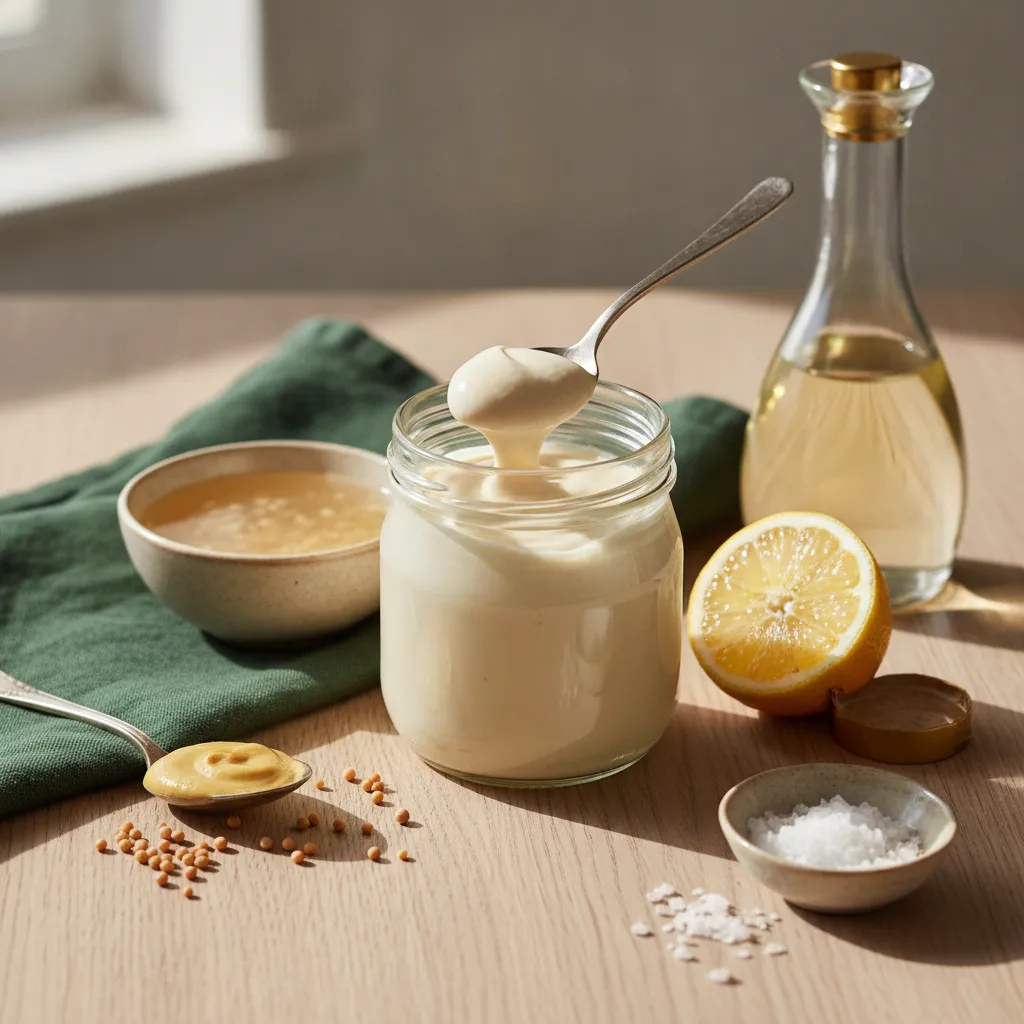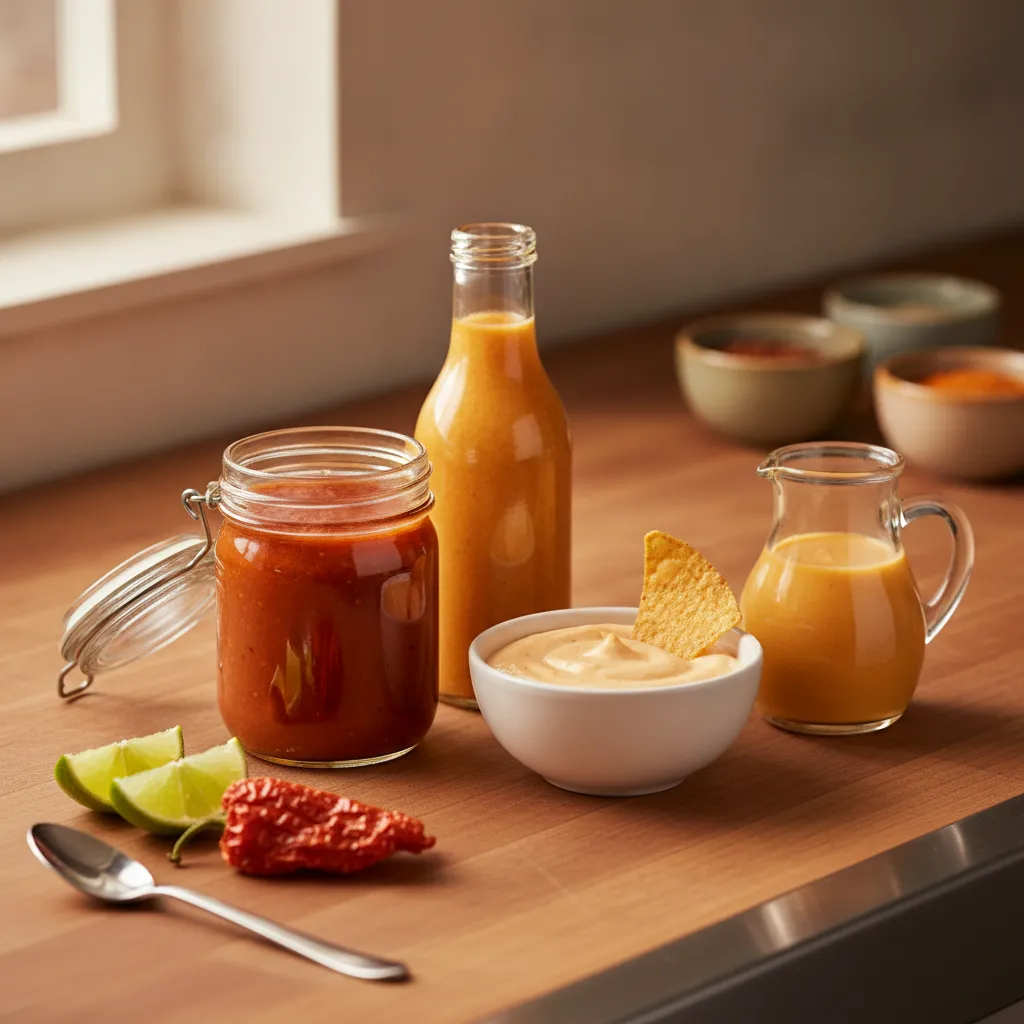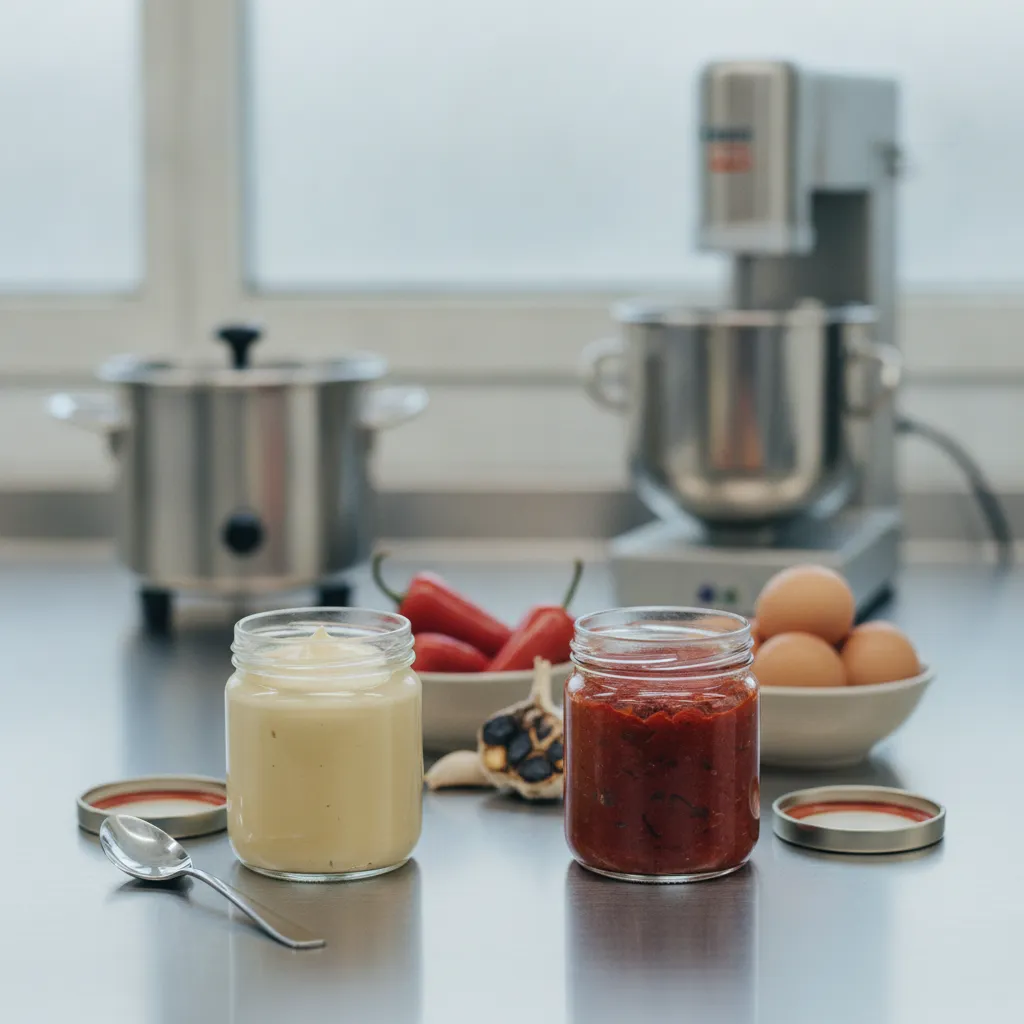
A new flavor of your dip is still your dip. Same base, same kettle, same plant, the same kind of safety review with new numbers. A clean mayo to sit beside that dip shares your name, your customer, and maybe a few ingredients. Almost everything else about it is new: how it is made, what keeps it safe, how it fails on the shelf, what it is allowed to be called, and sometimes which plant can make it at all.
That is not a reason to avoid companion products. A product that goes naturally with your winner (a mayo for the dip brand, or a dip for the mayo brand) can make real sense when customers already trust your label. It is a reason to plan it as a new build rather than a line extension, and to know before you start which parts of your winner carry over and which you are building from scratch.
Whether to launch it, where it sells, how it is priced, and how it is pitched belong to you and your sales and brand people. This article is about the product.
Answer the Mayo Question Before the Formula
Before any product gets a formula, I want a clear answer to a blunt question: why does the world need another mayo? The shelf already holds plenty of them. A companion earns its place the same way your first product did, by being something specific a shopper cannot already buy, and the answer has to be concrete enough to formulate from. "It matches our brand" is not concrete enough.
For a companion, the strongest answers usually connect back to the winner. Write a one-page product brief that covers:
- What it is for. Spread on the sandwich your dip already goes with, a base for a quick sauce, a dip for the same chips. The use drives texture, pour, and how bold the flavor can be.
- The hero ingredients. The one to three ingredients that make it yours, ideally ones your customers already connect with your winner: the same roasted chile, the same garlic treatment, the same kind of eggs or oil your brand is known for.
- The non-negotiables. What the product must contain, what it must never contain, and what the label has to be able to say. If your dip's ingredient list is short and recognizable, the companion inherits that promise. A mayo that leans on a list of stabilizers would quietly break it.
- The limits from outside. If your dip sells in stores that ban certain ingredients or expect certifications such as Non-GMO, the companion has to clear the same bar, or it cannot sit next to the dip on that shelf.
That brief tells me what the formula has to protect, and it gives you something to share with a co-packer early without sending a recipe.
What Carries Over From Your Winner, and What Does Not
What usually carries over:
- Your brand promise and the standards behind it: real ingredients first, additives only on purpose.
- Your flavor signature, if you design for it.
- Some raw materials, and the supplier relationships behind them.
- Your discipline: a formula in weights, a finished product spec with targets, a gold standard sample, and a sample from every batch.
What usually does not:
- The process and the equipment.
- The safety basis and the process review.
- Whatever limits shelf life.
- The allergen profile.
- The rules about the name.
- Sometimes the plant.
I take every product through six development stages: standardize the formula, optimize the product, define the technical parameters (pH, water activity, acidification), translate it to production, prepare the spec sheet, and support expansion. A new flavor can often lean on much of that work, because its base already went through it, though it still gets its own targets. A companion product starts at stage one, which is why the second list above matters.
A Different Category Means a Different Process
Take the dip and mayo pair. A shelf-stable dip in my lane is often kettle-cooked and hot filled: you cook it, hold it hot, and fill it hot, and that heat is part of how the product is made safe and stable. A shelf-stable mayo is usually a different kind of product altogether. It is an emulsion, oil broken into tiny droplets and held in a small, acidified water phase, built under high shear (equipment that breaks oil into very fine droplets) and typically not cooked the way your dip is. The things that make one great, such as a long cook, gentle handling of particulates, and a hot fill, do little for the other, and some of them would ruin it.
How the emulsifier, the water phase, and the oil work together, especially without egg, is covered in making a shelf-stable vegan mayo or aioli. For the companion question, what matters is the consequence: the plant that makes your dip beautifully may not have the equipment to make a fine, stable emulsion, and a plant built around emulsions may not be set up to cook and hot fill a chunky dip.
A Different Safety Basis
Because the process is different, the safety case is different. Both products may be acidified foods that depend on a low finished pH, with room left for the drift that can follow production. But each product gets there differently, so expect the companion to need its own review, not a footnote on your dip's paperwork. Sometimes the co-packer arranges that review and sometimes the brand does, so find out which early, get it in writing, and budget for it.
Ingredients that are new to your brand bring new questions. Egg ingredients for commercial use come in specific forms, and which form your plant and process authority will accept is their decision, not something to settle from a home recipe. Going the other way, a mayo brand adding a cooked dip takes on particulates such as beans, peppers, or onions, which change how heat reaches the center of the product and how its pH settles, and the process review has to account for that. Bring the plant's food safety team in as soon as the concept is clear.
A Different Shelf-Life Clock
Your dip and your companion will probably fail in different ways, so they need different watching. A cooked dip's limits often show up as texture, color, and flavor change: weeping, darkening, a cooked note getting stronger over the months. A mayo is mostly oil, so oxidation (the slow staling of the oil) is often the clock that matters, along with the emulsion starting to thin or oil off. Choosing an oil for stability matters far more in the companion than it did in the dip.
So the companion gets its own shelf-life testing, not an assumption borrowed from the dip. Taste it the way you taste your winner, approving the version that has settled for a couple of weeks, then keep tasting retained jars against it across the code date.
New Allergens, and Maybe a New Plant
Egg is a major food allergen. If none of your current products contain it, a mayo changes more than its own label. It changes what your brand can say about itself, it may change how the plant schedules and cleans around your products, and if the mayo runs on the same line as your dip, it can raise cross-contact questions about the dip that the plant's food safety team has to answer. The same goes in reverse when a companion brings dairy, sesame, or another major allergen into a brand that never had one. How plants manage this is covered in allergen control in co-packing. The formula decision is whether the companion needs that allergen at all, and if it does, whether it is worth everything it changes.
Between the equipment, the process, and the allergens, the companion may belong at a different co-packer. Whether to add a second plant, and which one, is your decision; finding and vetting plants is not part of my work. What I can do is make the formula and spec clear enough that a qualified plant can quote it and run it.
One caution from my side: hold the full recipe back until you are close to signing, with an NDA in place. Even in a trial run, a plant can learn a process you paid to develop. Early conversations run on the product brief, which describes the product without handing over the formula.
Check What You Are Allowed to Call It
Some product names come with a standard of identity: a federal rule that sets what a food must contain, and sometimes in what proportions, to be sold under that name. Mayonnaise is one of them. Its standard describes an emulsified semisolid food made from vegetable oil, an acidifying ingredient, and an egg yolk-containing ingredient, with a minimum oil content. If your companion is egg-free, lighter on oil, or built differently in some other way, the name you had in mind may not be open to you, and the product may need a different name on the label.
That is why the name gets checked before the formula is locked, not after. The name and the formula pull on each other. If the name matters most to your brand, the formula has to meet the standard. If the formula matters most, the name has to fit what the product actually is. Standards are also revised from time to time, so look at the current text rather than a summary, and have regulatory counsel or a labeling specialist confirm the name. Other names in the condiment aisle carry standards too, so check before you design around one.
Make the Two Products Belong Together
Customers should be able to tell the two products are related. That relationship is designed at the bench, and it is the most enjoyable part of the work.
Share a flavor signature, not a formula
Pick the element customers identify with your winner (the roasted chile, the particular acid, the garlic treatment, the smoke) and carry it into the companion in a form that suits the new product. A chile that simmers in your dip may need to go into a mayo as a paste, a powder, or an extract, because a cold emulsion will not cook it and particulates behave differently in it. The goal is that someone tastes both and recognizes the family. The same thinking applies when one flavor moves into a new format, which I covered in taking a winning flavor into a new format.
Share ingredients where they do the same job
Every ingredient both products can use is one less supplier to approve, one less certificate to file, and one less minimum to carry. Suppliers often sell by the pallet when a new product needs only a few pounds to start, so a companion that draws on ingredients you already buy is easier to launch and easier to store.
But only share an ingredient when it does the right job in both products. A vinegar chosen for a cooked dip can taste harsh in a raw emulsion. The oil that works in your dip may not be the most stable choice for a product that is mostly oil. Sharing for its own sake can weaken the product you are adding. When you get to tidying ingredients across the whole line, simplifying ingredients across your product line walks through it.
Let your values narrow the list on purpose
Brand values carry over too, and they shape the supplier list. If your brand stands for pasture-raised eggs, for example, the mayo has to be built around them, and that narrows the suppliers you can use and changes the cost, the minimums, and the lead time. That is a good trade, as long as it is made knowingly at the start rather than discovered when the first quote comes back.
Five Answers to Have Before the First Bench Batch
Expensive surprises in a companion product usually come from questions nobody asked until the formula was finished. Have these answered first:
- The product brief, written and agreed.
- Whether the name you want carries a standard of identity, confirmed with counsel.
- Whether your current co-packer can make this kind of product at all (your conversation to have).
- Whether the companion brings an allergen your brand does not carry today.
- Who arranges the process review this time, and where it sits in the calendar.
With those settled, the bench work, its own targets for pH, Brix, and viscosity, shelf-life testing, the plant trial, and the spec follow the same path as any new product. If you are not sure the pairing will sell, a short run can test the idea, though a companion in a new category is a much heavier lift than a limited-edition seasonal flavor built on your existing base. And if the bigger question is whether to add a category at all, the phasing in going from one SKU to a full line is the place to start.
Where a Pairing Gets Worked Out
The judgment inside all of this is specific to your two products: which part of your winner's flavor survives the move into a cold emulsion or a hot kettle, which shared ingredients help and which quietly hurt, how close the companion can get to the name you want, and what its spec has to hold so the plant makes the version you approved. That is the work I do with a brand on its real formulas, and it is where a companion product becomes a true sibling to your winner instead of another jar with your logo on it.
Sources: U.S. Food and Drug Administration, Standards of Identity for Food. Electronic Code of Federal Regulations, 21 CFR 169.140, Mayonnaise.
Need Help With Your Formulation?
Whether you're scaling your first recipe or reformulating an existing product, let's talk about how to get it right.
Book a Free Discovery Call