A Short Run Is a Whole Product With a Short Life
A limited edition looks like a small project. One new flavor, one production run, one season on the shelf, and then it is gone. On the calendar it is small. On the product side it is not. The jar still needs a formula the plant can run, a safe finished pH, a correct label, a code date you can stand behind, and a taste that holds up long after the season ends.
The only thing that is genuinely smaller is the volume, and small volume squeezes everything around it: ingredients you cannot buy in small amounts, one run with no second chance, and leftover stock with nowhere to go. So I plan a limited flavor backward from those squeezes.
Whether to do one, how many units to make, which accounts get it, and what it sells for are your calls (and your sales team's, and the co-packer's when it comes to run size). My part is the product: a flavor that is easy to make in a small run, safe and stable for its whole code date, and good enough that you would be glad to bring it back.
Start the Flavor From the Ingredients You Already Buy
The fastest way to make a short run expensive is to design the flavor from a blank page. Every ingredient your plant does not already stock for you brings its own paperwork and its own minimum: a supplier the plant has to approve, an ingredient spec, a certificate of analysis on every lot, an allergen review, and a container that has to live somewhere. For a permanent product, that cost spreads over years. For a seasonal flavor, it spreads over one run.
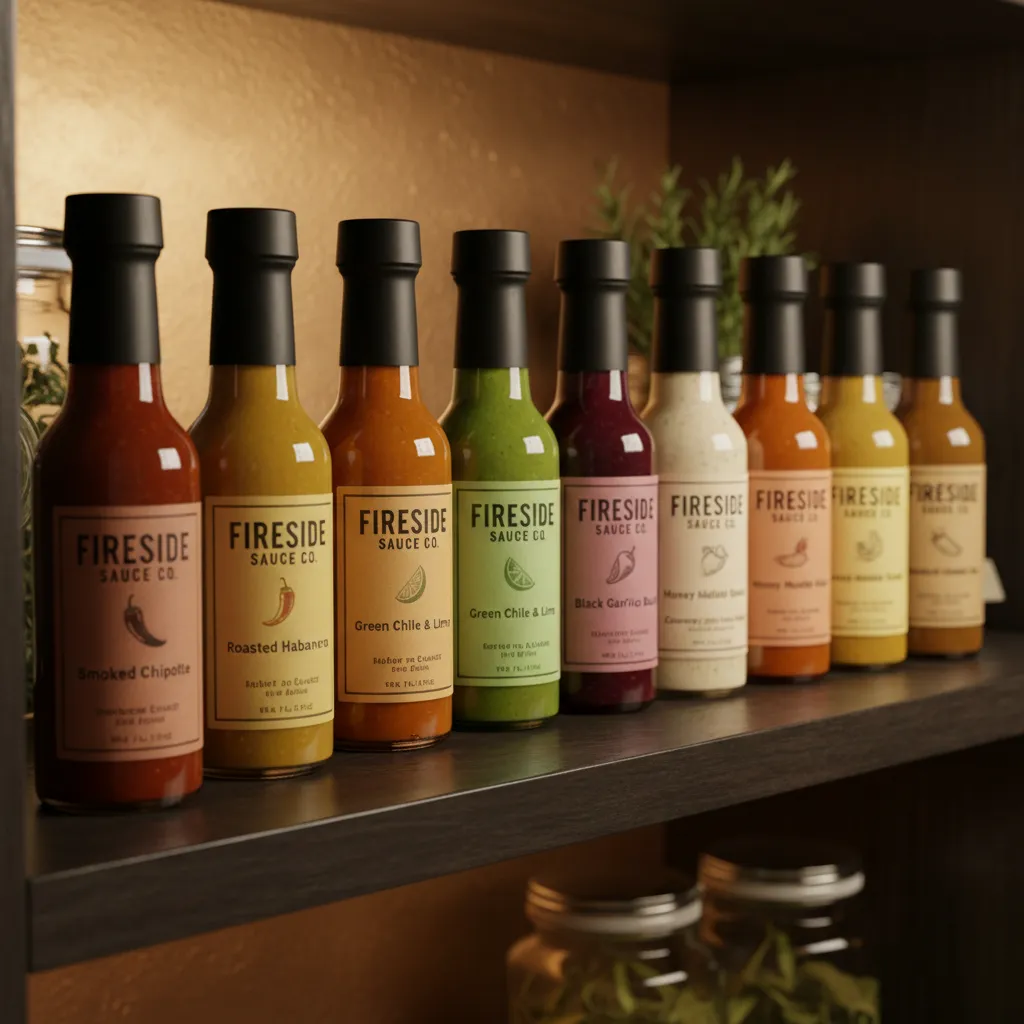
Before anyone opens a spice cabinet, write down every ingredient in your current line and mark the ones the plant already receives for you. That list is your pantry. A good limited flavor usually takes most of its body from that pantry (your existing base, your vinegar, your oil, your sweetener) and adds one or two hero ingredients that make it feel seasonal: one smoked chile, one fruit, one warm spice note people connect with that time of year.
If the idea needs six new ingredients to work, it is probably a new product rather than a limited edition, and it deserves a full development budget. The shared-base approach I described for permanent lines in going from one SKU to a full line matters even more here, because a single run is too small to carry much that is new.
Choose the form of the hero ingredient at the bench, too. Fresh seasonal produce rarely lines up with a production calendar: the crop comes in when it comes in, and your run happens when the plant has a slot. A puree, a concentrate, a dried ingredient, or an extract gives you more control over timing and usually comes with a written spec, but each form tastes and cooks differently, so test the one you will actually buy.
The Pallet Problem: Buying for a Run That Needs a Few Pounds
This is the part that catches established brands off guard, because their core products buy at volumes where minimums stop mattering. A seasonal flavor often needs a small amount of its hero ingredient, and the supplier sells it by the case, the drum, or the pallet.
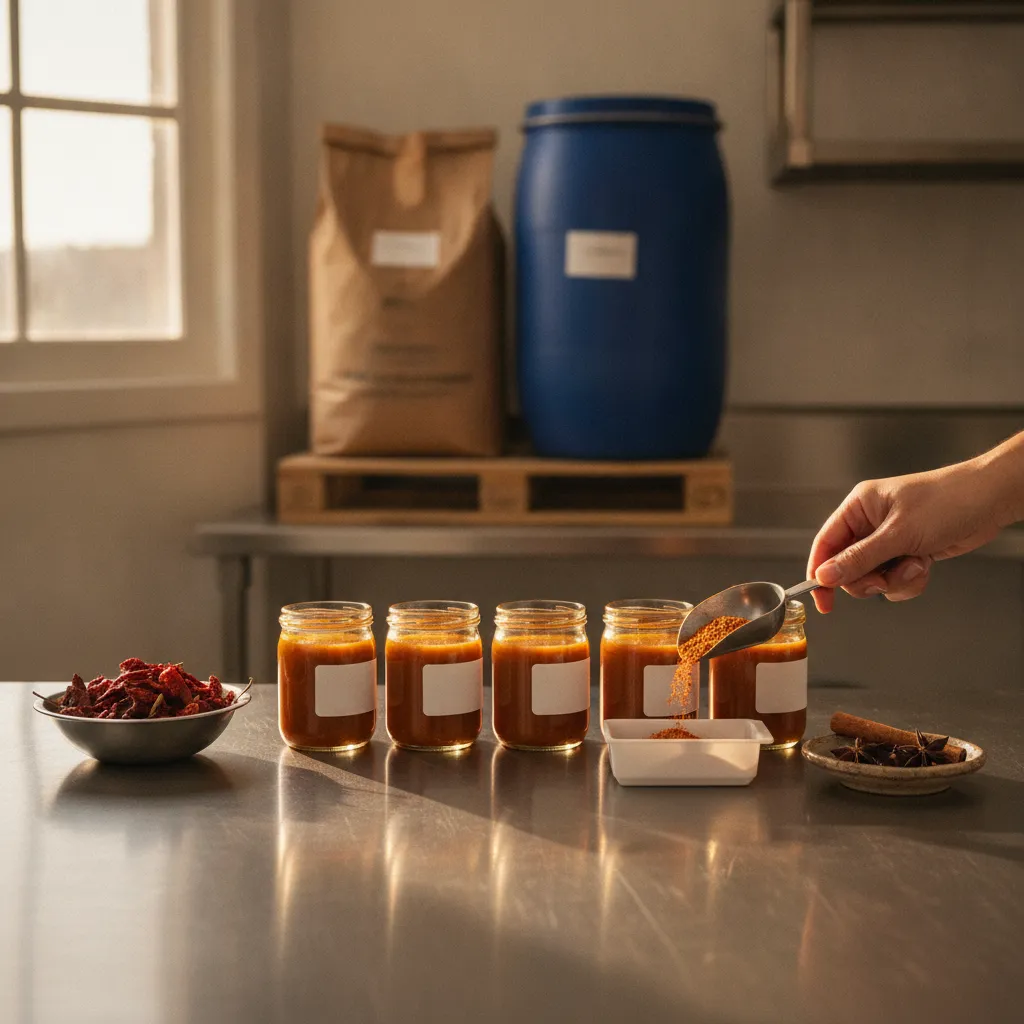
Say the whole run needs 30 pounds of a specialty dried chile, and the smallest quantity the supplier will ship is several hundred pounds. (Those numbers are only an example; your supplier's terms are what count.) You are now buying far more than the run needs, and the real question is no longer the flavor. It is the leftover. Work through four questions before you commit the formula to that ingredient:
- Can you buy less? Some suppliers sell smaller packs, and some distributors break pallets. That is a purchasing conversation between you (or your buyer) and the vendor; my part is knowing which forms of the ingredient leave you more options.
- Where will it live? Ask the co-packer early whether they have room to store it, and under what conditions. Some need cool, dry, dark storage or refrigeration, and a plant short on space may not want your pallet there until next year. Storage costs and terms are between you and the plant.
- Will it still be good when you use it? Check the ingredient's own shelf life and storage conditions on the supplier's spec sheet, then compare that with how long it will realistically take you to use the rest. Ground spices fade, oil-rich ingredients go stale, and opened containers age faster than sealed ones. If the leftover will be past its best before your next seasonal run, you have not bought an ingredient. You have bought a disposal problem.
- Where else can it go? The cheapest leftover is one a core product can use. If nothing else in your line can use it, plan for that before the run, not after.
Sometimes the honest answer is to change the hero ingredient. A different chile, a fruit you already buy for another product, or a more concentrated form in a small container can deliver the same seasonal idea without the pallet. An oleoresin (a concentrated spice extract, such as paprika oleoresin) is one example: a little goes a long way, and in my experience it holds flavor, heat, and color more steadily over time than a ground spice. It is a different ingredient on your label, though, so it should be a deliberate choice for your brand, never a default.
The co-packer's minimum for the run itself is a separate number with its own logic, explained in the guide to co-packer MOQs.
One Run, No Second Chance
A core product gets better over many runs. You notice something on the third batch, tighten the spec, and the fourth batch is better. A limited edition often runs once. Whatever comes out of that kettle is what your customers get all season, so the work you would normally spread across several runs has to happen before the first one.
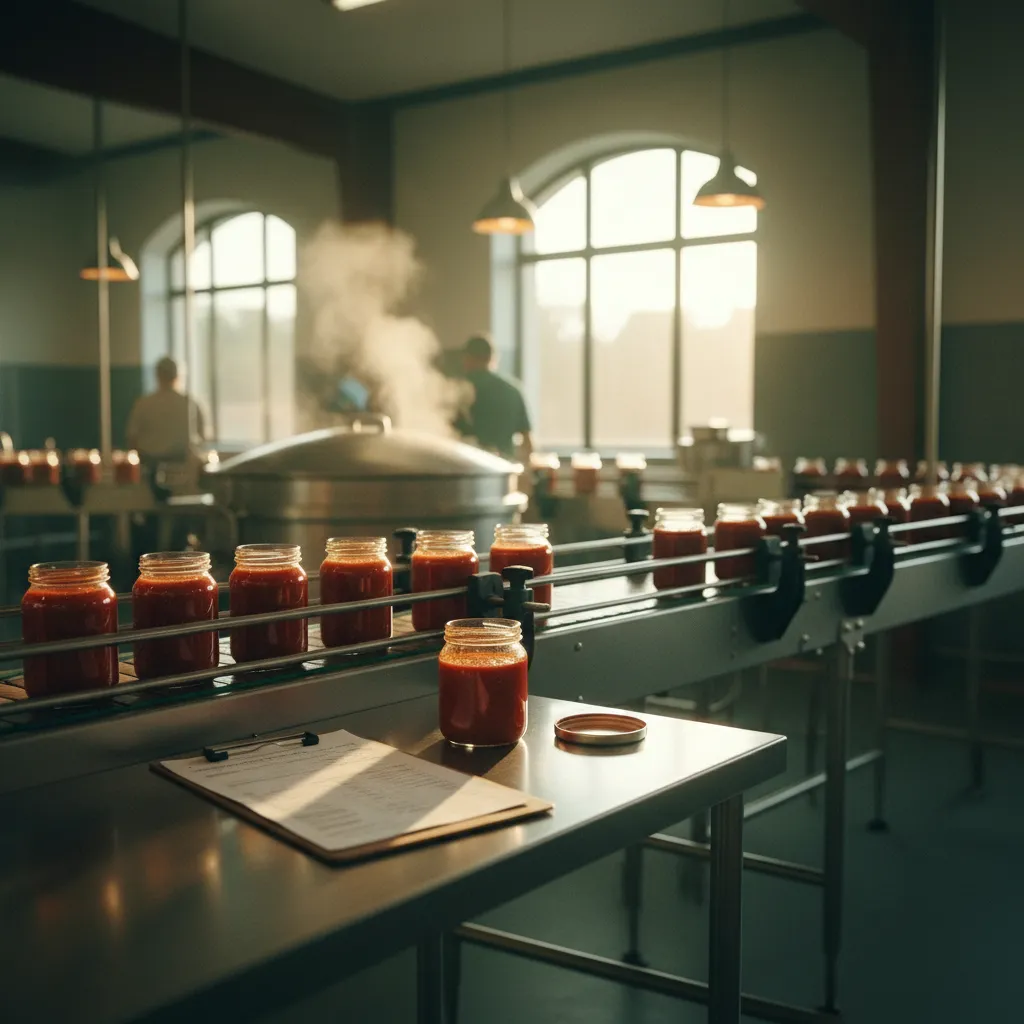
- Build for the equipment it will actually run on. A flavor that tastes right in a small pot can come out different in a production kettle, where heat-up time, evaporation, and shear are not the same. A small run may also land in a smaller kettle or a different slot than your core products, so ask the plant which equipment it will be.
- Trial it first if you can. A pilot or trial batch is worth more for a one-time flavor than for a core one, because there is no next run to fix it on. The pilot batch protocol applies here almost unchanged.
- Watch for new allergens. Seasonal ideas love major allergens: nuts in a holiday flavor, sesame, dairy, soy sauce for a savory note. If the hero ingredient brings an allergen your products do not otherwise contain, it changes the plant's scheduling and cleaning, your label, and possibly what you can say about the rest of your line. Talk to the plant's food safety team before you fall in love with the flavor.
- Respect the hard date at the end. A seasonal flavor that misses its season is not late. It is wrong. Work backward from the ship date, and leave room for the two-week settle (below), any process review, label approval, ingredient lead times, and the plant's schedule.
Process Review and Testing Still Apply
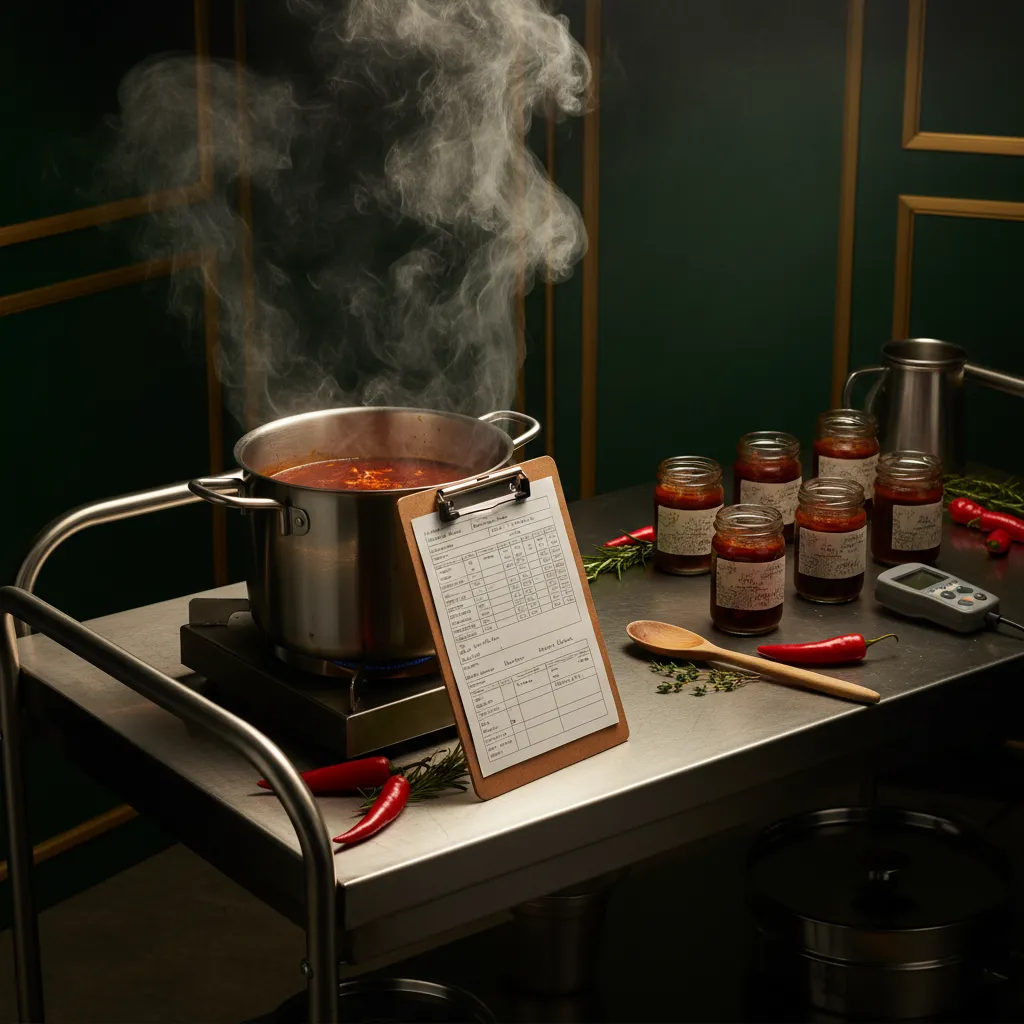
A new flavor is a new formula, and seasonal hero ingredients are often the ones that move its numbers most. Fruit brings sugar and its own acids. Dense, low-acid vegetable purees such as squash, sweet potato, or corn can push pH up and change how the product heats. A heavy hand of roasted peppers or warm spice can change viscosity and color. So the limited flavor needs its own targets for pH, Brix (the dissolved-solids reading, mostly sugar), and viscosity, not ones borrowed from the flavor it was built on.
On pH: your base may sit comfortably under its ceiling, with the cushion process authorities and co-packers like to see. Add low-acid seasonal ingredients and that cushion can shrink or disappear. Why pH moves, and how to measure it over the first weeks, is covered in pH drift after production.
Whether your existing process review covers the new flavor is not your call or mine. It is the process authority's, and it depends on how far the flavor moves the formula and the process, so send them the actual formula rather than a description of the same sauce with a twist. Sometimes the co-packer arranges that review, and sometimes they expect the brand to. Find out which early, get it in writing, and put it in both the budget and the calendar, because a seasonal flavor waiting on paperwork misses its season.
Then judge it the way you would a core product: approve the version that has had about two weeks to settle, not the one fresh out of the kettle. Seasonal flavors tend to lean on aromatics (warm spices, citrus, herbs, smoke), often the most fragile part of a formula, so keep tasting retained jars after that. A spice note that is lovely at week two and gone by month four is a real problem in a jar with a long code date, and designing flavor and color for the end of the code date covers how to plan for it.
Sell-Through Versus Code Date
Here is the mismatch at the center of every limited edition: the season is short, and the code date is not. The jar does not know the season ended. That has three consequences on the product side:
- The shelf life still has to be real. Planning to sell through in one season does not shorten what the product has to survive. Jars sit in warehouses and pantries, and someone will open the last one long after the promotion ends. The code date needs the same kind of evidence behind it as a core product's, built the way I describe in shelf life testing. A shorter code date for a limited run is a conversation with your testing lab and process authority, not a shortcut.
- Retains outlive the product. Ask the plant for samples from the run and test them yourself against the version you approved. Keep retained jars through the end of the code date, even after the flavor is retired. If a complaint arrives months later, those jars tell you whether the product changed or one customer's jar was mishandled. The lot code on a one-time run has to be just as traceable as a core product's.
- The leftover inventory decision is yours. Whether unsold jars get discounted, moved to another channel, or held is a business decision. My job is making sure the product in those jars still tastes like the one you approved, for as long as the date on the lid says it should.
Retire It Cleanly, or Promote It Properly
Every limited flavor ends one of two ways, and both need a little discipline.
Retiring a flavor
Archive a complete record while everyone still remembers the details: the final formula version in weights, the finished product spec with its targets, the process notes, the process authority documentation, the label file, the supplier and ingredient specs, and a short note on what you would change next time. Tell the plant in writing that the formula is inactive, so nobody runs an old version by mistake, and decide what happens to leftover ingredients. If the flavor comes back next year, that archive is the difference between a rerun and a redevelopment.
Promoting a flavor to the core line
If the flavor sells and you decide to make it permanent, do not assume the limited version is the permanent version. A formula built for one small run could get away with things a year-round product cannot. Look at it again with a core product's eyes:
- Can you buy the hero ingredient all year, at volume, to the same spec? A specialty lot that was perfect for one run may not exist next spring.
- Does it need an approved second source? A core product cannot stop because one supplier ran short. Qualifying a backup ahead of time is covered in approved alternate ingredients.
- Will it run in a larger batch or on different equipment? A bigger kettle changes heat-up, evaporation, and texture, and a process change may mean the process authority needs to see it again.
- Are the spec ranges built for many runs? A single run can be watched closely. A permanent flavor needs targets and ranges the plant can hold without you standing next to the kettle.
- Does the shelf-life evidence cover the code date you now want?
Treat promotion as a small development project with a strong head start: a real batch, real retains, and real feedback to build on.
Where the Fine-Tuning Happens
A checklist only gets you part of the way, because the answers that matter are specific to your product: how far a particular hero ingredient will move your base's pH and texture, which form of it holds through your code date, whether it can share your base at all, and what the spec has to say so the plant gets it right on the only run it gets. That calibration happens on your actual formula, at the bench, with the plant's real equipment in mind, and it is the work I do inside client projects. A limited edition built that way is more fun to launch and usually much easier to bring back.
Need Help With Your Formulation?
Whether you're scaling your first recipe or reformulating an existing product, let's talk about how to get it right.
Book a Free Discovery Call