The Label Says Less Sodium. The Sauce Still Has to Taste Like Something.
Lower-sodium is one of the fastest-growing asks I get from founders. A buyer wants it, a co-packer flagged the panel, or the brand promised "better for you" on the front of the jar and must deliver it on the back. The instinct is to cut the salt by a third and hope nobody notices. People notice. Salt is not a seasoning you dialed up too far, it is doing structural work in your sauce, so pull it out without replacing that work and the product doesn't taste "healthier." It tastes flat, hollow, and a little sour or bitter in a way tasters can't name but definitely register.
Here is the good news most reformulation advice skips. You almost never have to choose between a clean sodium number and a sauce that tastes great. You can rebuild most of the perceived saltiness with real food, the kind of ingredients a shopper reads on the panel and nods at. That is where I start every time: real, recognizable ingredients first, and processed replacers only if the math leaves no other option.
Understand What Salt Is Doing Before You Take It Out
Salt is the most quietly overloaded ingredient in a sauce. It plays at least four roles at once, and only one of them is "tastes salty." Reduce sodium without accounting for the other three and you get surprised on the back end.
Flavor and amplification. Beyond its own taste, salt suppresses bitterness, sharpens sweetness, and makes aromatics read louder. That is why an under-salted tomato sauce tastes both flat and oddly bitter: you are missing the salt that held the bitterness down and pushed the tomato forward.
Microbial safety and water activity. Salt lowers water activity (Aw), the free water available for microbes to grow. In some shelf-stable and refrigerated products, part of your safety margin lives in that salt, so cutting it can leave you leaning harder on pH, thermal process, or refrigeration than your original validation assumed. For how Aw and pH share the load, see water activity vs pH.
Texture and protein effects. In sauces with meat, dairy, cheese, or certain vegetable proteins, salt changes how proteins bind water and set. Reduce it and an emulsion can loosen, a cheese sauce turn grainy, a brine-dependent texture go soft, so the mouthfeel shifts, not just the taste.
None of this means you cannot reduce sodium. It means knowing which jobs your salt was doing, so you replace the ones that matter and re-verify the ones that touch safety. That honesty up front keeps a reformulation from becoming a recall.
Build Savoriness From Real Food First
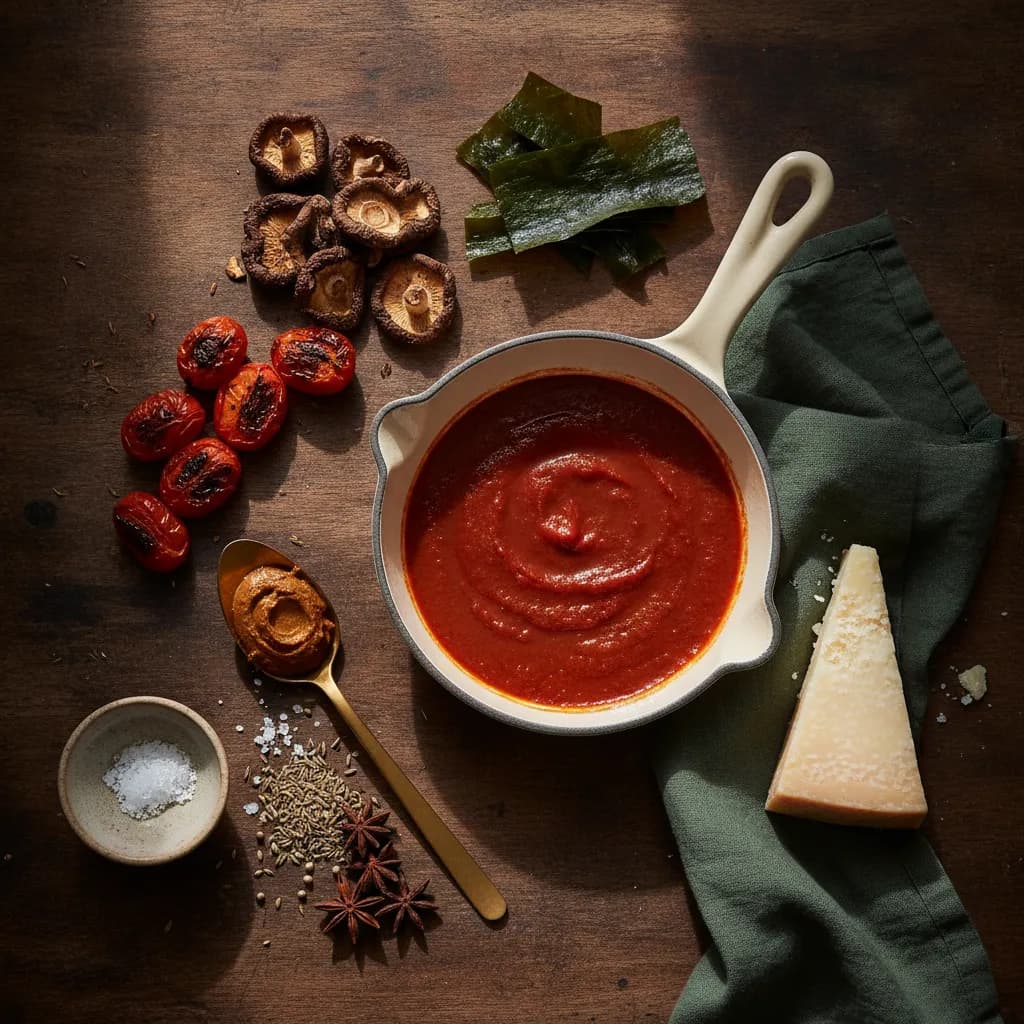
This is the heart of the work. The biggest lever for "tastes fully seasoned with less salt" is umami, the savory, mouth-filling taste from glutamates and certain nucleotides. Salt and umami amplify each other, so raising the umami floor with real ingredients lets the palate read the sauce as complete at a meaningfully lower sodium level. Every one of these is something a shopper recognizes.
Concentrated tomato and roasted vegetables
Tomato is naturally high in glutamate, and roasting or slow-cooking concentrates it while adding browned depth. Roasted tomato paste, fire-roasted tomato, sun-dried tomato, roasted red pepper, roasted onion, and roasted garlic all stack savory depth that reads as "seasoned" without a grain of added salt. In many red sauces this buys back a chunk of the salt.
Mushroom and mushroom powder
Mushrooms are one of the most useful clean-label umami tools available. Dried mushroom powder (porcini, shiitake, or a blend) delivers a huge glutamate and nucleotide punch at a fraction of a percent. It reads simply as "mushroom powder" and deepens savory sauces, gravies, and BBQ without pushing sodium.
Miso, fermented elements, and aged cheese
Fermentation builds glutamates naturally. Miso, tamari, aged soy, fermented bean pastes, and fermented chili all bring deep savoriness. They carry their own sodium, but ounce for ounce they deliver far more flavor per milligram than plain salt, so you come out ahead while gaining complexity. Aged cheese (Parmesan and other long-aged styles) is another glutamate powerhouse wherever a cheese note fits.
Seaweed and kombu
Kombu and other seaweeds are the original glutamate source behind Japanese dashi. A kombu extract or a small amount of seaweed lifts a savory or brothy sauce considerably. It adds some sodium and a faint marine note, so it suits some flavor stories more than others.
Anchovy, fish sauce, and other savory proteins
Anchovy and fish sauce are glutamate and nucleotide bombs, the secret inside great Worcestershire, Caesar, and puttanesca. A small amount melts into a savory or tomato sauce invisibly and reads as deep savoriness, not fish. They add sodium and are allergens and animal-derived, off the table for vegan or certain clean brands, but for the right product they are extremely efficient.
Nutritional yeast
Nutritional yeast is a real, recognizable ingredient with a savory, faintly cheesy character that works well in vegan and clean-label sauces. Used as a whole food (the flakes, not a hyper-refined extract), it adds savoriness and a nutty roundness that helps a lower-salt sauce feel complete. It is not the same as yeast extract, which I treat as a processed tool below.
The move is to combine two or three of these rather than lean on one. They multiply each other, so a little tomato plus a little mushroom powder plus a touch of miso reads as far more than the sum, rebuilding fullness as the sodium number keeps dropping.
Make the Palate Need Less Salt
Umami raises the savory floor. The next layer is making the rest of the flavor so vivid that the tongue stops asking for salt to fill the gaps. A flat sauce begs for salt; a bright, layered one does not.
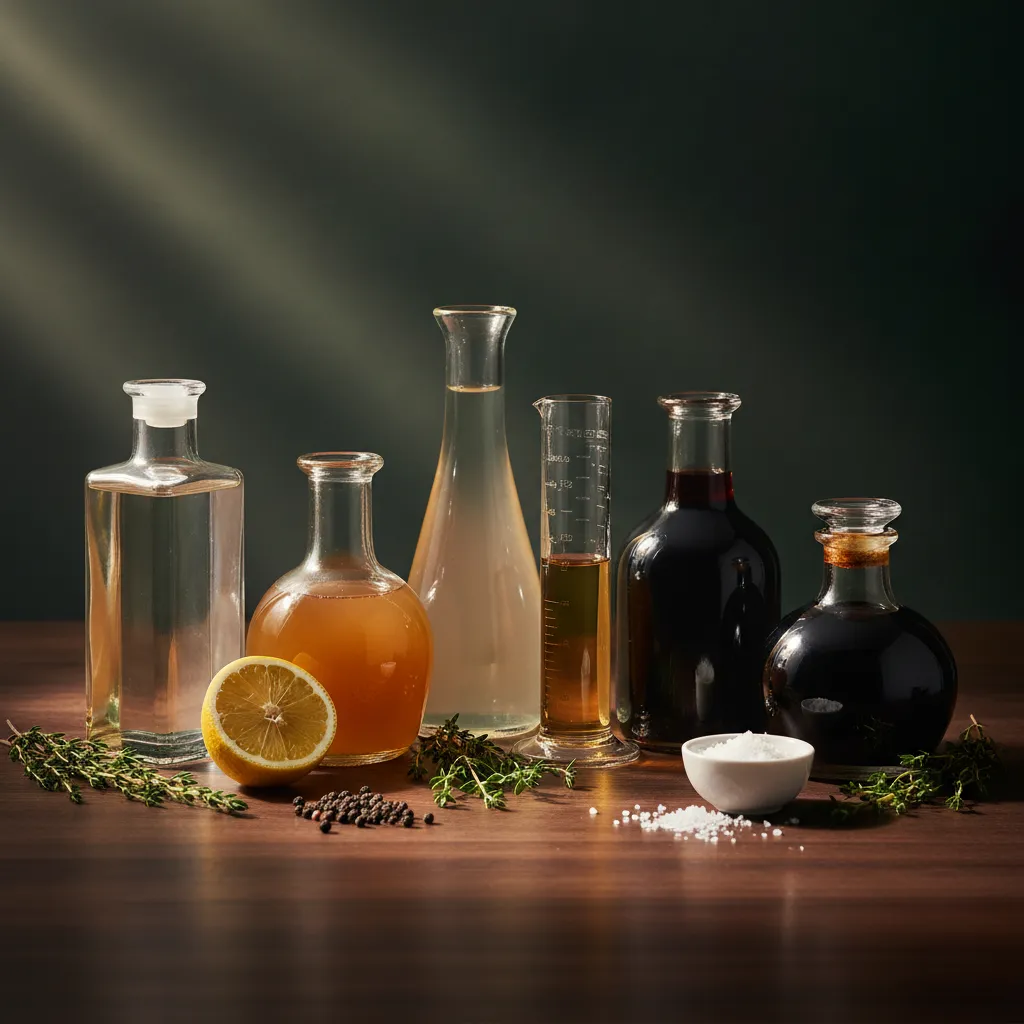
Acid. Acid is the most underused salt-reduction tool in a founder's kitchen. A well-placed acid lifts a sauce so the whole thing tastes more seasoned, and vinegar, citrus, verjus, or a splash of wine can make a low-sodium sauce feel alive instead of muted. Because vinegar also drives pH and shelf stability, treat it as a formulation decision. See choosing the right vinegar for shelf-stable sauces.
Aromatics, alliums, and heat. Onion, garlic, shallot, leek, and ginger, especially roasted or caramelized, add savory-sweet depth that fills the space salt used to occupy, with caramelized onion and roasted garlic carrying a rounded, almost meaty sweetness. Pungent notes (chili, black pepper, mustard, horseradish) add sensation that lowers the need for salt.
Toasted and bloomed spices. Toasting whole spices, or blooming ground spices in oil, releases aromatic compounds raw spice never delivers, so the same cumin, coriander, paprika, or fennel contributes several times the flavor. This is nearly free flavor that directly lowers how much salt the sauce needs.
Slow-built depth through reduction. Cooking a sauce down concentrates everything at once (glutamates, sugars, acids, aromatics) and builds browned complexity, so a reduced sauce carries more flavor per gram and lets salt come down. One caution: reduction also concentrates the sodium already present, so reduce first, then salt to taste against the finished base rather than the thin starting one.
Spend Your Remaining Salt Where It Is Seen and Felt
Not all salt delivers equal perceived saltiness. The tongue registers it most strongly from uneven pockets rather than a fully dissolved, uniform level, so a sauce where every milligram is dissolved into the matrix tastes less salty than one with a little textural contrast at the same total sodium. Options are limited in a smooth pourable sauce, but in a chunkier condiment, relish, or finishing sauce you can use this.
Crystal size matters too. Larger crystals (flake or coarse finishing salt) sitting on or near the surface dissolve as a burst the palate reads as a strong salt hit, giving outsized saltiness per gram versus the same amount dissolved early in the cook. Where the product allows surface or late salt, shift some of the budget there and cut the total. These moves interact with fill temperature and shelf life, so test them on a pilot, but in the right product they recover real saltiness for free.
When Real Food Is Not Enough: The Processed Toolbox, Honestly
Sometimes the sodium target is aggressive enough, or the format constrained enough, that real-ingredient techniques get you close but not all the way. Then I will reach for a processed tool, as a compromise and not my first move, and every one carries a real trade-off you should weigh against your label promise.
Potassium chloride and commercial salt replacers. Potassium chloride is the workhorse behind most sodium-reduction blends; it tastes salty and cuts sodium directly. The catch is a metallic, bitter, sometimes soapy off-note that grows the more you use, and replacer blends only partly mask it with bitterness blockers. A modest amount can disappear when the umami and acid work is already carrying the sauce, but leaning on it as the main answer usually reads a little "off" and puts an unfamiliar ingredient on the panel. Some people also need to limit potassium, worth a note to your regulatory reviewer.
Yeast extract and other savory extracts. Yeast extract, hydrolyzed proteins, and similar concentrated ingredients deliver glutamates efficiently and can genuinely help a low-sodium sauce taste full. The trade-off is label optics: to a clean-label shopper, "yeast extract" and "hydrolyzed vegetable protein" read as hidden-MSG-style additives, and some natural-channel buyers push back. My preference is the whole-food versions first (nutritional yeast flakes, miso, mushroom powder, tomato), with the refined extract as a fallback only when the format needs the concentration.
MSG (monosodium glutamate). MSG is worth naming honestly because the science and the optics diverge. It is simply the sodium salt of glutamate, well tolerated by most people, and per unit of sodium it delivers more savory impact than table salt, so it can be a net sodium-reduction tool. The problem is label perception: a meaningful slice of the clean-label market avoids "monosodium glutamate" on sight. I would rather build the same savoriness from tomato, mushroom, kombu, and fermented ingredients a shopper welcomes. For a brand comfortable with MSG it is legitimate, but for most of my founders it is not the first choice.
The rule is the same across all four: real tools, but a compromise against a clean label, reached for only after the real-food work has been pushed as far as it will go, and even then in the smallest amount that closes the gap.
The Safety Step You Cannot Skip
This is where I stop being a chef and start waving a flag. If salt contributes to the safety of your product, through water activity or its role in an acidified or thermally processed formulation, then reducing it can change your safety margin. A recipe validated at one sodium level is not automatically safe at a lower one.
Before you ship a lower-sodium version of any shelf-stable or safety-sensitive sauce, have the reformulation reviewed and, where required, re-validated by a qualified process authority or your co-packer's food safety team. That can mean fresh pH and water activity testing, and for acidified foods it can touch your process authority letter directly, see process authority letters for acidified foods. I am giving culinary direction here, not a food-safety sign-off, and the rules vary by product and jurisdiction, so verify current requirements with your process authority before the change is permanent.
Related Reading
For the broader formulation picture, see condiment formulation, flavor, and shelf stability, choosing the right vinegar for shelf-stable sauces, and recipe reformulation, when and why.
Frequently Asked Questions
How much sodium can I realistically cut without hurting the flavor?
It varies, but in many sauces you can bring sodium down meaningfully, often a quarter to a third, using real-ingredient umami, acid, and spice work before anyone notices a gap. The honest answer for your formula comes from bench trials and a tasting panel, not a fixed percentage.
Will low-sodium make my sauce spoil faster?
It can, if salt was part of your safety system through water activity or an acidified process. Whether it does depends on your pH, thermal process, packaging, and refrigeration, which is exactly why a sodium reduction needs re-validation with a process authority rather than being assumed a flavor-only change.
Is MSG a bad ingredient?
Not from a safety standpoint for the large majority of people, and per unit of sodium it can even lower the total. The real issue is label perception in the clean-label market. My default is to build the same glutamate savoriness from whole foods shoppers welcome, and treat MSG as optional for brands whose audience is comfortable with it.
What is the single most effective real-food move for a lower-sodium sauce?
Stacking glutamate-rich real ingredients: tomato concentrate plus mushroom powder plus a fermented element like miso. Because these sources amplify each other and amplify saltiness, a small amount makes the sauce taste fully seasoned at a lower sodium level, with ingredients a shopper recognizes.
Where This Turns Into Real Work
Cutting sodium well is not a subtraction problem, it is a rebuilding problem. You take out the salt, then rebuild the savoriness, brightness, and depth with real food so the palate never feels the loss, and re-verify anything that touched safety. Done in that order, real food first and processed replacers only as a last resort, you usually end up with a sauce that tastes better than the original, not just lower on the panel. That is the work I do with founders: find where the salt was working, replace each job, and validate before it ships. Book a Free Discovery Call if you want a hand taking sodium out of your sauce without taking the flavor with it.
Need Help With Your Formulation?
Whether you're scaling your first recipe or reformulating an existing product, let's talk about how to get it right.
Book a Free Discovery Call