The Batch That Tasted Right in August and Wrong in February
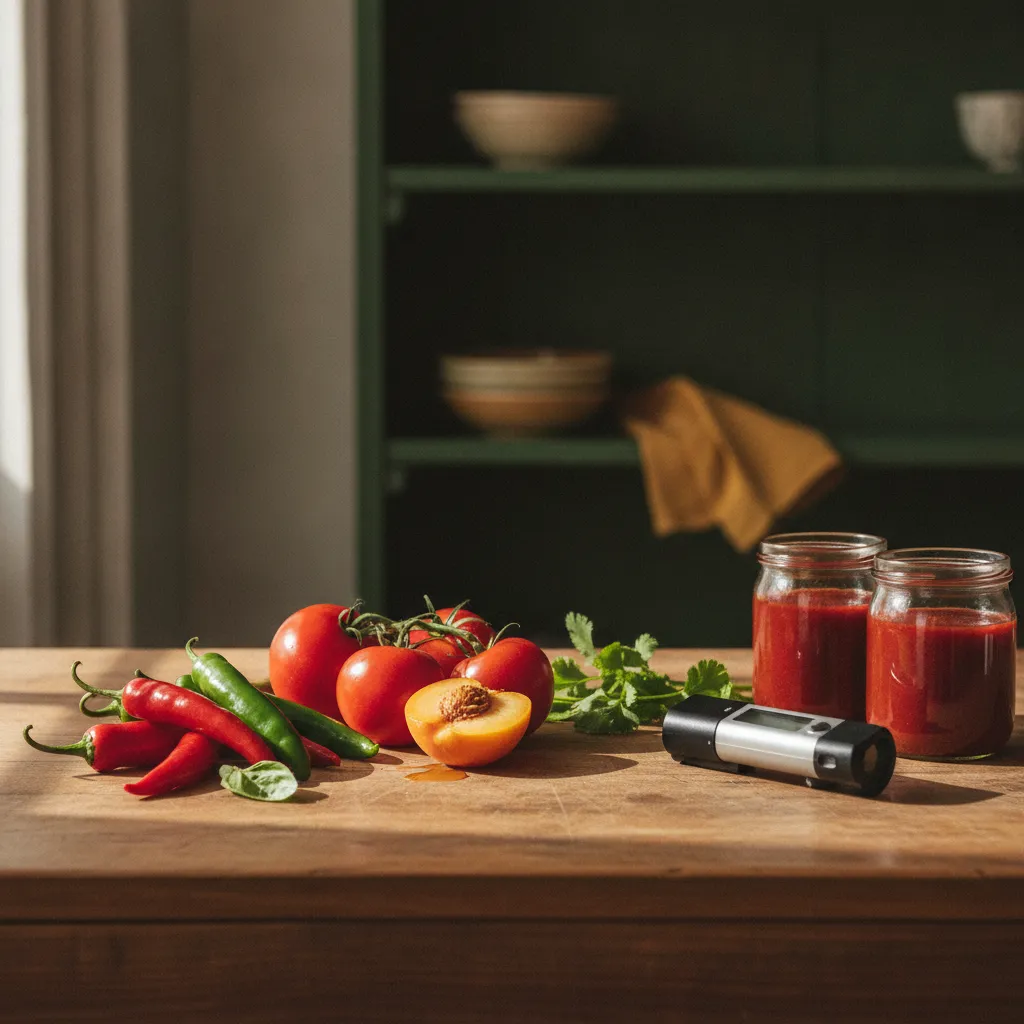
You built your product on real produce, and you should be proud of that. Fresh chilies, ripe tomatoes, actual fruit, herbs you can smell across the room. It is the whole reason your sauce tastes like something a person made instead of something a lab assembled. Then you run the same recipe six months later with the same suppliers and the same spec sheet, and it comes out different. Milder. Or thinner. Or a shade too brown.
This is one of the most common surprises I work through with founders who build on real ingredients, and it is not a sign that anything is broken. It is a sign that your ingredients are alive. A tomato in September is not the same tomato in March. A pepper grown through a dry, hot summer carries more heat than the same variety grown in a mild, wet one. When a recipe is written the way most kitchen recipes are, by weight and by name, it quietly assumes those inputs never change. They always do.
The good news is that this is a solvable engineering problem, and solving it does not mean abandoning real food for shelf-stable synthetics. It means designing the recipe so variation goes in the top and a consistent product comes out the bottom.
Why Real Ingredients Move: The Actual Mechanisms
To design around variation you have to know which properties move. Four matter most for sauces and condiments: soluble solids (Brix), moisture, color, and the active flavor compounds like heat and acid.
Chilies and heat
Capsaicin, the compound that carries pepper heat, is a stress response. A plant grown through drought and high heat produces measurably more of it, and the research is consistent: stressed peppers can run meaningfully hotter than the same genetics grown with steady irrigation. Ripeness compounds it, with fully red fruit typically hotter than the green stage of the same variety. The practical result is that a single jalapeno variety can span a wide heat range, sometimes from a couple thousand Scoville units to several thousand, based on nothing but the weather and when it was picked. If your recipe leans on a pepper for its kick, that kick moves every season.
Tomatoes and soluble solids
Fresh tomatoes generally carry only about 5 to 7 percent soluble solids, and that number swings with variety, soil, irrigation, and harvest timing, so fruit from the same field picked weeks apart can read differently. That matters because Brix drives sweetness, body, and how far you have to reduce to hit target. A lower-solids crop means more water to cook off and a thinner starting point. It is exactly why the processing industry standardizes on concentrates: paste is sold to a defined Brix minimum so the buyer is not at the mercy of the field. See Brix targets in condiment manufacturing for why this number quietly controls so much.
Fruit and acid
Fruit-forward sauces inherit two moving variables at once: sugar and acid. A stone fruit or berry crop that gets more sun and heat tends to arrive sweeter and lower in acid, while a cooler, wetter season pushes the other way. Because finished pH is a food-safety hurdle in most acidified products, a fruit crop that comes in less acidic than last year is not just a flavor issue, it can move your pH toward the edge of spec. That ties seasonality directly to shelf stability, covered in water activity versus pH.
Herbs, aromatics, and color
Fresh herbs and alliums carry their character in volatile oils that vary with maturity and season, so the same weight of basil or cilantro can deliver a different aromatic punch. Color moves too. Chlorophyll, carotenoids, and the red pigments in tomatoes and peppers shift with ripeness and degrade with heat and time, so a duller crop or a longer cook can leave your sauce browner or paler than your reference jar. Customers read color before they taste anything, so this one shows up on the shelf whether you track it or not.
Stop Specifying by Weight. Specify by Measurable Target.
Here is the single most important shift, and it is the same discipline that makes any recipe production-ready. A home recipe says "add four pounds of tomatoes" or "three cups of diced chilies." That assumes every batch is identical. They are not, so a fixed-weight recipe bakes last season's crop into a number and drifts as the crop changes.
A production recipe specifies the property you actually care about, then lets the quantity float to hit it. Instead of a fixed weight of tomato, you specify a finished Brix. Instead of a fixed volume of vinegar, a finished pH with a safety margin. Instead of a fixed weight of one pepper, a target heat level. Three things then live in your spec: the measurable target, an acceptable range around it, and the tool you use to correct when a lot reads high or low. This is the same logic that governs a real co-packer relationship, covered in what makes a recipe production-ready. Specify the destination, not one set of directions to it.
Blend Lots to Average Out the Variation
One of the oldest and most real-food-friendly tools in the book is lot blending. If one delivery of chilies runs hot and the next runs mild, a batch built entirely from either inherits that extreme, while a batch built from a deliberate blend of both lands closer to the middle. Coffee roasters and winemakers have done this for centuries: hold and characterize incoming lots rather than using each straight through, measure the property that varies, and combine to hit your target. A hot chili lot at 60 percent blended with a mild one at 40 percent can deliver more consistent heat than either alone. Measure before you blend, because blending by hope is just averaging two guesses. The catch is inventory, since this needs more than one lot on hand, but even keeping two lots in rotation smooths a surprising amount of the swing.
Frozen, Aseptic, and Concentrated: Real Food, Held Steady
This is where founders sometimes assume the only path to consistency is a synthetic one. It is not. Some of the most powerful consistency tools in the pantry are simply real produce captured at peak and stabilized, and I reach for these long before anything artificial. Frozen purees lock a crop at its ripe peak for months: a strawberry puree frozen in June is closer to June strawberries in February than any fresh February strawberry will ever be, because it literally is June fruit. Aseptic purees and pastes do the same at ambient temperature and often arrive standardized to a stated Brix and pH. Tomato paste is the classic example: nothing but real tomatoes concentrated to a defined solids level, and building on paste instead of raw fresh tomato removes an enormous amount of seasonal drift while keeping the ingredient list honest and recognizable.
None of these are compromises against a real-ingredient promise. Frozen fruit is fruit. Aseptic tomato is tomato. You simply gain a supplier who has already done the standardization the open field refuses to do. The trade-offs are real: frozen inventory needs freezer space and cost, aseptic and concentrated products can carry a cooked note, and a puree behaves differently in the kettle than whole fruit. But as a way to hold a product steady across seasons, a standardized real-food input is usually the first move I make, not the last.
Build Correction Levers Into the Formula
Even with blending and standardized inputs, some variation gets through. The answer is to design the recipe with a small set of deliberate correction levers, reaching for the real-food ones first. A well-built formula is not a locked block; it has a few dials you can turn at production to pull an off-spec lot back to target.
- Acid correction. If a fruit crop comes in sweeter and lower in acid, a measured addition of the vinegar or citrus already in your recipe brings both flavor balance and pH back where they belong. Real acid, already on your label. See vinegar selection for shelf-stable sauces.
- Sweetness correction. If a tomato or fruit lot reads low in Brix, a small adjustment of the real sweetener already in the formula, honey, cane sugar, concentrated fruit juice, restores body and balance. You move within your existing ingredient set, not toward a new synthetic one.
- Heat correction. A mild chili crop can be nudged up with a concentrated real pepper, a dried chili powder, or a hotter lot from inventory. A hot crop gets diluted with a milder lot. This is why specifying a heat target rather than a pepper weight is so powerful.
- Salt and umami correction. Perceived depth can be tuned with real levers too: a touch more salt to lift perception, or a small add of a real umami source like tomato, mushroom, miso, or roasted allium to rebuild savory character a weak crop left behind.
The key rule, borrowed from scale-up work, is to move one lever per adjustment and re-measure, so you always know which move fixed the batch. Only when the real-food levers cannot get you there, and for most sauces they can, do you weigh the processed options: a natural color add-back or a small colorant when pigment degradation is the problem, or a modified starch when a native thickener drifts. These are genuine tools with honest trade-offs in label transparency and natural-channel fit, but they are a last resort, not a first instinct. A real-ingredient brand solves with real food first, and when such a swap is truly warranted, does it deliberately, after reading recipe reformulation, when and why.
Plan Around Harvest Windows and Forward Contracts
The last piece is not in the kettle, it is on the calendar. Real ingredients have seasons, and pretending otherwise is how brands get caught paying triple for an out-of-season crop or scrambling when a supplier runs dry. Map the harvest window of every seasonal ingredient you depend on. Know when your peppers, tomatoes, and fruit come off the field in the regions you buy from, and when quality and price are best. Then decide, ingredient by ingredient, how to cover the rest of the year: buy at peak and freeze or store enough to bridge the gap, move to a standardized aseptic or concentrated form for the off months, or lock supply and price ahead with a forward contract.
Forward contracting, agreeing now to buy an agreed volume at an agreed price at harvest, is how mature brands protect both cost and availability, and it rewards knowing your annual volume. None of this eliminates seasonality. It just means the season stops surprising you, because you planned your buying around the crop instead of expecting the crop to bend around your schedule.
Related Reading
To go deeper on the pieces that connect here, start with Brix targets in BBQ and condiment manufacturing for the single most useful number to spec against, what makes a recipe production-ready for the discipline of specifying by target instead of by weight, and recipe reformulation, when and why for how to change a formula on purpose rather than by accident.
Frequently Asked Questions
Does building for seasonality mean I have to stop using fresh ingredients?
No, and that is the point. You design the recipe so fresh, variable produce still yields a consistent finished product. Sometimes that means using a standardized real-food form like a frozen or aseptic puree for part of the input, but that is still real food, and you keep the ingredient story that makes your brand worth buying.
Is a frozen or aseptic puree really as good as fresh?
For consistency, it is often better, because it was captured at peak ripeness and standardized to a stated Brix and pH. The trade-offs are storage cost for frozen and a slightly cooked character in some aseptic products. For many sauces the consistency gain wins, but test it side by side before committing.
How do I keep heat consistent when my peppers vary so much?
Specify a heat target rather than a pepper weight, then hit it with a blend and a correction lever. Blend a hot lot with a mild one toward the middle, keep a concentrated real pepper or dried chili on hand to nudge a weak crop up, and dilute a hot crop with a milder lot.
Do I need lab equipment to manage all of this?
Less than you might think to start. A refractometer for Brix and a reliable pH meter cover most of the seasonal variation in sauces and condiments, and both are affordable. Heat is harder to measure in-house, so most small brands manage it through lot blending and tasting against a reference. As you scale, verify any food-safety-critical measurement, especially pH on acidified products, with your co-packer and a qualified process authority.
Designing for the Season Instead of Fighting It
A brand built on real ingredients is not fragile because its ingredients change. It becomes fragile only when the recipe pretends they do not. Once you specify by measurable target instead of by weight, blend your lots, lean on standardized real-food forms where they help, build a few honest correction levers into the formula, and plan your buying around the harvest, seasonal variation stops being a threat and becomes something you simply manage, quietly, every year. That is the discipline of a real-food brand built to still be on the shelf in five years, and it is exactly the work I do with founders. Book a Free Discovery Call if your product keeps drifting with the crop and you want it to hold steady instead.
Need Help With Your Formulation?
Whether you're scaling your first recipe or reformulating an existing product, let's talk about how to get it right.
Book a Free Discovery Call