The Number That Does Not Match
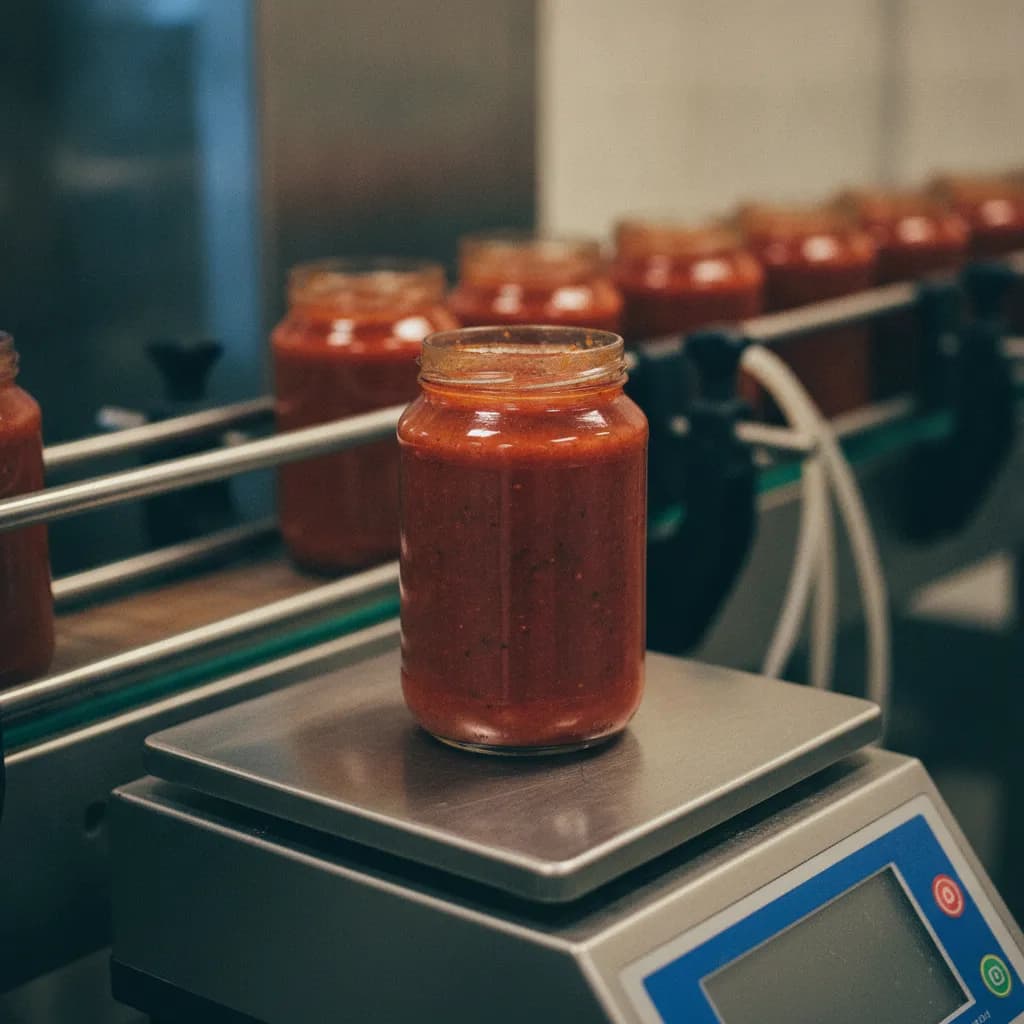
The batch sheet said 400 gallons. At 12 ounces a jar, the arithmetic says roughly 4,270 jars. You got 3,980. Nearly three hundred jars short, which at your ingredient cost is a number that ruins the mood on a production day.
The first time this happens, founders assume someone made a mistake. Usually nobody did. The missing product left through five or six exits, all predictable, most unavoidable, and a couple worth arguing about. What separates a founder who manages yield from one who is repeatedly surprised by it is knowing which exit is which.
Exit One: Evaporation
The big one, and the one people account for worst, because it is both intentional and variable.
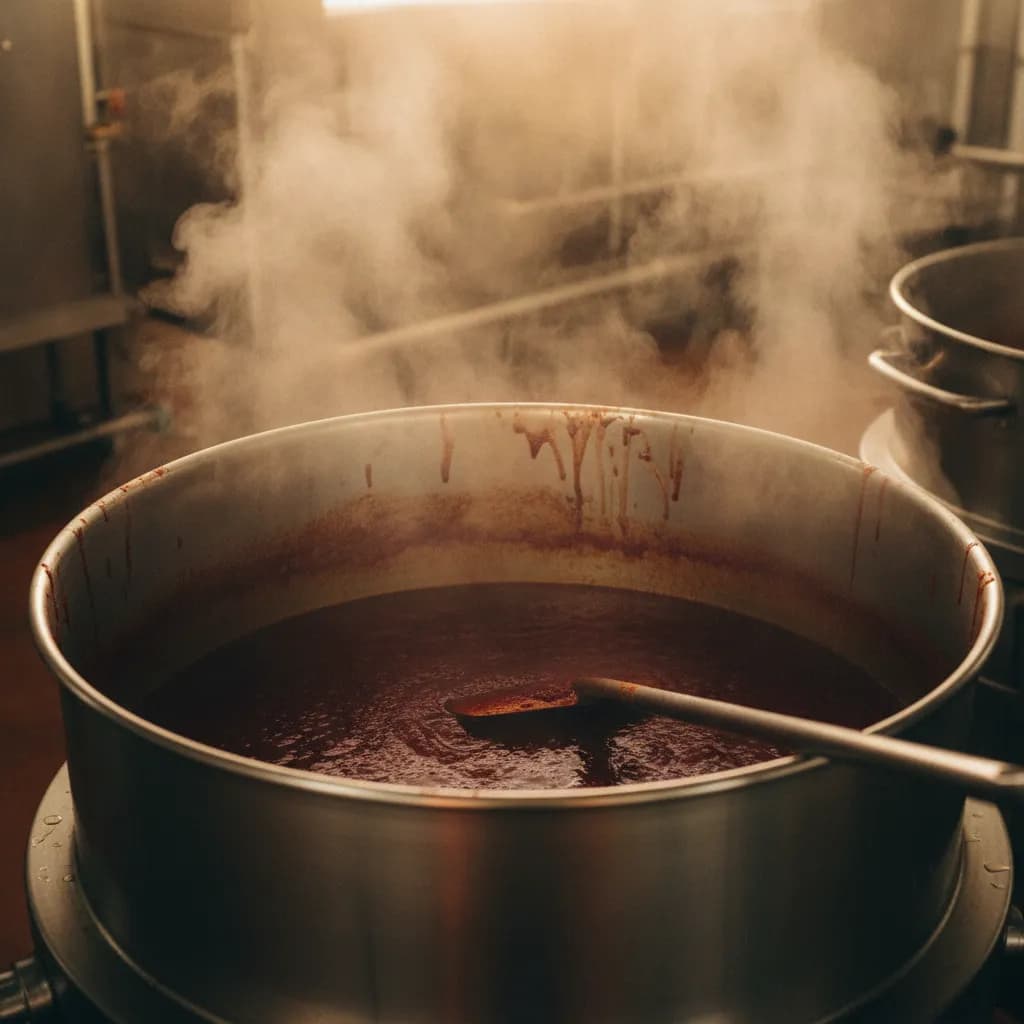
In most kettle-cooked sauces you are reducing on purpose. You are driving off water to concentrate flavor, build body, and land on a soluble solids target. That water is yield loss by definition, and it should be in your plan. The problem is that the amount is not fixed.
Evaporation rate depends on free surface area relative to the volume in the kettle, on whether the kettle is covered, on jacket steam pressure, on agitation, and on how humid the room is. Every one of those varies between facilities and some vary between days.
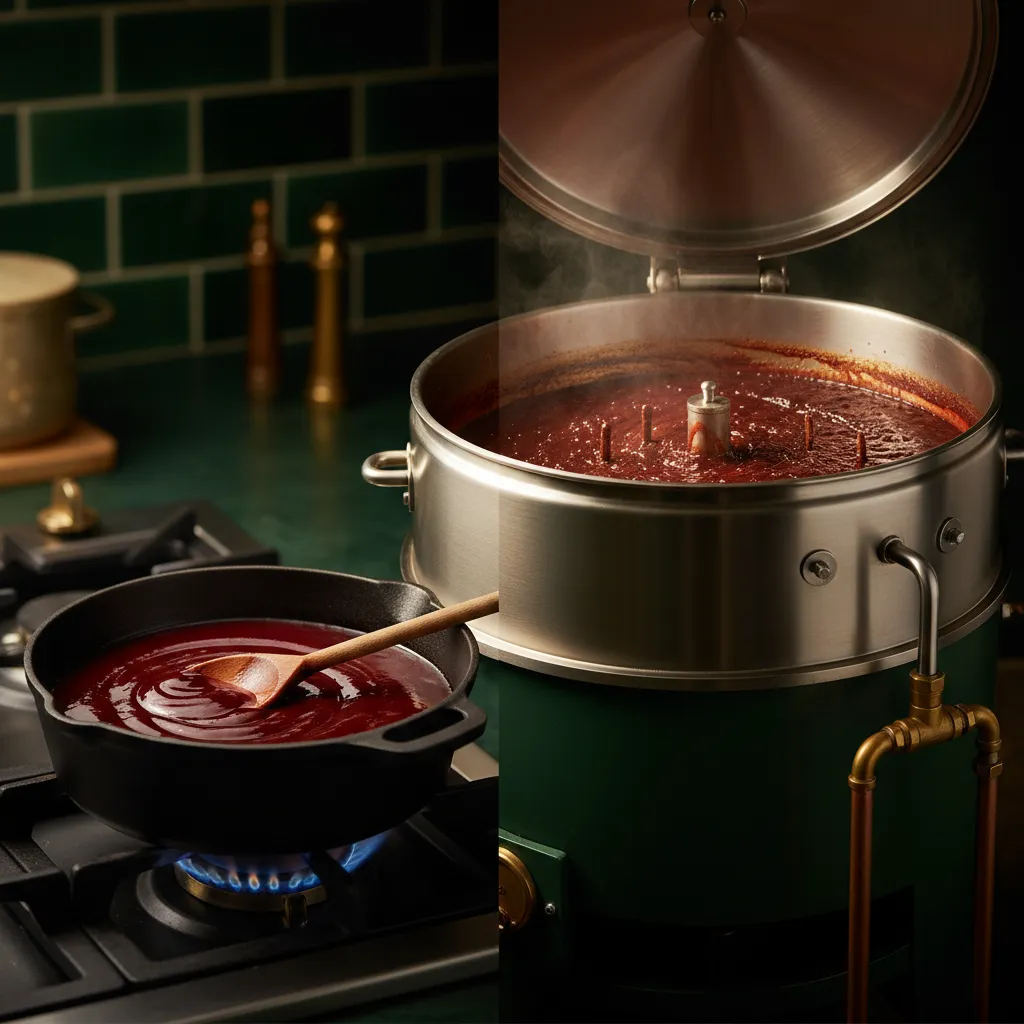
The scale effect surprises people most. Going from a home pot to a production kettle, volume grows faster than exposed surface does. A 400 gallon charge has vastly more product per square foot of open surface than a two quart saucepan. The consequence: the same reduction takes disproportionately longer at scale, and your evaporation loss is not a percentage you can carry over from your kitchen. It has to be measured on the equipment you will actually run. This is the same geometry problem behind why your kettle batch does not match your stovetop.
There is a fork here, and it is a genuine trade-off rather than a best practice.
Cook to an endpoint (a Brix reading, a viscosity measurement) and your product is consistent batch to batch while your yield floats with steam pressure and the weather. Cook to a time and your yield is predictable while your product drifts. I want founders on the endpoint side almost every time, because the customer tastes the product and never sees the yield sheet, but make that choice knowingly and price the variability in. The instrument that makes endpoint cooking practical is covered in Brix targets for BBQ and condiment manufacturing.
One trap in the other direction: if the facility uses direct steam injection rather than a jacket, the steam condenses into your product and adds water. That is not a yield loss, it is a dilution, and it moves your Brix and your pH. Know which kind of heat you are buying.
Exit Two: Cling, the Heel, and the Dead Legs
Product sticks to things. It coats the kettle wall, it rides the agitator, it sits in the bottom radius below the discharge valve, and it fills every short length of pipe that does not drain.
The trade term for what stays behind in a vessel is the heel. Its absolute size is roughly set by the geometry of the equipment, which leads to the most important consequence: cling is a much larger percentage loss on a small batch than a large one. The kettle wall has the same area whether you charged it full or a third full. A brand running 60 gallons in a 200 gallon kettle is paying the full cling penalty on a third of the product.
That is the single strongest operational argument for sizing your run to the equipment rather than the other way around, and it belongs in the same decision as the minimums discussed in the co-packer MOQ guide.
Two things make cling worse: high viscosity and high sugar. A thick, sticky glaze clings dramatically more than a thin vinegar-forward hot sauce. Build a higher cling allowance into a heavy-bodied product rather than discovering it on run day.
What helps: a proper scrape-down in the discharge procedure, agitators that sweep the wall rather than stirring the middle, and a water or steam push at the end of the batch. The push has a cost: recovered heel is diluted and out of spec, so a facility either blends a small amount back in where the specification allows or diverts it. That is a decision to write down rather than improvise, because it moves your finished Brix and pH.
Exit Three: Line Loss
Everything between the kettle and the jar holds product: the transfer pump, the hose, the strainer, the heat exchanger if there is one, the fill hopper, the manifold, and each fill nozzle.
The rule is the same as the heel, only more so. The line holds what the line holds. That volume is nearly constant regardless of batch size. The first run of the day has to fill the whole system before a single good jar comes off, and at the end whatever is still in the system gets pushed through with water, recovered, or discarded.
This is why a facility built for 2,000 gallon runs is a poor fit for a 150 gallon brand even when they are willing to take you. A fixed line volume is a small fraction of a big run and a painful fraction of a small one. If you are quoting with a facility whose equipment is clearly oversized, ask how they handle first-fill and end-of-run product, and what that does to your assumed yield.
Exit Four: Startup and Shutdown
The first units off a filler are not normal units. The filler is warming up, the product temperature has not stabilized, air is still working out of the system, and the fill weights are erratic. The same is true in reverse at the end of a run as the hopper level drops and the filler starts pulling air.
Many operations pull and discard the first several units of a run as a matter of course, and set aside the tail. That product is gone from your count even though it was perfectly good sauce, and it is one of the reasons the weights on early units skew in the ways described in net weight and fill control.
This loss is largely fixed per run, which means, again, it hurts small batches disproportionately.
Exit Five: QA Samples and Retains
Product leaves the count for good reasons. In-process pH and Brix samples. A fill weight check series. Finished product pulled for lab work. And retains: units held so that if a question arises later, you have product from that exact lot to examine.
None of this is waste and none of it is a place to economize. Just count it. On a small run, samples and retains can be a visible fraction of the units produced, and a founder who has not accounted for them will think the numbers do not add up.
Exit Six: Fill Giveaway
If every jar carries a little more product than the label says, your jar count drops accordingly. This is the exit that looks like yield loss on the batch sheet but is really a fill control problem, and it is fully addressable. It gets its own treatment in net weight and fill control, because the fix (narrowing the fill distribution, then lowering the target) is a different discipline from anything else on this list.
Exit Seven: Rejects
Seal failures, low fills caught on the line, crooked labels, glass that breaks in handling, cases damaged before they leave. Some of this belongs to the packaging conversation in packaging that fails rather than to the kettle, but it comes off the same jar count and it should be in the same accounting.
Putting It in a Number You Can Use
Yield is simply actual units divided by theoretical units, where theoretical is batch weight divided by target fill weight. What matters is not hitting a particular percentage. What matters is knowing your number for your product on their equipment, and having it in writing.
Co-packers routinely build a yield assumption into their quotes, commonly somewhere in the low to mid nineties as a percentage, and you pay ingredient cost on the full batch, not on the filled units. A quote that assumes a yield you cannot hit has quietly raised your cost per jar without changing a single printed number. That is why the yield line gets its own paragraph in reading and negotiating a co-packer quote.
My advice is unglamorous: get the assumed yield in writing before the run, reconcile actual against it after the run, and ask about any gap while the production records are still fresh. Do that twice and you will know your real number. After that, yield stops being a surprise and becomes what it should be, a line in the plan.
And a last word on where to spend your attention. Evaporation and cling are physics, and beyond sensible practice you are not going to argue them away. Startup loss and line loss are largely a function of running a batch size that fits the equipment. Giveaway and rejects are genuinely controllable and usually the best return on effort. Chase those two first, understand the rest, and stop treating the shortfall as a mystery.
Sources: eCFR, 21 CFR Part 114, Acidified Foods · eCFR, 21 CFR Part 117, Current Good Manufacturing Practice, Hazard Analysis, and Risk-Based Preventive Controls for Human Food · NIST Handbook 133, Checking the Net Contents of Packaged Goods
Need Help With Your Formulation?
Whether you're scaling your first recipe or reformulating an existing product, let's talk about how to get it right.
Book a Free Discovery Call