Why Most Shelf-Stable Salsa Tastes the Same
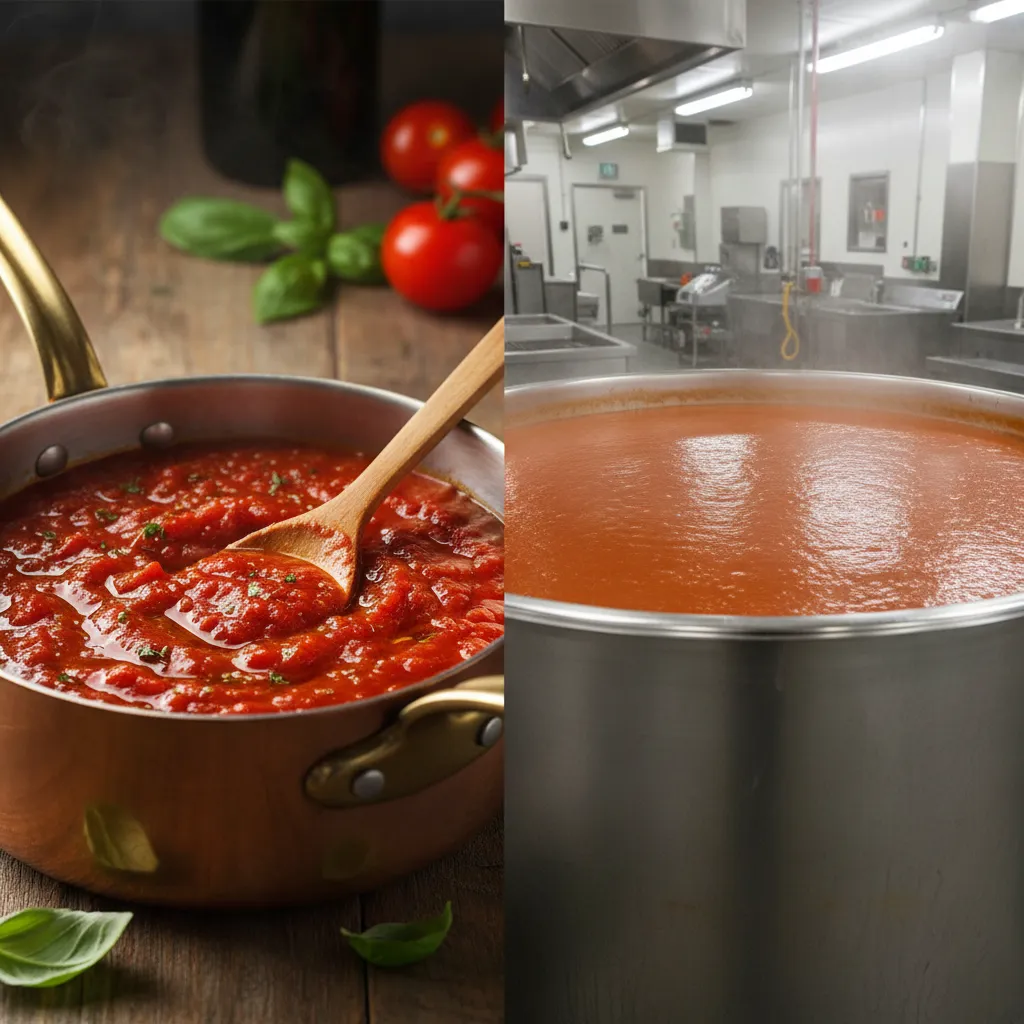
Walk down any supermarket aisle and taste the mid-tier shelf salsa. You'll notice a strange sameness — a flat, one-note tomato character with a hit of acid on top. That sameness isn't the recipes. It's the process. Most conventional shelf salsa is flash-pasteurized or hot-filled through a continuous tube, designed to hit throughput and cost targets, not flavor depth.
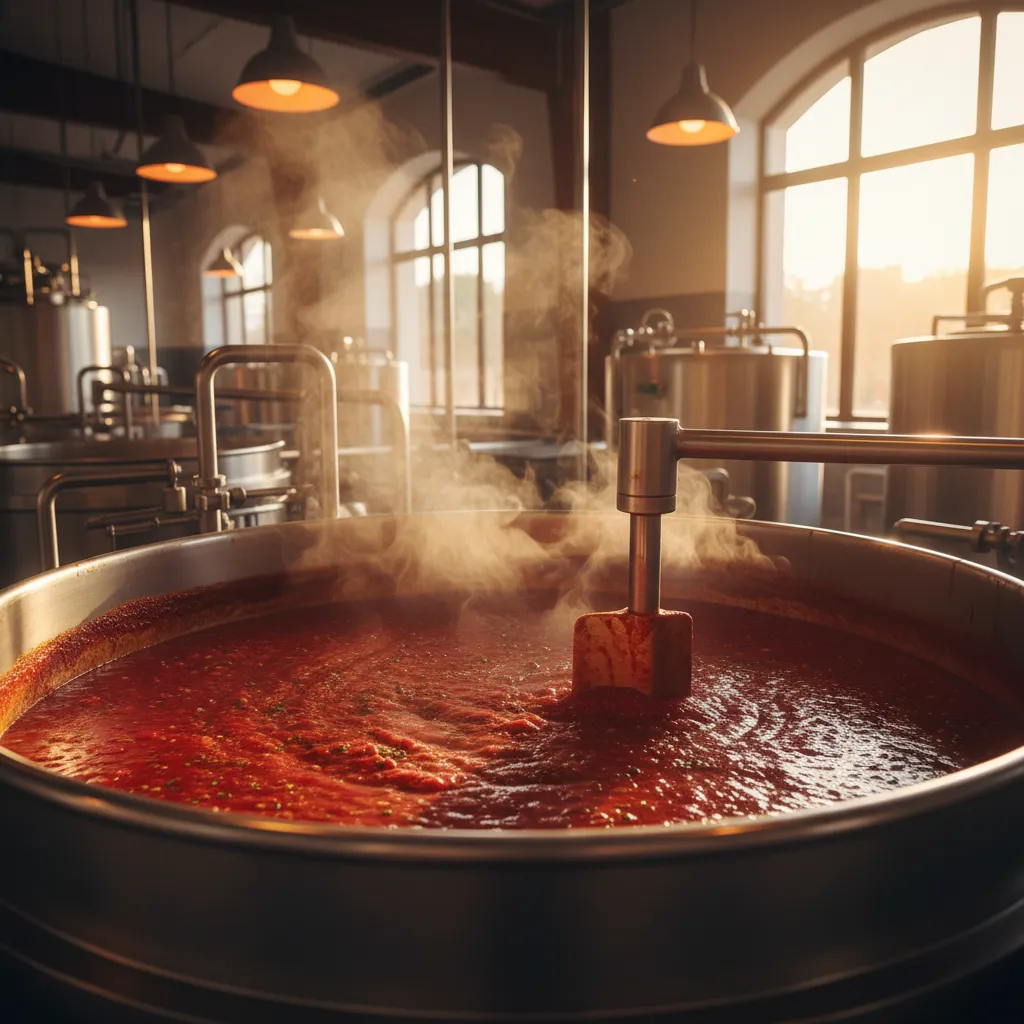
Kettle-cooked salsa — made in batches in a steam-jacketed kettle, with longer cook times and deliberate browning — is a different product. Not better for every brand, but meaningfully different in ways your ideal customer can taste.
What Changes When You Cook Salsa in a Kettle
Maillard development
The brown, savory, slightly caramelized backbone of a well-cooked salsa comes from Maillard reactions between sugars and amino acids. Those reactions need time at temperature — not a 2-minute pass through a heated tube. Kettle cooking, typically 30-90 minutes in controlled segments, develops color and depth the flash process can't reach.
Aromatic concentration
Evaporation in an open or partially covered kettle concentrates volatile aromatic compounds from onions, peppers, garlic, and tomatoes. Done well, it intensifies the sensory profile. Done poorly, it drives off the lighter top notes — fresh cilantro, lime — that a good finishing step adds back.
Texture and breakdown control
In a kettle, you control how much each ingredient breaks down. Diced tomato added in the last 10 minutes stays chunky. Added at minute zero with 60 minutes of cook time, it all becomes sauce. Layered additions are how kettle cooks build a salsa that has both a rich base and visible integrity — a texture flash processing can't deliver.
Heat and acid integration
Capsaicin extraction from peppers is time-and-temperature dependent. A long cook pulls more heat from the same peppers, so a kettle salsa recipe can't just mirror a fresh-salsa ratio. The cook curve — when each ingredient enters, how long it stays, when acid is added — is the real recipe.
For the foundational mechanics of kettle cooking, see why kettle cooking produces better sauces.
The Flavor Ceiling Difference
The reason kettle salsas can command a higher retail price isn't nostalgia or marketing — it's a genuine ceiling difference. A flash-processed salsa, no matter how good the fresh recipe was, is capped by the brevity of its heat exposure. A kettle salsa has access to Maillard compounds, concentration, and layered texture that shift the entire sensory experience.
That ceiling comes at a cost: slower throughput, more complex SOPs, and higher per-unit pricing. Brands that live in the premium segment of the category tend to absorb it. Brands competing on price don't.
What Scaling a Kitchen Salsa to a Kettle Actually Requires
Rewriting the cook curve
Your home recipe assumes a pot on a burner. A 200-gallon kettle has different heat transfer characteristics, different evaporation rates, and a different geometry. The order of additions, the timing of acidification, and the target cook endpoint all have to be re-mapped.
Managing evaporation
Unclosed kettles lose water. If your home recipe ends at a specific consistency by eye, your commercial kettle needs a target finished Brix or Bostwick reading to hit the same texture reliably. Evaporation factors in the 3-8% range are common for kettle salsas.
Pepper behavior at scale
Ground pepper at kitchen scale gives a certain heat profile. The same ground pepper in 200 gallons of salsa, cooked for 60 minutes instead of 10, extracts substantially more heat. Most scaled salsa recipes need 20-30% less ground pepper to hit the same Scoville perception.
pH and food safety at this scale
Shelf-stable kettle salsa is an acidified food. Your process authority letter and scheduled process apply specifically to the formulation and cook you document. For an overview, see FDA process authority letters for acidified foods. For the foundational chemistry, see water activity vs pH.
Protecting top notes
Fresh cilantro, lime, and some fresh pepper character don't survive an hour in a hot kettle. A well-designed kettle salsa either adds these ingredients very late in the cook, uses stabilized forms, or relies on aromatic compounds that are complementary but heat-stable.
Common Mistakes When Scaling a Salsa to Kettle
Cooking everything together from the start. This yields a uniform, homogenized texture and lost top notes. Staggered additions are the craft.
Using fresh tomato only. Fresh tomato is beautiful but expensive and variable. Most commercial kettle salsas blend fresh, frozen-diced, and concentrate components to balance cost, consistency, and character.
Ignoring the Brix endpoint. A cook time alone won't land you at the same finished consistency across batches. Brix or Bostwick targets anchor the endpoint.
Skimping on pepper qualification. Lot-to-lot variability in capsaicin can push your heat meaningfully around. Qualifying incoming pepper lots is standard practice for serious kettle brands.
Frequently Asked Questions
Is kettle-cooked salsa more shelf stable than flash-processed salsa?
Both can be shelf stable when properly designed. Kettle salsas typically have a longer thermal process and more opportunity to achieve consistent hurdles. But shelf stability is a product of your specific scheduled process, pH, Aw, and packaging — not the kettle itself. A process authority determines what's adequate for your product.
How is kettle-cooked different from "slow-cooked" on a label?
"Slow-cooked" is a marketing term with no regulated definition. Kettle-cooked usually refers to a specific production method using a steam-jacketed kettle. Some brands use both terms; some use one. The claim has to be truthful and non-misleading, but it isn't technical.
What's a reasonable production size for a kettle salsa?
Craft kettle co-packers often operate in the 50-200 gallon range per batch. Larger kettle operations run 300-500 gallons. MOQ implications depend heavily on the co-packer — see the co-packer MOQ guide for the full picture.
Can I use canned tomatoes in a kettle salsa and still claim clean label?
Yes, in most cases. Canned tomatoes with simple ingredient decks (tomatoes, salt, sometimes calcium chloride, sometimes citric acid) are widely accepted in the natural channel. Watch for added corn syrups, modified starches, or artificial preservatives in lower-quality options.
Where the Recipe Becomes the Craft
The public framework — cook curve, staggered additions, pepper qualification, Brix endpoints — is what anyone who has worked in a commercial kettle knows. The specific calibrations — your tomato-to-pepper ratio, your acid-addition timing, your fresh-to-processed tomato blend, your finishing aromatic strategy — are where a recipe develops its signature. That layer is what I work through with founders inside an engagement. If you're scaling a kitchen salsa and suspect the process is where it's flattening out, a discovery call is a good starting point.
Need Help With Your Formulation?
Whether you're scaling your first recipe or reformulating an existing product, let's talk about how to get it right.
Book a Free Discovery Call