The Email Every Founder Dreads
It almost always arrives on a Tuesday. A supplier emails: "We're discontinuing this ingredient," or "We're reformulating this SKU," or "We're short-shipping for the next 6-9 months." And suddenly the foundation under your best-selling product is shifting.
This is one of the most common operational crises in CPG, and it's also one of the most survivable — if you have a playbook. Here's the one I run with founders when an ingredient goes away.
Step 1: Don't Panic, But Start the Clock
Your window depends on how much of the discontinued ingredient you already have in inventory, how much the supplier will run before the change, and how fast your usage rate burns through existing stock. Calculate weeks of supply on hand at current production rate — that's your runway.
A typical runway: 6-16 weeks. A tight runway: under 6 weeks. An easy runway: over 20 weeks. Knowing which you're in sets the pace of everything that follows.
Step 2: Identify What the Ingredient Was Actually Doing
The mistake here is searching for a drop-in replacement that has the same name. The better approach is to identify the function the ingredient plays in your product. Most ingredients do more than one job:
Flavor contribution: The sensory character it brings — sweetness, acidity, umami, aroma, heat.
Functional contribution: Texture, viscosity, emulsion, color, preservation, pH influence.
Label contribution: How it reads on the ingredient deck, any certifications it carries, how consumers interpret it.
A replacement has to be evaluated against all three — not just one. Some of the hardest reformulations happen when founders find an ingredient that nails the flavor but changes the label story in a way their brand can't accept.
Step 3: Build a Short List of Candidates
For each functional role the old ingredient played, brainstorm 3-5 candidate replacements. Sources worth checking:
Other suppliers of the same ingredient class. Often the fastest path — a similar vinegar, a similar paprika, a similar tomato concentrate from a different producer.
Functionally similar ingredients. A different variety that does the same job — a different pepper, a different thickener, a different natural emulsifier.
Blends that reproduce the contribution. Sometimes two ingredients together reproduce what one ingredient did alone. This opens design space but adds sourcing complexity.
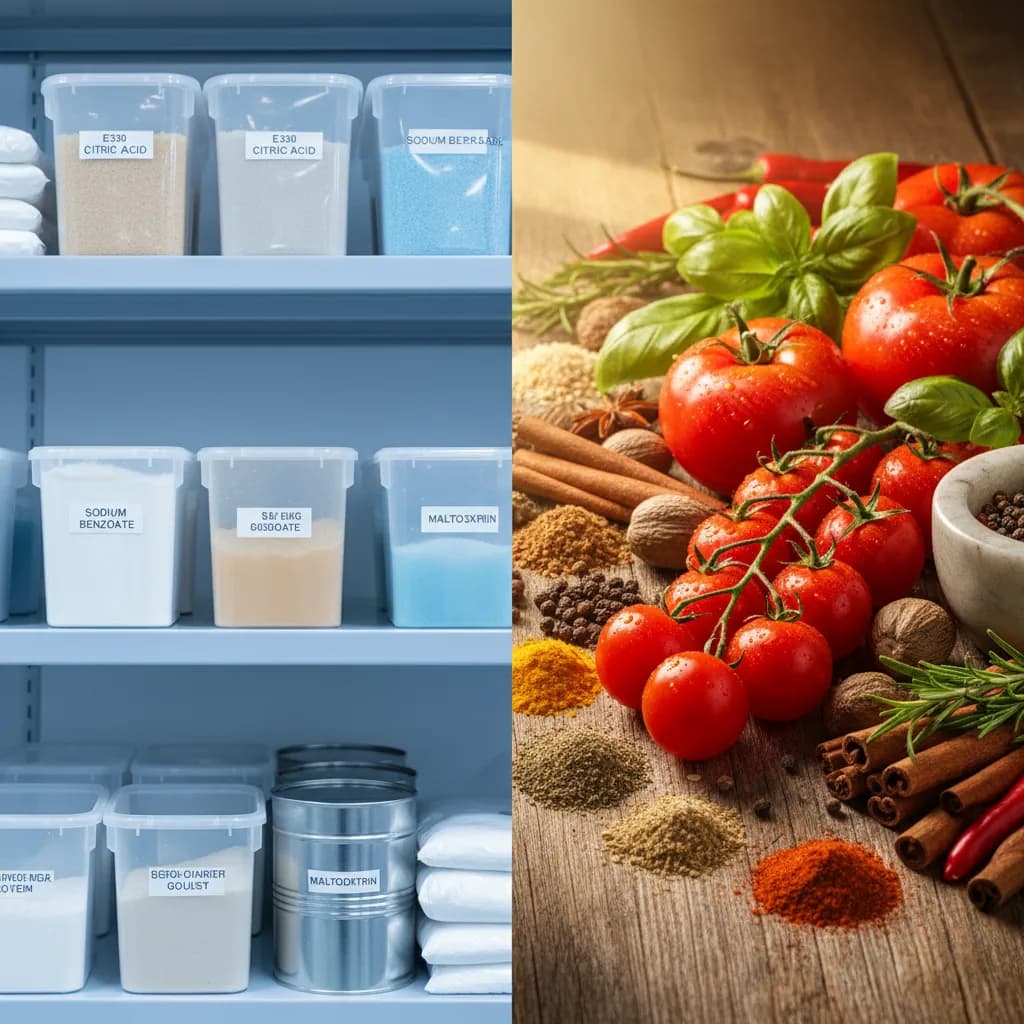
Ingredient-chain upgrades. Occasionally a discontinuation is an opportunity — the forced reformulation lets you move to a cleaner, more premium, or more story-friendly ingredient you'd been meaning to adopt.
Step 4: Test in the Right Order
Don't scale straight to production with an untested candidate. Work through in sequence:
Bench-scale evaluation
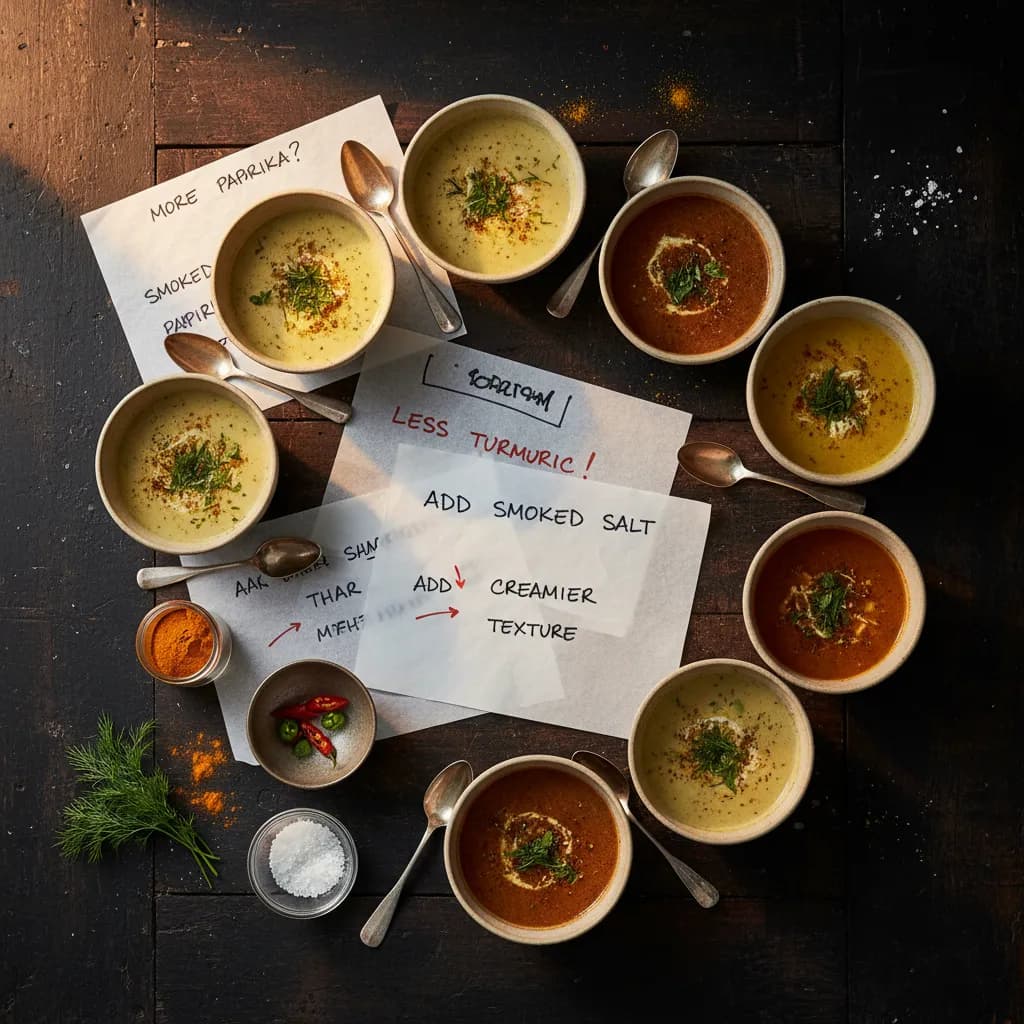
Make small batches using each candidate, side by side with your reference (current) formulation. Evaluate sensory attributes, color, viscosity, pH, and Aw. This usually narrows 5 candidates to 2.
Pilot-scale or small commercial batch
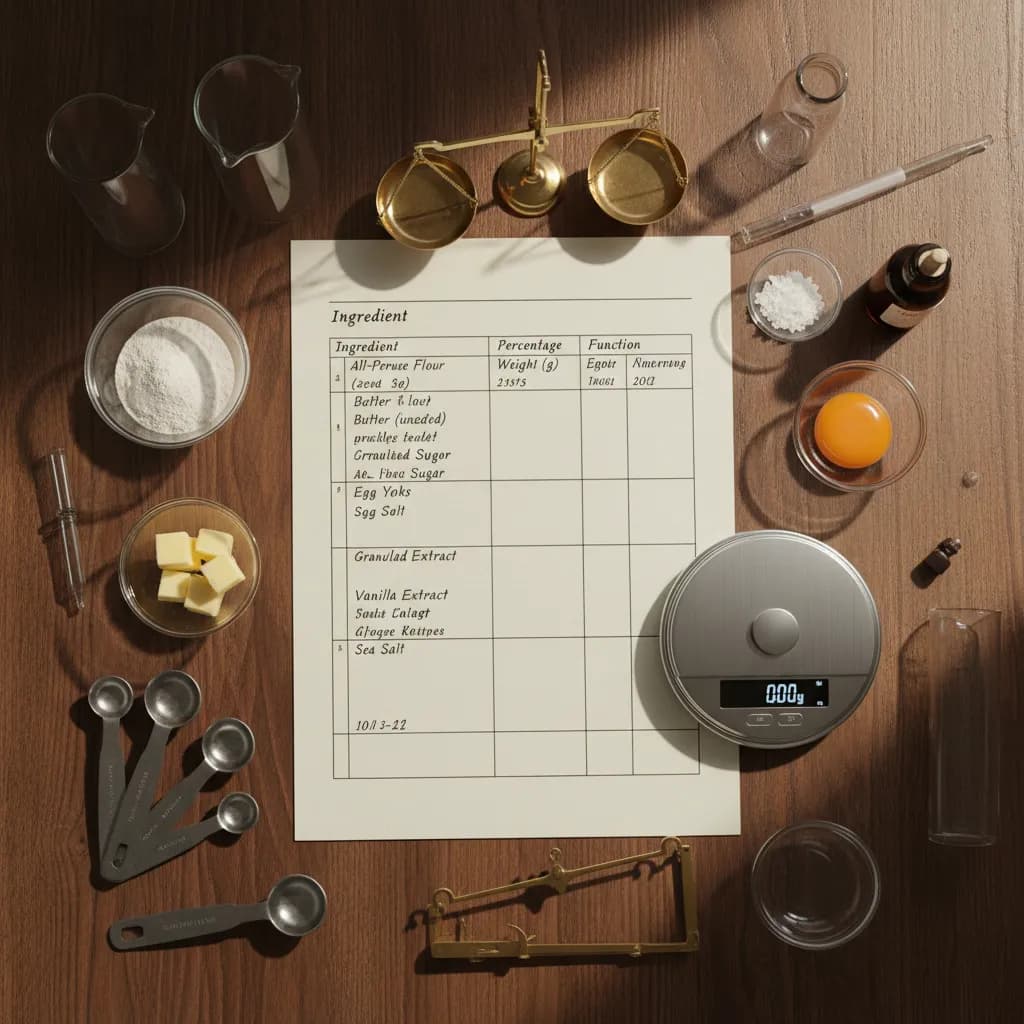
Move the top candidates into a scale that's representative of your production — typically at least 25-50 gallons for a kettle product. Behavior often changes at scale; a candidate that looked perfect at bench can underperform in a larger kettle. For the mechanics, see how to scale a kitchen recipe.
Paired sensory testing
Blind triangle tests with your internal panel and ideally a sample of customers. A candidate that's sensory-indistinguishable is the gold outcome. A detectable-but-positive outcome can work if the brand is ready for a small flavor shift. Detectable and worse means keep looking.
Shelf life confirmation
If the reformulation touches preservation, pH, water activity, or any hurdle parameter, run accelerated or real-time shelf life testing before committing. A beautiful fresh product that fails at month six is worse than finding a less perfect candidate up front. For foundations, see water activity vs pH.
Step 5: Update the Paper Trail
A reformulation doesn't end with the production spec. Depending on scope, it may also touch:
Nutrition Facts panel. If the ingredient change is material, the panel may need recalculation or retesting. See nutrition facts panel: lab vs database.
Allergen declarations. A new ingredient may introduce (or remove) allergens. Labels and allergen programs both update.
Process authority letter. For acidified products, changes that affect formulation or pH may require re-review. See process authority letters.
Certification audits. Organic, Non-GMO, Gluten-Free, Kosher certifications often require notification and sometimes re-audit for formulation changes.
Retailer notifications. Some retailers require brand notification of ingredient changes. Silent reformulations that consumers spot on the label are a brand-trust event.
Common Mistakes Under Pressure
Replacing under time pressure without testing. Shipping a product with an untested substitution to meet a production window is the fastest way to create a quality crisis that outlasts the original supply crisis.
Over-correcting the recipe. If the replacement is slightly different, resist the urge to compensate with multiple other changes. The more variables you move at once, the harder it is to diagnose the result.
Ignoring the cost implication. Some replacements cost more. Running through a reformulation without updating your COGS model leads to margin surprises a quarter later.
Missing the label change. If the ingredient deck changes, labels have to update — and that means inventory of old labels becomes obsolete. Budget for scrapping label inventory.
Treating this as a one-off. If one key supplier discontinued an ingredient, others might. Now is a good time to evaluate supply chain risk across your whole ingredient deck and identify which single-sourced ingredients would cause the same crisis if they disappeared.
When to Treat This as a Strategic Opportunity
Not every forced reformulation is bad news. Sometimes an ingredient discontinuation is the nudge a brand needed to:
Upgrade to a cleaner label that improves natural-channel positioning.
Consolidate ingredients across a product line, simplifying sourcing.
Improve margin if the new ingredient is better sourced.
Refresh the product story with a new sourcing narrative.
Done thoughtfully, a reformulation can end with a product that's stronger in the market than the original.
Frequently Asked Questions
Do I have to announce a reformulation to consumers?
Legally, not usually — as long as the label is accurate. Reputationally, it depends. If the change is detectable and you say nothing, some customers will notice and assume the worst. Many brands handle small changes quietly and larger changes with positive framing ("we've upgraded to...").
How long does a typical emergency reformulation take?
With a disciplined process, 4-10 weeks from discovery to production-ready new spec for a single-ingredient swap. Complex cases (multi-ingredient swaps, process authority re-review, packaging changes) can stretch to 12-16 weeks or more.
Can I run the old and new formulation simultaneously?
Sometimes, if inventory permits. This lets you burn through old-formula finished goods before new-formula product hits shelves. But it adds SKU complexity and can confuse trade customers if not communicated carefully.
What if I can't find an acceptable replacement?
Rare, but possible. In that case, options include short-term stockpiling of the original ingredient (if the supplier will run a final batch), finding a smaller specialty supplier who can produce it, temporarily discontinuing the SKU, or rebuilding the product around a significantly different formulation.
Where Experience Saves the Most Time
The public playbook is the shape of the work. The specific moves — which functional replacements I've seen work for kettle-cooked sauces, which labs turn around shelf life studies quickly, which suppliers cover short-notice gaps — come from having done this many times across many brands. If you're sitting on a discontinuation notice and the clock is running, a discovery call is a reasonable way to get the framework pointed at your specific situation.
Need Help With Your Formulation?
Whether you're scaling your first recipe or reformulating an existing product, let's talk about how to get it right.
Book a Free Discovery Call